Metal Roof Insurance Discounts: How to Save
Let's be honest, few things are as frustrating as watching your home insurance premiums creep higher and higher, especially when you're trying to make smart investments in your home's future. You've heard whispers about metal roofs offering significant savings on insurance, and it sounds almost too good to be true. This guide is here to cut through the noise, explaining exactly how a metal roof can impact your homeowners insurance, what discounts you might qualify for, and how to make sure you reap all the benefits.
Why Metal Roofs Often Qualify for Insurance Discounts
It's not just a rumor – metal roofs genuinely do often lead to lower homeowners insurance premiums. Insurance companies are all about risk assessment, and when they see a durable, long-lasting material like metal protecting your biggest asset, they typically view that as a lower risk. This translates into potential savings for you, which can really add up over the lifetime of your roof. It's one of those rare instances where a big upfront investment truly pays dividends down the line, beyond just curb appeal.
Superior Durability and Lifespan
One of the most compelling arguments for metal roofing, both for homeowners and insurance providers, is its incredible durability. Unlike traditional asphalt shingles that might need replacing every 15-20 years, a properly installed metal roof can last 40, 50, or even 70 years or more. Think about that for a moment – you might never need to replace your roof again in your lifetime! This extended lifespan means fewer claims for wear and tear, which is a big green flag for insurance carriers. They know they're looking at a reduced chance of having to pay out for roof replacements due to age or general deterioration.
Metal roofs are specifically designed to withstand the test of time and the elements. Materials like steel, aluminum, copper, and zinc are inherently tough. They don't absorb water, they resist rot and mildew, and they're less susceptible to the constant expansion and contraction that can prematurely age other roofing materials. This robust construction is a key factor in why insurers look favorably upon them, seeing fewer potential issues over decades. When you invest in a metal roof, you're essentially buying peace of mind, and insurance companies recognize that reduced long-term risk.
Enhanced Resistance to Natural Disasters
This is where metal roofs truly shine in the eyes of insurance companies, especially if you live in an area prone to severe weather. From high winds to hail to fire, metal roofs offer a level of protection that many other roofing materials simply can't match. This resilience directly translates into lower perceived risk for damage claims, which is a major driver of potential discounts.
Wind and Storm Resistance
If you've ever experienced a major storm, you know the anxiety of wondering if your roof will hold up. Metal roofs are engineered to resist incredibly high wind speeds. Many systems, particularly standing seam metal roofs, can withstand winds exceeding 140-150 miles per hour, often even higher. This is largely due to their interlocking panel design and robust fastening systems that prevent uplift. In areas prone to hurricanes or tornadoes, such as Florida or parts of Texas, this is a monumental advantage. Insurance companies in these regions are very keen on homes with superior wind resistance, often offering specific "wind mitigation" credits because your home is less likely to suffer catastrophic damage and subsequent claim filings during severe weather events. Your peace of mind during a hurricane is invaluable, and your wallet will thank you too. For more on this, you might want to read about Metal Roof Wind and Fire Ratings Explained.
Hail and Impact Resistance
Hailstorms can be incredibly destructive, leaving asphalt shingle roofs pockmarked and compromised. Metal roofs, especially those made from heavier gauges or stone-coated steel, are far more resistant to hail damage. While a massive hailstorm could dent a lighter gauge metal roof, it's far less likely to compromise its structural integrity or lead to leaks compared to traditional shingles. Many metal roofing products achieve Class 4 impact resistance, which is the highest rating available. This designation is a huge deal for insurers in hail-prone states like Colorado or Oklahoma, as it signifies a drastically reduced risk of expensive hail damage claims. If your roof has this rating, make sure your insurance provider knows it – it could be a golden ticket to significant savings. Learn more about getting a Class 4 Impact-Resistant Roof Insurance Discount.
Fire Resistance
Another critical safety advantage of metal roofs is their non-combustible nature. They won't ignite from airborne sparks or embers, which is a major concern in areas susceptible to wildfires. Most metal roofs carry a Class A fire rating, the highest classification, meaning they offer superior protection against external fires. For homeowners in wildland-urban interface zones or simply those looking for added safety, this fire resistance is a huge bonus. Insurance companies certainly take notice, as it significantly reduces the risk of a total loss due to fire originating from external sources. It’s an investment not just in your home, but in your family’s safety.
Types of Insurance Discounts for Metal Roofs
Okay, so we know why metal roofs are favored, but what does that actually look like in terms of discounts? It's not always a single, straightforward "metal roof discount." Often, it's a combination of credits related to the specific protective features of your metal roof. Understanding these categories will help you speak intelligently with your insurance agent and ensure you're getting every possible saving.
Wind Mitigation Credits
These are perhaps the most common and substantial discounts available for metal roofs, especially in high-wind regions. Wind mitigation refers to features or construction techniques that reduce the likelihood of damage during strong winds, hurricanes, or tornadoes. Metal roofs, with their robust fastening systems and ability to withstand high wind uplift, are prime candidates for these credits.
To qualify for wind mitigation credits, you'll typically need a certified inspector to conduct a wind mitigation inspection. They'll assess various features of your home, including your roof's age, type, deck attachment, and the presence of secondary water resistance. For metal roofs, they'll be looking at the panel type (e.g., standing seam versus exposed fastener), gauge, and how it's attached to the roof deck. A strong inspection report proving your metal roof's superior wind resistance can lead to significant savings, often a substantial percentage off your premium. These discounts are particularly prevalent in coastal states like Florida, where hurricane risk is high. Check out our guide on Wind Mitigation and Roof Premium Credits for an in-depth look.
Impact Resistance Discounts (Class 4)
If your metal roof has achieved a Class 4 impact resistance rating, you're in a great position to claim another valuable discount. This rating indicates that your roof can withstand the impact of a 2-inch steel ball dropped from 20 feet without cracking or puncturing. This is a big deal in hail-prone areas.
Many insurance companies offer specific premium reductions for roofs with this top-tier rating because it dramatically reduces the chance of expensive hail damage claims. When you're getting quotes for your metal roof, always ask the installer about the product's impact rating and ask for documentation. Then, present this documentation to your insurance provider. Even if a hailstorm is severe enough to cause cosmetic dents, some insurers will differentiate between cosmetic damage and functional damage, potentially saving you from a full claim or premium increase. Understanding the Metal Roof Hail Damage and Insurance Claims process can further empower you.
Fire Resistance Discounts
As mentioned, metal roofs are non-combustible and carry a Class A fire rating. While not as universally advertised as wind or hail discounts, some insurance carriers, especially in areas with high wildfire risk (such as California or parts of the Pacific Northwest), will offer discounts for homes with Class A rated roofing materials.
These discounts are essentially a reward for reducing the risk of your home catching fire from external sources like embers or nearby brush fires. It demonstrates to the insurer that you've taken proactive steps to protect your property from a devastating loss. Always inquire with your insurance agent if they offer specific fire resistance credits, particularly if you live in an area prone to wildfires. Even if it’s a smaller discount, every little bit helps in reducing your overall cost of ownership.
Green Home or Energy Efficiency Discounts
While not directly tied to the material itself in the same way as wind or fire resistance, metal roofs can contribute to a home's overall energy efficiency, which sometimes qualifies for "green home" or energy-efficient home discounts. Many metal roofs, especially those with reflective coatings, are considered "cool roofs."
A cool roof reflects more sunlight and absorbs less heat than a standard roof. This means your attic and home stay cooler in warm climates, reducing the load on your air conditioning system. Lower energy consumption can sometimes be recognized by insurance companies as part of a broader "green home" initiative, or it might just be an indirect benefit by making your home more resilient and less prone to issues related to extreme heat. It’s worth asking your agent if they have any programs that reward energy-efficient home improvements, as your metal roof could be a key component.
Factors Affecting Your Discount Eligibility
It's not enough to just say "I have a metal roof!" to get a discount. Insurance companies are detailed, and the specifics of your metal roof installation and the product itself will play a significant role in determining your eligibility and the size of your discount. Knowing these factors beforehand can help you make informed decisions when choosing your metal roofing system and ensure you provide your insurer with all the necessary information.
Metal Roof Material and Gauge
The type of metal and its thickness (gauge) can significantly influence the level of protection, and thus, the potential insurance discount. Not all metal roofs are created equal, and insurers understand these differences.
Material Type
- Steel (Galvalume/Galvanized): Steel roofs, especially those coated with Galvalume or galvanized finishes, are incredibly popular due to their strength and cost-effectiveness. They offer excellent impact and wind resistance. A 24-gauge steel standing seam roof, for instance, will likely be viewed very favorably.
- Aluminum: Lighter than steel and inherently rust-resistant, aluminum is a great choice, particularly in coastal areas with high salt exposure. While it might dent slightly more easily than heavier gauge steel, its rust resistance is a huge plus for longevity and low maintenance, which indirectly benefits insurers.
- Copper/Zinc: These premium metals offer exceptional durability, longevity, and aesthetics. While they come at a higher initial cost, their extreme lifespan and resistance to elements make them highly attractive to insurers, though perhaps less common for direct "discount" calculations due to their niche market.
- Stone-Coated Steel: These panels combine the strength of steel with the aesthetic of traditional shingles or tiles. They are renowned for their Class 4 impact resistance and often excellent fire ratings, making them a prime candidate for specific hail and fire discounts.
When discussing your roof with your insurer, be specific about the material. A well-constructed Steel Roof Cost Per Square Foot project, for example, will typically garner more favorable attention than a cheaper, less robust option.
Gauge (Thickness)
Gauge refers to the thickness of the metal. Generally, a lower gauge number means a thicker, more durable metal.
- 24-gauge vs. 26-gauge: For residential standing seam roofs, 24-gauge steel is often preferred for its superior rigidity and dent resistance. 26-gauge is also common and still very strong. A thicker gauge often translates to better impact resistance and overall durability, which can directly influence impact and wind mitigation credits. For example, a 24 vs 26 Gauge Metal Roof: Cost Difference might be a consideration, but the increased durability of 24-gauge could pay off in insurance savings and peace of mind.
- 29-gauge: Typically used for agricultural or commercial buildings, 29-gauge is thinner and more prone to denting from hail. While still offering good wind resistance, it might not qualify for the same level of impact resistance discounts as thicker panels.
Always ask your installer about the gauge and confirm it's suitable for your local climate and desired insurance benefits.
Roofing Profile and Fastener Type
The way your metal roof panels are designed and attached is crucial for its performance, especially against wind.
Standing Seam vs. Exposed Fastener
- Standing Seam: This is generally considered the "gold standard" for residential metal roofing. Its panels interlock, and the fasteners are hidden underneath, protecting them from the elements and potential wear. This concealed fastener system offers superior wind uplift resistance and a sleeker look. Insurers often look very favorably on standing seam roofs due to their exceptional durability and longevity. If you're wondering, Is a Standing Seam Roof Worth the Extra Cost, consider the long-term insurance savings as part of the ROI.
- Exposed Fastener (e.g., Corrugated, R-Panel): With these systems, screws with rubber washers are driven through the face of the panel into the roof deck. While more economical, the exposed fasteners can be a potential point of failure over time if not installed correctly or if the washers deteriorate. While still offering excellent wind resistance compared to shingles, they might not achieve the absolute highest wind mitigation ratings that standing seam systems do, and they are generally more prone to leakage if not maintained.
The choice between Standing Seam vs Corrugated Metal Roof isn't just aesthetic; it's a practical decision that impacts durability and insurance.
Installer Certifications and Warranty
Who installs your roof and what kind of warranty they offer can also be important signals to insurance companies. A professionally installed roof by a reputable company significantly reduces the risk of installation-related issues.
Manufacturer-Certified Installers
Some metal roofing manufacturers offer certification programs for installers. This means the contractor has undergone specific training from the manufacturer to ensure their products are installed according to the highest standards. An installation by a Manufacturer-Certified Metal Roof Installers Explained professional often comes with extended manufacturer warranties, which is a strong indicator of quality and reliability. Insurance companies see this as a positive, as a properly installed roof is less likely to fail prematurely.
Workmanship and Manufacturer Warranties
Always ensure your metal roof comes with robust warranties – both for the materials (manufacturer's warranty) and for the installation (workmanship warranty from the contractor). A strong manufacturer's warranty (often 30-50 years on finish, lifetime on substrate) shows confidence in the product's longevity. A solid workmanship warranty (typically 5-10 years, sometimes longer) shows confidence in the installer's skill. These warranties demonstrate that multiple parties stand behind the product and installation, further de-risking your investment in the eyes of an insurer. Don't overlook the importance of Metal Roof Warranties: Workmanship vs Manufacturer.
The Role of Wind Mitigation Inspections
If you live in a coastal state or an area prone to high winds, a wind mitigation inspection isn't just a good idea – it's often the key to unlocking the most significant insurance discounts for your metal roof. It’s a specialized assessment that goes beyond a standard home inspection, specifically evaluating your home's ability to withstand severe weather.
What a Wind Mitigation Inspection Entails
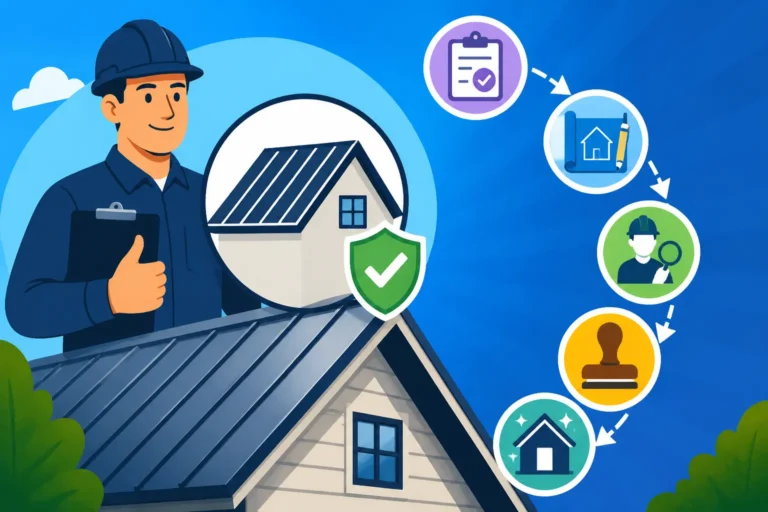
A certified wind mitigation inspector will examine several key areas of your home, focusing on features that protect it from wind damage. For your metal roof, they will meticulously check specific components and installation details. This isn't just a quick look; it's a thorough evaluation that quantifies your roof's resilience.
The inspector will typically look at:
- Roof Covering: They'll identify the type of roofing material (e.g., metal), its age, and its resistance rating. They'll specifically note if it’s a standing seam or exposed fastener system.
- Roof Deck Attachment: How your roof sheathing (plywood or OSB) is attached to the rafters or trusses is critical. Stronger attachment (e.g., larger nails, closer spacing) earns more points.
- Roof-to-Wall Attachment: This refers to how securely your roof structure is connected to your home's walls. Hurricane clips or straps are prime examples of enhancements that earn credits here.
- Roof Geometry: The shape of your roof can affect its wind resistance. A hip roof (slopes on all four sides) often performs better than a gable roof (two sloped sides) in high winds.
- Secondary Water Resistance (SWR): This is a layer of protection beneath your roof covering, like an ice and water shield or a special underlayment, that helps prevent water intrusion if your primary roof covering is damaged. Metal roofs almost always require quality underlayment. Find out more about Metal Roof Underlayment and Ventilation Guide.
The inspector will compile a report, often on a state-specific form (like Florida's OIR-B1-1802 form), detailing their findings. This report is then submitted to your insurance company.
How a Metal Roof Maximizes Wind Mitigation Credits
A metal roof naturally excels in many of the categories assessed during a wind mitigation inspection, making it an excellent investment for maximizing these credits.
- Superior Roof Covering: As discussed, metal roofs have high wind ratings. A standing seam metal roof with a robust fastening system will score very well here.
- Stronger Deck Attachment (Indirectly): While not directly part of the metal roof itself, choosing a metal roof often comes with more stringent installation requirements that ensure a very secure roof deck attachment.
- Secondary Water Resistance: The best metal roof installations often include advanced synthetic underlayments or even peel-and-stick ice and water shields, which act as excellent SWR and can earn significant credits. This provides an additional layer of protection, something insurers highly value.
The combination of these factors means that a home with a metal roof is often seen as a much lower risk for significant wind damage, translating directly into lower premiums. It’s worth the upfront cost of the inspection (usually a few hundred dollars) because the savings often recoup that investment within the first year or two. Don’t delay in scheduling one after your metal roof installation! For more specific state information, you might find Florida Metal Roof Codes: FBC, HVHZ & Approvals helpful.
Working with Your Insurance Company
Getting the maximum discount for your metal roof isn't always automatic. You need to be proactive and informed when communicating with your insurance provider. It's an ongoing relationship, and proving your home's enhanced resilience is your responsibility.
Gathering Necessary Documentation
Before you even call your insurance agent, make sure you have all your ducks in a row. Having clear, concise documentation will make the process much smoother and ensure you don't miss out on potential savings.
- Invoice/Contract from Roofer: This should clearly state the type of metal roof installed (e.g., "24-gauge standing seam Galvalume steel roof"), the square footage, and the installation date.
- Product Specifications/Brochures: Get these from your roofing contractor or directly from the manufacturer. They will often highlight wind, impact (Class 4), and fire ratings. Brands like McElroy Metal, Englert, and PAC-CLAD provide detailed product specifications that can be incredibly useful.
- Warranty Information: Copies of both the manufacturer's material warranty and your contractor's workmanship warranty.
- Wind Mitigation Inspection Report: As discussed, this is critical, especially in high-wind regions. Make sure it's performed by a certified inspector.
- Photos: Before, during, and after installation photos can be helpful, especially if there are any unique aspects of the installation that enhance durability.
- Permit Information: Proof that your roof was installed to code and passed final inspection.
Having these documents ready demonstrates to your insurance agent that you've invested wisely and are serious about proving your home's improved safety profile.
Communicating with Your Agent
Once you have your documentation, reach out to your insurance agent. Don't just assume they'll automatically apply discounts. Be prepared to explain the benefits of your metal roof and what specific ratings or features it possesses.
- Be Specific: Instead of just saying "I have a metal roof," say "I installed a new 24-gauge standing seam Galvalume metal roof with a Class 4 impact rating and a Class A fire rating. I also had a wind mitigation inspection completed, and I have the report ready."
- Ask Direct Questions: "What specific discounts do you offer for metal roofs?" "Do you provide credits for Class 4 impact resistance?" "What are the criteria for your wind mitigation discounts, and how much can I save?"
- Shop Around (If Necessary): If your current insurer isn't offering competitive discounts, don't be afraid to shop around. Different insurance companies have different risk assessment models and may offer varying levels of discounts for metal roofs. Some insurers are more aggressive in offering these credits because they specialize in properties with lower risk profiles. Check to see if any companies specifically advertise discounts for durable roofing. Our guide on Insurance Companies That Discount Metal Roofs can provide a starting point.
- Annual Review: Make it a habit to review your policy annually with your agent. Changes in building codes, new discount programs, or even just keeping your policy updated can ensure you're always getting the best rates.
Remember, your insurance agent is there to help, but they can only work with the information you provide. The more detailed and proactive you are, the better your chances of securing the maximum possible savings.
Common Misconceptions and What to Watch Out For
While metal roofs offer fantastic benefits and potential insurance savings, it's important to be realistic and avoid common misconceptions. Not every metal roof guarantees a massive discount, and there are some pitfalls to be aware of.
Not All Metal Roofs Are Equal
This is perhaps the biggest misconception. Just because a roof is "metal" doesn't mean it's automatically superior or will qualify for the same discounts.
- Quality Varies: A thin, agricultural-grade metal panel (like 29-gauge corrugated) installed with exposed fasteners will likely not offer the same level of impact or wind resistance as a heavier, 24-gauge standing seam system. The former might still get some discount over shingles, but it won't be as substantial as the latter.
- Installation Matters: Even the highest quality metal panels can fail if installed improperly. A shoddy installation negates many of the inherent benefits of metal, and insurers won't give discounts for roofs that aren't up to snuff. This is why choosing a reputable, experienced contractor is paramount.
- Cosmetic vs. Functional Damage: In some cases, particularly with lighter gauge exposed fastener systems, hail might cause cosmetic dents without compromising the roof's integrity. Some insurance policies may have a Metal Roof Cosmetic Damage Insurance Exclusion, meaning they won't cover purely aesthetic damage if the roof is still functional. Understand your policy's specifics regarding hail.
Always discuss the specific type of metal roof you have or are planning to install with your agent.
Discounts Vary by Location and Insurer
What might be a substantial discount in hurricane-prone Florida might be a smaller one in a less weather-volatile state.
- State Regulations: Some states mandate certain discounts (e.g., wind mitigation in Florida), while others leave it up to individual insurance companies. The regulatory environment greatly influences available savings. For example, Do Metal Roofs Qualify for Insurance Discounts in Texas? might depend heavily on the specific policy and insurer.
- Company Policies: Each insurance company has its own underwriting guidelines and risk algorithms. One insurer might offer a 15% discount for a Class 4 roof, while another might offer 5%. It truly pays to get multiple quotes.
- Risk Profile: If your area has a very low risk of hail, fire, or high winds, the "risk reduction" value of a metal roof is less, and thus the discount might be smaller or non-existent for those specific perils.
Don't assume your neighbor's discount will be identical to yours. Always get personalized quotes.
Hidden Costs of a Metal Roof
While metal roofs are a fantastic long-term investment, the initial cost is higher than asphalt shingles. Don't let the promise of insurance discounts overshadow the reality of the upfront investment.
- Higher Initial Outlay: A metal roof can cost anywhere from 2 to 4 times more than an asphalt shingle roof upfront. While the long-term ROI is excellent, including reduced maintenance and energy savings, and potentially lower insurance, the initial sticker shock is real. Our guide on Metal Roof Cost: Complete 2026 Guide gives a full breakdown.
- Installation Complexity: Metal roof installation, especially standing seam, requires specialized skills and tools, which can contribute to higher labor costs. It's not a DIY project for most homeowners.
- Accessories: Components like snow guards (essential in cold climates), specialized flashing, and ventilation can add to the overall cost. For instance, Metal Roof Trim and Flashing Cost can be a significant line item.
Factor in all costs when making your decision, and view insurance discounts as a significant bonus rather than the sole reason for your choice. A metal roof is an investment that pays off over its entire lifespan, not just in immediate savings.
Understanding State-Specific Considerations for Discounts
The world of insurance is highly localized, and what applies to a homeowner in Florida might be entirely different for someone in Arizona or California. Understanding these regional nuances is crucial for homeowners looking to leverage their metal roof for insurance savings. Different states face different primary weather threats, and their insurance regulations and available discounts reflect those unique challenges.
High Wind and Hurricane Zones
States along the coasts, particularly those in the Southeast like Florida, Texas, Louisiana, and the Carolinas, are deeply concerned with hurricane and high-wind damage. Insurance companies in these areas often have the most robust and mandatory discount programs for properties that demonstrate superior wind resistance.
- Florida: Florida is perhaps the quintessential example. Due to its frequent hurricane activity, the state has specific regulations that often mandate insurers to offer discounts for wind mitigation features. A properly installed metal roof, especially a standing seam system with appropriate fastening and secondary water resistance, can lead to substantial premium reductions through a wind mitigation inspection. The state's building codes, like the Florida Building Code (FBC), and high-velocity hurricane zone (HVHZ) requirements, directly influence what qualifies for these credits. Homeowners in Florida should absolutely pursue a wind mitigation inspection after installing a metal roof.
- Texas: Similarly, Texas, with its Gulf Coast exposure and tornado alley risks, sees significant emphasis on wind resistance. Homeowners in Texas can often find discounts for roofs that meet higher wind load requirements. While not always state-mandated in the same way as Florida, many insurers offer competitive rates for impact-resistant and wind-resistant roofing. Exploring Metal Roof Cost in Texas often reveals that these long-term savings are built into the value proposition.
- Other Coastal States: States like South Carolina, North Carolina, Georgia, Alabama, Mississippi, and Louisiana also experience hurricanes and severe thunderstorms. While specific regulations vary, the trend is generally towards rewarding homeowners who invest in durable, wind-resistant roofing materials like metal.
In these regions, the primary focus for insurance savings will be on proving your metal roof's superior wind uplift resistance and its ability to protect against water intrusion during storms.
Hail-Prone Regions
Midwestern states and parts of the Mountain West, like Colorado, Oklahoma, Kansas, Nebraska, and even parts of Texas, frequently experience severe hailstorms. For homeowners in these areas, impact resistance is the name of the game for insurance discounts.
- Class 4 Impact Resistance: As discussed earlier, a metal roof with a Class 4 impact resistance rating is a major advantage here. Insurers in these states are very familiar with the high costs associated with hail damage to traditional asphalt roofs, and they are often keen to incentivize homeowners to install more resilient materials.
- Proof is Key: You'll need proper documentation from your metal roof manufacturer confirming the Class 4 rating. This might be a product approval report, a specific certification, or a fact sheet. Your insurance agent will require this to apply the discount.
- Dent vs. Damage: It's still important to understand your policy's stance on cosmetic hail damage versus functional damage, as even Class 4 metal roofs can sometimes dent from very large hail, though the roof's integrity usually remains.
For homeowners facing consistent hail threats, investing in a robust metal roof and ensuring it carries that Class 4 rating can lead to substantial, ongoing premium savings.
Wildfire Risk Areas
In states like California, Oregon, Washington, and parts of the Southwest where wildfires are a growing concern, fire resistance becomes a paramount factor for insurance.
- Class A Fire Rating: Metal roofs are inherently non-combustible and almost universally achieve a Class A fire rating, the highest possible. This means they are highly resistant to ignition from airborne embers, which is a common cause of home destruction in wildfires.
- Zoning and Regulations: In high-risk wildfire zones, local building codes or even insurance company requirements might strongly encourage or mandate fire-resistant roofing materials. Homes in these areas with Class A rated metal roofs are often viewed as significantly lower risk for external fire spread.
- Premium Impact: While specific "fire discounts" might not be as overtly advertised as wind mitigation, having a Class A rated roof in a wildfire-prone area can still impact your overall premium or even your insurability. It demonstrates a proactive approach to mitigating a major risk.
Regardless of your location, it's always worth discussing all your metal roof's protective features with your insurance agent to see how they impact your specific policy. The landscape of insurance discounts is constantly evolving, driven by changing climate patterns and regional risks.
Table: Typical Metal Roof Discount Triggers
To make it a little easier to digest, here’s a quick overview of common discount triggers related to metal roofs and what they typically mean for you. Remember, specific percentages and availability will vary widely by insurer and location!
| Discount Type | Primary Benefit of Metal Roof | Typical Qualifying Feature | Common Regions | Potential Impact |
|---|---|---|---|---|
| Wind Mitigation Credit | Reduces damage from high winds, hurricanes, tornadoes | Robust fasteners, interlocking panels, secondary water resistance | Coastal areas (FL, TX, LA, NC, SC) | Significant (5-20%+) |
| Impact Resistance (Class 4) | Prevents damage from hail | Heavy gauge metal, stone-coated steel, specific panel designs | Hail Belt (CO, OK, KS, TX) | Moderate to Significant |
| Fire Resistance (Class A) | Non-combustible, resists ignition from embers | All metal roofs inherently Class A rated | Wildfire-prone areas (CA, OR, WA) | Minor to Moderate |
| Green/Energy Efficiency | Reflects solar heat, reduces cooling costs | Cool roof coatings, lighter colors | Hot climates (Southwest, FL) | Minor |
| New Roof Credit | Overall lower risk due to new, well-installed roof | Any new roof, but metal offers extended lifespan | Universal, especially for older homes | Minor to Moderate |
| Secondary Water Resistance | Protects interior from water if roof is compromised | Quality underlayment, ice and water shield | High-wind/hurricane zones | Moderate |
This table provides a general idea, but always verify details with your specific insurance provider!
Maximizing Your Savings Beyond the Initial Discount
While securing those initial insurance discounts for your metal roof is fantastic, the savings don't stop there. A metal roof offers numerous other long-term financial benefits that, while not always direct "discounts" on your premium, contribute to significant overall savings and an improved financial picture for your home. These benefits underscore why the initial investment in a metal roof is often touted as one of the best home improvements you can make.
Reduced Maintenance and Repair Costs
One of the often-overlooked financial benefits of a metal roof is the drastically reduced need for maintenance and repairs compared to other roofing materials. Asphalt shingles often require regular checks for cracked, missing, or curling shingles, especially after storms. Tile roofs can chip or break, and wood shakes require extensive ongoing maintenance.
Metal roofs, on the other hand, are exceptionally low maintenance. They don't absorb water, resist mold and mildew, and are not prone to insect infestation. While it's still a good idea to periodically inspect your metal roof for debris, clear gutters, and check fasteners (especially on exposed fastener systems), the frequency and cost of major repairs are significantly lower. This means less money out of your pocket over the decades your roof protects your home. For example, understanding Metal Roof Maintenance Guide will show you how straightforward it is. You also won't be paying nearly as much for small, intermittent fixes, which can quickly add up over the years. This isn’t a direct insurance discount, but it’s a very real financial saving that adds to the overall value proposition of metal roofing.
Increased Home Value and Faster Sale
A metal roof is a premium home improvement that significantly boosts your home's value and curb appeal. When it comes time to sell, a metal roof is a major selling point that can attract buyers and potentially command a higher asking price.
- Appraisal Value: Appraisers often factor in the quality and expected lifespan of a roof. A metal roof's extensive lifespan means the buyer won't have to worry about a costly roof replacement for decades, which is a huge financial relief and a tangible asset.
- Buyer Appeal: In a competitive housing market, a home with a durable, attractive metal roof stands out. Buyers understand the benefits of low maintenance, energy efficiency, and superior protection. They see it as a wise investment that they won't have to concern themselves with. Our article on Does a Metal Roof Increase Home Value? dives deep into this topic.
- Faster Sale: Homes with desirable, long-lasting features like a metal roof often sell more quickly, reducing the time your home spends on the market and the associated carrying costs. This is an indirect but powerful financial benefit that comes from the quality and longevity of metal roofing.
While not a direct insurance discount, the enhanced resale value and marketability of your home mean a better financial outcome when you eventually decide to move.
Potential Energy Savings
As touched upon earlier, many metal roofs qualify as "cool roofs" due to their high solar reflectivity and thermal emissivity. This characteristic can lead to tangible energy savings, especially in warmer climates.
- Reduced Cooling Costs: By reflecting a significant portion of the sun's radiant heat, a metal roof keeps your attic and the interior of your home cooler. This reduces the workload on your air conditioning system, leading to lower electricity bills during hot summer months. The impact can be quite noticeable, particularly if you're upgrading from a dark-colored asphalt shingle roof that absorbs a lot of heat.
- Potential Tax Credits: While less common now, federal, state, or local governments sometimes offer tax credits or rebates for energy-efficient home improvements, including qualifying cool roofs. It's always worth checking with local authorities or energy programs to see if your metal roof qualifies for any such incentives.
These energy savings are a continuous, month-after-month financial benefit that adds to the overall economic advantage of choosing a metal roof.
Long-Term Cost-Effectiveness
When you combine all these factors – direct insurance discounts, reduced maintenance, increased home value, and energy savings – the long-term cost-effectiveness of a metal roof becomes undeniably clear. While the initial investment is higher, the total cost of ownership over the life of the roof is often significantly lower than repeatedly replacing a less durable roofing material.
Consider the "Metal Roof Cost vs Shingles Over 30 Years" scenario. Over three decades, you might replace an asphalt shingle roof twice, incurring not only material and labor costs but also potential disposal fees and disruptions. A metal roof, lasting 50 years or more, avoids these recurring expenses. This long-term perspective is what truly makes a metal roof a financially savvy choice. You're not just buying a roof; you're buying decades of predictable, low-stress home protection.
Disclaimer
Please remember that insurance policies and discounts vary significantly by provider, location, and the specific characteristics of your home and roof. This article provides general information and should not be considered a substitute for professional advice from a licensed insurance agent or roofing contractor. Always consult with these professionals to get accurate quotes and information tailored to your individual situation.