How to Get a Metal Roof Estimate
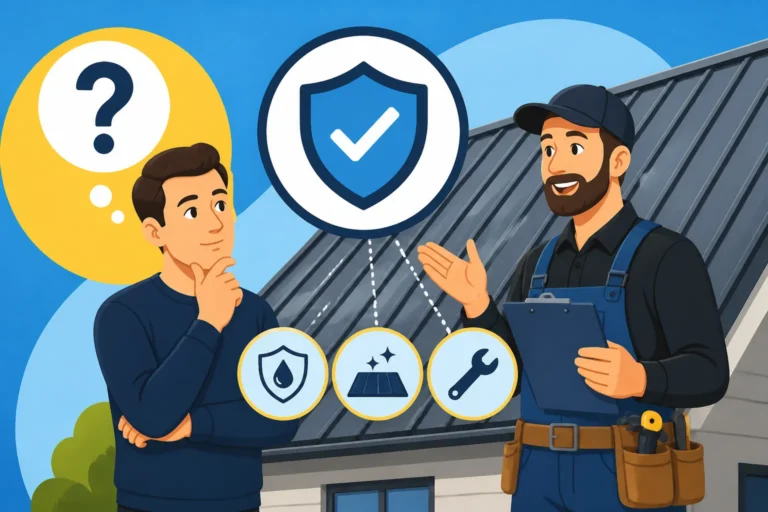
Most homeowners feel a knot in their stomach the moment a roofing contractor pulls into the driveway. You are likely worried about hidden fees, aggressive sales pitches, and whether the number you are about to see is even remotely fair for your specific home. This guide eliminates the guesswork by teaching you exactly how to get a metal roof estimate that is transparent, accurate, and competitive.
Preparing for the Estimate: What You Need to Know First
Before you even pick up the phone to call a contractor, you need to do a little bit of homework. I have seen too many homeowners walk into an estimation meeting completely blind, only to be overwhelmed by technical jargon and "one-day-only" discounts. Taking an hour to understand the basics of your roof ensures that when a professional starts talking about squares and pitches, you can follow along and ask the right questions.
Measuring Your Roof and Understanding Square Footage
In the roofing world, we do not talk in terms of standard square feet; we talk in "squares." One square is a 10-foot by 10-foot area, or 100 square feet. When you are looking at a Metal Roof Cost Per Square Foot, it is important to remember that your roof's actual surface area is much larger than your home's footprint. If you have a 2,000-square-foot ranch, your roof area might actually be 2,800 to 3,000 square feet depending on the overhangs and the slope.
You can get a rough idea of your roof's size by measuring the perimeter of your house from the ground and adding about 20% to 30% for the slope. While the contractor will do a precise measurement—often using satellite software or drones—having your own rough estimate prevents a dishonest salesperson from padding the numbers. If you know you have roughly 25 squares and they come back claiming you have 35, that is an immediate red flag that requires an explanation.
Identifying Your Roof's Pitch and Complexity
The "pitch" of your roof is essentially how steep it is. This is a massive factor in your final quote because it dictates the level of safety equipment required and how slowly the crew has to move. A "walkable" roof (lower pitch) is much cheaper to install than a steep roof where installers must remain harnessed at all times. When researching What Affects Metal Roof Cost: Gauge, Pitch, Complexity & Tear-Off, you will find that a complex roof with multiple dormers, valleys, and chimneys will always command a premium.
Complexity also refers to the "cuts" required. Every time a metal panel has to be cut to fit around a vent or into a valley, it adds labor time and increases material waste. If your roof looks like a game of Tetris with dozens of different angles, expect the labor portion of your estimate to be significantly higher than a simple up-and-over gable roof.
Researching Local Material Costs
Metal is a commodity, meaning prices fluctuate based on global supply chains. However, the type of metal you choose is the biggest variable you can control. Are you looking for the high-end look of copper, or is a budget-friendly corrugated steel panel more your style? I always recommend looking at a Metal Roof Cost: Complete 2026 Guide to see how materials are currently trending in your region.
By the time the contractor arrives, you should have a general idea of whether you want a standing seam system or an exposed fastener system. Standing seam is the gold standard for residential homes because it hides the screws, but it is also more expensive. Having a preference beforehand allows the contractor to provide a specific quote rather than a "ballpark" range that might leave you frustrated later.
Finding the Right Contractors to Quote Your Project
Once you have your bearings, the next step is sourcing the professionals. This is where most people get overwhelmed. You do not just want a "roofer"; you want a metal roofing specialist. Installing shingles is a vastly different skill set than bending and crimping metal panels.
Where to Look for Qualified Metal Roofers
Don't just rely on the first three names that pop up on a search engine. I suggest looking for contractors who are members of the Metal Roofing Alliance or those who have been in business in your specific city for at least a decade. Local longevity is a great indicator of quality because bad roofing companies usually go out of business or change names after a few years of warranty claims.
When you are looking for Metal Roofing Contractors Near Me: How to Find & Vet, check their social media pages for actual project photos. You want to see crisp lines, clean flashing around chimneys, and organized jobsites. A contractor who is proud of their work will have plenty of high-resolution proof to show you.
The Importance of Specialization in Metal
I have seen many general roofing contractors try to "wing it" with metal installations because the profit margins are higher. This is a recipe for disaster. Metal expands and contracts with the temperature, and if an installer does not understand how to allow for that movement, your roof will "oil can" (ripple) or the fasteners will back out within a few years.
Ask potential hires: "What percentage of your business is metal roofing?" If the answer is less than 50%, they might not have the specialized tools or the experienced crew needed for a flawless finish. You are paying for expertise, so make sure that is exactly what you are getting.
Using Lead Services Like Modernize
If you are struggling to find vetted pros, services like Modernize can be a lifesaver. Modernize acts as a bridge, connecting homeowners with contractors who have already been screened for the necessary credentials. This saves you the headache of cold-calling a dozen companies only to find out half of them don't actually do residential metal work. Using a platform like Modernize allows you to compare multiple quotes from contractors who are actually interested in your specific project type, which often leads to more competitive pricing.
| Factor | Impact on Estimate | Why It Matters |
|---|---|---|
| Roof Pitch | High | Steeper roofs require more safety gear and more labor hours. |
| Material Choice | Very High | Steel is affordable; copper or zinc can quadruple the material cost. |
| Tear-Off | Moderate | Removing two layers of old shingles costs more in labor and disposal fees. |
| Access | Low to Moderate | If a house is surrounded by trees or tight fences, moving material is slower. |
| Complexity | High | Valleys, dormers, and skylights require custom flashing and more cuts. |
The Site Visit: What Happens When the Contractor Arrives?
When a contractor comes to your home for an estimate, it is essentially a job interview. You are interviewing them, but they are also assessing you and your home. A professional visit should take at least 45 minutes to an hour. If someone shows up, walks around for five minutes, and hands you a price on a napkin, show them the door.
Physical Inspection vs. Satellite Estimates
In the age of technology, many companies use satellite imagery to measure your roof. This is great for a "rough" quote, but a final estimate should always involve a physical inspection. The contractor needs to see the condition of your roof's "decking" (the wood underneath). If you have rotting wood or structural issues, a metal roof cannot be installed safely until those are fixed.
During the visit, the contractor should also check your attic. They are looking for signs of moisture and, more importantly, proper ventilation. A metal roof requires a specific ventilation strategy to prevent condensation. If they don't ask to see your attic or look at your intake vents, they aren't looking at the whole picture. For a detailed list of what they should be checking, see Questions to Ask a Metal Roofing Contractor Before You Hire.
Questions to Ask During the Walkthrough
Don't be shy. This is your home and your money. I always tell my readers to have a list of questions ready. Ask about their crew—are they employees or sub-contractors? Ask about their insurance—can they provide a current certificate of general liability and workers' comp?
One specific question I love is: "How do you handle the transition from the roof to the gutters?" This is where many leaks happen. A good contractor will explain their drip edge process and how they ensure water doesn't get behind the fascia board. If you use a service like Modernize to find your pro, they often provide checklists to help you remember these critical technical questions.
Assessing the Decking and Underlayment
The "invisible" parts of your roof are often the most important. During the estimate, the contractor should explain what type of underlayment they plan to use. With metal roofs, you generally want a high-temperature synthetic underlayment rather than traditional felt paper. Metal gets hot, and cheap felt can actually stick to the underside of the panels.
Make sure the estimate clearly states whether they are replacing the underlayment or if they are proposing Installing a Metal Roof Over Shingles. While going over shingles can save you money upfront, it can complicate future repairs. A thorough estimate will explain the pros and cons of both options for your specific house.
Decoding the Line Items in Your Metal Roof Estimate
When you finally receive the written estimate, it can be several pages long. Do not just flip to the last page to see the total price. You need to understand where every dollar is going. A transparent contractor will break down the costs so you can see exactly what you are paying for.
Material Costs: Panels, Fasteners, and Trim
The largest chunk of your estimate will be the materials. This includes the panels themselves, but also the "trim and flashing." Homeowners are often shocked to see that the trim (the pieces that go on the ridges, corners, and around chimneys) can account for 20% to 30% of the total material cost. Metal trim is expensive because it is often custom-bent for your roof's specific angles.
Look for the "gauge" of the metal. Residential roofing is typically 24 or 26 gauge (lower numbers are thicker). If one estimate is significantly cheaper than another, check the gauge. A 29-gauge roof is much thinner and may dent more easily. You can compare the longevity of these options by looking at Is a Metal Roof Worth It? ROI, Resale & Payback.
Labor and Installation Fees
Labor is not just about "putting the roof on." It includes the setup of scaffolding, the removal of the old roof, the installation of the new system, and the meticulous cleanup of the jobsite. Metal installation is labor-intensive because it requires precision. Unlike shingles, which can be trimmed with a utility knife, metal requires heavy-duty shears and specialized folding tools.
When reviewing Metal Roof Labor Cost, remember that you are paying for a skilled trade. If the labor cost seems suspiciously low, they might be cutting corners on the "flashing" work—the most critical part of keeping your home dry. Modernize can help you find contractors who provide a detailed labor breakdown so you know exactly how many man-hours are being billed.
Disposal and Tear-Off Charges
Don't forget about the trash. Removing an old asphalt roof creates a massive amount of heavy waste. Your estimate should include the cost of the dumpster, the labor to haul the shingles off the roof, and the landfill fees. If you have multiple layers of old roofing, these fees will climb.
If you are looking for ways to save, some people consider the Tear-Off vs Metal Over Shingles: Cost Difference. However, I usually recommend a full tear-off so the contractor can inspect the wood underneath. It is a one-time expense that provides peace of mind for the next 50 years.
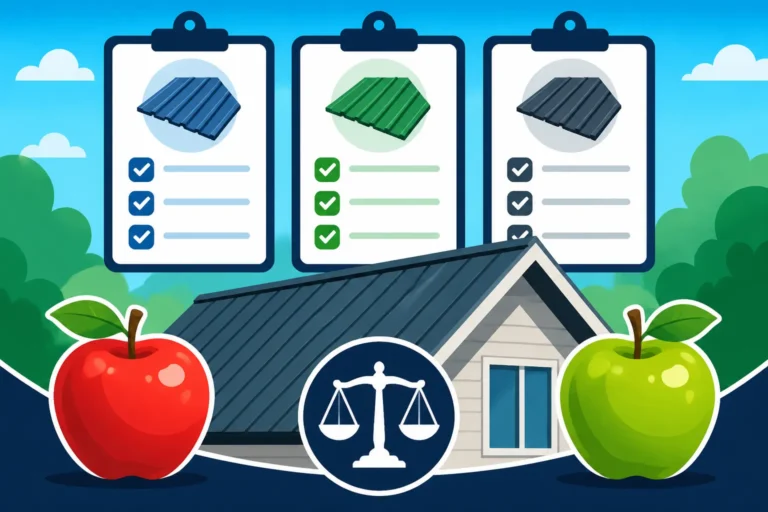
Comparing Multiple Quotes: Apples to Apples
I always recommend getting at least three estimates. If you get only one, you have no baseline. If you get two and they are vastly different, you need a third to act as the "tie-breaker." However, comparing them isn't always easy because every contractor formats their bids differently.
Hidden Costs and Scope of Work Variations
One contractor might include a new ridge vent, while another assumes your old one is fine. One might include a "magnetic sweep" of the yard to pick up dropped screws, while another doesn't mention cleanup at all. You need to look at the "Scope of Work" section of each estimate side-by-side.
If a quote is missing a specific detail, like Metal Roof Underlayment Cost, ask them to add it. A professional will have no problem being specific. If they are vague, it gives them room to add "change orders" later, which can quickly blow your budget. Modernize-affiliated contractors are generally accustomed to providing detailed, itemized bids that make this comparison process much easier.
Warranty Coverage and Workmanship Guarantees
This is a huge one. There are two types of warranties: the manufacturer's warranty on the materials and the contractor's warranty on the labor. A metal roof panel might have a 50-year warranty against fading or rusting, but that doesn't help you if the roof leaks because a screw was driven in at the wrong angle.
You want to see a clear "Workmanship Warranty" in the estimate. Usually, this is anywhere from 2 to 10 years. If a contractor doesn't stand behind their installation for at least a few years, keep looking. For more on this, check out Metal Roof Warranties: Workmanship vs Manufacturer.
Negotiating Your Estimate
Can you negotiate a roofing quote? Yes, but within reason. You probably won't get a 20% discount just by asking, but you can ask about "off-season" discounts if you are willing to have the roof installed in late fall or early winter. You can also ask if they offer Metal Roof Financing Options that might make a higher-quality material more affordable over time.
Instead of asking for a flat discount, ask: "What can we change in the scope of work to bring this closer to my budget?" Maybe switching from a custom color to a standard "stock" color can save you $1,000. Most contractors are happy to work with you if you are respectful of their profit margins.
Red Flags to Watch for in a Metal Roofing Quote
Finally, let's talk about the warning signs. I have heard too many horror stories of homeowners who chose the "cheap" option only to spend twice as much fixing the mistakes a year later.
Extremely Low Bids and What They Hide
If you get three quotes for $15,000, $16,500, and $9,000, that $9,000 quote is not a "bargain"—it is a red flag. An extremely low bid usually means the contractor is either uninsured, using "seconds" (damaged materials), or planning to skip essential steps like replacing flashing or underlayment. In the roofing world, you truly get what you pay for.
I often point people toward Metal Roofing Scams and Red Flags to Avoid to help them spot these issues early. A low-baller might also be a "storm chaser" who will do a quick job and disappear before you notice the leaks during the next big rain.
Vague Language and Missing Specifications
Avoid quotes that use phrases like "replace roof as needed" or "standard materials." You want specific brands, specific gauges, and specific colors. If they are using a specific brand of panel, they should name it. If they are using a specific type of sealant, it should be listed.
Vagueness is a tool used by unscrupulous contractors to swap out high-quality materials for cheaper alternatives once the contract is signed. If it isn't in writing, it doesn't exist. Using a reputable sourcing service like Modernize can help ensure you are dealing with professionals who use standard, transparent contract language.
High-Pressure Sales Tactics
If a salesperson tells you the price is only good if you sign "right now," or if they won't leave your kitchen table until you give them a deposit, show them the door. A reputable roofing company knows that a metal roof is a massive investment and that you need time to think it over.
Trust your gut. If you feel pressured, it is usually because they don't want you to have the time to compare their quote with a competitor. Take your time, do your research, and only sign when you feel 100% confident in the contractor and the price.
Disclaimer
The information provided in this guide is for educational purposes only and does not constitute professional construction, legal, or financial advice. Roofing costs and regulations vary significantly by location and specific project requirements. Always consult with a licensed and insured roofing professional and check your local building codes before starting any home improvement project.