Tear-Off vs Metal Over Shingles: Cost Difference
Deciding to upgrade to a metal roof is a fantastic investment, promising longevity and superior protection. But then you hit the first big question: "Do I rip off my old shingles, or can I just lay the shiny new metal right over them?" It’s a common dilemma, and one that often causes a lot of head-scratching about budgets and long-term consequences. You're not alone in feeling a bit overwhelmed by the options and the potential cost implications. This guide is here to break down the real cost differences and help you understand which path makes the most sense for your home and your wallet.
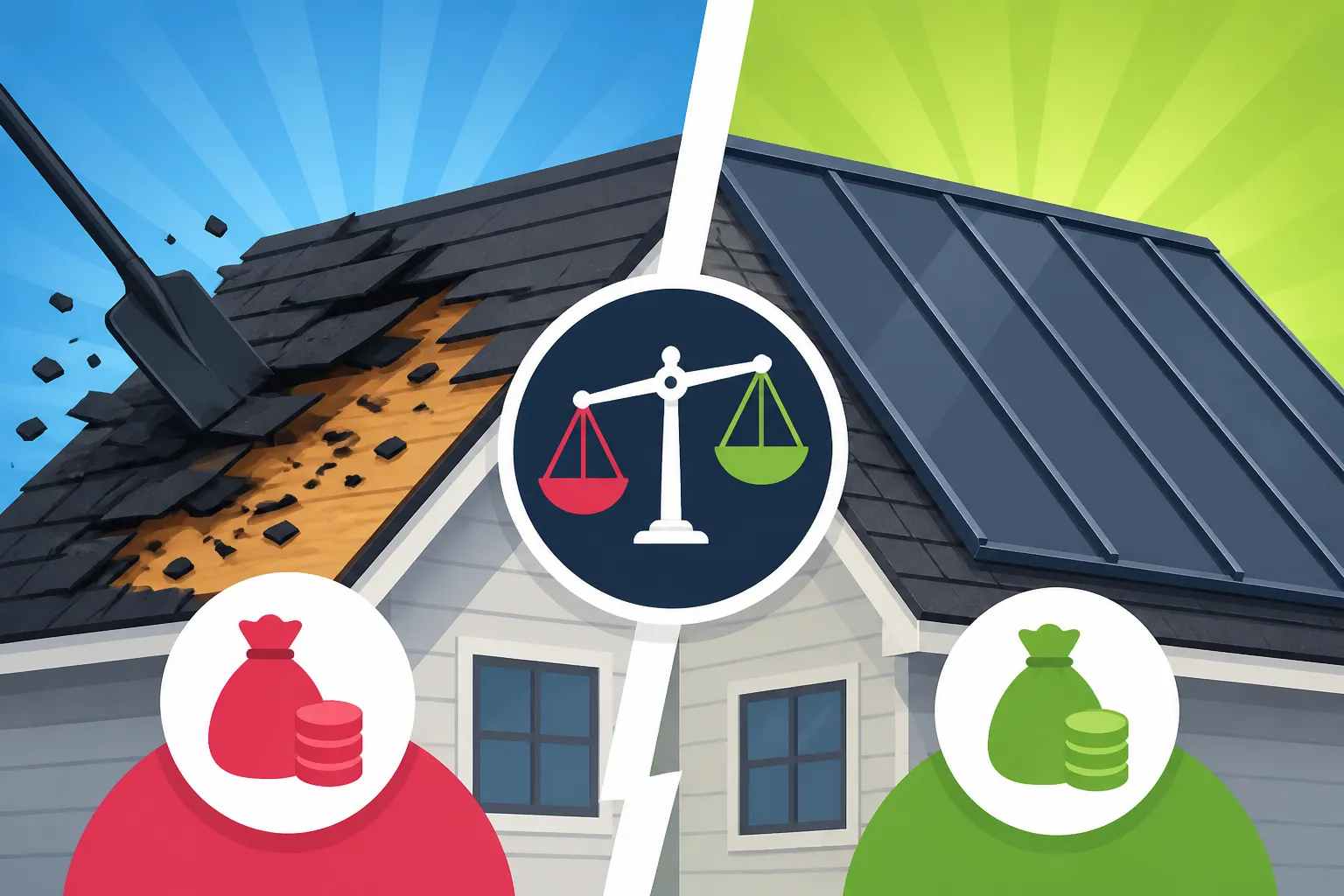
Understanding the Core Options: Tear-Off vs. Overlay
When you're talking about putting a brand-new metal roof on your home, you essentially have two main approaches for dealing with your existing roof: a full tear-off or an overlay. Both have their proponents, their benefits, and their drawbacks, especially when it comes to the final price tag. It’s crucial to understand what each method entails before you make a decision that will affect your home for decades to come.
What is a Full Tear-Off?
A full tear-off, as the name suggests, involves completely removing all existing roofing materials down to the roof decking. This means your old asphalt shingles, underlayment, and any other layers are stripped away, leaving a clean slate for your new metal roof. It’s the traditional, often recommended, method for roof replacement for good reason, though it does come with a higher initial price.
When your roofers embark on a full tear-off, they're not just pulling off the top layer; they're meticulously clearing the entire surface. This process usually involves staging a dumpster on your property to collect the debris, which adds to the project's logistics and cost. The crew will then inspect the underlying roof decking (usually plywood or OSB) for any damage – rot, water stains, soft spots, or compromised areas. This inspection is a huge advantage, as it allows for necessary repairs to be made before the new roof goes on, ensuring a solid foundation. After any decking repairs, a new underlayment is installed, providing an extra layer of protection, followed by the metal roofing panels or shingles. While it’s certainly more labor-intensive and messy, a clean slate often leads to a more reliable, longer-lasting metal roof installation.
What Does "Metal Over Shingles" Mean?
Installing metal over shingles, sometimes called a "re-cover" or "overlay," means your new metal roofing system is installed directly on top of your existing asphalt shingle roof. This method is often touted as a way to save money on labor and disposal costs, as it eliminates the need for stripping off the old materials. It sounds appealing, doesn't it? Less mess, less time, and potentially lower upfront expenses.
In this scenario, contractors will typically install battens or furring strips over the existing shingle roof, creating a level surface and an air gap, before securing the metal panels to these strips. Some lighter gauge corrugated metal panels can even be installed directly over existing shingles, though this is less common for higher-end standing seam systems. The key "saving" here is the omission of the tear-off labor and dumpster fees. However, it's not a universally applicable solution. The condition of your existing roof, local building codes, and the structural capacity of your home all play a significant role in determining if this is even a viable option. While tempting for its apparent cost savings, it's crucial to weigh these against potential long-term issues.
The Cost Breakdown: Material, Labor, and Hidden Expenses
Now, let's get down to the brass tacks: the money. When you're comparing a tear-off to an overlay, the fundamental difference in cost doesn't usually lie in the metal roofing material itself. You're going to pay for those beautiful metal panels or shingles regardless of what’s underneath. The real divergence in pricing comes from the labor involved in preparing your roof and handling the old materials. And, of course, there are always those little "oops" moments that can crop up, regardless of the method you choose. For a deeper understanding of overall expenses, you can explore a comprehensive guide on Metal Roof Cost: Complete 2026 Guide
Material Costs: Is There a Difference?
Strictly speaking, the base price of your chosen metal roofing material—whether it's standing seam, corrugated, stone-coated steel, or metal shingles—remains the same whether you tear off the old roof or not. What might change, however, are some of the accessory materials.
For instance, with a tear-off, you're almost certainly installing a brand-new, high-quality synthetic underlayment directly onto your decking. This acts as a critical secondary weather barrier. When you go over shingles, some argue the existing shingles act as a form of underlayment, potentially reducing the need for an equally robust new underlayment, or at least changing the type used. However, many reputable metal roofing manufacturers still recommend a specific underlayment system for optimal performance and warranty validity, even over shingles. Additionally, if you're using furring strips or battens for an overlay, those are added material costs that wouldn't be present in a direct-to-deck tear-off. So, while the metal panels themselves might be a fixed cost, the supporting materials can see slight variations depending on the installation method and local building requirements. You can investigate more granular details like Metal Roof Underlayment Cost to refine your estimates.
Labor Costs: Where the Real Savings (or Spends) Happen
This is where the rubber meets the road when it comes to the cost difference between a tear-off and an overlay. Labor is the most significant variable, and it's typically where homeowners hope to save money with an overlay.
- Tear-Off Labor: A full tear-off requires significant manual labor. Workers must carefully and safely remove every shingle, nail, and piece of old felt. This is physically demanding, time-consuming work. Then, all that debris needs to be transported from the roof, loaded into a dumpster, and hauled away. You're paying for the crew's time, the dumpster rental, and the disposal fees. Depending on the size and complexity of your roof, this can easily add several thousand dollars to your project. The average Metal Roof Labor Cost can range widely based on your location and the specific roofing contractor.
- Overlay Labor: With an overlay, you bypass all that tear-off and disposal labor. The crew's time starts directly with preparing the surface (if needed, installing battens) and then installing the metal roof. This often means a faster installation timeline, which translates to fewer labor hours and lower overall labor costs. However, it's not entirely free of "extra" labor. If battens are required to create a level surface and airspace, installing these precisely takes time and skill. So, while you avoid tear-off labor, you might incur some additional labor for the sub-structure preparation. On average, opting for an overlay can save you anywhere from $1.00 to $2.50 per square foot on labor and disposal, making it a compelling option for budget-conscious homeowners.
Unexpected Costs to Consider
No matter how well you plan, roofing projects can sometimes throw curveballs. It’s always wise to factor in a contingency budget, typically 10-15% of the total project cost, for unforeseen expenses.
- Permits and Inspections: Even if you're just overlaying, most municipalities require permits for roof replacement or significant modifications. The cost of these permits varies by location, but neglecting them can lead to hefty fines and potential issues with insurance or resale. You should definitely check Do You Need a Permit for a Metal Roof? in your area. Additionally, a tear-off allows for a thorough decking inspection. If significant rot, termite damage, or structural issues are discovered (which are often hidden by old shingles), repairing these problems will add to your cost. With an overlay, these issues might go unnoticed, potentially leading to bigger, more expensive problems down the road.
- Decking Repair: This is a big one. When an old roof is torn off, the decking underneath is exposed. This is your chance to assess and repair any water damage, soft spots, or areas where the wood has deteriorated. These repairs are essential for a sound new roof but are an additional expense. If you overlay, you risk putting a brand new, expensive metal roof over a compromised deck, which could lead to premature failure or voided warranties.
- Hidden Damage: Beyond the decking, sometimes flashing, ventilation components, or even parts of the fascia or soffit are found to be damaged during a tear-off. These too need to be addressed for a complete, effective roof system, adding to the cost but ensuring proper long-term performance.
Factors Influencing Your Decision and the Cost
Deciding between a tear-off and an overlay isn't just about the initial quote. There are several critical factors that can swing the pendulum one way or the other, impacting both the upfront cost and the long-term performance and value of your metal roof.
Condition of Your Existing Roof
The state of your current roof is perhaps the most significant factor in this decision. If your existing asphalt shingle roof is severely damaged, has extensive dry rot, mold, or is sagging, an overlay is almost certainly out of the question.
- Multiple Layers: Many building codes limit the number of roofing layers allowed, usually to two. If you already have two layers of shingles (which isn't uncommon, especially on older homes where a previous re-roof involved overlaying rather than a tear-off), you must perform a tear-off. Adding a third layer would violate codes, potentially overload your roof structure, and could even void your homeowner's insurance.
- Structural Damage, Mold, or Water Leaks: If your current roof has persistent leaks, visible water damage to the decking, or signs of mold growth, a tear-off is imperative. You cannot effectively address these underlying issues by simply covering them with a new metal roof. Doing so would trap moisture, accelerate rot, and lead to significant structural problems that would be far more costly to fix later. A thorough inspection after a tear-off allows for all these problems to be identified and repaired, ensuring a healthy foundation for your new metal roof.
- Evenness and Fastener Integrity: An overlay relies on the existing roof providing a relatively flat, stable surface for the new metal. If your shingle roof is uneven, buckled, or has many loose fasteners, these imperfections will transfer to the metal roof, leading to an unsightly finish and potential performance issues like oil canning. A tear-off guarantees a smooth, strong substrate for optimal metal roof installation.
Local Building Codes and Permits
Building codes are not just suggestions; they are legal requirements designed to ensure the safety and structural integrity of your home. These codes often dictate what you can and cannot do when replacing a roof, and they vary significantly by location.
- Maximum Number of Layers: As mentioned, most codes limit roofs to two layers. If your home already has one layer of shingles, you might be able to add a metal roof over it, provided the metal itself is considered a single layer. If you have two layers, a tear-off is mandatory. Always check with your local building department, as some areas, particularly those prone to high winds or seismic activity, might be even stricter.
- Weight Restrictions: Metal roofs are typically lighter than asphalt shingles, which is a major benefit. However, when you install a metal roof over existing shingles, you are adding the weight of the metal to the existing shingles and any battens or furring strips. While rarely an issue with standard residential structures, if your home has an older or questionable framing system, adding extra weight might be a concern. A structural engineer's assessment might be required in some cases, especially with heavier metal profiles or when installing over multiple existing layers.
- Florida's 25% Rule: In high-wind zones, like much of Florida, specific regulations come into play. Florida's "25% Rule" states that if more than 25% of your roof decking is damaged, the entire roof deck must be replaced or brought up to current code. This often necessitates a full tear-off and can significantly increase costs, regardless of whether you initially planned for an overlay. Ignoring these codes can lead to major headaches down the line, including failed inspections, insurance claim denials, and legal issues. Understanding Metal Roof Building Codes Explained is paramount.
Structural Integrity of Your Home
Your roof is only as strong as the structure underneath it. The existing framework of your home, particularly the rafters and roof decking, needs to be robust enough to support the new roofing system.
- Weight Load: While metal roofs are relatively light, adding them on top of existing shingles still increases the overall weight load on your home's structure. For most modern homes, this isn't an issue. However, if you live in an older home, or one with a history of structural concerns, it's wise to have a professional assess the current load-bearing capacity. An overloaded roof could lead to sagging, compromised structural elements, and safety hazards. A tear-off allows for the lightest possible new roof system, as it removes the old, heavier material.
- Decking Condition: The roof decking is what the roofing material is fastened to. If the decking is weak, rotted, or improperly fastened, neither an overlay nor a tear-off will perform optimally. A tear-off provides the opportunity to inspect and reinforce or replace compromised Metal Roof Decking Requirements before the new roof is installed, ensuring a secure and durable foundation. With an overlay, you're essentially building on an unseen foundation, hoping it's sound.
Desired Lifespan and Warranty
When you invest in a metal roof, you're usually doing so for its impressive lifespan and robust warranties. The installation method can actually impact both.
- Optimizing Lifespan: A metal roof is designed to last 50 years or more. To truly achieve that longevity, it needs the best possible foundation. A clean, properly prepared roof deck, with new underlayment, offers ideal conditions for a metal roof to perform as intended for its full projected lifespan. An overlay, while often adequate, introduces potential variables like trapped moisture, uneven surfaces, or hidden decking issues that could subtly reduce the metal roof's ultimate durability.
- Warranty Considerations: Many metal roofing manufacturers offer extensive warranties that cover materials and sometimes even labor. However, these warranties often come with specific installation requirements. Installing over existing shingles might, in some cases, affect the terms or even the validity of your manufacturer's warranty, especially if it's not explicitly approved for such an application. Always read the fine print of your chosen metal roofing product's warranty and discuss it thoroughly with your installer. Ensure their installation method aligns with the warranty requirements to protect your significant investment. Understanding Metal Roof Warranties: Workmanship vs Manufacturer is crucial here.
A Deep Dive into the Numbers: Cost Comparison Table and Examples
Let’s talk real numbers, because that’s what often drives these big home improvement decisions. While exact costs will always vary based on your location, the specific metal roofing product you choose, and the complexity of your roof, we can establish some clear trends and averages. For more specific local estimates, you might want to look at a guide like Metal Roof Cost by State and City.
Here's a general comparison table to give you a clearer picture of the cost differences:
| Cost Factor | Full Tear-Off & New Metal Roof | Metal Roof Over Shingles (Overlay) | Notes |
|---|---|---|---|
| Material Cost (Metal) | $6.00 – $18.00 per sq ft | $6.00 – $18.00 per sq ft | This cost is largely consistent, varying by metal type (steel, aluminum, copper, zinc) and profile (standing seam, corrugated, shingle). |
| Underlayment | $0.50 – $1.50 per sq ft | $0.20 – $1.00 per sq ft | New synthetic underlayment is standard for tear-off. For overlay, existing shingles may sometimes be considered partial underlayment, or lighter/different underlayment may be used, but many manufacturers still recommend full new underlayment. |
| Battens/Furring Strips | $0.00 | $0.50 – $1.50 per sq ft (if needed) | Crucial for creating a level surface and ventilation gap, especially for standing seam over shingles. This is an added material and labor cost for overlays. |
| Labor (Removal) | $1.00 – $2.50 per sq ft | $0.00 | This is the primary savings area for overlays. Includes removal of old roofing, loading, and cleanup. |
| Labor (Installation) | $3.00 – $7.00 per sq ft | $3.00 – $7.00 per sq ft | Similar for both, but overlay might have slightly more prep labor if battens are installed. Varies by metal type and complexity. |
| Dumpster/Disposal Fees | $500 – $1,500+ | $0.00 | Significant cost for tear-offs, depending on the volume of debris and local disposal rates. |
| Decking Repair (Potential) | $500 – $5,000+ (if needed) | Hidden / Delayed Cost | This is a major unknown. Tear-off allows detection and repair. Overlay covers it, deferring a potentially huge problem. |
| Permits & Inspections | $150 – $1,000+ | $150 – $1,000+ | Required for most significant roof work regardless of method. |
| Total Estimated Cost | $10.60 – $30.00+ per sq ft | $9.80 – $29.00+ per sq ft | Initial savings with overlay, primarily from avoided tear-off labor/disposal. However, potential decking issues can skew this. Averages for Metal Roof Cost Per Square Foot for a tear-off might be slightly higher. |
Note: These are average ranges and can fluctuate based on specific materials, roof complexity, location, and contractor.
Average Cost Scenarios
Let’s look at some hypothetical scenarios to put these numbers into perspective. We'll use a moderate-sized home of 2,000 square feet, assuming a fairly straightforward roof pitch and installation. For detailed breakdowns by home size, you might find Metal Roof Cost for a 2,000 Sq Ft House useful.
Scenario 1: 2,000 sq ft home, installing a Standing Seam Metal Roof (mid-range)
-
Material Cost (Standing Seam): Let's say $12.00/sq ft x 2,000 sq ft = $24,000
-
Total for Full Tear-Off:
- Tear-off Labor & Disposal: $2.00/sq ft x 2,000 sq ft = $4,000
- New Underlayment: $1.00/sq ft x 2,000 sq ft = $2,000
- Installation Labor: $5.00/sq ft x 2,000 sq ft = $10,000
- Permit: $500
- Subtotal: $24,000 + $4,000 + $2,000 + $10,000 + $500 = $40,500
- Add 10% for contingencies (decking repair, etc.): ~$44,550
-
Total for Metal Over Shingles (Overlay):
- Battens/Furring Strips (Material & Labor): $1.50/sq ft x 2,000 sq ft = $3,000 (if needed for standing seam)
- Underlayment (potentially lighter/different type): $0.50/sq ft x 2,000 sq ft = $1,000
- Installation Labor (slightly adjusted for battens): $5.50/sq ft x 2,000 sq ft = $11,000
- Permit: $500
- Subtotal: $24,000 + $3,000 + $1,000 + $11,000 + $500 = $38,500
- Add 5% for contingencies (lower for known decking): ~$40,425
In this scenario, the initial saving for an overlay could be around $4,000, assuming no major hidden issues. However, if a tear-off revealed $3,000 in decking repairs, the gap narrows significantly.
Scenario 2: 1,500 sq ft home, installing Corrugated Metal Panels (entry-level)
-
Material Cost (Corrugated): Let's say $7.00/sq ft x 1,500 sq ft = $10,500
-
Total for Full Tear-Off:
- Tear-off Labor & Disposal: $1.50/sq ft x 1,500 sq ft = $2,250
- New Underlayment: $0.75/sq ft x 1,500 sq ft = $1,125
- Installation Labor: $4.00/sq ft x 1,500 sq ft = $6,000
- Permit: $300
- Subtotal: $10,500 + $2,250 + $1,125 + $6,000 + $300 = $20,175
- Add 10% for contingencies: ~$22,190
-
Total for Metal Over Shingles (Overlay):
- Installation Labor (potentially direct over shingles, no battens): $4.50/sq ft x 1,500 sq ft = $6,750
- Underlayment (minimal): $0.20/sq ft x 1,500 sq ft = $300
- Permit: $300
- Subtotal: $10,500 + $6,750 + $300 = $17,850
- Add 5% for contingencies: ~$18,740
Here, the initial savings for an overlay could be closer to $3,400. For entry-level metal roofs, the percentage of savings from an overlay can sometimes feel more impactful on the overall project cost.
Long-Term Value and ROI
While the initial cost savings of an overlay can be attractive, it's essential to consider the long-term value and return on investment (ROI). A metal roof is a significant investment because it offers exceptional durability, energy efficiency, and a lifespan that far outstrips traditional asphalt shingles. To truly capitalize on this, you want the best possible installation.
- Maximized Lifespan: A tear-off, by providing a pristine foundation, often means your metal roof will perform optimally for its entire projected lifespan (50-70+ years). An overlay, while often successful, carries a slightly higher risk of issues if the underlying shingles deteriorate, shift, or if moisture gets trapped. Any compromise to the foundation could shorten the effective lifespan of your metal roof, reducing your long-term ROI.
- Warranty Integrity: As discussed, a tear-off typically ensures full compliance with manufacturer warranties, which protects your investment over many decades. Any ambiguity with an overlay might complicate future warranty claims.
- Resale Value: While a metal roof undoubtedly adds value to your home, a meticulously installed metal roof on a clean deck, free of underlying issues, will likely be viewed more favorably by discerning buyers and home inspectors. The peace of mind that comes with a "perfect" installation can also translate into higher perceived value. For a deeper discussion on this, check out Is a Metal Roof Worth It? ROI, Resale & Payback. Ultimately, while an overlay can offer immediate cost savings, a full tear-off often provides superior long-term performance, maximized lifespan, and potentially a better overall ROI when considering the entire life of the roof.
Making the Right Choice for Your Home
The decision between a full tear-off and installing metal over shingles isn't always straightforward, and it certainly isn't one-size-fits-all. It truly depends on a confluence of factors unique to your home, your budget, and your long-term goals.
When a Tear-Off is Non-Negotiable
Sometimes, the choice is made for you, and a full tear-off becomes the only responsible, code-compliant, and long-lasting option.
- Building Code Violations: If your existing roof already has two layers of shingles, a tear-off is mandatory to comply with most local building codes. Adding a third layer is simply not permitted and could lead to fines, insurance issues, and structural problems. Always confirm local codes with your contractor and municipality. This is a common situation, so understanding Metal Roof Cost vs Cost to Repair Old Roof might factor into your decision.
- Significant Underlying Damage: If your current shingle roof is showing signs of severe damage, such as extensive rot, sagging decking, pervasive mold, or chronic leaks, you absolutely must perform a tear-off. These issues cannot be fixed by simply covering them up. Trapping moisture and rot beneath a new metal roof will lead to rapid deterioration of your roof deck and potentially the structural integrity of your home, costing you significantly more in the long run. A tear-off provides the critical opportunity to inspect and repair the decking, ensuring a solid foundation for your new metal roof.
- Structural Concerns: While metal roofs are lightweight, adding any additional weight to an already compromised or exceptionally old roof structure might pose a risk. If a structural engineer advises against adding more weight, a tear-off is the only option to lighten the overall load.
- Optimizing Performance and Warranty: For homeowners who prioritize maximum performance, the longest possible lifespan, and complete peace of mind with their manufacturer's warranty, a full tear-off is almost always the preferred method. It guarantees a clean, stable surface for the metal roof, reducing variables and potential future issues. If you want your How Long Do Metal Roofs Last? for the absolute longest, a tear-off is your best bet.
When Overlaying Makes Sense
Despite the potential drawbacks, there are situations where installing metal over shingles can be a perfectly viable and cost-effective solution.
- Good Condition Existing Roof: If your existing asphalt shingle roof is relatively new, in excellent condition, has only a single layer, and shows no signs of significant damage, rot, or leaks, an overlay can be a reasonable option. The existing shingles can provide a smooth, stable surface for the metal, and the added insulation value might even offer a slight energy benefit.
- Budget Constraints: Let’s be realistic—sometimes, the budget is the absolute driving factor. If the cost of a full tear-off puts a metal roof completely out of your reach, and your existing roof meets the criteria for an overlay, this method can make a high-quality metal roof more accessible. The savings from avoiding tear-off labor and disposal can be substantial upfront.
- Lighter Metal Roof Profiles: Certain lighter metal roof profiles, particularly some corrugated or R-panel systems, are more readily installed directly over existing shingles, sometimes even without extensive battens. These types of systems are often designed with easier overlay in mind, though proper fastening and underlayment are still critical. You can explore options like Standing Seam vs Corrugated Metal Roof to understand the profiles better.
- Specific Aesthetic or Insulation Goals: In some cases, the air gap created by battens when overlaying can actually enhance ventilation and insulation, which is desirable in certain climates. This isn't a primary driver for most, but it can be a secondary benefit. Just remember, even with an overlay, a quality metal roof will still last a very long time, as detailed in our guide Metal Roof Cost vs Lifespan Value.
Ultimately, the best approach is to get multiple detailed quotes from reputable metal roofing contractors. Ask them for quotes for both a tear-off and an overlay, and make sure they clearly explain the pros, cons, and any potential risks associated with each method for your specific home. A good contractor will be transparent about the entire process, including any hidden costs or code compliance issues.
Disclaimer
Please remember that the information provided in this article is for general informational purposes only and does not constitute professional advice. Roofing costs and requirements vary significantly based on location, specific materials, roof complexity, local building codes, and the individual contractor. Always consult with licensed and experienced roofing professionals in your area for accurate estimates, structural assessments, and code compliance information tailored to your specific project. It is crucial to obtain detailed quotes and understand all terms and conditions before proceeding with any roofing work.