Metal Roof Cost by State and City
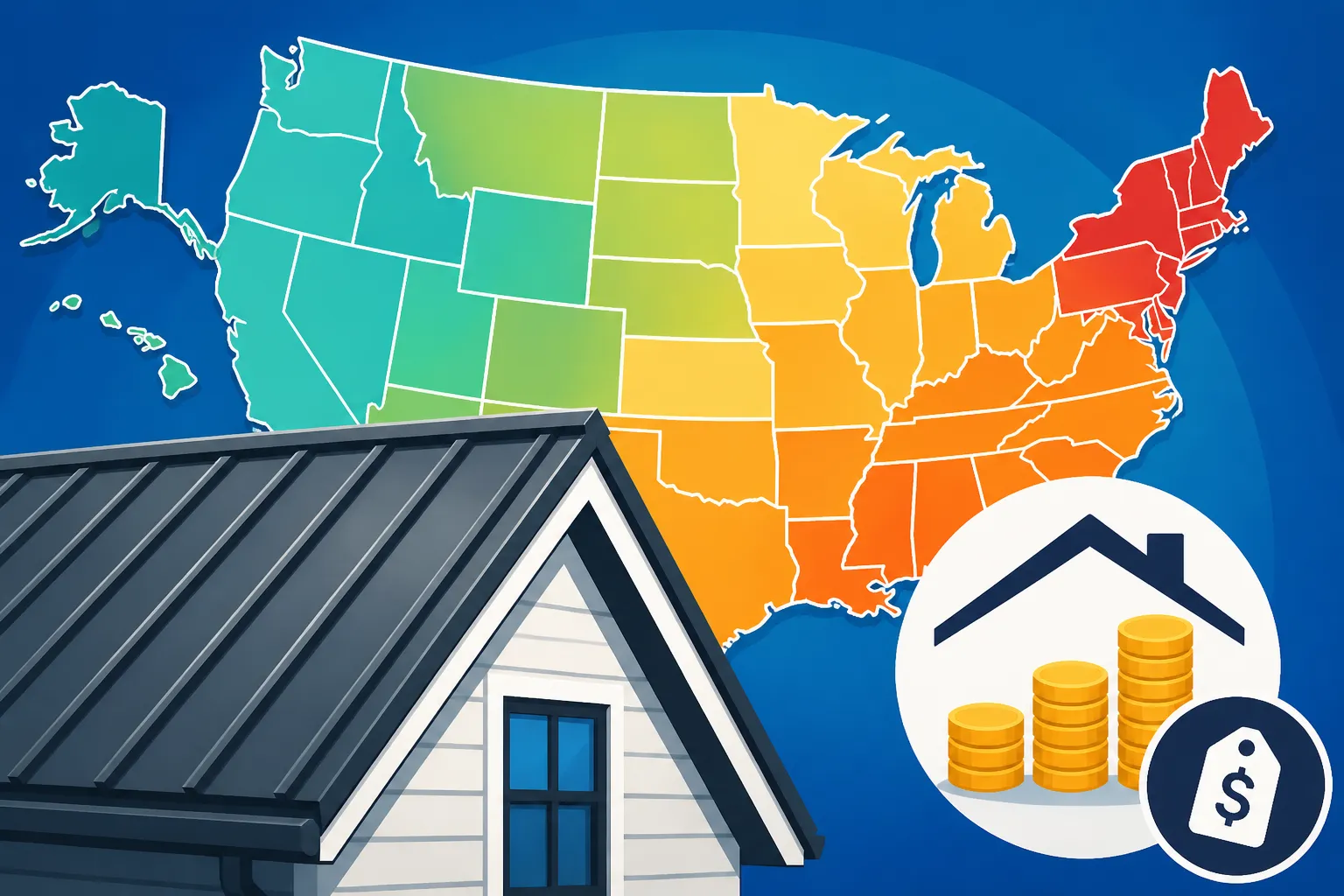
Trying to figure out why a neighbor two towns over paid a completely different price for their new roof can leave any homeowner feeling frustrated and confused. The reality is that metal roof costs swing dramatically depending on where your home is located on the map. Regional labor rates, local building codes, freight distance from manufacturing hubs, and specialized climate requirements mean that a project in one city can carry a drastically different price tag than an identical project in another state. This guide breaks down the precise geographic cost drivers, state-level climate considerations, and municipal factors that dictate what you will actually pay for a metal roof.
Geographic Factors Shaping Metal Roof Costs Nationwide
Local Labor Rates and Skilled Trade Availability
When you start getting quotes for a residential project, the single largest variable on your estimate is often the local cost of skilled labor. Installing a metal system—especially concealed fastener profiles—is a specialized trade that requires significantly more craftsmanship than slapping down asphalt shingles. In metropolitan areas with high costs of living, experienced metal installers command top-tier wages, which directly elevates your total installation costs. If you live in an area with a shortage of specialized trade workers, local contractors must pay higher wages to attract talent, driving up the total Metal Roof Labor Cost for homeowners in those markets.
Conversely, in regions where general construction labor is plentiful or where residential metal roofing is the regional standard, labor rates tend to remain more competitive. However, cheap labor can be a double-edged sword when it comes to custom sheet metal work. Improperly folded flashing, poorly seated fasteners, or misplaced trim can easily lead to severe water intrusion. Paying a premium for a crew that specializes exclusively in sheet metal fabrication and installation is often an investment that saves thousands of dollars in future repairs.
The density of competing roofing companies in your immediate city also plays a massive role in labor pricing. In booming suburban areas with dozens of qualified sheet metal contractors, aggressive competition helps keep labor quotes balanced. In remote or rural towns, you might only have one or two specialized crews operating within a hundred-mile radius. Those crews often charge additional travel fees, daily meal per diems, or higher baseline labor prices simply because they face zero local competition.
Freight, Logistics, and Proximity to Manufacturing
Metal roof panels do not magically appear in a contractor’s shop; they are fabricated from heavy coils of coated steel, aluminum, or copper that must be transported from regional mills and roll-forming facilities. The geographic distance between your home and these production plants directly impacts the freight fees built into your material quote. If your job site is located hundreds of miles away from the nearest roll-former, transportation charges for delivering long, rigid panels on flatbed trailers can add a substantial line item to your overall project budget.
Logistical challenges expand significantly when dealing with custom-length standing seam panels. Unlike boxed asphalt shingles that fit easily onto standard delivery trucks, long standing seam panels require specialized transport to prevent warping, scratching, or crimping during transit. In major industrial hubs, contractors can easily pick up panels directly from local suppliers or have them delivered for a minimal fee. In mountain towns or island communities, shipping costs escalate dramatically due to difficult terrain, ferry transport, or restricted highway access.
To minimize these transport expenses, many modern contractors utilize portable job-site roll-forming machines. A crew loads raw metal coils onto a trailer, hauls the compact equipment directly to your driveway, and runs individual panels to the exact measurement of your roof planes right on site. While this approach eliminates long-distance freight fees for pre-cut panels, the contractor’s investment in mobile roll-forming machinery is naturally reflected in their baseline overhead and service pricing.
Climate Demands and Regional Building Codes
Your zip code dictates the exact environmental stresses your home must endure, ranging from hurricane-force coastal winds to heavy snow accumulation and blistering thermal exposure. Municipalities establish strict building codes to ensure structures survive these local threats, and meeting these codes directly impacts the required material specs for your roof. A project built in a high-wind coastal zone requires tighter fastener spacing, heavier metal gauges, and specialized underlayments, all of which push material and labor costs upward compared to a home built in a mild inland climate.
In regions prone to severe weather, structural engineering requirements become a non-negotiable part of the permitting process. Local building departments may mandate specific uplift tests, thicker structural decking, or specialized clips that allow panels to expand and contract under intense thermal cycling without buckling. Meeting these engineering standards demands higher-grade accessories and more time-intensive installation procedures, naturally increasing the overall financial commitment.
Furthermore, regional climate conditions dictate the type of protective paint system required for long-term performance. A standard siliconized modified polyester paint finish might work perfectly fine for an inland agricultural building, but a home located near a salt-water coast or subjected to intense ultraviolet exposure requires a high-performance resin finish like PVDF. Choosing high-grade coatings and corrosion-resistant substrates ensures your installation withstands local climate hazards, but it adds an undeniable tier to your upfront material expenditures.
Regional Cost Breakdowns Across the United States
The Sunbelt and Coastal South
Homeowners across the Sunbelt and Coastal South face a unique combination of intense solar radiation, high humidity, and extreme tropical storm threats. In states along the Gulf Coast and Atlantic Seaboard, roofing systems must be engineered to resist high wind speeds and driving rain. The necessity for high-wind uplift resistance often means installing concealed-fastener systems with heavy-duty clips spaced at tight intervals. These stringent safety requirements make understanding a regional Metal Roof Cost in Florida or similar coastal market essential for setting a realistic budget.
Salt air in coastal environments introduces another significant cost layer: material selection. Standard galvanized or Galvalume steel will eventually succumb to edge creep and rust when exposed to salt spray. As a result, coastal building codes and contractor recommendations heavily favor aluminum or copper substrates, which naturally resist saltwater corrosion. Aluminum materials carry a higher raw cost than standard steel, which lifts the overall investment for coastal southern homes above national baseline averages.
On the positive side, southern homeowners often reap major energy efficiency rewards from reflective metal roofs. Cool roofing finishes with high Solar Reflectance Index values bounce heat away from the home, drastically reducing attic temperatures during long, sweltering summers. While the upfront investment for a high-wind, salt-resistant metal roof in the Coastal South is higher, the long-term energy savings and wind resistance offer exceptional value for property owners facing rising utility and insurance rates.
| Region | Primary Climate Drivers | Recommended Materials | Key Regional Cost Factors |
|---|---|---|---|
| Coastal South & Sunbelt | High Winds, Salt Air, UV | Aluminum, PVDF-Coated Steel | Wind-uplift engineering, salt air |
| Snowbelt & Mountain West | Heavy Snow Loads, Ice Dams | Heavy-Gauge Steel, Snow Guards | Structural reinforcement, labor |
| Pacific Northwest | Constant Rain, Coastal Moisture | Aluminum, Coated Galvalume | Specialized synthetic underlayment |
| Midwest & Great Lakes | Hail, Extreme Freeze-Thaw | Class 4 Steel, Metal Shingles | Tear-off, hail-impact ratings |
The Snowbelt and Mountain West
In the northern snowbelt and elevated mountain regions, metal roofs are prized for their ability to shed heavy snow accumulation and prevent destructive ice dams. However, managing thousands of pounds of sliding snow requires specialized installation techniques and heavy-duty structural components. Contractors in these regions must install robust snow guards and ice retention systems along eaves, walkways, and entryways to prevent dangerous snow slides, adding notable material and labor fees to the total project quote.
The thermal dynamics of mountain climates also require high-performance underlayment systems. High-temperature self-adhering ice and water shields must be applied across the entire deck or along vulnerable eaves to protect against moisture backup caused by freeze-thaw cycles. Additionally, structural roof framing in snow-heavy zones may require evaluation to ensure it can support heavy snow loads alongside the roofing material, occasionally leading to structural framing enhancements before panel installation can even begin.
Labor costs in mountain resort communities and remote high-altitude towns are notoriously high. Crews often face hazardous working conditions, steep pitch requirements, and short summer installation windows, all of which drive daily labor charges up. Transportation fees for hauling heavy materials up winding mountain roads during tight scheduling windows further escalate the final contract price for homes in these picturesque yet challenging environments.
The Pacific Northwest and West Coast
The Pacific Northwest presents a unique roofing landscape dominated by prolonged dampness, moss growth, and marine air, while southwestern coastal areas contend with stringent wildfire regulations. In wet coastal climates, standard roofing materials deteriorate quickly under constant rain and moss buildup. Metal panels offer an ideal, moss-resistant alternative, but proper underlayment and seamless flashing detailing are critical to prevent subtle, long-term water intrusion around roof penetrations.
Wildfire threats across the West Coast have driven many states to enforce strict fire safety standards for residential structures. Metal systems naturally carry a Class A fire rating when installed with approved underlayments, making them a preferred choice for homes located in Wildland-Urban Interface zones. Navigating local fire codes and obtaining mandatory building permits in states with rigorous regulations often pushes overall project costs higher due to compliance inspections and specialized material requirements, as seen in a typical Metal Roof Cost in California.
Urban labor markets in major western cities also significantly elevate total installation expenses. High municipal permit fees, strict contractor licensing requirements, and elevated overhead for local roofing businesses translate to higher per-square-foot labor costs. Homeowners must weigh these higher upfront installation costs against the unparalleled longevity, fire safety, and low maintenance demands that metal provides in these diverse western microclimates.
The Midwest and Great Lakes Region
The Midwest experiences dramatic seasonal temperature swings, ranging from sub-zero winter freezes to humid summer heatwaves, accompanied by severe springtime hail storms. Roofing systems in this region must withstand intense thermal expansion and contraction cycles as panels heat up under the summer sun and rapidly cool at night. Fastener systems, clips, and trim details must be designed to accommodate this constant movement without loosening screws or tearing sealants apart over time.
Hail resistance is a massive cost consideration for Midwestern homeowners. Severe hailstorms can easily dent thin-gauge metal or shatter traditional shingles. Installing heavy-gauge steel panels—such as 24-gauge or Class 4 impact-resistant stone-coated steel shingles—is common practice to protect against cosmetic and structural hail damage. Investing in thicker metal gauges increases material expenses upfront, but it frequently qualifies homeowners for substantial premium discounts on their property insurance policies.
Tear-off costs in the Midwest can also vary based on the age of the structure. Many older homes in the Great Lakes region have multiple historical layers of asphalt shingles or wooden shakes hidden beneath their current roof. If local building codes prohibit installing new panels over existing layers, the complete removal, disposal, and deck repair phase can become a significant portion of the total contract price, driving up total project expenditures.
Deep Dive into Key State Trends and Weather Requirements
High-Wind and Hurricane Zones
In states frequently targeted by tropical storms and hurricanes, building codes dictate every single detail of a roof’s structural attachment. High-velocity hurricane zones enforce strict testing standards, requiring panels to demonstrate exceptional resistance to wind uplift and severe water penetration. Meeting these stringent standards requires specialized panel clips, heavy-gauge metals, and tightly spaced stainless steel fasteners, all of which raise material costs compared to inland construction standards.
Florida stands as the benchmark for high-wind roofing regulations, where products must hold explicit state product approvals or Miami-Dade Notice of Acceptance documentation. Homeowners planning a project must account for detailed engineering reviews, mandatory multi-stage municipal inspections, and rigorous wind-mitigation reporting. To fully understand these coastal regulatory impacts on pricing, exploring a comprehensive Metal Roof Cost by State and City guide provides deep context on how local codes alter baseline estimates.
Beyond the raw material costs, labor in high-wind regions demands meticulous precision. Every seam must be properly hand-folded or mechanically seamed, and every perimeter flashing must be reinforced to prevent wind from catching panel edges during extreme weather events. While the upfront investment for a hurricane-rated system is significant, the peace of mind and structural integrity it delivers during major storms is unmatched by traditional roofing alternatives.
Severe Snow and Freezing Climates
In northern states subject to severe winter conditions, roofing design revolves around snow load management and thermal efficiency. Snow accumulation exerts immense downward pressure and lateral drag on roof planes as snow sheets shift and melt. Contractors must specify heavy-gauge standing seam panels that allow snow to slide freely off the structure without catching on exposed screw heads, making a sleek profile like a Standing Seam Metal Roof Cost higher initially, but far superior in winter performance.
Ice damming is another costly winter threat that dictates regional installation practices. When heat escapes from an under-insulated attic, it melts snow on the upper roof, which then freezes at the cold eaves, creating a block that backs water up under panels. To combat this, local codes often require specialized high-temperature ice and water protection membrane applied across vulnerable roof areas. Incorporating these premium self-sealing underlayments increases total material costs but remains vital for long-term structural protection.
| Climate Challenge | Structural Solution | Financial Impact |
|---|---|---|
| Hurricane Winds & Tropical Storms | Heavy-gauge aluminum, tight clip | High material & engineering fees, |
| spacing, high-wind underlayment | lower long-term insurance rates | |
| Heavy Snow & Ice Damming | Smooth standing seam panels, ice | Increased underlayment & snow |
| retention rails, full-deck shield | guard accessory costs | |
| Hail Impact & Severe Storms | 24-gauge steel, Class 4 impact- | Higher panel material cost, potential |
| resistant metal shingles | insurance premium discounts |
Fastener selection also carries unique regional importance in freezing climates. Exposed fasteners utilize rubber washers that can degrade over time when subjected to constant freeze-thaw cycles and severe ultraviolet exposure. Many homeowners in northern states choose concealed fastener systems specifically to eliminate thousands of potential screw-hole leak points, ensuring their roof remains watertight through decades of brutal winter freezes.
Intense Sun and Heat Mitigation Zones
In arid, sunny states throughout the Southwest and Central Plains, thermal performance and UV resistance drive metal roof specifications. Prolonged exposure to intense sunlight causes lower-grade paint systems to fade, chalk, and lose their aesthetic appeal within a few short years. To prevent premature weathering, homeowners in high-sun states must invest in advanced Kynar 500 or Hylar 5000 PVDF resin coatings, which retain their color integrity and gloss for decades under harsh solar exposure.
The financial trade-off for these premium solar-reflective finishes comes in the form of substantial summer energy savings. Refined cool-roof coatings reflect the majority of the sun’s infrared rays back into the atmosphere rather than absorbing heat into the attic space. This thermal reflection keeps attic temperatures significantly cooler, easing the burden on air conditioning systems and reducing monthly electric utility bills during peak summer months.
Texas presents a classic example of a high-heat, high-storm market where solar performance must be balanced with hail protection. Intense heat waves are routinely interrupted by violent spring storms that dump large hail across major metro areas. The regional dynamics driving a Metal Roof Cost in Texas reflect a dual necessity: purchasing reflective coatings to fight radiant heat while opting for heavy-gauge, impact-resistant steel to absorb massive hail strikes without fracturing.
Major Metro vs. Rural Cost Dynamics
Urban Permitting, Access, and Staging Logistics
Replacing a roof on a home located in a densely populated metropolitan area involves a complex web of logistical hurdles that rarely exist in small-town projects. In busy urban centers, narrow streets, limited driveway parking, and tight property lines make delivering and staging heavy metal materials extraordinarily difficult. Contractors often have to pay for specialized boom truck deliveries, street occupancy permits, or temporary traffic control measures just to get raw panels onto the job site.
Permit fees in major cities are also substantially higher than in rural townships. Urban building departments frequently enforce complex administrative reviews, historical district oversight, and multi-stage site inspections before, during, and after construction. The administrative time spent navigating city hall, securing structural sign-offs, and paying high municipal permit fees adds hundreds—and sometimes thousands—of dollars to the contractor’s operational overhead, which is passed directly to the homeowner.
Furthermore, job-site safety regulations are strictly enforced in dense urban environments. Scaffolding setup, sidewalk pedestrian protection, overhead electrical wire safeguards, and debris containment systems require additional setup time and specialized equipment. These urban safety protocols protect neighbors and passersby, but they undeniably increase the labor hours and site preparation expenses associated with city roofing projects.
Suburban Neighborhoods and HOA Constraints
Suburban developments offer easier physical access and driveway staging than dense city centers, but they present their own set of costly challenges in the form of Homeowners Associations (HOAs). HOAs frequently maintain strict aesthetic guidelines regarding acceptable roofing materials, panel profiles, seam heights, and paint colors. Navigating these private community regulations requires homeowners and contractors to submit detailed material samples, specification sheets, and architectural plans for formal committee review before work can begin.
If an HOA rejects low-cost exposed-fastener corrugated panels due to their industrial appearance, the homeowner is forced to upgrade to a higher-end standing seam profile or stone-coated steel shingle system to meet community standards. Understanding the cost differences between an industrial corrugated panel and a refined architectural profile, such as evaluating a Corrugated Metal Roof Cost against standing seam alternatives, is essential for suburban homeowners working within strict neighborhood design rules.
Suburban installation rules also frequently dictate working hours, noise restrictions, dumpster placement limits, and weekend work bans. These neighborhood restrictions can extend the total timeframe of a project by limiting the number of hours a crew can work each day. Longer project durations mean higher cumulative equipment rental fees and extended labor overhead, which subtly inflates the overall cost of a suburban installation.
Rural and Agricultural Installations
Rural roofing projects present a completely different set of financial trade-offs. On one hand, rural property owners rarely face HOA restrictions, tight property access issues, or costly municipal permitting processes. Crews have ample space to park delivery vehicles, stage equipment, assemble portable roll-formers, and dispose of tear-off debris without paying steep urban staging or parking fees.
However, the primary cost driver for rural installations is travel distance and vendor availability. Specialized sheet metal contractors are usually headquartered in larger regional cities. Hauling a crew, heavy equipment, and custom-fabricated materials out to a remote farm, ranch, or mountain cabin involves significant fuel costs, travel time wages, and lodging expenses if the job takes multiple days to complete. These long-distance logistical fees can quickly offset any savings gained from lower rural permit costs.
| Environment Type | Operational Advantages | Operational Cost Drivers |
|---|---|---|
| Dense Urban Center | Close proximity to suppliers, | High permit fees, staging fees, |
| abundant trade competition | street permits, safety barriers | |
| Suburban Community | Easy site access, paved roads, | HOA approval delays, aesthetic |
| reasonable delivery logistics | material restrictions, work hours | |
| Rural / Agricultural | Zero HOA oversight, low permit | Long-distance travel per diems, |
| costs, spacious staging areas | freight charges, limited contractors |
Rural homeowners also frequently utilize exposed-fastener ribbed panels for agricultural barns, outbuildings, and residential structures. These utility profiles offer a cost-effective way to cover expansive roof surfaces quickly. However, if a rural homeowner wants a premium architectural standing seam roof installed on their custom residence, finding a qualified regional artisan willing to travel long distances can require paying a premium labor rate.
Material Selection and Local Pricing Impacts
Steel vs. Aluminum in Coastal vs. Inland Cities
The underlying metal substrate you choose plays a massive role in shaping your material estimate, and that choice is largely governed by your local environment. Steel—available as either Galvalume (zinc-aluminum coated) or Galvanized (pure zinc coated)—is the workhorse of the residential metal roofing industry across inland markets. It offers exceptional structural strength, excellent impact resistance, and a cost-effective price point for inland cities where salt air corrosion is not a threat.
In coastal communities located within a few miles of ocean water, steel is a risky choice due to airborne salt ions that accelerate edge rust. Coastal contractors overwhelmingly mandate aluminum panels for these properties. Aluminum naturally forms an oxide layer that resists corrosion, ensuring decades of performance in aggressive marine environments. However, aluminum is lightweight and softer than steel, requiring specialized handling, tighter clip spacing, and carrying a higher raw material price tag.
Choosing between steel and aluminum requires balancing your geographical risk against your upfront budget. While steel is cheaper to produce and install, using it in a coastal salt-spray zone can void manufacturer warranties and lead to premature structural failure. Investing in aluminum for coastal homes prevents costly structural repairs down the road, making it the most logical and cost-effective material choice for marine climates despite its higher initial cost.
Standing Seam vs. Exposed Fasteners Across Regions
The architectural profile you select determines not only how your home looks, but also how long the roof will last and how much labor is required to install it. Exposed fastener profiles—such as corrugated or ribbed panels—are secured by driving screws directly through the face of the metal into the roof deck below. These systems require far less labor to install and use cheaper panel designs, making them popular for budget-conscious homeowners, agricultural buildings, and rural residences.
Standing seam systems represent a higher tier of metal roofing technology, utilizing concealed clips and raised interlocking seams that hide all fasteners beneath the surface. This design allows the metal to expand and contract freely during extreme thermal cycles without placing stress on the screw holes. Because standing seam installations require specialized custom trim work, precise field fabrication, and extensive skilled labor, total installation costs are roughly double that of exposed-fastener systems.
| System Feature | Exposed Fastener Profile | Standing Seam Profile |
|---|---|---|
| Fastener Visibility | Screws exposed to elements | Concealed clips beneath seams |
| Thermal Movement | Restricted; stress on screw holes | Unrestricted pan expansion |
| Labor Intensity | Moderate; fast panel laying | High; intricate custom flashing |
| Baseline Price Point | Lower upfront investment | Higher upfront investment |
| Primary Regional Usage | Agricultural, rural, inland homes | High-wind, snowbelt, coastal homes |
Regional weather patterns heavily influence which profile is right for your home. In severe snowbelts or hurricane-prone coastal cities, the structural superiority and leak protection of standing seam panels make them the preferred standard. In mild inland climates with low annual rainfall, an exposed-fastener system can provide decades of reliable service at a fraction of the cost, provided the rubber washer fasteners are regularly inspected and maintained.
Specialty Metals and Architectural Profiles
For luxury properties, historic restorations, or unique architectural designs, specialty metals like copper and zinc offer unmatched longevity and striking visual appeal. Copper requires no protective paint finish, developing a natural green patina over time that protects the underlying metal from atmospheric degradation for over a century. Zinc offers similar self-healing properties, forming a natural protective carbonate layer that thrives in harsh mountain or coastal environments.
These specialty metals carry astronomical material costs compared to standard painted steel or aluminum. Beyond the high raw material expense, working with copper and zinc demands an elite level of sheet metal artistry. Joints must be traditional hand-soldered or precisely double-locked, and installation crews must possess years of specialized apprenticeship training. Hiring artisans capable of executing custom copper or zinc work drives total labor charges to the very top of the construction pricing scale.
Additionally, architectural metal shingles, tiles, and shake profiles offer the aesthetic look of traditional wood, slate, or clay roofing combined with the durability of steel. These stamped metal profiles require specialized starter strips, interlocking side laps, and custom valley details that elevate labor time. While stamped architectural panels cost significantly more than standard flat metal panels, they provide homeowners in historical or high-end suburban neighborhoods with a premium aesthetic that easily satisfies strict design guidelines.
Local Labor, Permitting, and Hidden Regional Expenses
Permit Fees and Municipal Code Compliance
Securing building permits is a mandatory step for any major structural renovation, but the costs associated with municipal approvals vary wildly depending on where you live. Small rural townships might charge a flat, minimal fee for a residential roofing permit, requiring only a simple one-page form and a single final drive-by inspection. In contrast, major metropolitan building departments calculate permit fees based on the total valuation of the contract, adding substantial administrative costs to high-end metal projects.
Beyond basic filing fees, strict municipal building codes can force costly structural or material upgrades. Some city codes dictate specific underlayment performance standards, fire-retardant decking materials, or strict wind-uplift engineering documentation that must be stamped by a licensed professional engineer before a permit is granted. Paying for third-party engineering calculations and structural reviews creates an additional out-of-pocket expense that must be accounted for early in the planning phase.
Failing to pull proper permits or attempting to bypass municipal inspection requirements can lead to severe financial consequences. Unpermitted work can result in immediate stop-work orders, costly daily fines from city code enforcement, and significant challenges when trying to sell or re-insure the property in the future. Working with a licensed local contractor who handles the entire permit process ensures full compliance with local regulations and protects your financial investment. Reviewing a detailed breakdown of Metal Roof Permits and Codes by State helps set clear expectations for these administrative procedures.
Tear-Off and Disposal Differences by City
Before a new metal system can be installed, a contractor must address the existing roofing materials covering your home. The labor required to strip off old asphalt shingles, wooden shakes, or heavy concrete tiles represents a major variable in your overall quote. In cities where landfill tipping fees are exceptionally high, or where strict environmental regulations mandate waste sorting and recycling, the cost of disposing of old roofing debris can add a heavy surcharge to the project budget.
Urban projects often incur higher disposal charges due to the complex logistics of staging waste dumpsters in tight residential quarters. If a contractor cannot place a large roll-off dumpster directly in your driveway, they must haul torn-off materials away using smaller dump trailers or pay for daily municipal street parking permits for disposal bins. These spatial constraints add labor hours and logistical expenses to the tear-off phase of the job.
| Disposal Driver | Low-Cost Regional Scenario | High-Cost Regional Scenario |
|---|---|---|
| Landfill Tipping Fees | Rural landfills with low fees | Metro areas with high eco-tax |
| Existing Roof Layers | Single shingle layer over plywood | Multiple heavy layers or wood |
| Logistics & Staging | Wide rural/suburban driveway | Tight city alley, street permit |
The physical complexity of the existing roof structure also drives tear-off expenses. Stripping shingles from a simple, low-slope gable roof takes a crew a fraction of the time required to tear down a steep, multi-gabled 2-story residence. Homeowners evaluating their project scope must weigh the labor costs of a full tear-off against the alternative of applying panels directly over existing shingles, carefully evaluating the overall Tear-Off vs Metal Over Shingles: Cost Difference to determine if an overlay is viable under local building codes.
Underlayment and Insulation Upgrades by Climate
The metal panels you see on the surface represent only one part of a high-performance roofing assembly. The concealed underlayment layers beneath the metal are critical for weatherproofing, thermal management, and condensation control. In mild climates, a standard synthetic underlayment provides excellent water resistance at an affordable price point. However, severe climate zones demand specialized, higher-cost underlayment upgrades to ensure long-term performance.
In regions prone to severe freeze-thaw cycles or extreme tropical heat, high-temperature self-adhering (peel-and-stick) underlayments are essential. Standard underlayments can melt, degrade, or stick to the underside of metal panels when exposed to extreme summer heat, while peel-and-stick membranes seal tightly around every single fastener shaft, creating a watertight barrier even if moisture penetrates the outer metal skin. These advanced membranes cost significantly more per roll than standard synthetic felts, lifting total material expenses.
Ventilation and rigid foam insulation upgrades represent another hidden regional cost factor. In cold northern climates, adding rigid insulation panels above the roof deck prevents thermal bridging and keeps heat trapped inside the living space. In hot southern climates, incorporating radiant barriers or specialized ventilation spacers under the panels maximizes heat reflection and air passage. Tailoring the underlayment and insulation package to your specific climate adds material costs, but it guarantees maximum energy efficiency and prevents catastrophic structural condensation issues over time.
Regional Cost Comparison and Material Suitability Guide
Evaluating Cost vs. Performance Across Top Regions
Understanding how regional pricing swings compare side-by-side helps clarify why national average estimates are often misleading. A residential metal installation in a low-cost Midwest market using standard 26-gauge steel might cost half of what an identical square-footage installation costs on a coastal property in Florida requiring engineered aluminum panels and Miami-Dade approvals. Evaluating these regional pricing dynamics allows homeowners to establish realistic financial expectations based on their actual location rather than generic national statistics.
The trade-off between material price and regional performance is directly tied to environmental survival. Installing a cheap exposed-fastener system in a coastal hurricane zone or high snowbelt area might save money initially, but premature leak failures, storm damage, or rust will destroy those initial savings within a few short years. Conversely, over-specifying heavy aluminum panels with high-wind clip systems in a mild inland market with low wind risk adds unnecessary expense to a residential budget.
To navigate these variables effectively, homeowners should match their material selection precisely to local climate threats. Investing in Class 4 impact resistance makes total sense in hail-prone states like Texas and Oklahoma, while focusing budget dollars on high-temperature underlayment and snow retention systems is essential in the Rocky Mountains. Tailoring your material spending to local climate realities ensures you get the absolute highest return on performance for every dollar spent.
How to Estimate Your City’s True Installation Price
To build an accurate budget for your specific home, you must combine regional material costs, local labor rates, and city-specific permitting expenses into a unified estimate. Start by calculating the true square footage of your roof planes, keeping in mind that roof pitch adds surface area beyond your home’s ground-level footprint. A steep roof pitch significantly increases surface area and demands higher labor safety protocols, both of which increase installation quotes.
Next, factor in local labor dynamics and municipal overhead. If you reside in a major metropolitan hub or an isolated resort town, expect your labor baseline to sit considerably higher than the national midpoint. Add in estimated expenses for tear-off, debris disposal, specialized climate underlayments, and municipal permit fees to establish a complete picture of total project expenditures.
| Project Component | Estimated Cost Weight | Local Variable Factor |
|---|---|---|
| Raw Metal Panels & Accessories | 35% – 45% of Total Contract | Substrate metal, paint finish |
| Installation Labor | 40% – 50% of Total Contract | Local metro wages, crew skill |
| Tear-off, Disposal & Prep | 10% – 15% of Total Contract | Landfill fees, roof complexity |
| Permits, Fees & Engineering | 2% – 8% of Total Contract | Municipal rules, wind-uplift code |
Finally, always maintain a contingency reserve of 10% to 15% above your initial estimate. Once the old roof is stripped away, contractors frequently uncover hidden structural damage, water-rotted plywood decking, or compromised fascia boards that must be repaired before the new metal panels can be installed. Having a financial cushion ensures these unexpected structural repairs do not halt construction or blow out your project budget mid-stream.
How to Vet Local Contractors and Estimate Your Project
Navigating Quotes in High-Cost vs. Low-Cost Markets
When soliciting bids for a metal roofing project, homeowners are often shocked by the massive price spread between different estimates. In high-cost markets, a low-ball quote should raise immediate red flags. A contractor offering a price far below regional standards may be cutting corners by using underqualified labor, skipping mandatory permits, using low-grade thin metal, or omitting critical flashing and underlayment accessories required by local codes.
Conversely, the highest bid does not automatically guarantee superior craftsmanship. Large regional sales companies frequently mark up contract prices to cover heavy marketing budgets, commission payouts, and administrative overhead, while subcontracting the actual physical labor out to third-party crews. Understanding How to Read and Compare Metal Roof Quotes allows you to dissect line items, verify material specs, and separate real installation value from inflated corporate markups.
To find the true market price for your specific city, collect detailed written quotes from at least three established local sheet metal contractors. Compare the exact metal gauges, substrate types, paint finish warranties, and underlayment specs listed across every proposal. Ensuring all contractors are bidding on identical material specs and scope of work is the only reliable way to evaluate estimates on a true apples-to-apples basis.
Questions to Ask Local Installers Before Signing
Before committing to a contract, you must thoroughly vet a contractor’s specific sheet metal experience. Sheet metal work requires vastly different skills, tools, and flashing techniques than traditional shingle installations. Asking a general roofing company to install a standing seam metal roof without extensive prior metal experience often results in severe cosmetic defects, oil canning, and chronic water leaks. Reviewing a step-by-step framework on How to Hire a Metal Roofing Contractor helps ensure you choose a qualified trade specialist.
Start by asking the contractor for proof of local trade licensing, general liability insurance, and worker’s compensation coverage. Request specific references and physical addresses of completed metal installations in your immediate city so you can inspect their real-world craftsmanship firsthand. Ask directly whether the crew executing the installation consists of in-house sheet metal employees or temporary third-party subcontractors.
Crucially, inquire about manufacturer certifications and warranty coverage. Premium paint systems and standing seam panel profiles often carry strict installation requirements that must be executed by a manufacturer-certified installer to validate the full warranty duration. Ensure your contractor provides written guarantees covering both manufacturer material defects and local contractor workmanship quality before signing any binding contract.
| Key Vetting Focus | Critical Question for Contractors |
|---|---|
| Sheet Metal Experience | How many custom standing seam roofs has your crew installed? |
| Crew Structure | Will this job be performed by in-house employees or subcontractors? |
| Code & Permit Compliance | Will you handle pulling all municipal permits and engineer sign-offs? |
| Manufacturer Warranty Validation | Are you certified by the panel manufacturer to validate warranties? |
Finding Financial Balance in Regional Metal Roofing
While the upfront investment for a custom metal system is undeniably higher than traditional asphalt shingles, evaluating the purchase solely on initial installation cost misses the long-term economic picture. A properly installed, high-quality metal roof easily lasts two to three times longer than standard shingle alternatives, effectively eliminating the massive cost of tearing off and replacing your roof every fifteen to twenty years.
Beyond long-term physical durability, metal systems offer significant secondary financial returns. Reflective cool-roof coatings lower monthly summer cooling bills, while Class 4 impact-resistant steel panels frequently qualify homeowners for substantial long-term premium discounts on property insurance. Exploring potential Metal Roof Insurance Savings & Discounts through your local insurance provider can reveal substantial annual savings that offset initial installation expenditures over time.
By carefully evaluating your city’s specific climate hazards, local labor dynamics, material substrate needs, and municipal code requirements, you can make an informed, confident investment in your home. A tailored metal roof provides unmatched structural protection, striking architectural beauty, and long-term financial peace of mind, making it one of the most rewarding upgrades you can choose for your property.
Disclaimer
This article is for general informational purposes only and does not constitute professional advice. Laws, prices and regulations vary by location and change over time. Consult a qualified professional for guidance on your specific situation.