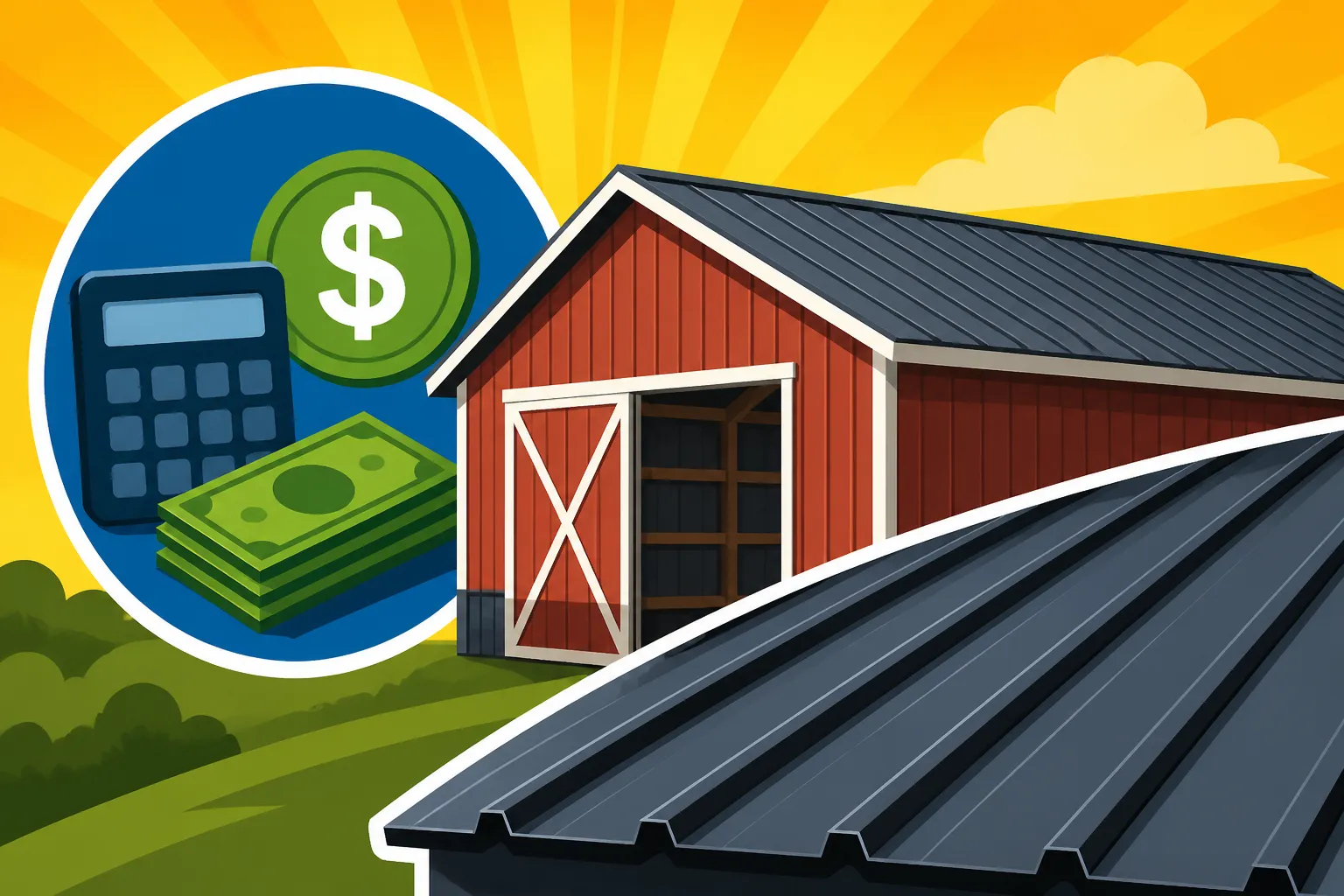
Metal Roof Cost for a Barn or Pole Building
Most barn owners feel the sting of sticker shock when they realize a roof for a 40×60 pole building isn't just a small weekend project anymore. This guide solves that frustration by detailing the real-world costs of metal roofing for barns, comparing different panel types, and explaining how labor and materials influence your final bill.
Why Metal is the Standard for Barns and Pole Buildings
If you have spent any time in rural America or managed a large-scale storage facility, you know that the roof is the most critical line of defense for your equipment, livestock, and feed. Unlike a residential home where aesthetic trends change every decade, a barn needs to withstand the brutal reality of the elements without needing a babysitter. We have talked to countless property owners who are tired of patching old asphalt shingles that blow off every time a thunderstorm rolls through. The move to metal isn't just about a modern look; it is about survival and long-term financial sanity.
The frustration of dealing with a leaking barn roof is unique. It’s not just a wet spot on a ceiling; it’s the risk of moldy hay that can sicken horses, or the slow rust devouring an expensive combine. Metal roofing addresses these concerns by providing a rigid, non-combustible surface that sheds snow and rain with ease. When we look at Metal Roof Cost vs Lifespan Value, it becomes clear why almost every modern pole building is designed with a metal skin from day one. It is the only material that matches the functional, rugged nature of the structure itself.
Furthermore, barns often have massive surface areas. A standard residential home might have 2,000 to 3,000 square feet of roof, but a serious agricultural pole building can easily double or triple that. This scale makes durability even more important. You do not want to be back on a 20-foot ladder replacing shingles in fifteen years. You want a solution that lasts fifty years or more, and that is exactly where the value proposition of metal begins to shine, even if the initial price tag feels a bit heavy.
Breaking Down the Costs: Materials vs. Labor
When you receive a quote for a barn roof, it is usually broken down into two main categories: the stuff you see (the panels and trim) and the hard work required to put it all together. For barns and pole buildings, the material choice is where you have the most control over the final price. Most people opt for exposed fastener panels, such as R-panels or U-panels, because they are incredibly cost-effective for large spans. If you are curious about specific pricing for these, you might want to look into How Much Does a Ribbed Panel Metal Roof Cost to get a sense of the baseline.
Labor is the other side of the coin. While a pole building often has a simpler "up and over" gable design, the sheer height and the size of the panels require specialized equipment. You aren't just paying for someone's time; you are paying for the boom lifts, the safety harnesses, and the expertise to ensure thousands of screws are driven at the perfect angle. Mismanaged Metal Roof Labor Cost can lead to a roof that leaks at every fastener within five years, so cutting corners on the crew is rarely a good idea.
Common Material Choices for Barns
The most frequent choice for an agricultural structure is corrugated or ribbed steel. These are known as "exposed fastener" systems. They are quick to install and the material cost is significantly lower than residential-grade standing seam. If you are on a tight budget, researching Corrugated Metal Roof Cost will show you just how much you can save compared to other options. These panels are typically made of Galvalume or galvanized steel, which provide excellent rust resistance for the price.
On the higher end, especially for "Barndominiums" or luxury horse arenas, some owners choose concealed fastener systems. These provide a much cleaner look and eliminate the risk of leaks at the screw holes because there are no exposed screws. However, the Standing Seam Metal Roof Cost is substantially higher, often doubling the material and labor price. For a standard storage barn, this is usually considered overkill, but for a building that doubles as a residence, it is a smart long-term investment.
Labor and Installation Fees
Labor for a barn is calculated differently than for a house. Because there are fewer valleys, dormers, and chimneys, the crew can often "fly" through the installation. However, the height of a pole building adds a layer of risk and requires more expensive insurance for the contractor. You should expect labor to make up roughly 30% to 50% of your total project cost. Understanding What Affects Metal Roof Cost: Gauge, Pitch, Complexity & Tear-Off is vital here, as a very steep barn roof will cost much more in labor than a low-slope equipment shed.
| Structure Type | Estimated Sq. Footage | Material Type | Estimated Total Cost (Installed) |
|---|---|---|---|
| Small Equipment Shed (20×30) | 800 sq. ft. | 29-Gauge Ribbed | $4,500 – $6,500 |
| Standard Pole Barn (30×40) | 1,500 sq. ft. | 26-Gauge Ribbed | $9,000 – $13,500 |
| Large Agricultural Barn (40×60) | 3,000 sq. ft. | 26-Gauge Ribbed | $18,000 – $26,000 |
| Barndominium/Luxury (40×60) | 3,000 sq. ft. | Standing Seam | $35,000 – $55,000 |
| Commercial Warehouse (60×100) | 7,000 sq. ft. | 24-Gauge R-Panel | $45,000 – $70,000 |
Factors That Can Drive Your Barn Roofing Quote Up or Down
It is easy to look at a "price per square foot" and think you have your budget figured out, but there are several hidden variables that can swing a quote by thousands of dollars. One of the biggest is the gauge of the metal. For barns, you will usually choose between 29-gauge and 26-gauge steel. The 29-gauge is thinner and cheaper, often used for basic agricultural sheds. However, if you live in a region with heavy snow or high winds, the thicker 26-gauge is almost always worth the extra money. We suggest checking out 24 vs 26 Gauge Metal Roof: Cost Difference to see if the upgrade makes sense for your climate.
Another factor is the existing roof. If you are building a brand-new pole building, your costs are straightforward. But if you are retrofitting an old barn, you have to decide between a "tear-off" and an "overlay." Tearing off old shingles or rusted tin adds a massive amount of labor and disposal fees. Some contractors will suggest installing the new metal directly over the old material using furring strips. This can save money, but you need to be careful about the weight and the condition of the underlying wood.
Building Height and Roof Pitch
The taller the building, the more you will pay. It sounds simple, but many people forget that roofing a barn with 20-foot eaves requires specialized staging and much more time for the crew to move materials. Similarly, the "pitch" or steepness of the roof changes the safety requirements. A "walkable" roof is much cheaper to install than a steep roof that requires the crew to be tied off at all times. This is why a simple lean-to is much cheaper per square foot than a traditional high-pitched Gambrel barn.
The complexity of the roofline also plays a role. Most pole buildings are simple rectangles, which is great for your wallet. But if you add "wings," lean-tos, or porches to your barn, you are adding valleys and transitions. Every time a roof changes direction, you need specialized Metal Roof Trim and Flashing Cost components. These trims are often surprisingly expensive because they require custom bending and more labor to seal correctly against leaks.
Underlayment and Insulation
One of the most common complaints about metal roofs on barns is "sweating" or condensation. When the warm air inside the barn hits the cold metal roof, it creates dripping water that can ruin whatever is stored inside. To prevent this, you need proper Metal Roof Underlayment Cost considerations. For barns, this often means a vapor barrier or a specialized felt underlayment. In some cases, owners opt for panels that come with a pre-applied "drip stop" fleece on the back, which absorbs moisture and releases it as the temperature stabilizes.
If your pole building is going to be heated or used as a workshop, you also need to factor in insulation. This isn't just about comfort; it's about protecting the longevity of the structure. Moist air trapped against the underside of the metal will eventually lead to rust from the inside out. Investing in a high-quality radiant barrier or spray foam at the time of installation can save you a fortune in repairs twenty years down the road.
Estimating Your Specific Project
To get a realistic estimate, you need to look past the surface area and think about the "total system." A roof is more than just panels. It includes ridge vents, gable trims, eave trims, and thousands of fasteners with rubber washers. For a typical 30×40 pole barn, you are looking at roughly 15 "squares" of roofing (a square is a 10×10 area). At 2026 prices, a quality 26-gauge exposed fastener system will likely run you between $6.00 and $9.00 per square foot installed, depending on your location and the complexity of the job.
It is also worth considering the long-term return on investment. While a shingle roof might be 30% cheaper today, it won't be 30% cheaper in twenty years when you have to replace it again. When people ask Is a Metal Roof Worth It? ROI, Resale & Payback, the answer for barns is almost always a resounding yes. A metal roof adds significant value to the property because a buyer knows they won't have to worry about the structure's integrity for decades.
Choosing the Right Contractor
Don't just hire the guy with the lowest bid. Barn roofing requires someone who understands the specific thermal expansion and contraction of long metal panels. If the screws are driven too tight, the panels will buckle. If they are too loose, they will leak. You want a contractor who has a track record with agricultural buildings and can provide references for jobs they did ten years ago. Ask about their warranty on both the materials and their workmanship. A "tailgate warranty" (where the warranty ends when their tailgate leaves your driveway) is a recipe for disaster.
In the end, roofing your barn or pole building is an investment in your lifestyle and your business. It is about the peace of mind that comes from knowing your equipment is dry when a hailstorm hits at 2 AM. By understanding the components of the cost—from the gauge of the steel to the complexity of the trim—you can make a decision that fits your budget today without creating a headache for yourself tomorrow.
Disclaimer
This guide is intended for informational purposes only. Roofing costs can vary significantly based on geographic location, local building codes, and specific site conditions. We always recommend obtaining at least three detailed quotes from licensed and insured professional roofing contractors in your area before beginning any construction project. The price estimates provided for 2026 are based on current market trends and are subject to change due to fluctuations in material costs and labor availability.