How Much Does a Ribbed Panel Metal Roof Cost
You're standing at a crossroads, staring up at your old, worn-out roof, contemplating a major home improvement that feels both necessary and daunting: a new roof. Specifically, you've heard whispers about metal roofing, and now you're wondering about ribbed panel options. It's a smart choice for many, but the big question always looms large: "How much does a ribbed panel metal roof really cost?" It’s a completely fair question, and frankly, trying to get a straight answer can feel like pulling teeth. You hear numbers all over the place, making it tough to budget or even understand if it's the right fit for your home. This guide is here to cut through the confusion, break down the actual costs involved, and give you a clear picture of what to expect when investing in a ribbed panel metal roof.
Understanding Ribbed Panel Metal Roofing
Before we dive into the nitty-gritty of pricing, let’s get on the same page about what a ribbed panel metal roof actually is. Often, when people picture a metal roof, they think of the classic barn roof look – those long, straight panels with distinct ridges running down their length. That's essentially what we're talking about with ribbed panels, but there's more to it than just that rustic charm.
What Exactly is Ribbed Panel Metal Roofing?
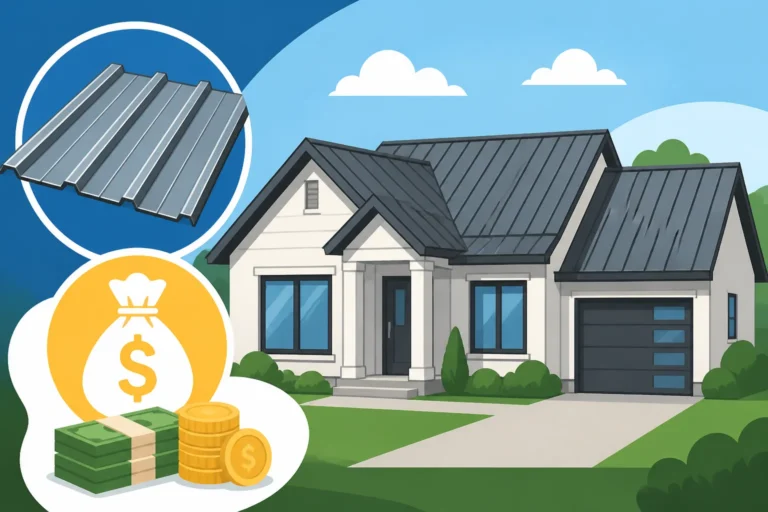
Ribbed panel metal roofing, also commonly known as exposed fastener panels, agricultural panels, or PBR/R-panels, is characterized by its series of raised ribs and flat valleys. These panels are typically installed with fasteners that go directly through the panel and into the roof deck or purlins, meaning the screw heads are visible on the finished roof surface. They come in various profiles, but the core idea remains the same: a sturdy, pre-formed metal sheet designed for efficient coverage and excellent durability.
The materials used for ribbed panels are usually steel, often coated with a protective layer like Galvalume or galvanized zinc, to prevent rust and enhance longevity. Aluminum is another option, particularly for coastal areas where salt corrosion is a major concern. These panels are manufactured in long lengths, often custom-cut to fit the specific dimensions of your roof, which helps minimize seams and potential leak points during installation. While commonly associated with agricultural buildings, garages, and commercial properties, modern ribbed panels, especially those with aesthetically pleasing color options and finishes, are increasingly making their way onto residential homes, particularly those seeking a more industrial, modern, or even rustic farmhouse aesthetic. The simplicity of their design allows for a relatively straightforward installation process compared to some more intricate roofing systems.
Key Benefits and Drawbacks
Like any roofing material, ribbed panel metal roofs come with their own set of advantages and disadvantages that homeowners need to weigh carefully.
On the benefit side, durability is a huge win. These roofs are built to last, often boasting lifespans of 40 to 70 years, significantly outlasting traditional asphalt shingles. They're also incredibly resistant to fire, rot, mildew, and pests. Their metal composition means they won't absorb moisture like other materials, reducing the risk of water damage to your underlying structure. Energy efficiency is another major plus; many ribbed panels come with cool roof coatings that reflect solar radiant heat, keeping your attic and home cooler in warm climates and potentially reducing your air conditioning bills. Think of it as a built-in sunshield for your house. Furthermore, while the initial cost might be higher than shingles, the long-term value, reduced maintenance, and potential for Metal Roof Insurance Savings & Discounts can make them surprisingly cost-effective over their lifespan.
However, there are drawbacks to consider. The most noticeable one for many homeowners is the aesthetic. While some appreciate the utilitarian or modern look, others find the visible fasteners less appealing than the sleek, seamless appearance of a standing seam metal roof or the more traditional look of metal shingles. Noise can also be a concern, especially during heavy rain or hail, though proper underlayment and insulation can significantly mitigate this. Another point to consider is the exposed fasteners themselves. While designed for durability, the rubber washers on these screws can degrade over many decades, potentially leading to leaks if not properly maintained or replaced. This doesn't mean it's a guaranteed problem, but it's a maintenance item to be aware of far down the line, unlike hidden fastener systems that typically require less long-term attention to individual fasteners.
Factors Influencing Ribbed Panel Metal Roof Cost
The cost of a ribbed panel metal roof isn't a fixed price tag you can just pluck out of thin air. It's a dynamic figure influenced by several key factors, much like buying a car—the base model is one thing, but adding all the bells and whistles changes the price dramatically. Understanding these variables will empower you to get a more accurate estimate and make informed decisions.
Material Type and Gauge
The type of metal and its thickness, or "gauge," play a monumental role in the overall cost. This is where the real material science comes into play.
- Steel (Galvalume and Galvanized): By far the most common and cost-effective material for ribbed panels is steel.
- Galvalume steel is a fantastic option. It's steel sheet coated with an alloy of aluminum and zinc, which gives it superior corrosion resistance compared to traditional galvanized steel. This coating is a game-changer for longevity, especially in humid or slightly corrosive environments. Galvalume roofs are known for their strength and durability, offering a great balance of performance and price.
- Galvanized steel is also available, coated with pure zinc. While it offers good protection, it's generally considered less corrosion-resistant than Galvalume in many applications, especially over the very long term. It's often a slightly cheaper option, but the trade-off in lifespan might not be worth it for a residential application where you want maximum durability.
- Aluminum: If you live in a coastal area like Florida or the Gulf Coast, or anywhere with significant salt exposure, aluminum is often the material of choice. Aluminum naturally resists rust and corrosion, making it incredibly durable in these harsh environments. However, it's typically more expensive than steel panels, sometimes by 20-30% or more, due to the higher raw material cost. It’s also softer than steel, which means it can be more prone to denting from significant impacts.
- Gauge: The gauge refers to the thickness of the metal. Counter-intuitively, the lower the gauge number, the thicker the metal.
- 29-gauge is the thinnest commonly used ribbed panel and is often seen on agricultural buildings or smaller structures like sheds and garages. It's the most budget-friendly option, but its lighter weight can make it more susceptible to oil canning (a wavy appearance) and potential denting. For a primary residence, many homeowners find it a bit too thin.
- 26-gauge is a popular choice for residential ribbed panel applications. It offers a good balance of strength, durability, and cost. It's thicker and more rigid than 29-gauge, providing better resistance to impacts and a more robust feel.
- 24-gauge is the thickest and most durable of the common options. It's often considered premium and is typically used for commercial buildings or high-end residential projects where maximum rigidity, impact resistance, and longevity are paramount. As you might guess, 24-gauge panels will be the most expensive. You can dive deeper into the nuances by exploring 24 vs 26 Gauge Metal Roof: Cost Difference.
Roof Size and Complexity
It probably goes without saying, but the larger your roof, the more materials and labor it will require, directly impacting the total cost. A 1,000 sq ft house will inherently cost less than a 3,000 sq ft home. However, it's not just about square footage. The complexity of your roof also plays a massive role.
- Roof Pitch: A steep roof (a high pitch) is more challenging and dangerous to work on than a low-slope roof. This means installers might need specialized equipment like scaffolding or additional safety measures, and the work itself will simply take longer and require more skill. Consequently, labor costs will be higher for steeper roofs.
- Number of Valleys, Hips, and Gables: Every angle, every valley (where two roof planes meet), and every hip (where two roof planes meet to form an outward angle) requires custom cutting, fitting, and sealing of panels and flashing. More intricate roof designs mean more material waste, more specialized components like trim and flashing, and significantly more labor. A simple, rectangular gable roof will always be less expensive to install than a multi-faceted roof with dormers, skylights, and numerous valleys.
- Chimneys, Skylights, and Vents: These elements require careful flashing to ensure a watertight seal, which adds to both material and labor costs. Each penetration through the roof needs meticulous attention, consuming more time and specialized flashing materials. You might be interested in knowing more about Metal Roof Trim and Flashing Cost to understand this component better.
Installation Labor and Location
Labor costs are often the largest component of a metal roof installation, and these can vary wildly based on your geographic location and the specific contractor you choose.
- Regional Labor Rates: Just like real estate, roofing labor rates are higher in areas with a higher cost of living. Installing a metal roof in, say, California or the Northeast will almost certainly cost more per square foot than in a state like Oklahoma or Alabama. Cities within states also have significant variations. For example, Metal Roof Cost in Los Angeles will be considerably higher than in a more rural part of California.
- Contractor Experience and Reputation: You absolutely get what you pay for in roofing. An experienced, reputable metal roofing contractor who specializes in metal will charge more than a general handyman or a crew new to metal. However, that higher price often comes with proper licensing, insurance, manufacturer certifications, and a proven track record of quality work. Cutting corners here can lead to costly leaks and headaches down the road. Always ask about their experience specifically with metal panels.
- Tear-Off Costs: If you're replacing an existing roof, the old material needs to be removed and disposed of. This "tear-off" process adds significant labor, dump fees, and time to the project. The cost will depend on the type of existing material (asphalt shingles are easier to remove than old tile or multiple layers of shingles) and the number of layers. Some ribbed panel systems can be installed over existing shingles, but this also has its own considerations and costs, which you can explore in Tear-Off vs Metal Over Shingles: Cost Difference. If a tear-off is needed, expect to add anywhere from $1 to $5 per square foot to the total project cost.
Average Cost Breakdown for Ribbed Panel Metal Roofs
Alright, let's talk numbers. While it's impossible to give you an exact quote without knowing your specific project details, we can certainly give you a solid range and break down where your money goes. Remember, these are national averages, and local pricing will always fluctuate.
On average, installing a ribbed panel metal roof can range anywhere from $4.00 to $10.00 per square foot installed. This broad range encapsulates all the variables we just discussed: material choice (29-gauge galvanized vs. 24-gauge aluminum), roof complexity, labor rates, and whether a tear-off is involved.
Material Costs vs. Installation Costs
It's helpful to break down the cost into its two main components: materials and labor.
- Material Costs: For ribbed panels, materials typically account for about 30% to 50% of the total project cost.
- 29-gauge galvanized steel panels: You might see these panels for as low as $1.50 to $2.50 per square foot for materials alone.
- 26-gauge Galvalume steel panels: These usually run in the range of $2.50 to $4.50 per square foot for materials.
- 24-gauge Galvalume steel panels: Expect to pay $3.50 to $6.00 per square foot for materials.
- Aluminum panels: If you opt for aluminum, material costs can be anywhere from $4.00 to $8.00+ per square foot, depending on gauge and coating.
These material costs also include things like fasteners, sealants, basic drip edge, and standard flashing. Specialty items or custom colors might push these numbers a bit higher.
- Installation Labor Costs: Labor often makes up the lion's share, ranging from 50% to 70% of the total cost, typically between $2.50 and $5.50 per square foot. This includes the crew's wages, their overhead (insurance, equipment, transportation), and the time it takes to properly install the panels, flashing, and trim. Factors like roof pitch and complexity will swing this number significantly. A simple, low-pitch garage roof will have much lower labor costs per square foot than a two-story home with multiple dormers and a steep pitch.
- If a tear-off is required, as mentioned earlier, add an additional $1.00 – $5.00 per square foot to cover the removal and disposal of old roofing materials.
Let's look at a hypothetical 1,500 square foot home as an example, assuming a moderately complex roof and 26-gauge Galvalume steel panels, with a tear-off.
| Cost Component | Low End (per sq ft) | High End (per sq ft) | Total for 1,500 sq ft (Low) | Total for 1,500 sq ft (High) |
|---|---|---|---|---|
| Material Costs | $2.50 | $4.50 | $3,750 | $6,750 |
| Installation Labor | $2.50 | $5.50 | $3,750 | $8,250 |
| Tear-Off & Disposal | $1.00 | $3.00 | $1,500 | $4,500 |
| Total Installed | $6.00 | $13.00 | $9,000 | $19,500 |
Note: These are estimates for illustrative purposes only and do not constitute a quote.
Comparing Ribbed Panels to Other Metal Roof Types
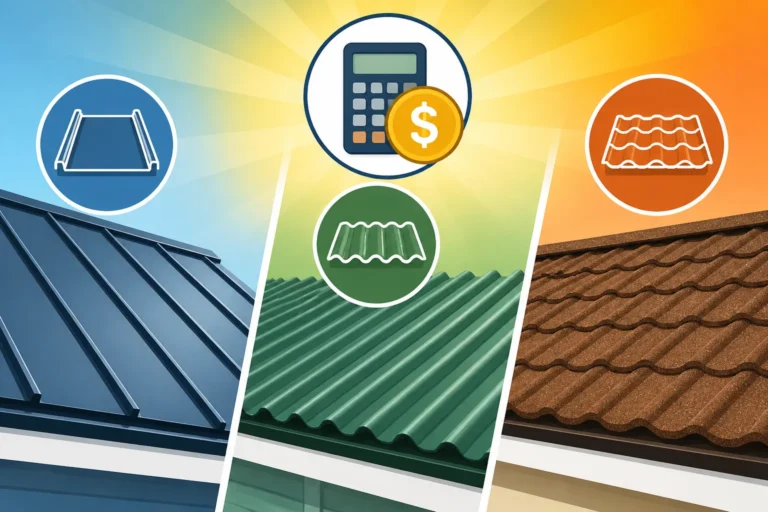
It's helpful to put the cost of ribbed panels into perspective by comparing them to other popular metal roofing options. Generally, ribbed panel roofs are one of the most budget-friendly types of metal roofing available, primarily due to their exposed fastener system which makes installation somewhat simpler and quicker than hidden fastener systems.
- Standing Seam Metal Roofs: These are often considered the premium choice in residential metal roofing due to their sleek, modern aesthetic and superior weather resistance from hidden fasteners. However, they come at a higher price point, typically ranging from $8.00 to $18.00+ per square foot installed. The panels themselves are more complex to manufacture, and the installation process is more specialized and labor-intensive. So, if you're looking for the most affordable metal roof, ribbed panels will usually beat standing seam. You can get more details on Standing Seam Metal Roof Cost.
- Metal Shingles (Stone-Coated Steel, Metal Tile, Metal Shake): These options aim to mimic the look of traditional roofing materials like asphalt shingles, slate, or wood shake, but with the durability of metal. They are generally priced higher than ribbed panels, often in the range of $7.00 to $15.00+ per square foot installed, depending on the complexity of the tile and the brand. They involve more individual pieces and a more intricate installation process than long ribbed panels. If you love the look of traditional shingles but want metal durability, these are great, but know they'll likely cost more than ribbed panels. For example, Stone-Coated Steel Roof Cost will show a higher price range.
So, for homeowners who want the benefits of a metal roof – longevity, energy efficiency, fire resistance – but need a more budget-conscious option than standing seam or metal shingles, ribbed panel metal roofing presents a very compelling choice. It delivers excellent performance without the top-tier price tag.
Getting an Accurate Estimate for Your Ribbed Panel Roof
You've learned about the factors, seen some ranges, but now you're thinking, "How do I get a number for my house?" That's the critical next step. Getting an accurate estimate means doing your homework and asking the right questions. It’s not just about the lowest bid; it’s about understanding what that bid includes and, more importantly, what it doesn't.
What to Look for in a Quote
When you get quotes from contractors, they can sometimes feel like reading a foreign language. But there are key elements you absolutely need to see itemized and clearly explained. Don't settle for a single, vague total number.
- Detailed Material Breakdown: The quote should specify the type of metal (e.g., Galvalume steel, aluminum), the gauge (e.g., 26-gauge), the finish/coating (e.g., Kynar 500/PVDF, SMP), and the color. It should also list all accessory materials: underlayment type, fasteners, trim (ridge caps, rake trim, eave trim), flashing for all penetrations (chimneys, vents, skylights), and any specialized components like snow guards if you need them. If a quote is vague on materials, it's a red flag. What exactly are they planning to put on your roof?
- Scope of Work: This section should clearly outline every step of the project. Does it include tear-off and disposal of your old roof? Is it going over existing shingles? What kind of underlayment will be used? How will penetrations be flashed? Will proper ventilation be addressed? A good quote will leave no stone unturned, detailing the installation process specific to your roof.
- Labor Costs: While often bundled into a per-square-foot price, it should be clear what the labor cost covers. Does it include staging, safety equipment, and clean-up? This isn't just about the hourly rate; it's about the entire logistical effort of installing a large, heavy, and often custom-cut product.
- Permit Fees: In nearly all areas, a permit is required for a roof replacement. The quote should clarify who is responsible for pulling the permit (it should almost always be the contractor) and if the cost of the permit is included in the total. Ignoring this step can lead to legal issues and problems with your home insurance. For example, understanding Do You Need a Permit for a Metal Roof? is crucial.
- Warranty Information: This is non-negotiable. You need to know both the manufacturer's warranty on the materials (often 20-50 years, sometimes even lifetime for specific coatings) and the contractor's workmanship warranty (typically 1 to 10 years). Ask about the details of each: what's covered, what voids it, and if it's transferable to a new homeowner. A quality contractor will stand by their work. Exploring Metal Roof Warranties: Workmanship vs Manufacturer is highly recommended.
- Payment Schedule: A clear payment schedule should be outlined, usually with a deposit upfront (often 10-30%), progress payments, and a final payment upon satisfactory completion. Be wary of contractors who demand 50% or more upfront or insist on cash payments.
The Importance of Vetting Contractors
This step cannot be stressed enough. The quality of your metal roof ultimately hinges on the quality of its installation. Even the best materials will fail if installed poorly.
- Verify Licensing and Insurance: This is foundational. A legitimate contractor will have the necessary licenses for your state and locality. They must carry general liability insurance to protect your property and workers' compensation insurance to protect their crew. Ask for current certificates of insurance directly from their insurance provider, not just a copy from the contractor. Without these, you could be held liable for accidents on your property. If you live in Texas, for example, it's vital to know What License Does a Roofer Need in Texas.
- Check References and Reviews: Don't just rely on online reviews (though those are a good starting point). Ask the contractor for a list of recent customers you can call. Ask those customers about their experience, the timeliness of the project, how issues were handled, and if they'd hire the contractor again. Also, check their standing with the Better Business Bureau.
- Specialization in Metal Roofing: Not all roofers are created equal, and not all are experts in metal. Metal roofing, especially custom ribbed panels, requires specialized tools, techniques, and experience. Ask how many metal roofs they install per year and if they have specific certifications from metal panel manufacturers. A general shingle roofer might be able to install a metal roof, but an experienced metal roofer will ensure it's done right, anticipating potential issues and guaranteeing long-term performance.
- Multiple Quotes: Always get at least three detailed quotes from different reputable contractors. This allows you to compare not just price, but also the scope of work, materials offered, and proposed warranties. Don't automatically go with the cheapest bid; evaluate the overall value. Understanding How to Read and Compare Metal Roof Quotes can save you a lot of headache and money.
By being diligent in this process, you'll not only gain a clearer understanding of your ribbed panel metal roof cost but also ensure that your investment is protected by quality materials and expert installation.
Disclaimer
Please remember that the cost estimates and information provided in this article are for general informational purposes only. Actual costs can vary significantly based on your specific location, chosen materials, roof complexity, contractor rates, and market conditions at the time of installation. It is always recommended to obtain multiple detailed quotes from qualified local professionals for an accurate assessment of your project.