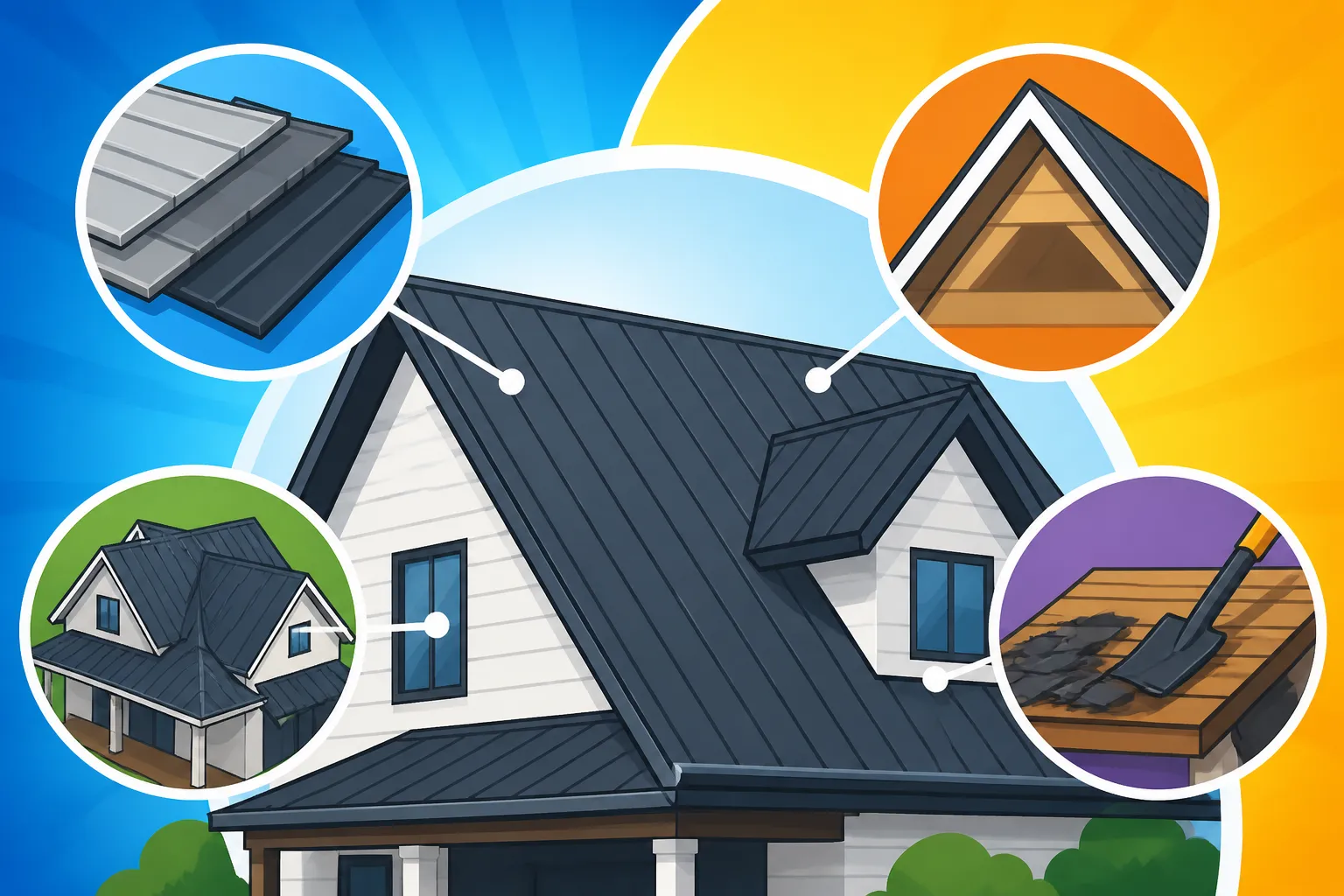
What Affects Metal Roof Cost: Gauge, Pitch, Complexity & Tear-Off
Trying to budget for a new metal roof can feel like navigating a maze blindfolded, especially when every estimate seems to throw new jargon at you. I remember feeling overwhelmed by all the numbers and terms when I first looked into it for my own home, wondering if I was truly comparing apples to apples. This comprehensive guide will pull back the curtain on the key factors that genuinely impact metal roof cost, helping you understand where your money goes so you can make informed decisions.
Understanding the Core Elements of Metal Roof Cost
When you start digging into metal roofing prices, it quickly becomes clear that it's not a one-size-fits-all scenario. There's a wide spectrum of costs, and much of it boils down to the fundamental choices you make about the materials and the complete system. Think of it like building a custom home; the foundation and framing are essential, but the finishes and specialized components can significantly alter the final bill.
Material Type and Quality
The type of metal you choose for your roof is arguably the biggest cost differentiator right from the start. Steel, aluminum, copper, and zinc each come with their own price points, aesthetic appeals, and long-term benefits. Steel, especially galvanized or Galvalume steel, is often the most economical choice, offering robust performance and excellent value. It's a popular option for many homeowners because it balances durability with a manageable initial investment. Aluminum, while typically a bit more expensive than steel, is renowned for its exceptional rust resistance, making it an ideal choice for coastal regions where salt air can be a real problem for other metals. Its lighter weight can also sometimes translate to slightly easier installation.
Then you move into the premium metals like copper and zinc. These aren't just roofing materials; they're architectural statements. Copper roofs are beautiful, developing a distinctive patina over time that many find incredibly appealing, evolving from a shiny new penny to a rich, earthy brown, and eventually a striking blue-green. Zinc offers a sophisticated, matte finish and boasts an incredibly long lifespan, often exceeding 100 years with minimal maintenance. The upfront cost for copper and zinc is substantially higher, reflecting their luxurious appearance, superior longevity, and the specialized craftsmanship required for their installation. It's worth exploring the nuances of Metal Roof Cost by Material: Steel vs Aluminum vs Copper vs Zinc to get a clearer picture of these differences.
Beyond the raw material, the quality of the finish and coatings applied to the metal also plays a crucial role. For instance, pre-painted steel panels often feature high-performance coatings like Kynar 500 (PVDF) or SMP (Siliconized Modified Polyester). Kynar 500 is a top-tier finish known for its exceptional fade and chalk resistance, meaning your roof will retain its vibrant color and look newer for much longer. SMP coatings offer good durability at a slightly lower price point. These coatings aren't just for looks; they provide an extra layer of protection against the elements, extending the life of your roof and influencing the warranty coverage you receive. A higher-quality coating means a higher material cost but can save you significantly on maintenance and replacement in the long run.
Roof System Components and Accessories
It's easy to focus solely on the panels themselves, but a metal roof is a complete system, and its various components and accessories add to the overall cost. This includes things like underlayment, fasteners, flashing, trim, and possibly snow guards or solar panel integration. The underlayment, which is the layer directly beneath the metal panels, is critical for moisture protection and can affect the roof's energy performance. High-quality synthetic underlayments, often preferred for metal roofs, are more expensive than traditional felt but offer superior durability, tear resistance, and moisture barriers. Understanding What Goes Under a Metal Roof? Layers Explained can give you a deeper insight into this foundational element.
Fasteners, such as screws for exposed fastener systems or clips for standing seam, need to be high-grade, corrosion-resistant, and properly installed to prevent leaks. While a small detail, the sheer number of fasteners needed for a large roof means their quality and cost can add up. Flashing and trim pieces, which seal the edges, valleys, and penetrations like chimneys or skylights, are equally vital. Custom fabrication for complex rooflines or specific architectural details will naturally increase the cost of these components. For example, a properly detailed Metal Roof Underlayment Cost and Metal Roof Trim and Flashing Cost can easily represent a noticeable portion of the total project budget.
Finally, consider accessories that enhance functionality or meet specific needs. If you live in an area with heavy snowfall, installing snow guards to prevent large sheets of snow and ice from sliding off can be a wise, albeit additional, investment. For those looking to integrate solar, special racking systems for metal roofs will be required. Even seemingly minor elements like ridge vents for proper attic ventilation contribute to the total system cost. Each of these components, though often overlooked in initial estimates, plays a crucial role in the roof's performance, longevity, and ultimately, its overall price.
The Impact of Metal Gauge on Overall Expense
When you hear roofers talk about "gauge," it might sound a bit like a secret code, but it's actually a straightforward way to describe the thickness of the metal panels. This seemingly small detail has a considerable impact on the material's strength, durability, and, of course, the final price of your metal roof.
Demystifying Metal Gauge Numbers
In the world of metal roofing, gauge refers to the thickness of the metal sheet. Here’s the tricky part that often confuses homeowners: the lower the gauge number, the thicker the metal. So, a 24-gauge steel panel is thicker and more robust than a 26-gauge panel, which in turn is thicker than a 29-gauge panel. This inverse relationship is historical, stemming from old manufacturing practices, but it's crucial to remember when evaluating bids. Thicker metal means more raw material, which translates directly to higher material costs.
Why does thickness matter? A thicker gauge metal offers superior resistance to dents, dings, and deformation. This is especially important in areas prone to hail, heavy foot traffic during maintenance, or high winds. Thicker panels also tend to lay flatter and present a more premium, less "wavy" appearance, which can be a significant aesthetic factor for homeowners. While 29-gauge panels might be suitable for agricultural buildings or very short spans, most residential applications benefit greatly from the increased durability offered by lower gauge options.
Gauge vs. Material Durability and Cost
The relationship between gauge and durability is quite direct. A thicker panel (lower gauge) will generally be more durable, less susceptible to impact damage from falling branches or hail, and less prone to oil canning (a visual waviness or distortion in the flat parts of the metal panels). This enhanced durability translates into a longer lifespan for your roof and potentially fewer repair needs over the decades. However, this increased durability comes at a higher cost per square foot for the material itself. You’re paying for more metal and a more resilient product.
For instance, comparing 24-gauge versus 26-gauge steel, the 24-gauge will be noticeably more rigid and will command a higher price. The difference might seem small per square foot, but when multiplied across an entire roof, it can add thousands to the material budget. This cost difference extends to installation as well, though less dramatically. Thicker panels are heavier and can be a bit more challenging to work with, potentially increasing labor time slightly, especially on complex roofs. It's a balance between initial investment and long-term performance, and understanding the nuances can help you decide if the extra upfront cost for a lower gauge is a worthwhile investment for your home and local climate. You can dive deeper into this comparison in our article on 24 vs 26 Gauge Metal Roof: Cost Difference.
Common Gauges for Residential Metal Roofs
For most residential metal roofing applications, you'll typically encounter panels in the 24-gauge, 26-gauge, and sometimes 29-gauge ranges.
- 24-Gauge: This is often considered the premium choice for residential standing seam metal roofs. Its significant thickness provides excellent durability, a very clean aesthetic, and superior resistance to damage. It's especially recommended for high-wind areas, regions prone to severe weather, or if you anticipate needing to walk on your roof for maintenance (though caution is always advised). The cost will be at the higher end for steel or aluminum.
- 26-Gauge: A very common and popular choice for both standing seam and exposed fastener (e.g., corrugated, R-panel) residential metal roofs. It offers a great balance of durability, performance, and cost-effectiveness. While not as thick as 24-gauge, it's still very resilient and provides excellent protection for most climates. Many homeowners find this gauge to be the sweet spot, providing a long-lasting roof without the top-tier price of 24-gauge.
- 29-Gauge: Primarily used for agricultural buildings, barns, or smaller residential structures like sheds or detached garages, 29-gauge is the thinnest of the common options. While it's the most budget-friendly, its thinner profile makes it more susceptible to dents and oil canning. For a primary residence, it's generally not recommended for the main roof, especially in areas with harsh weather or where a premium look is desired.
Making an informed decision about gauge means considering your budget, the specific weather challenges your home faces, and your aesthetic preferences. A reputable metal roofing contractor can help you weigh these factors and recommend the most appropriate gauge for your particular circumstances.
How Roof Pitch Influences Installation Complexity and Cost
The "pitch" of your roof, which is its slope or steepness, is more than just an architectural detail; it's a critical factor that dictates the complexity, safety requirements, and ultimately, the cost of installing a metal roof. A very flat roof will present different challenges than a very steep one, and these challenges directly impact labor hours and equipment needs.
Low-Slope vs. Steep-Slope Roofs
Generally, roofs are categorized as low-slope or steep-slope, and each has distinct implications for metal roofing. Low-slope roofs (typically less than a 3:12 pitch, meaning a 3-inch rise over 12 inches of run) can be tricky for metal. While some metal roofing systems, like certain standing seam profiles, are designed for lower pitches, they often require continuous substrate, specialized sealing, and meticulous attention to detail to prevent water penetration. Standing water on a low-slope metal roof can be a concern, making proper panel selection and installation even more critical. The installation might seem easier due to less climbing, but the precision required for waterproofing can actually increase labor costs.
Steep-slope roofs (anything above a 3:12 pitch, going up to 12:12 or even steeper) pose different safety challenges. While excellent for water shedding, working on them requires extensive safety equipment, including harnesses, ropes, and specialized scaffolding. This means more setup time for the crew, specialized training, and a slower pace of work to ensure everyone's safety. The higher up and steeper the roof, the more difficult it becomes to maneuver materials and tools, which translates directly into higher labor costs. Moving panels up to a very high, steep roof on a two-story house, for example, is a significantly more time-consuming and labor-intensive process than working on a single-story home with a gentle pitch.
Safety and Equipment Considerations
Safety is paramount on any roofing project, but especially on steep-pitched roofs. Professional metal roofing contractors invest heavily in safety equipment, which includes fall protection systems, non-slip footwear, and sometimes even specialized platforms or lifts. Setting up these safety measures takes time, and that time is factored into the labor cost. On an exceptionally steep roof, you might see contractors using roof jacks, toe boards, and even temporary netting, all of which require careful installation and removal.
Beyond safety gear, the equipment needed to transport and install metal panels on a high or steep roof can also add to the expense. Scaffolding, cranes, or powered lifts might be necessary to get long, heavy metal panels onto the roof deck safely and efficiently. If access to the roof is difficult—say, a narrow lot or significant landscaping—it can further complicate equipment placement and material delivery, driving up costs. These equipment rentals and the specialized labor to operate them are all part of the overall Metal Roof Labor Cost. Homeowners often underestimate these "behind-the-scenes" costs, but they are crucial for a safe, high-quality installation, particularly when dealing with challenging roof pitches.
Architectural Complexity: A Major Cost Driver
Your home's unique architectural design, while beautiful, can significantly influence the cost of a metal roof. A simple, rectangular roof is far less expensive to cover than a multifaceted one with numerous angles, valleys, and protrusions. Every cut, bend, and custom flashing piece adds to the labor and material requirements.
Roof Shape, Valleys, and Dormers
The simpler the roof's geometry, the lower the cost. A straightforward gable or hip roof without many interruptions is ideal for metal roofing, as panels can be cut to length and installed with minimal specialized fabrication. This reduces waste and labor time. Conversely, a roof with multiple peaks, complex valleys, or numerous dormers dramatically increases the difficulty and time involved.
Each valley on a roof requires careful fitting and sealing of metal panels, often involving custom-bent flashing. This is precision work, and any mistakes can lead to leaks down the line. Dormers, those charming little windowed structures popping out of your roof, are essentially mini-roofs themselves. Each dormer requires intricate flashing around its base and sides to integrate seamlessly with the main roof system. These detailed cuts, bends, and seals take skilled labor and significantly more time than simply laying a straight panel. Even unique features like turrets or rounded sections, while stunning, demand highly specialized metal fabrication and installation techniques, pushing labor costs upward. The more "ins and outs" your roof has, the more intricate the work, which directly translates to a higher Metal Roof Cost by Profile: Standing Seam vs Corrugated vs Stone-Coated due to the specialized cuts and installation methods required.
Penetrations and Flashing Requirements
Modern homes are filled with roof penetrations: chimneys, skylights, plumbing vents, exhaust fans, and satellite dishes, just to name a few. Each of these creates a break in the roof's surface and requires meticulous flashing to ensure a watertight seal. Flashing is essentially a waterproof barrier, typically made of metal, that directs water away from these vulnerable points. For a metal roof, this flashing needs to be integrated carefully with the metal panels, often involving custom fabrication on-site or ordering specialized components.
A chimney, for example, demands complex step flashing, counter flashing, and cricket installation to shed water effectively. Skylights require a complete flashing kit designed to work with metal roofing, ensuring no water seeps around the edges. Plumbing vents need specialized boots that seal tightly around the pipe and integrate with the metal panels. Every single penetration adds a layer of complexity to the installation. The labor involved in accurately measuring, cutting, bending, and sealing around these elements is substantial and requires a highly skilled crew. Mistakes here are common sources of future leaks, so paying for expert installation and proper flashing materials is a non-negotiable part of the cost for a durable, leak-free metal roof.
The Cost of Removing Your Old Roof: Tear-Off vs. Overlay
One of the first practical decisions you'll face when getting a new metal roof is what to do with your existing one. The choice between a "tear-off" (removing the old roof completely) and an "overlay" (installing the metal roof directly over the old one) has significant cost implications.
Factors Dictating Tear-Off Necessity
While installing a new metal roof directly over existing asphalt shingles might seem like a cost-saving shortcut, it's not always feasible or advisable. Several factors dictate whether a tear-off is necessary. First and foremost is the condition of your existing roof deck. If the plywood or OSB decking beneath your current shingles is soft, rotting, or damaged from previous leaks, it absolutely needs to be repaired or replaced before a new roof goes on. An overlay would simply hide these structural issues, leading to potential problems down the road.
Secondly, local building codes often have limitations on the number of roofing layers allowed. Many areas restrict roofs to two layers, meaning if you already have two layers of shingles, a tear-off is mandatory. Exceeding these limits can void your homeowner's insurance and make your home unsellable. Thirdly, the weight of multiple layers can be a concern. While metal roofs are relatively lightweight, adding them over several layers of heavy asphalt shingles might exceed your roof structure's design load, particularly in areas prone to heavy snow loads. A tear-off also allows your contractor to thoroughly inspect the roof deck for proper ventilation, address any insulation issues, and ensure a perfectly smooth surface for the metal panels, which can minimize oil canning and ensure a better aesthetic. Our guide on Tear-Off vs Metal Over Shingles: Cost Difference delves deeper into this comparison.
The Environmental and Disposal Aspects
The decision to tear off an old roof isn't just about labor; it also involves significant waste disposal costs and environmental considerations. When an old roof is removed, all that material—shingles, felt paper, nails, and sometimes even parts of the decking—becomes construction debris. Hauling this material away to a landfill incurs fees, which are passed on to the homeowner. The heavier and bulkier the old roofing material, the higher these disposal fees will be. For instance, removing two layers of asphalt shingles from a large home can generate several tons of waste.
Some areas and contractors offer recycling programs for asphalt shingles, which can be more environmentally friendly and sometimes slightly reduce disposal costs, but this isn't universally available. If you're sensitive to the environmental impact, choosing a contractor who can responsibly dispose of the waste, or exploring recycling options, might be a priority, even if it adds a small premium. Conversely, an overlay avoids these disposal costs entirely, making it an attractive option if your existing roof and local codes allow it. However, it's important to weigh the upfront savings against the potential for hidden issues if the existing roof deck isn't thoroughly inspected. Ultimately, the cost of the tear-off, including labor, dump fees, and transportation, is a non-negotiable part of the budget when it's deemed necessary.
Location, Labor, and Local Market Dynamics
The final price tag on your metal roof isn't solely determined by materials and roof features; it's also heavily influenced by where you live, the local cost of labor, and the specific dynamics of your regional construction market. A metal roof in a bustling metropolitan area will likely cost more than an identical one in a rural setting.
Regional Price Variations
Just like real estate, roofing costs vary significantly from one state or city to another. Factors like the general cost of living, local demand for metal roofing, and even climate-specific requirements contribute to these variations. For example, homes in hurricane-prone coastal regions like Florida or Texas often face stricter building codes that mandate higher-grade materials, stronger fasteners, and more robust installation techniques to withstand extreme winds. These enhanced requirements naturally drive up the overall cost. Conversely, areas with less extreme weather might have slightly lower material and labor costs.
Permit fees also differ by municipality. Some cities have higher administrative costs for permits and inspections, which get factored into your total project price. Transportation costs for materials can also play a role; if your home is in a very remote location, it might cost more to get the metal panels and equipment delivered. It's really helpful to research Metal Roof Cost by State and City to get a localized estimate, as these regional differences can be quite substantial. For instance, a metal roof in Miami might have different requirements and associated costs than one in Denver, even for similar house sizes and roof complexities.
Contractor Expertise and Crew Size
The skill and experience of your roofing contractor and their crew are paramount, especially for metal roofing, which requires specialized knowledge and tools. A highly experienced, reputable contractor who specializes in metal roofs will likely charge more than a general roofer, but that premium is often well worth it. Metal roofing installation is precise work, and mistakes can be costly, leading to leaks, premature wear, or aesthetic issues. An expert team understands the nuances of proper flashing, panel alignment, and fastening systems that ensure a long-lasting, watertight roof.
The size of the crew and how efficiently they work also impacts labor costs. A larger, well-coordinated crew might finish the job faster, reducing the overall labor hours, but their collective hourly rate will be higher. Smaller crews might take longer but have a lower individual hourly rate. Additionally, a contractor's overhead—insurance, licensing, equipment, and administrative costs—is factored into their pricing. Companies with comprehensive insurance and proper licensing (which are crucial for your protection) will have higher overheads. While you might be tempted by a cheaper bid from a less experienced contractor, remember that the long-term cost of repairs from shoddy workmanship can far outweigh any initial savings. Choosing a qualified professional is investing in the longevity and performance of your roof. Our guide on How to Hire a Metal Roofing Contractor can help you find the right team.
The Long-Term Value: Beyond the Upfront Price Tag
While the upfront cost of a metal roof can be a significant investment, it's crucial to look beyond that initial price tag and consider the long-term value it brings. A metal roof is an asset that can deliver substantial savings and benefits over its extended lifespan, often making it a more economical choice in the long run compared to traditional roofing materials.
Energy Efficiency and Insurance Savings
One of the most attractive long-term benefits of a metal roof is its potential for energy savings. Many metal roofing systems, particularly those with light-colored or reflective coatings, are considered "cool roofs." They reflect a significant portion of the sun's radiant energy, rather than absorbing it like darker asphalt shingles. This reduces heat transfer into your attic and home, leading to lower air conditioning costs, especially in hot climates. In fact, studies have shown that cool metal roofs can reduce energy consumption for cooling by 15-25%. This isn't just a small perk; over the decades a metal roof lasts, these savings can really add up.
Beyond energy efficiency, metal roofs often qualify for discounts on homeowners insurance premiums. Because metal roofs are highly durable and resistant to many common perils—they are Class A fire rated, highly resistant to high winds, and often boast Class 4 impact resistance against hail—insurance companies view them as a lower risk. In regions prone to severe weather, these discounts can be substantial. For example, in states like Florida or Texas, homeowners with metal roofs can often see significant savings due to their superior performance against hurricanes and hail. Always ask your insurance provider about potential Metal Roof Insurance Savings & Discounts, as these savings can help offset the initial investment.
Longevity and Return on Investment
Perhaps the most compelling argument for the long-term value of a metal roof is its exceptional lifespan. While an asphalt shingle roof might last 15-25 years, a quality metal roof can easily last 40-70 years, and some materials like copper or zinc can exceed 100 years. This means that over the lifetime of your home, you might replace an asphalt roof two or even three times, while your metal roof continues to perform. When you factor in the cost of multiple replacements—materials, labor, and disposal—the initial higher cost of a metal roof often becomes a much better investment.
This incredible longevity, combined with reduced maintenance needs, translates into a fantastic return on investment (ROI). A metal roof adds significant curb appeal and perceived value to your home. Should you decide to sell, a relatively new metal roof is a major selling point, often increasing resale value. Buyers appreciate the low maintenance, durability, and energy efficiency, and are willing to pay a premium for a home with such a long-lasting and robust roofing system. Furthermore, many metal roof warranties are transferable to a new homeowner, further enhancing its resale appeal. For a deeper look into this, check out our article, Is a Metal Roof Worth It? ROI, Resale & Payback. When you combine the energy savings, potential insurance discounts, and decades of reliable performance, the upfront investment in a metal roof truly pays dividends over time.
Comparison of Metal Roof Cost Factors
To help clarify how different elements contribute to the overall cost, here's a table summarizing the impact of various factors:
| Cost Factor | Low Impact (Generally Cheaper) | Moderate Impact (Mid-Range Cost) | High Impact (Most Expensive) |
|---|---|---|---|
| Material Type | Galvanized/Galvalume Steel (26-29 gauge) | Aluminum, Painted Steel (24 gauge) | Copper, Zinc, Specialty Alloys |
| Metal Gauge | 29 Gauge | 26 Gauge | 24 Gauge, 22 Gauge (for heavy commercial/industrial) |
| Roof Profile | Exposed Fastener (e.g., Corrugated, R-Panel) | Snap-Lock Standing Seam, Metal Shingles | Mechanically Seamed Standing Seam, Metal Tile/Slate/Shake |
| Roof Pitch | Moderate (4:12 to 6:12) | Low (2:12 to 3:12) or Steep (7:12 to 9:12) | Very Low (<2:12) or Extremely Steep (>9:12) |
| Architectural Complexity | Simple Gable/Hip, Few Valleys/Penetrations | Moderate Dormers, Several Valleys, Standard Penetrations | Multiple Peaks, Complex Valleys, Many Dormers, Custom Features |
| Tear-Off | No Tear-Off (Overlay over 1 layer of shingles) | Tear-off of 1 layer of shingles | Tear-off of 2+ layers, extensive deck repair/replacement |
| Labor & Location | Rural area, experienced but smaller contractor | Suburban area, established contractor, standard crew size | High-cost urban area, specialized contractor, complex access |
| Coatings | Standard Polyester/Acrylic finishes | SMP (Siliconized Modified Polyester) | Kynar 500 (PVDF), Specialty Coatings |
| Underlayment | Asphalt-saturated felt | Synthetic underlayment | Self-adhering ice & water shield across entire roof |
This table provides a quick reference, but remember that many of these factors interact with each other. For a comprehensive estimate of your specific project, it's always best to get multiple detailed quotes from reputable local contractors. For a deeper dive into overall costs, you might want to look into the Metal Roof Cost: Complete 2026 Guide.
Disclaimer
The information provided in this guide is for general informational purposes only and does not constitute professional advice. Roofing costs can fluctuate significantly due to market changes, material availability, labor rates, and specific project requirements. Always consult with qualified and licensed metal roofing contractors for accurate estimates and professional recommendations tailored to your individual property and local building codes.