Metal Roof Cost in Florida
Dealing with the uncertainty of home improvement costs, especially something as crucial as a new roof in a state like Florida, can feel like navigating a hurricane in a rowboat. You're not just looking for a price; you're seeking durability, protection, and peace of mind against the relentless sun, torrential downpours, and the ever-present threat of high winds. This guide will walk you through the real-world costs of a metal roof in Florida, breaking down exactly what influences the price tag so you can make an informed decision for your home.
Understanding Metal Roof Costs in the Sunshine State
Florida is a unique beast when it comes to roofing. Our climate isn't just "sunny"; it's a complex mix of high humidity, intense UV radiation, salt air in coastal regions, and, let's not forget, hurricane season. These factors don't just influence if you get a metal roof, but what kind and how much it will cost.
Why Florida's Climate Matters for Your Metal Roof Investment
It's not just about aesthetics here; it's about survival. Florida’s climate demands roofing materials and installation practices that can withstand extreme conditions. First off, consider the salt air if you're anywhere near the coast. This corrosive environment means certain metals, like aluminum, are often preferred over steel, even if they come with a slightly higher upfront cost, because they offer superior rust resistance. You can learn more about how different materials stack up in our comprehensive guide on Metal Roofing Materials Compared: Steel, Aluminum, Copper & Zinc.
Then there's the sun. Intense UV rays can degrade many roofing materials over time, leading to fading and brittleness. High-quality metal roofs, often with specialized coatings, are designed to reflect sunlight and resist this degradation, contributing to both the roof's longevity and your home's energy efficiency. Lastly, and perhaps most critically, are the wind and rain. The Florida Building Code (FBC) is one of the strictest in the nation for a reason, especially in High-Velocity Hurricane Zones (HVHZ) like Miami-Dade and Broward counties. These codes dictate everything from fastening schedules to the gauge of the metal, all of which directly impact the materials and labor required, and thus, the final price.
Average Metal Roof Cost Range in Florida
Pinpointing an exact average cost for a metal roof in Florida is a bit like trying to catch a cloud – it's constantly shifting and varies wildly based on numerous factors. However, to give you a ballpark, most homeowners in Florida can expect to pay anywhere from $10,000 to $50,000 for a full metal roof installation on an average-sized home (around 1,500 to 2,000 square feet). This translates to roughly $8.00 to $18.00 per square foot installed. Keep in mind, this is a broad average, and it accounts for a wide spectrum of materials, profiles, and geographical nuances within the state. For a deeper dive into overall pricing, check out our Metal Roof Cost: Complete 2026 Guide.
The lower end might include more economical options like basic exposed fastener corrugated metal or R-panel roofing on a simpler roof structure. The higher end of this range would encompass premium choices such as standing seam aluminum or copper roofs, particularly on complex roofs or in high-demand, high-cost metropolitan areas like South Florida. The cost per square foot can really fluctuate, so understanding what you're getting for that money is key.
Factors Influencing Metal Roof Pricing in Florida
Just like planning a trip to Disney World, the total cost of a metal roof isn't just one ticket price; it's the sum of many individual components. Understanding these elements will help you decipher quotes and anticipate your overall investment.
Material Choices and Their Impact on Cost
The type of metal you choose is arguably the most significant cost driver. In Florida, certain materials shine brighter due to their inherent properties that resist our unique environmental challenges.
- Steel (Galvanized and Galvalume): Steel is a popular choice due to its strength and relatively lower cost compared to other metals. Galvanized steel is coated with zinc, while Galvalume adds aluminum to that zinc coating, offering enhanced corrosion resistance—a big plus for Florida's humidity and occasional salt spray. You might find a Galvalume roof costing between $8-$15 per square foot installed. While robust, steel is heavier and can be more prone to denting than aluminum if thinner gauges are used. Many homeowners find that the Galvalume Roof Cost Per Square Foot is a compelling option.
- Aluminum: This is often considered the gold standard for coastal Florida homes because of its excellent rust resistance. Aluminum won't corrode, even in the harshest salt air, making it incredibly durable. However, it's typically more expensive than steel, ranging from $10-$18 per square foot installed. It's also lighter, which can sometimes reduce structural requirements, but it's softer and can be more susceptible to denting than steel.
- Copper and Zinc: These are luxury options, known for their stunning aesthetics and extreme longevity (100+ years!). They develop a beautiful patina over time. However, their cost is significantly higher, often starting at $25-$40+ per square foot installed. While they perform exceptionally well in Florida's climate, their price point usually reserves them for high-end custom homes or specific architectural statements. If you're curious about the ultimate luxury, you can explore Copper Roof Cost.
Roofing Profile and Panel Type Costs
Beyond the material, the style or profile of your metal roof panels also plays a huge role in the final price. Different profiles require different manufacturing processes, installation techniques, and labor intensity.
- Standing Seam Metal Roofs: This is the premium choice for residential metal roofing, and for good reason. Standing seam panels have raised seams that interlock, concealing the fasteners underneath. This design offers superior weather protection, especially against wind-driven rain, and a clean, modern aesthetic. Installation is more specialized, leading to higher labor costs. You can expect to pay anywhere from $12-$20+ per square foot installed for standing seam in Florida. Homeowners often weigh the long-term benefits of Is a Standing Seam Roof Worth the Extra Cost.
- Corrugated Metal Roofs: These are the classic "barn roof" style, characterized by their wavy or ribbed appearance. They use exposed fasteners, meaning the screws go directly through the panel into the roof deck. While effective and often the most economical metal roofing option (typically $8-$12 per square foot installed), the exposed fasteners mean more potential points for leaks over time, requiring more diligent maintenance. This makes them less common for primary residences in hurricane-prone areas unless paired with advanced sealing.
- Stone-Coated Steel Roofs: These panels are pressed into various shapes to mimic the look of traditional shingles, shakes, or tiles, then coated with stone granules. They offer excellent impact resistance (often Class 4 hail resistant) and a beautiful aesthetic that blends modern durability with classic charm. Installation is more involved than basic corrugated, putting them in a mid-to-high price range, usually $10-$18 per square foot installed. You might compare the options by looking at Stone-Coated Steel Roof Cost.
- Metal Shingles/Tiles/Slates: These are designed to perfectly replicate traditional roofing materials but with the benefits of metal. They come in individual pieces or larger panels that interlock. While offering a high-end look and excellent durability, their intricate installation makes them one of the more expensive options, often similar to or slightly above standing seam, ranging from $10-$20+ per square foot installed.
Roof Size, Pitch, and Complexity
Think of your roof's characteristics as a blueprint for labor and materials. A larger roof simply requires more of everything: more panels, more underlayment, more fasteners, and more hours for the crew.
- Size: This is straightforward – a 3,000 square foot roof will naturally cost more than a 1,500 square foot roof. However, the per square foot cost can sometimes decrease slightly on very large projects due to economies of scale for materials and labor setup. For more specific size estimates, consider exploring Metal Roof Cost for a 2,000 Sq Ft House.
- Pitch (Slope): The steeper your roof, the more challenging and hazardous it is for installers to work on. Steeper pitches require more safety equipment, more specialized rigging, and often slower, more meticulous work, which translates to higher labor costs. A low-slope roof is generally easier and less expensive to install than a very steep, multi-story roof.
- Complexity: This is where architectural features come into play. A simple, rectangular roof with two slopes is far less expensive to roof than a complex design with multiple dormers, valleys, hips, skylights, chimneys, and varying roof sections. Each interruption requires precise cutting, custom flashing, and careful sealing, adding significant labor and material waste. These complexities also increase the chances of potential leak points if not installed perfectly, making skilled labor even more crucial.
Installation and Labor Costs in Florida
The cost of getting that beautiful metal roof onto your Florida home isn't just about the materials; a huge chunk of your investment goes towards the skilled hands and expertise of the installation crew. In Florida, especially, you're paying for experience that understands our unique building challenges and codes.
The Importance of a Qualified Florida Metal Roofing Contractor
Finding the right contractor in Florida is paramount, and their labor rates will reflect their expertise and compliance. The demand for skilled metal roofing contractors in Florida is high, especially after storm seasons, which can drive up labor prices. An experienced, licensed, and insured contractor who specializes in metal roofing will cost more per hour than a general roofer, but this premium is an investment in quality and longevity. You want a team that is intimately familiar with the Florida Building Code, wind mitigation requirements, and the best practices for installing specific metal panel systems to prevent leaks and ensure your roof performs under pressure. For example, a reputable contractor will know the precise fastening schedules and sealant applications required for a standing seam roof to meet HVHZ standards. You can find excellent advice on How to Hire a Metal Roofing Contractor.
Labor costs in Florida can range widely, typically accounting for 40% to 60% of the total project cost. For a metal roof, you might see labor charges anywhere from $4.00 to $9.00 per square foot, depending on the complexity of the roof, the type of metal system, and the contractor's reputation. Don't shy away from asking about their experience with metal roofs specifically in Florida's climate; it's a critical question that can save you headaches and costly repairs down the line. Asking Questions to Ask a Metal Roofing Contractor Before You Hire is a smart move.
Additional Installation Considerations: Tear-Off and Underlayment
It's easy to overlook costs that aren't the metal panels themselves, but these "hidden" elements can significantly impact your final bill.
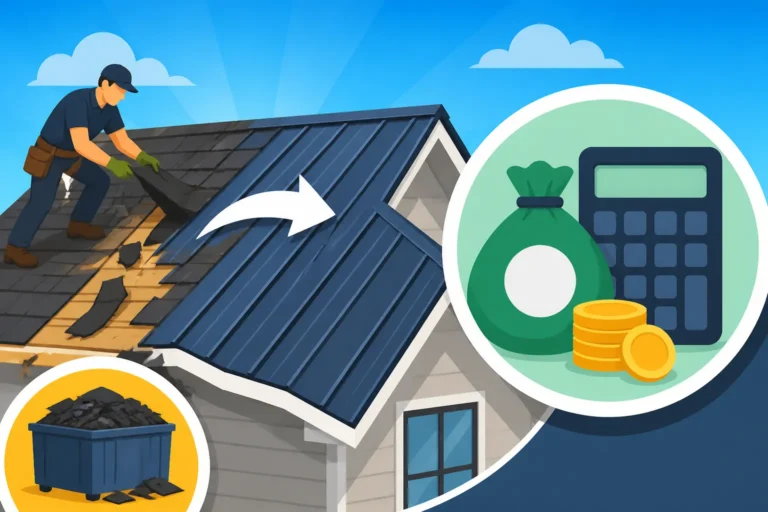
- Tear-Off of Existing Roof: Unless you're putting your new metal roof directly over existing shingles (which is sometimes possible but not always recommended or permitted in Florida), your old roof needs to come off. The cost to tear off and dispose of an old asphalt shingle roof can add $1.00 to $3.00 per square foot, or even more for heavier materials like tile. This cost includes labor for removal, dumpster rental, and disposal fees. If your existing roof has multiple layers or contains hazardous materials, the cost will climb. Our guide on Tear-Off vs Metal Over Shingles: Cost Difference breaks down these considerations.
- Underlayment: This protective layer beneath your metal panels is absolutely critical in Florida. It acts as a secondary water barrier, offering a last line of defense against leaks, especially during high winds when water can be forced upwards under panels. While organic felt paper is a basic option, synthetic underlayments are far more common and recommended for metal roofs in Florida due to their durability, tear resistance, and moisture protection. Even better, ice and water shield (a self-adhering modified bitumen membrane) is often used, especially at eaves, valleys, and around penetrations, or even across the entire roof deck in HVHZ areas. Expect to pay anywhere from $0.50 to $2.00+ per square foot for high-quality underlayment materials and installation. Cutting corners here to save a few dollars can lead to devastating water damage later, far outweighing any initial savings. You can delve into Metal Roof Underlayment and Ventilation Guide for more details.
Regional Cost Variations Across Florida's Major Cities
Florida is a big state, and just like housing prices, the cost of a metal roof can fluctuate quite a bit depending on where you live. Local economies, population density, storm exposure, and specific building code interpretations all play a role.
Cost Breakdown for Coastal vs. Inland Areas
There's a noticeable difference in roofing costs between Florida's bustling coastal cities and its more subdued inland communities.
- Coastal Regions (e.g., Miami, Fort Lauderdale, Tampa, Jacksonville, Sarasota): These areas typically face higher costs. Why? Proximity to the ocean means increased exposure to salt corrosion and higher wind uplift requirements, often necessitating more expensive, corrosion-resistant materials (like aluminum) and more robust fastening systems. Furthermore, coastal cities are frequently designated High-Velocity Hurricane Zones (HVHZ), leading to stricter building codes that demand specialized materials and installation techniques, adding to labor and material costs. Demand for roofing services is also often higher in these densely populated areas, particularly after storms, which can drive up contractor rates. For instance, a metal roof in Miami might be on the higher end of the state average due to these combined factors. You can compare this to general pricing in our Metal Roof Cost in Florida article.
- Inland Areas (e.g., Orlando, Lakeland, Gainesville, Tallahassee): While still subject to Florida's overall strong building codes and hurricane risks, inland areas generally experience slightly lower labor costs and less extreme requirements for corrosion resistance. This can sometimes allow for more cost-effective material choices, though wind ratings remain crucial. For example, while a Galvalume steel roof is an excellent choice for an inland Orlando home, a homeowner in Key West might strongly favor aluminum despite its higher cost. The overall project cost might be a bit more moderate in these regions compared to their coastal counterparts.
Local Permit and Inspection Fees
Don't forget the bureaucratic side of roofing! Every re-roofing project in Florida, especially for a material change like switching to metal, requires a permit. These fees vary significantly by county and city. For example, a permit in Miami-Dade County, known for its rigorous building department, might be considerably higher than in a smaller, more rural county. The cost often depends on the project's valuation and the specific requirements for plan review and inspections.
Beyond the initial permit fee, you'll also have costs associated with inspections. Throughout the metal roof installation process, various inspections will be conducted (e.g., deck inspection, fastener inspection, final inspection) to ensure compliance with local building codes. These inspections, while crucial for safety and warranty validation, are part of the overhead built into your project cost or sometimes charged directly as part of the permit. In some cases, specific engineering reviews for wind uplift or structural capacity might be required for metal roofs on certain structures or in high-risk zones, adding another layer to the permit and approval process. It's wise to discuss these with your contractor early on to avoid surprises.
Long-Term Value and Savings of a Metal Roof in Florida
While the initial cost of a metal roof in Florida might seem daunting compared to traditional asphalt shingles, it’s crucial to look beyond the upfront price tag. The real story of a metal roof is told over its lifespan, revealing significant savings and added value, especially in Florida's challenging climate.
Insurance Discounts and Wind Mitigation Credits
This is where metal roofs truly shine in Florida. Homeowners insurance premiums in Florida are notoriously high, largely due to hurricane risk. However, metal roofs are often eligible for substantial discounts because they are incredibly resilient against severe weather. Many insurance companies offer credits for "wind mitigation" features, and a properly installed metal roof usually qualifies for several.
- Wind Resistance: Metal roofs are installed to withstand incredibly high wind speeds, often exceeding 150 mph. This robust attachment and structural integrity significantly reduce the risk of roof damage during hurricanes.
- Impact Resistance: Many metal roofing systems, particularly stone-coated steel and thicker gauge standing seam panels, boast a Class 4 impact resistance rating. This means they can withstand significant impacts from hail and flying debris, which is a big plus for insurers. You can learn more about how this translates to savings in Metal Roof Insurance Savings & Discounts.
These discounts can shave hundreds, sometimes even over a thousand dollars, off your annual insurance premiums. Over the decades-long lifespan of a metal roof, these savings alone can offset a considerable portion of the initial investment. It’s always a good idea to speak with your insurance provider before installation to confirm the specific discounts you might qualify for with your chosen metal roof system.
Energy Efficiency and Lifespan ROI
Florida summers are brutal, and air conditioning bills can eat a significant portion of your budget. This is another area where metal roofs offer a distinct advantage.
- Reflectivity: Metal roofs, especially those with lighter colors or specialized reflective coatings (like cool pigment paints), are excellent at reflecting solar radiant heat away from your home. This reduces the amount of heat absorbed into your attic and living spaces, leading to lower air conditioning demands and noticeable energy savings. Some metal roofs can reduce attic temperatures by 30-40 degrees Fahrenheit compared to asphalt shingles, translating to 10-25% savings on cooling costs.
- Lifespan and Durability: A metal roof typically lasts 40-70 years, with some materials like copper and zinc exceeding 100 years. Compare this to asphalt shingles, which often need replacement every 15-25 years in Florida's harsh climate. This means you might install two or even three asphalt roofs for every one metal roof, accumulating replacement costs, disposal fees, and associated labor over time. The long-term ROI (Return on Investment) of a metal roof, considering its longevity, minimal maintenance, and energy savings, often makes it the more economical choice in the long run. Our article, Metal Roof Cost vs Lifespan Value, delves deeper into this comparison.
The cumulative savings on insurance and energy, combined with the fact that you likely won't need to replace your roof again during your homeownership, make the higher initial investment in a metal roof a smart financial decision for many Florida homeowners.
Here's a quick look at how various factors might influence your Florida metal roof cost:
| Factor | Lower Cost Impact (Generally) | Higher Cost Impact (Generally) |
|---|---|---|
| Material | Galvalume Steel, Exposed Fastener | Aluminum, Standing Seam, Copper, Zinc |
| Roof Profile | Corrugated, R-Panel | Standing Seam, Stone-Coated Steel |
| Roof Size | Smaller (e.g., <1500 sq ft) | Larger (e.g., >2500 sq ft) |
| Roof Complexity | Simple gables, minimal penetrations | Multiple dormers, valleys, skylights |
| Roof Pitch | Low-slope, single story | Steep, multi-story |
| Location | Inland, less dense areas | Coastal, HVHZ, major metro areas |
| Tear-off | Single layer shingles, no damage | Multiple layers, heavy tile, damage |
| Underlayment | Basic synthetic | Full ice & water shield |
| Contractor | General roofer, less specialized | Metal roofing specialist, certified |
This table should help you visualize how different choices stack up when you're looking at your budget for a metal roof project in Florida.
Disclaimer
Please remember that the cost estimates provided in this article are general averages and can fluctuate significantly based on current material prices, labor availability, specific project requirements, and your chosen contractor. For an accurate estimate, always obtain multiple detailed quotes from licensed and insured local metal roofing contractors. This guide is for informational purposes only and does not constitute professional financial or construction advice.