Do You Need Underlayment Under a Metal Roof
One of the biggest headaches when planning a new roof, especially a metal one, is trying to figure out all the different layers and components. You might be looking at quotes and wondering, "Do I really need that underlayment layer? Isn't the metal roof strong enough on its own?" It feels like an extra cost, and sometimes, it's tempting to think you can cut corners. But trust me, as someone who’s seen it all, skipping the underlayment under your metal roof is almost always a decision you'll live to regret. This guide will walk you through exactly why this protective layer is so crucial and what you need to know.
Why Underlayment is Non-Negotiable for Metal Roofs
Let's get straight to it: for the vast majority of residential metal roofing installations, underlayment isn't just a good idea; it's absolutely essential. While metal roofing itself is incredibly durable and long-lasting, it's not a standalone solution against all the elements. Think of your roof like a multi-layered defense system. The metal panels are your primary shield, but the underlayment is the crucial secondary line of defense, ready to catch anything that gets past the first.
The Critical Role of a Secondary Weather Barrier
Imagine a severe thunderstorm rolling through, or a freak ice storm like the kind we saw in parts of Texas a few years back. Even the best metal roof installation can experience minor breaches. A wind-driven rain might find its way under a seam, or a rogue piece of hail could cause a tiny, imperceptible dent that eventually leads to a pinhole leak. This isn't a knock on metal roofs; it's simply acknowledging the realities of Mother Nature and the incredible forces our homes endure.
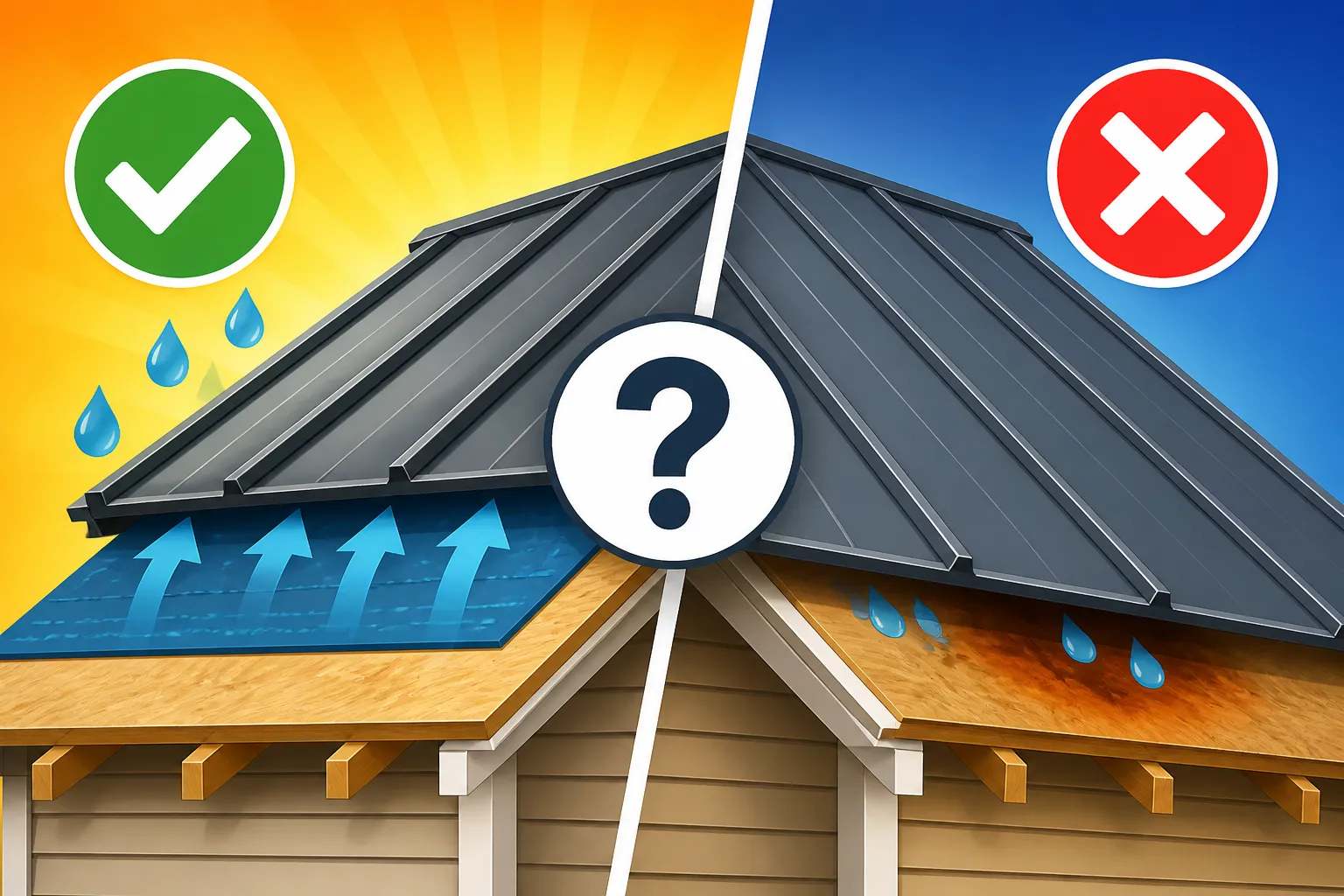
Without underlayment, any water that breaches the primary metal panels goes directly onto your roof deck. This can lead to immediate leaks into your attic, causing damage to insulation, drywall, and even electrical systems. Over time, consistent moisture can rot the plywood or OSB decking itself, compromising the structural integrity of your entire roof system. A robust underlayment acts as a waterproofing membrane, funneling any stray moisture down to the eaves and away from your home's interior, buying you precious time to address any minor issues before they become major disasters. It’s an insurance policy you install before disaster strikes.
Protecting Your Investment from Condensation and Moisture
Beyond direct leaks from rain or snowmelt, there's another silent, insidious enemy that underlayment helps combat: condensation. Metal roofs, especially those installed directly over a heated or cooled living space, are prone to condensation forming on the underside of the panels. This happens when warm, moist air from your attic (or even from inside your home, if ventilation isn't perfect) meets the colder surface of the metal roof. It's the same principle as a cold can of soda "sweating" on a humid day.
This condensation isn't just a minor annoyance; it can accumulate into significant moisture over time. This moisture then drips down onto your roof deck, creating a perfect breeding ground for mold and mildew. Mold doesn't just smell awful; it can seriously impact indoor air quality and, like direct leaks, can lead to the deterioration of your roof decking and structural components. Underlayment, particularly synthetic types, creates a separation layer, often with some breathability, that manages this moisture. Some even have a perm rating that helps manage vapor drive, preventing it from reaching the cold metal surface. This protective barrier is vital for maintaining a healthy, dry attic space and ensuring the long-term integrity of your home. If you're looking for more details on the installation process, check out our guide on the Metal Roof Installation Process: Step by Step.
Types of Metal Roof Underlayment: Choosing the Right Shield
When you understand why underlayment is so important, the next step is knowing what kind of underlayment to choose. It's not a one-size-fits-all situation, and the right choice can significantly impact your roof's performance and longevity.
Traditional Felt vs. Modern Synthetic Underlayments
For decades, asphalt-saturated felt paper (often called "tar paper") was the go-to underlayment for most roofing types. You might see 15-pound or 30-pound felt. While it's still used in some applications, especially with asphalt shingles, it generally isn't the preferred choice for metal roofs, particularly standing seam systems, these days. Felt paper can absorb moisture, become brittle over time, and might not withstand the high temperatures that the underside of a metal roof can reach, leading to cracking or degradation.
Modern synthetic underlayments, on the other hand, are engineered specifically for demanding roofing applications, including metal. These are typically made from polypropylene or polyethylene, often with a woven or non-woven fabric construction. They are lighter, stronger, much more tear-resistant, and more resistant to mold and mildew. Crucially, many synthetic underlayments are also highly resistant to UV degradation, meaning they can be exposed to the sun for longer periods during installation without losing their effectiveness. This is a huge advantage, especially on larger projects where the roof deck might be exposed for a few days. Brands like Modernize connect homeowners with contractors who are well-versed in the latest synthetic underlayment technologies, ensuring you get a modern, high-performance system. You can explore more about the various options in our Metal Roof Underlayment and Ventilation Guide.
Here's a quick comparison of general underlayment types:
| Feature | Felt Paper (e.g., #30 Felt) | Synthetic Underlayment (e.g., RoofRunner, Titanium) | Ice & Water Shield (e.g., Grace Ice & Water Shield) |
|---|---|---|---|
| Material | Asphalt-saturated organic felt | Polypropylene/Polyethylene (woven or non-woven) | Rubberized asphalt, self-adhering membrane |
| Weight | Heavy (30 lbs per square) | Lightweight (2-5 lbs per square) | Moderate (typically 40-50 lbs per roll) |
| Durability | Prone to tearing, cracking, moisture absorption | High tear-resistance, UV stable, mold-resistant | Extremely durable, self-sealing around fasteners |
| Water Resistance | Water-resistant, not fully waterproof | Water-resistant, often highly water-repellent | Waterproof, seals fasteners, prevents ice damming |
| Perm Rating | Varies, often moderate to high | Varies, some breathable, some very low perm | Very low perm, acts as a vapor barrier |
| Cost (Material) | $15-$25 per square | $25-$50 per square | $60-$100+ per square (installed in critical areas) |
| Ideal Use | Secondary barrier, less ideal for metal roofs | Primary choice for metal roofs, steep slopes | Critical valleys, eaves, penetrations, low slopes, cold climates |
Note: Costs are estimates and can vary by brand, location, and market conditions.
The Indispensable Ice and Water Shield
Then there's the specialized hero of the underlayment world: ice and water shield. This isn't typically used for the entire roof surface, but it's absolutely critical in specific areas, especially in climates prone to freezing temperatures, heavy snow, or high winds. Ice and water shield is a self-adhering membrane, meaning it has a sticky backing that seals directly to the roof deck and, crucially, around fasteners. When a roofing nail or screw penetrates it, the rubberized asphalt material self-seals around the shank, preventing water from seeping through the fastener hole.
It's typically installed at the eaves (often extending 24 inches beyond the interior wall line, as per many building codes), in valleys, around chimneys, skylights, and any other penetrations or areas where water is likely to pool or ice dams could form. In colder climates, or areas that experience significant snowfall, local building codes often mandate the use of ice and water shield. Skipping it in these areas is not only a code violation but an open invitation for leaks that can cause immense damage, far exceeding the cost of the material and labor. This is especially true for residential areas where proper flashing and sealing are paramount. For more detailed insights, you might want to read our article on Ice and Water Shield for Metal Roofs.
When Skipping Underlayment is a Risky Gamble (and Almost Never Recommended)
You might hear whispers, or even read forum posts, suggesting that underlayment can be skipped, especially in certain situations or for specific types of metal roofs. While there might be rare, highly specialized industrial or agricultural applications where a minimalist approach is taken, for residential roofing, this advice is almost universally unsound and carries significant risks.
Understanding Manufacturer Warranties and Building Codes
One of the most compelling reasons not to skip underlayment is directly tied to your metal roof's warranty. Reputable metal roofing manufacturers like McElroy Metal or Metal Sales design their products to be installed as part of a complete system. This system almost always includes a specific type of underlayment. If you choose to install their metal panels without the recommended underlayment, you could very easily void your manufacturer's warranty. Imagine spending thousands on a high-quality metal roof, only to have a problem arise years down the line, only to find out you're on the hook for repairs because of an installation shortcut. It's a risk not worth taking. Knowing the intricacies of Metal Roof Warranties: Workmanship vs Manufacturer is crucial.
Beyond warranties, building codes are non-negotiable. Almost every residential building code in the United States requires some form of underlayment beneath roofing materials. These codes are in place to ensure public safety and the longevity of structures. They specify types of underlayment, minimum thicknesses, and areas where ice and water shield is required. A professional, licensed contractor will always adhere to these codes. If a contractor suggests skipping underlayment, that's a massive red flag. Always verify your contractor's licensing and ensure they are pulling the necessary permits. Companies like Modernize emphasize connecting homeowners with qualified professionals who understand and comply with local building regulations.
Long-Term Consequences and Hidden Costs
The immediate savings from skipping underlayment are minuscule compared to the potential long-term costs. Let's say you save a few hundred dollars on materials and labor by foregoing underlayment. What happens a few years down the road when condensation causes mold growth in your attic, requiring costly remediation and roof deck replacement? Or when a minor leak from a wind-driven storm compromises your insulation and damages your ceiling? The repair costs for these issues will far outweigh any initial "savings."
Consider a scenario in a humid state like Florida, where attic moisture is a constant battle. Without proper underlayment and ventilation, the chances of encountering serious mold issues beneath a metal roof escalate dramatically. Similarly, in snowy regions like the Rocky Mountains, an ice dam that forms without the protection of an ice and water shield can force water under your metal panels and into your home, causing thousands in damage. The underlayment is a relatively inexpensive component that provides disproportionately large protection. It ensures that the significant investment you've made in your durable, long-lasting metal roof truly performs as intended, protecting your home for decades to come. Don't be tempted to short-change your home's most critical defense system. It’s important to understand the overall Metal Roof Cost: Complete 2026 Guide to see how underlayment fits into the total project budget.
The Role of Underlayment in Specific Scenarios
While the general rule is "always use underlayment," it's worth exploring how this applies to common installation scenarios. The type and method of underlayment application can vary, but the need for it remains.
Installing a Metal Roof Over Existing Shingles
One common practice to save on labor and disposal costs is to install a metal roof directly over existing asphalt shingles. This is often an acceptable method, provided the existing shingle roof is in stable condition and only has one layer. However, even in this scenario, underlayment is still recommended, and often required.
While the existing shingles might offer some minimal protection, they are not a substitute for dedicated underlayment designed for metal roofs. The primary reasons for using underlayment, such as condensation control and a secondary weather barrier, still apply. The existing shingles don't provide the vapor barrier or breathability that modern synthetic underlayments offer, which is crucial for preventing moisture buildup between the two roof systems. Furthermore, the underlayment provides a smoother surface for the metal panels to sit on, which can help prevent "oil canning" (visible ripples or waves in the metal) and protect the back of the metal panels from abrasion against the granular surface of the shingles. Consulting with a professional contractor, possibly through Modernize, can help you understand the specific requirements for Installing a Metal Roof Over Shingles in your area.
Underlayment for Low-Slope Metal Roofs
Low-slope roofs, typically those with a pitch less than 3:12 (meaning a 3-inch rise over a 12-inch horizontal run), present unique challenges for any roofing material, including metal. Water drains more slowly, increasing the potential for pooling and leaks. For these roofs, underlayment is not just recommended; it's absolutely critical, and often, more robust solutions are needed.
For very low-slope metal roofs, a fully adhered underlayment system, like a high-quality ice and water shield applied across the entire roof deck, is often the best practice and sometimes a code requirement. This creates a monolithic, waterproof barrier beneath the metal panels, offering superior protection against water intrusion. The metal panels then act as a durable, long-lasting cover for this primary waterproof membrane. Failing to use an appropriate, high-performance underlayment on a low-slope metal roof is an invitation for catastrophic leaks and subsequent damage to the building structure and interior. Understanding Metal Roof Decking Requirements is also important for these types of installations.
Conclusion: Don't Compromise on Underlayment
Ultimately, when you're investing in a metal roof, you're making a choice for long-term durability, performance, and peace of mind. A metal roof is a significant investment, often lasting 50 years or more. Sacrificing the underlayment to save a comparatively small amount upfront is akin to building a custom sports car but using cheap, worn-out tires. It compromises the entire system's ability to perform.
The underlayment is an unsung hero, silently working beneath your beautiful metal panels to prevent leaks, manage condensation, and protect your home's most critical structural component – the roof deck. It ensures your metal roof lives up to its legendary lifespan and delivers on its promise of superior protection. Always insist on proper underlayment, and work with reputable contractors who understand its importance and adhere to best practices and local building codes. Your home, and your wallet, will thank you for it in the long run.
Disclaimer
Please remember that this article provides general information and recommendations. Building codes, product specifications, and best practices can vary significantly by location and specific project requirements. Always consult with a qualified, licensed metal roofing contractor and local building authorities to ensure your project complies with all applicable regulations and uses the most appropriate materials for your specific situation.