What Are the Signs of a Failing Metal Roof?
Even with the incredible durability of metal roofs, there comes a time when even the toughest materials start to show their age. It’s easy to assume your metal roof is practically immortal, but neglecting the subtle (or not-so-subtle) cues that it's nearing the end of its useful life can lead to much bigger, more expensive headaches down the road. This guide will walk you through the key indicators that your metal roof might be failing, helping you understand when it’s time to consider a repair or even a full replacement.
Early Warning Signs: The Subtle Clues
When you first invested in a metal roof, you probably pictured decades of worry-free protection. And for the most part, that’s true! Metal roofs are champions when it comes to longevity. However, even these titans of the roofing world will start to whisper their troubles before they shout. Catching these early, subtle signs can save you a world of grief and expense later on. Think of it as your roof's way of sending you a polite heads-up before things get serious.
Fading and Chalking Finishes
One of the first things you might notice, especially on a colored metal roof, is a change in its appearance. That vibrant red, deep blue, or crisp gray you loved might start looking a little dull, faded, or chalky. This isn't just an aesthetic issue; it's a sign that the protective coating, often a high-performance paint system like PVDF (Kynar 500) or SMP (Siliconized Modified Polyester), is breaking down under the relentless sun and elements.
Over time, UV radiation and weather exposure degrade the resins in the paint, causing the pigments to lose their intensity. This can lead to a phenomenon known as "chalking," where a fine, powdery residue appears on the surface. While a purely cosmetic issue at first, a compromised coating means the underlying metal is losing its primary defense against moisture, UV rays, and environmental pollutants. This leaves the metal more vulnerable to future corrosion. It's not an immediate emergency, but it's a clear signal that your roof's protective armor is weakening and will eventually need attention, perhaps through repainting or recoating.
Minor Dents and Surface Imperfections
Metal roofs are tough, but they aren't impervious to everything. Depending on the material and gauge of your panels, you might start to notice minor dents or other surface imperfections. This could be from hail storms, falling branches, or even just repeated foot traffic during maintenance or other home projects. For instance, a lighter gauge metal, like a 29 gauge corrugated panel, might be more susceptible to denting than a thicker 24 gauge standing seam panel.
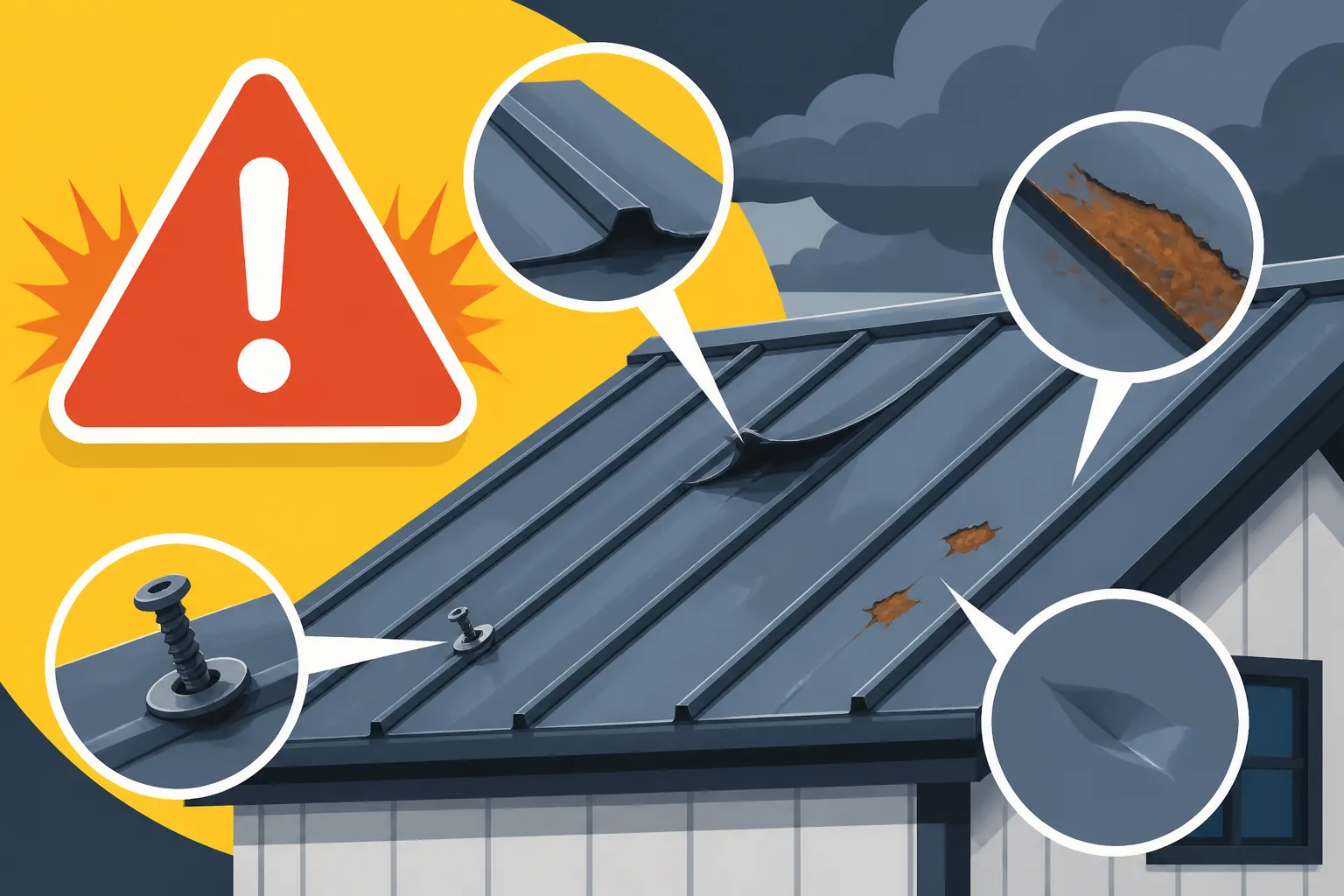
Most small dents that don't puncture the panel or compromise the protective coating are often considered cosmetic. They might not look pretty, but they won't necessarily lead to leaks or structural issues. However, significant dents that have sharp creases or have removed the protective finish could expose the bare metal, creating potential sites for rust and accelerated degradation. It's crucial to distinguish between a superficial ding and a damage point that could lead to a breach in the weatherproofing, especially if you live in an area prone to severe weather. Regularly inspecting your roof, or having a professional do it, can help determine if these imperfections are purely aesthetic or a precursor to bigger problems.
Loose Fasteners or Screws
For metal roofs that use exposed fasteners, like many corrugated or R-panel systems, loose screws are a common but often overlooked sign of trouble. These fasteners are typically installed with a rubber washer designed to create a watertight seal. However, over years of thermal expansion and contraction (where the metal heats up and expands, then cools down and contracts), intense winds, or simply age, these washers can degrade, crack, or dry out.
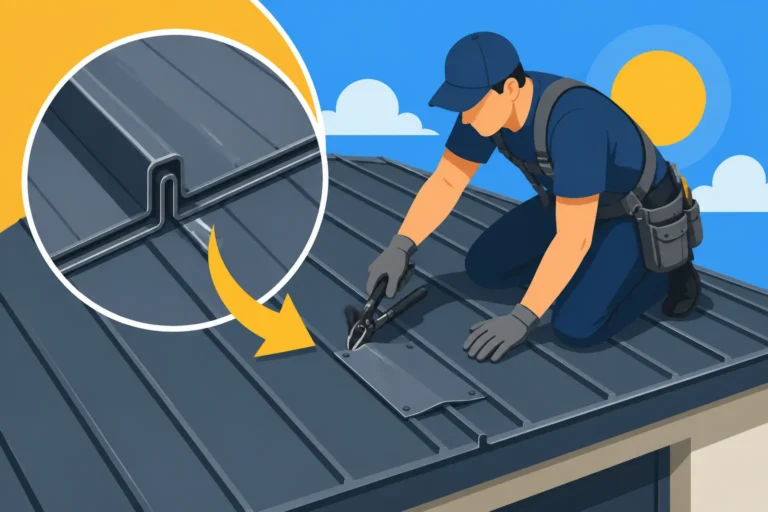
When the washer fails, the screw can back out slightly, or water can seep in around it. You might notice the screw heads are no longer flush with the panel, or you might even see rust streaks running down from them. Each loose or compromised fastener is a potential entry point for water, slowly leading to leaks that can damage your roof decking, attic, and interior ceilings. Catching this early means a relatively simple fix: replacing the old screws with new, oversized ones that have fresh, durable washers, or even re-tightening existing ones if the washer is still viable. This is a maintenance item that can significantly extend the life of an exposed fastener metal roof.
Escalating Issues: When Problems Become More Serious
Once your metal roof moves past the subtle hints, it starts sending clearer, more urgent signals. These aren't just cosmetic woes; they're direct threats to your home's integrity and your peace of mind. Ignoring these escalating issues can quickly turn a manageable repair into a costly replacement project. It’s time to take these signs seriously and consider bringing in an expert, perhaps starting with a search on platforms like Modernize, to assess the damage.
Visible Rust and Corrosion
While many modern metal roofs are designed to be highly resistant to rust, it's not entirely impossible for corrosion to set in, especially on older roofs, specific materials, or in areas where coatings have been compromised. Rust is the most obvious enemy of metal and a major red flag. For instance, an untreated scratch on a steel panel that exposes the underlying metal can start to rust, particularly in humid or coastal environments.
There are different types of corrosion to look out for. Surface rust, which is often reddish-brown, is usually the first stage and can sometimes be treated if caught early with rust converters and sealants. However, if you see widespread rust, particularly perforation (where rust has eaten completely through the metal), then the integrity of the panel is severely compromised. This often happens around fasteners, seams, or areas where debris has accumulated and held moisture. Unlike surface fading, significant rust means the metal itself is degrading, leading to structural weakening and eventual leaks. If your roof is displaying significant rust, especially in multiple areas, it’s past the point of minor maintenance and requires a professional assessment to determine if specific panels need replacement or if the entire roof is failing. For more on this, you might find our guide on Metal Roof Rust and Corrosion Treatment helpful.
Leaks and Water Penetration
This is the big one, the undeniable sign that your roof isn't doing its job. A leak, no matter how small, is an urgent problem. You might spot water stains on your ceiling, dripping water in your attic, or even mold growth in damp areas. The frustrating thing about roof leaks, especially with metal, is that the point where you see water inside isn't always directly above the source of the leak on the roof. Water can travel along trusses, beams, and even the underside of panels before showing itself.
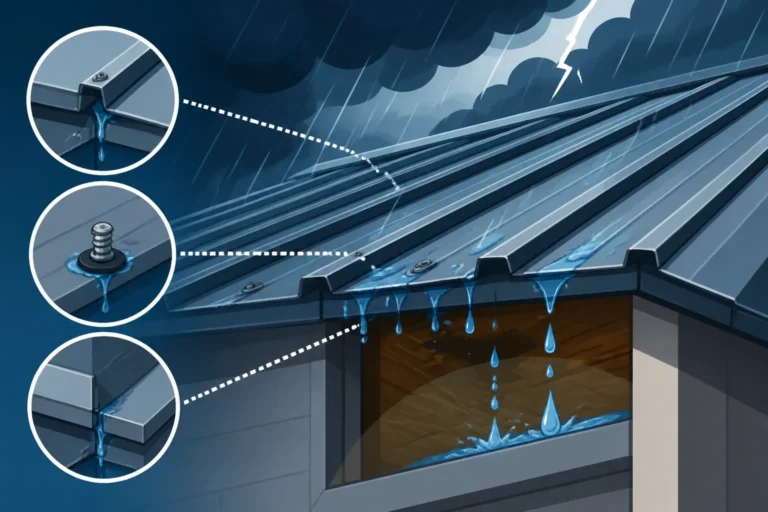
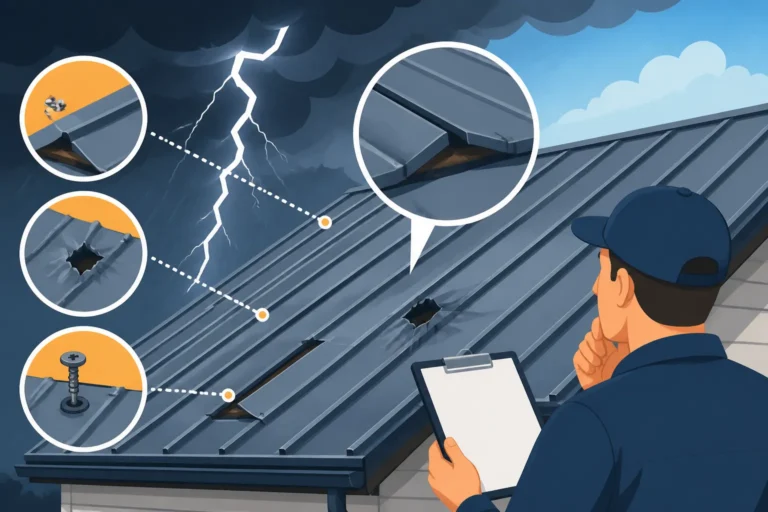
Common leak points on metal roofs include compromised seams (especially on exposed fastener panels), flashing around chimneys, skylights, or vents, and damaged panels themselves. High winds can lift panels, allowing water to get underneath, or hail can create micro-fractures that allow slow seepage. If you're experiencing leaks, it means the roof's primary function—keeping your home dry—is failing. Don't delay addressing this. It's not just about the roof; prolonged water intrusion can lead to rotten decking, damaged insulation, electrical hazards, and extensive interior damage, making a prompt Metal Roof Leak Repair Guide essential reading.
Lifting or Detached Panels/Shingles
Severe weather, particularly strong winds, can wreak havoc on a metal roof, especially if it wasn't installed correctly or if the fasteners have weakened over time. When you see panels or individual metal shingles lifting, flapping, or entirely detached, it’s a critical sign of failure. This isn't just a matter of aesthetics; it's a structural breach that leaves your home exposed to the elements.
A lifted panel can act like a sail in the wind, catching more air and further loosening adjacent panels. It also creates a wide-open pathway for rain, snow, and debris to enter your attic and home. The damage often starts with fasteners pulling through the metal or seams failing. In high-wind zones, securing your metal roof properly is paramount. If you observe any panels that are no longer flush with the roof deck or have completely come off, this requires immediate attention from a qualified professional. A swift repair can prevent further damage, but significant detachment might indicate broader installation issues or material fatigue across the entire roof system. Our guide on Metal Roof Storm, Hail & Wind Damage offers more insights into these kinds of issues.
Structural and Performance Problems: Beyond the Surface
Sometimes, the problems with a failing metal roof aren't just about what you see on the surface or the occasional drip. They delve deeper, impacting the structural integrity and the very performance benefits you expected from your investment. These are the kinds of signs that reveal a roof is not merely aging, but fundamentally losing its ability to protect and insulate your home effectively. Addressing these issues often requires a thorough inspection to get to the root cause, and this is where platforms like Modernize can connect you with experienced professionals.
Oil Canning and Panel Deformation
Oil canning is a visual phenomenon characterized by waviness or distortion in flat metal panels, appearing as ripples or buckles. While often considered a cosmetic issue, if it becomes severe or accompanies other problems, it can signal deeper structural or installation flaws. It typically occurs due to stress in the metal during manufacturing, improper handling, or incorrect installation that doesn't account for thermal expansion and contraction.
While minor oil canning usually doesn't affect the roof's performance or lifespan, significant and widespread panel deformation could be a sign of panels buckling under undue stress. This might happen if fasteners are over-tightened, if the panels were installed in extreme temperatures, or if there's movement in the underlying roof deck. If the oil canning is accompanied by cracking, exposed bare metal, or areas where fasteners are pulling loose, it moves beyond cosmetic and into the realm of structural concern, potentially leading to leaks or accelerated material fatigue. It’s important for a professional to assess if the deformation is stable or worsening.
Compromised Flashing and Trim
Flashing and trim pieces are the unsung heroes of any roofing system, especially metal roofs. These are the metal strips or custom-bent pieces installed around vulnerable areas like chimneys, skylights, vents, valleys, and edges to prevent water intrusion. If these components are compromised, your entire roof is at risk, even if the main panels are in perfect condition. Over time, flashing can become loose, cracked, bent, or corroded, often due to harsh weather, improper installation, or the natural expansion and contraction of the roof components.
You might notice gaps where flashing meets a wall or chimney, bent pieces that no longer create a tight seal, or even rust on the flashing itself. Water will always find the path of least resistance, and often, that path is through faulty flashing. This leads to leaks that can be difficult to trace and costly to repair, as the water can travel far before becoming visible inside your home. Replacing or repairing compromised flashing and trim is critical for maintaining your roof’s watertight seal and preventing extensive damage to your home’s structure. Details on the proper installation and maintenance of these elements can be found in a guide covering Metal Roof Trim and Flashing Cost.
Decreased Energy Efficiency or Increased Noise
One of the less obvious, but still significant, signs of a failing metal roof can be a noticeable change in your home’s energy efficiency or an increase in unusual noises. Metal roofs are renowned for their energy efficiency, reflecting solar radiant heat and helping to keep your home cooler in hot climates. They also tend to be quieter than people often assume, especially when properly installed over adequate decking and underlayment.
If you suddenly find your energy bills climbing despite no changes in your usage, it could be a sign that your roof system’s thermal performance is degrading. This might be due to issues with the underlying Metal Roof Underlayment and Ventilation Guide that has become damaged, compressed, or shifted, allowing more heat transfer. Similarly, an increase in rattling, creaking, or excessive noise during wind or rain could indicate loose panels, failing fasteners, or issues with the roof’s attachment to the decking. While some "thermal movement" noise is normal, a sudden increase or persistent loud noises warrant investigation. These issues suggest that the roof system, as a whole, is no longer performing optimally, impacting your comfort and your wallet.
Age and Wear: The Inevitable Factors
Even the most robust metal roofs, with lifespans stretching 40 to 70 years or more, aren't immune to the relentless march of time. Eventually, age and cumulative wear will catch up. Recognizing these inevitable factors is crucial for making informed decisions about whether to invest in significant repairs or plan for a full replacement. It’s about understanding the long-term value and when you’re simply throwing good money after bad.
Approaching End of Expected Lifespan
Every roofing material has an expected lifespan, and while metal roofs are at the top of that list, they still have one. Steel and aluminum roofs often last 40-70 years, while more exotic metals like copper can exceed 100 years. If your metal roof is nearing the higher end of its projected lifespan, say 35-40 years for a steel roof, it's naturally going to start showing more signs of wear and tear.
Even with meticulous maintenance, materials degrade. Coatings wear thin, seals become brittle, and the metal itself, after countless cycles of expansion and contraction, can fatigue. When your roof is older, these issues become more frequent and widespread. Instead of just replacing a few fasteners, you might find entire sections of flashing need to be redone, or multiple panels are showing significant surface degradation. This is when the question shifts from "Can I repair this?" to "Is it truly cost-effective to repair this, given its age?" Understanding your specific roof material and its typical longevity, as detailed in articles like Metal Roofing Materials Compared: Steel, Aluminum, Copper & Zinc or Metal Roof Lifespan: How Long Do They Last, is key here.
Recurring Repairs
One of the most frustrating signs that your metal roof is failing is the endless cycle of recurring repairs. You fix one leak, and another pops up a few months later. You replace a few loose screws, and then more start backing out across another section of the roof. This "whack-a-mole" approach to roofing is a clear indication that individual problems are no longer isolated incidents but symptoms of a systemic failure.
When repair costs start accumulating and the intervals between fixes shrink, you're likely reaching the point of diminishing returns. At this stage, the money you're spending on constant repairs could very well be put towards a new roof that offers decades of trouble-free performance and comes with a fresh warranty. It becomes a financial calculation: is it more sensible to invest in one major solution (a new roof) rather than continuously patching a failing system? This is a prime time to get multiple quotes for both extensive repairs and full replacement.
Catastrophic Damage
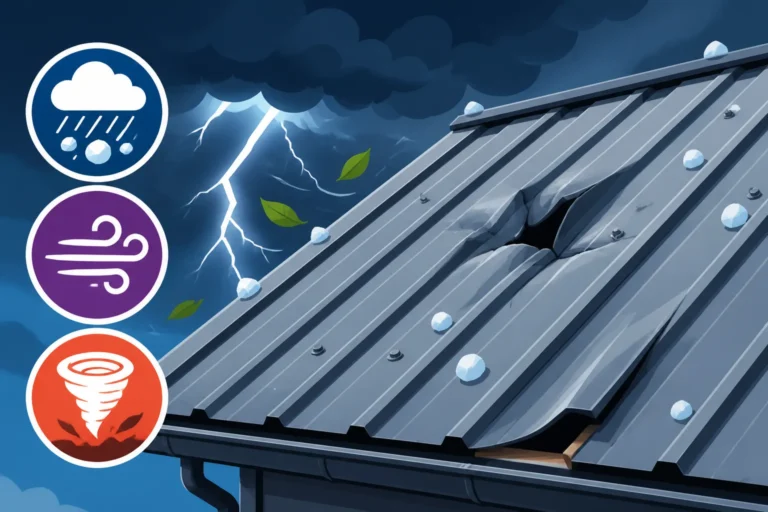
Sometimes, there's no subtle hint or gradual decline; disaster strikes. Catastrophic damage, often from extreme weather events like hurricanes, tornados, or severe hailstorms, can render a metal roof beyond repair in an instant. This could involve large sections of panels ripped away, severe structural deformation of the roof deck, or widespread perforation from large hail.
In these scenarios, the signs are unmistakable. Your roof might be visibly open to the elements, or there might be significant interior damage already. While metal roofs are excellent at standing up to severe weather, even they have their limits, especially when hit by debris or extreme forces. In such cases, repair might be impossible or impractical, and a full replacement is the only viable option. Dealing with insurance claims for such damage can be complex, and understanding your Metal Roof Warranties: Workmanship vs Manufacturer can be crucial. When faced with catastrophic damage, it's not a question of if you need a new roof, but when and how to get it done as quickly and efficiently as possible.
Comparing Repair vs. Replacement
Deciding whether to repair or replace your metal roof can be a tough call, especially with such a significant investment. Here’s a quick overview of factors to consider:
| Factor | Consider Repair If… | Consider Replacement If… |
|---|---|---|
| Age of Roof | Less than 25-30 years old, well within lifespan. | Nearing or exceeding its expected 40-70 year lifespan. |
| Extent of Damage | Isolated issues (e.g., a few loose fasteners, minor rust on one panel, small flashing leak). | Widespread issues (e.g., extensive rust, multiple leaks, severe panel deformation, large storm damage). |
| Cost of Repair | Significantly less than replacement, offering good value for money. | Repair costs are approaching or exceeding 50% of a new roof's cost, or repairs are recurring. |
| Structural Integrity | Underlying roof deck and structure are sound. | Evidence of rot, widespread damage to decking, or structural compromise. |
| Future Plans | Planning to sell soon, or want to extend life a few more years. | Planning to stay in the home long-term, desire for improved aesthetics, energy efficiency, or different profile. |
| Warranty | Existing warranty covers the repairs. | Warranty has expired, or issues are not covered. |
| Aesthetics | Minor cosmetic flaws that don't bother you. | Significant fading, oil canning, or visible damage affecting curb appeal. |
For a deeper dive into this decision, check out our guide on Metal Roof Repair vs Replacement: How to Decide. If you're looking at the cost side, our Metal Roof Cost: Complete 2026 Guide can provide a comprehensive overview.
Finding the Right Professional for Your Metal Roof Assessment
Once you’ve identified potential signs of a failing metal roof, the next crucial step is to get a professional assessment. This isn’t a job for just any contractor; metal roofing requires specialized knowledge and experience. Look for contractors who specifically advertise expertise in metal roofing systems, especially the type you have (e.g., standing seam, corrugated, metal shingle). Platforms like Modernize can be incredibly helpful resources for connecting you with local, vetted roofing professionals who specialize in metal roof inspections and installations.
Don’t hesitate to ask about their experience, request references, and verify their licensing and insurance. A reputable contractor will provide a thorough inspection, explain their findings in clear terms, and offer detailed, itemized quotes for both repair and replacement options. They should also be transparent about the pros and cons of each solution, helping you make the best decision for your home and budget. Remember, a trustworthy professional will prioritize your long-term satisfaction over a quick sale. Taking the time to properly How to Hire a Metal Roofing Contractor can save you countless headaches and ensure your home is protected for years to come.
Disclaimer
The information provided in this article is intended for general guidance and informational purposes only, and does not constitute professional advice. While we strive to provide accurate and up-to-date content, metal roofing conditions can vary significantly based on material, installation, age, climate, and maintenance. Always consult with a qualified and licensed metal roofing professional for specific assessments, recommendations, and services regarding your individual roofing needs.