What to Do If a Roofer Does Bad Work
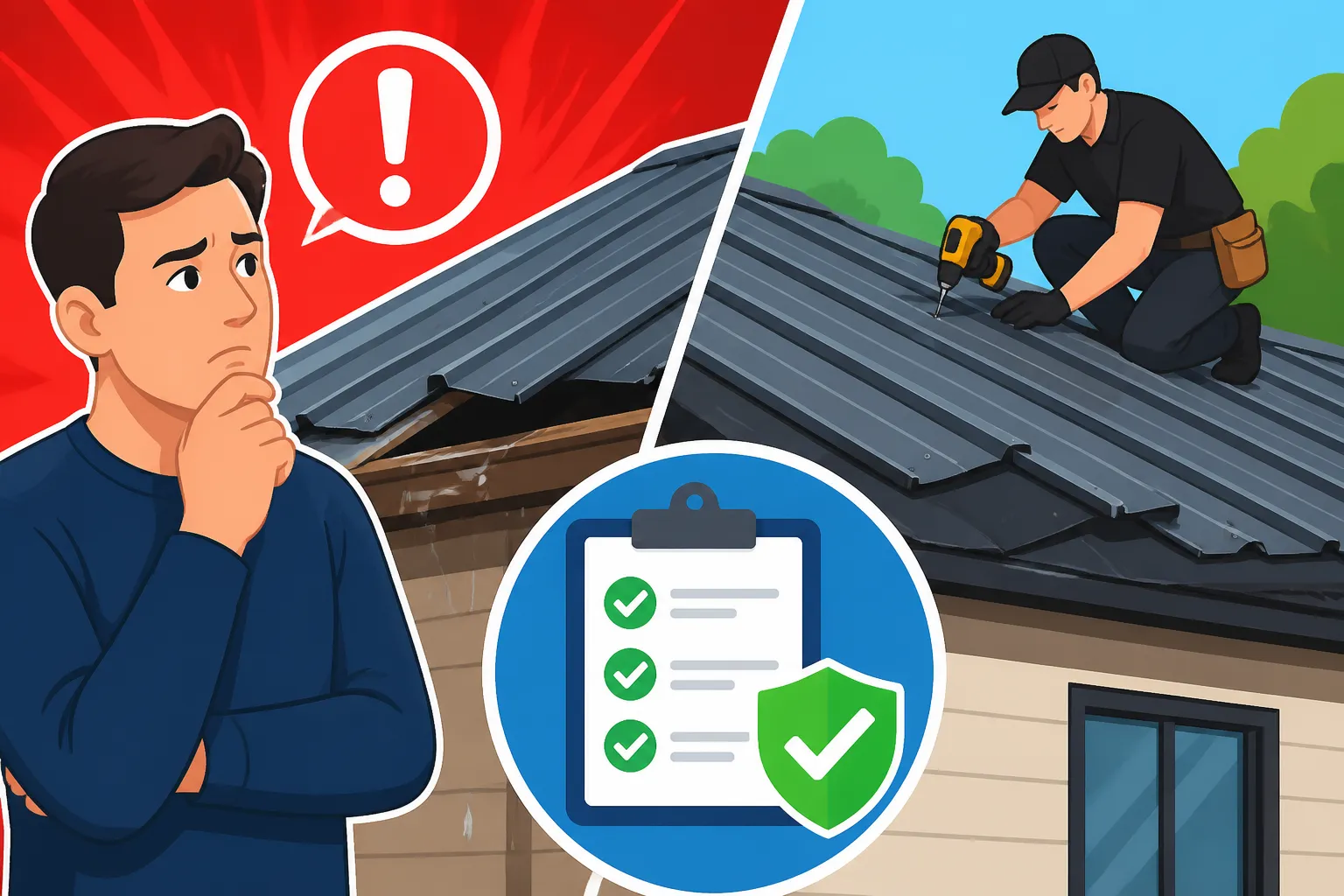
Discovering that your expensive new metal roof was installed incorrectly is a gut-wrenching experience that many homeowners face after a heavy storm or a change in seasons. Whether it is crooked panels, persistent leaks, or terrifying popping noises, bad workmanship can compromise your home's integrity. This guide provides a strategic roadmap to confront your contractor, protect your finances, and successfully remediate the damage.
Identifying Symptoms of Subpar Metal Roof Installation
The first step in addressing bad work is knowing exactly what went wrong. Unlike asphalt shingles, metal roofing requires precision engineering and specific tools. If a contractor tries to "wing it" using standard roofing techniques, the results are often disastrous. You might notice visual defects first, but the hidden issues are usually the ones that cause long-term structural damage.
Visible Panel and Fastener Defects
One of the most common signs of a botched job is "oil canning," which looks like wavy or distorted ripples across the flat areas of the metal panels. While a tiny bit of this can happen due to thermal expansion, excessive waviness often means the fasteners were over-tightened or the panels were forced into place without allowing for natural movement. If you have an exposed fastener system, check the screws. Are they crooked? Are the rubber washers squashed flat or missing entirely? These are the primary culprits in Why Is My Metal Roof Leaking at the Screws and should be addressed immediately before the underlayment begins to rot.
Another red flag is improper alignment. If the rows of panels are not perfectly parallel to the eaves or if the overhang is inconsistent, it’s not just an aesthetic issue; it’s a sign that the contractor didn't use a chalk line or follow the manufacturer’s layout instructions. When panels are out of alignment, the interlocking seams won't sit correctly, which eventually leads to water infiltration. You should also look at the "drip edge" and the eaves. If water is running behind the gutter rather than into it, the starter strips were likely installed incorrectly.
Inadequate Flashing and Sealant Use
Flashing is the most critical component of any roof, acting as the primary defense against water at joints and penetrations. If you see huge globs of caulk or roof cement around your chimney, vents, or valleys, be very worried. Quality metal roofing relies on "mechanical" flashing—metal pieces bent and tucked into one another—rather than buckets of sealant. Over-reliance on caulk is a classic sign of an amateur who doesn't understand Metal Roof Components & Accessories Explained.
Take a close look at the areas where the roof meets a wall or a chimney. If the metal isn't tucked into a counter-flashing or if the "apron" flashing is sitting on top of the panels without a proper seal, you are looking at a Metal Roof Leak Around Chimney or Skylight waiting to happen. In many cases, bad contractors will skip the custom-bent metal transitions entirely, opting for generic products that don't match the profile of your specific roof. This leads to gaps where wind-driven rain and snow can migrate upward and under your roofing system.
Structural and Ventilation Oversight
A metal roof needs to breathe, and the deck it sits on must be perfectly flat. If you hear loud banging or popping noises during the day, it’s often because the panels are pinned too tightly to a deck that isn't level. Furthermore, if the contractor failed to follow the Metal Roof Underlayment and Ventilation Guide, you might start seeing "sweat" or condensation in your attic. This happens when the roof lacks a proper ridge vent or when the intake vents at the soffits are blocked.
Bad work also extends to what you can't see. If the contractor didn't replace rotted decking or if they used the wrong type of underlayment, the metal panels will eventually fail from the inside out. Some homeowners discover too late that their contractor skipped the "ice and water shield" in the valleys, which is a code violation in many cold-weather states. If you suspect these issues, you may need to consult a third-party inspector to verify the Metal Roof Decking Requirements were actually met.
Communication and Confrontation Strategy
Once you’ve documented the issues, you need to approach the contractor. This is often the most stressful part of the process, but keeping a level head and a paper trail is your best defense. You want to give them a chance to fix it, but you also need to set hard boundaries to ensure you aren't being led on while your "workmanship warranty" clock ticks down.
The Documentation Phase
Before you pick up the phone, grab your camera and a notebook. Take high-resolution photos of every defect you found. If it’s raining and you can safely see a leak, record a video of the water entering the home. Match these photos with the original contract specifications. For example, if your contract called for a 24 vs 26 Gauge Metal Roofing: Which Is Best? and you suspect they used a thinner, cheaper material, look for manufacturer stamps on the underside of the panels in the attic.
Keep a detailed log of every interaction. If you have a phone call, follow it up with an email stating, "Per our conversation today at 2:00 PM, you agreed to come out on Tuesday to inspect the leaking valley." This prevents the "he said, she said" dynamic that often kills legal claims later. If you are using a platform like Modernize to find or manage your contractor relations, check their project tracking tools to see if you can log these disputes officially within their system.
Issuing a Formal Notice to Correct
Standard "friendly" texts are rarely enough when the work is fundamentally flawed. You should issue a formal "Notice to Correct" via certified mail. This document should list the specific defects, reference the sections of the What a Metal Roof Contract Should Include that were violated, and provide a reasonable deadline (usually 10-14 days) for the repairs to begin.
Be firm but professional. State that if the repairs are not completed to industry standards by the deadline, you will be forced to terminate the contract and seek a different professional. This is also the time to withhold any final payments. If you followed a Normal Deposit and Payment Schedule for a Roof, you should still have at least 10% to 25% of the total cost in your pocket. Do not release this money until a third-party inspector or a local building official clears the work.
Using Third-Party Mediation
If the contractor is being ghost-like or defensive, you might need a middleman. Many homeowners find success by reaching out to the manufacturer of the metal panels. If the contractor is a "Certified Installer," the manufacturer has a vested interest in making sure their products aren't being installed poorly, as it reflects on their brand. They may send a representative to inspect the job.
You can also leverage consumer advocacy platforms. If you initially sourced your contractor through a service like Modernize, they often have dispute resolution resources or can help you vet the contractor's standing. Additionally, filing a complaint with the Better Business Bureau (BBB) or posting a factual, photo-backed review on Google can sometimes motivate a slow-moving contractor to make things right to protect their online reputation.
Legal and Regulatory Recourse Options
If communication fails and the roof is still a mess, it's time to shift from "negotiation mode" to "protection mode." You have several layers of protection depending on your state and the specific terms of your agreement, but you must act quickly before the contractor disappears or files for bankruptcy.
Filing a Claim Against the Contractor's Bond
Most reputable roofing companies are required to be bonded. A "surety bond" is essentially a pot of money set aside to protect consumers from incomplete or incompetent work. If your roofer does bad work and refuses to fix it, you can file a claim directly with their bonding company. To do this, you'll need the contractor's bond number, which should be on their initial quote or available through your local building department.
The bonding company will conduct its own investigation. If they find the claim valid, they may pay out the cost to have another contractor fix the roof, up to the bond's limit. This is why it is vital to verify Metal Roof Contractor Licensing, Bonding & Insurance before you ever sign a contract. Note that bonds are different from general liability insurance; the bond covers the work quality, while insurance covers accidental damage (like if they dropped a ladder through your window).
Engaging the State Licensing Board
In many states, the Department of Professional Regulation or the State Roofing Board has the power to suspend or revoke a contractor's license for "gross negligence" or "failure to follow building codes." Filing a formal complaint here is often more effective than a lawsuit because it threatens the contractor’s ability to stay in business.
Once a complaint is filed, the board may send a state inspector to your home. If the inspector confirms the work is subpar, they can issue a "Stop Work" order or a "Notice of Violation." In states like Florida, the Florida Metal Roof Codes: FBC, HVHZ & Approvals are incredibly strict. A contractor failing to meet these can face massive fines. Even if the state doesn't force them to pay you, the threat of losing their license often brings a difficult contractor back to the negotiating table very quickly.
Small Claims Court and Legal Action
If the damage is significant but falls under a certain dollar amount (usually $5,000 to $15,000 depending on your jurisdiction), Small Claims Court is a viable path. You don't usually need a lawyer, and the process is relatively fast. You will need to present your photos, your "Notice to Correct," and ideally, a quote from another roofer explaining the Metal Roof Repair vs Replacement: How to Decide for your specific situation.
For larger, more complex projects—especially those involving structural damage or mold—you may need to hire a construction defect attorney. They can help you file a lawsuit for breach of contract. Before going this route, check if your contract has a "Mandatory Arbitration" clause. These clauses require you to settle disputes through a private arbitrator rather than a public court, which can sometimes be faster but may limit your ability to appeal the decision.
| Action Item | Best For | Potential Outcome |
|---|---|---|
| Bond Claim | Financial recovery for repairs | Payout from a surety company to hire a new pro |
| State Board Complaint | Leveraging the contractor's license | Fines for the roofer or forced remediation |
| Manufacturer Contact | Certified installation errors | Manufacturer intervention or warranty support |
| Small Claims Court | Low-to-mid range financial disputes | Legal judgment ordering a refund or damages |
| Building Inspection | Code violations and safety | Official documentation of bad work for legal use |
Navigating Insurance and Warranty Claims
When the roof is failing, you might be tempted to call your insurance company immediately. However, you need to be careful. Insurance generally covers "sudden and accidental" damage (like hail or wind), not "faulty workmanship." If you file a claim for a leak caused by bad installation, your insurance may deny the claim and then mark your roof as a "pre-existing condition" or a "maintenance issue," making it harder to get coverage in the future.
Workmanship vs. Manufacturer Warranties
It is crucial to understand the difference between the two types of warranties that should come with your roof. The Manufacturer Warranty covers defects in the metal itself (like the paint peeling or the metal rusting prematurely). This warranty will almost certainly be voided if the installation was done incorrectly. If your contractor didn't follow the rules for Metal Roof Trim and Flashing Cost, the manufacturer will not pay for the resulting leaks.
The Workmanship Warranty is provided by the contractor and covers the actual labor. If the roofer does bad work, this is the warranty you are trying to enforce. If the contractor goes out of business, this warranty is usually worthless unless it was "third-party backed." When you use a service like Modernize, you should ask if they can help you identify contractors who offer transferable or third-party warranties that stay with the house even if the company folds.
Getting a "Letter of Un-repairability"
If the work is so bad that the roof cannot be fixed—only replaced—you need a "Letter of Un-repairability" from a reputable, high-end roofing company. This document is golden in legal and insurance disputes. It should detail exactly why the current installation cannot be salvaged. Common reasons include "improper fastener spacing throughout," "irreparable damage to panel seams," or "failure to install required underlayment."
This letter serves as expert testimony. When you are looking for this, don't just call a general handyman. Seek out a specialist in Standing Seam Metal Roof Cost or someone who does high-end custom metal work. They have the expertise to spot the nuanced errors that a general contractor might miss. Having this document in hand makes it much harder for the original bad roofer to claim that you are just being "picky."
Hiring a Professional to Remediate the Damage
Once you have parted ways with the original contractor, your goal is "remediation." You aren't just looking for a roofer; you’re looking for a specialist who knows how to fix someone else's mess. This is often more expensive and difficult than a fresh install because the new contractor has to take on the liability of the existing structure.
Vetting a Recovery Contractor
When looking for a remediation pro, be 100% transparent about the situation. A good contractor will want to see the old contract and the inspection reports. Ask them, Questions to Ask a Metal Roofing Contractor Before You Hire specifically about their experience with "take-over" jobs. You want to hear that they are going to strip it back to the deck to ensure the Metal Roof Underlayment Cost was handled correctly.
Avoid anyone who says they can "just slap some sealant on it." You’ve already been down that road. Look for someone who is manufacturer-certified and has a high rating on Modernize. These pros are more likely to follow the book because they have a reputation and a certification to protect. It’s also wise to check if they have a dedicated service department; companies that only do "new builds" often lack the diagnostic skills needed for complex repairs.
Comparing Remediation Bids
Expect remediation bids to be higher than your initial quotes. This is because they have to factor in the labor of removing and disposing of the bad work, plus the risk of discovering hidden rot. When you How to Read and Compare Metal Roof Quotes for a repair job, look for a "discovery clause." This protects you and the contractor by setting a pre-agreed price for replacing rotted plywood or adding missed insulation if found during the tear-off.
Ensure the new contract is airtight. It should specify that the new work will meet or exceed all local building codes and manufacturer specifications. If you are switching from an exposed fastener system to something more durable, check the Standing Seam vs Corrugated Metal Roof cost differences. Sometimes, it’s worth spending a bit more now to upgrade to a system that is less prone to the "bad work" symptoms you just suffered through.
Warning Signs Your Metal Roof Needs Attention
If you aren't sure if the work is truly "bad" or just "settling," there are specific signs that warrant an immediate professional inspection. Metal is a "noisy" material by nature, but there is a big difference between the quiet ticking of thermal expansion and the sound of panels lifting in the wind.
- Internal Ceiling Stains: If you see brown spots on your drywall, the underlayment has failed.
- Missing Trim Pieces: If a "ridge cap" or "rake trim" blows off in a minor windstorm, it wasn't fastened to the structural members.
- Visible Gaps: If you can see light coming through the roof from inside your attic, the flashing or ridge vent is wide open.
- Excessive Rust: On a new roof, any rust at the cut edges suggests the contractor used a high-speed saw (which burns the edges) instead of "snips" or a "nibbler." This is a major violation of Metal Roof Maintenance Guide standards.
If you catch these signs early, you might be able to save the roof with a partial replacement. However, if the entire field of panels was installed without a Metal Roof Underlayment: Synthetic vs Felt barrier, you may be looking at a total loss.
Metal Roof Installation Standards Disclaimer
This guide is intended for informational purposes only and does not constitute legal or professional engineering advice. Roofing codes and consumer protection laws vary significantly by state and municipality. Always consult with a licensed attorney and a certified roofing inspector in your local jurisdiction before taking legal action or terminating a contract. Your safety is paramount; do not attempt to inspect a roof yourself if you do not have the proper safety equipment and training.