Metal Roof Leak in Heavy Rain: Causes
There's nothing quite like the sound of heavy rain hitting your roof, only to realize that some of that rain isn't staying where it belongs – outside. A metal roof leaking during a downpour can be incredibly frustrating, especially since you probably invested in it for its renowned durability and longevity. You expect it to stand up to anything Mother Nature throws at it, and when it doesn't, it feels like a major letdown. This guide is here to shed light on the most common reasons your metal roof might be failing you during heavy rain, helping you understand the culprits and what to look for.
Understanding Why Metal Roofs Leak During Heavy Rain
It’s easy to think a metal roof is impervious to everything once it’s installed. After all, it's metal! But just like any roofing system, metal roofs have their vulnerabilities, especially when subjected to sustained, heavy rainfall. The sheer volume and force of water during a torrential downpour can exploit even the smallest imperfections or weaknesses that might go unnoticed during lighter rain.
The Myth of Metal Roof Invincibility
Many homeowners opt for metal roofing with the expectation that it will be a "set it and forget it" solution, an impenetrable shield against the elements. While metal roofs are indeed incredibly robust, offering superior longevity and resistance to fire and wind compared to many other materials, they are not entirely invincible. The idea that once it’s up, you’ll never have another leak again is a common misconception. Over time, components can degrade, installation errors can become apparent, and unforeseen events can compromise its integrity. It’s not a matter of if a roof component might fail, but when a weakness might be exposed by extreme conditions like heavy rain.
What happens is that the cumulative effect of constant thermal expansion and contraction, UV exposure, and the natural aging of sealants and fasteners can slowly but surely create tiny pathways for water. During a light shower, these might not be an issue as the water simply evaporates or drains away before it can seep in. But when the skies open up and the rain comes down in sheets, those tiny pathways become channels, and gravity does the rest, leading to visible leaks inside your home. It’s often these subtle, cumulative factors that lead to dramatic failures during the most intense weather.
How Water Behaves on a Roof Especially with Heavy Flow
Water is relentless, always seeking the path of least resistance. On a roof, its behavior changes significantly between a gentle drizzle and a heavy downpour. During heavy rain, the volume of water can overwhelm drainage systems, creating standing water or causing sheets of water to flow in unexpected ways. A well-designed and properly installed metal roof should channel water efficiently off the structure. However, when the flow rate is exceptionally high, any obstruction or minor deviation in the panel system can cause water to pool or even wick up beneath panels due to capillary action.
Consider your roof's pitch; a very low-slope metal roof, while designed for certain types of panels like standing seam, can still be more susceptible to pooling if drainage is compromised. The sheer kinetic energy of heavy raindrops can also wear down protective coatings and expose fasteners over time. Furthermore, if your roof has any areas where water can collect, even momentarily, the prolonged saturation creates a hydrostatic pressure that can force water through incredibly small openings. This is why a leak might only appear during severe storms, even if the underlying issue has been present for a while. Understanding these dynamics is crucial to pinpointing why your otherwise sturdy metal roof might be letting you down.
Common Culprits: Installation Flaws and Wear
The vast majority of metal roof leaks, especially those that manifest during heavy rainfall, can be traced back to either how the roof was initially put together or the natural wear and tear on its various components over years of exposure. Even the smallest oversight during installation can become a significant problem when tested by a severe storm.
Improper Fastener Installation and Degradation
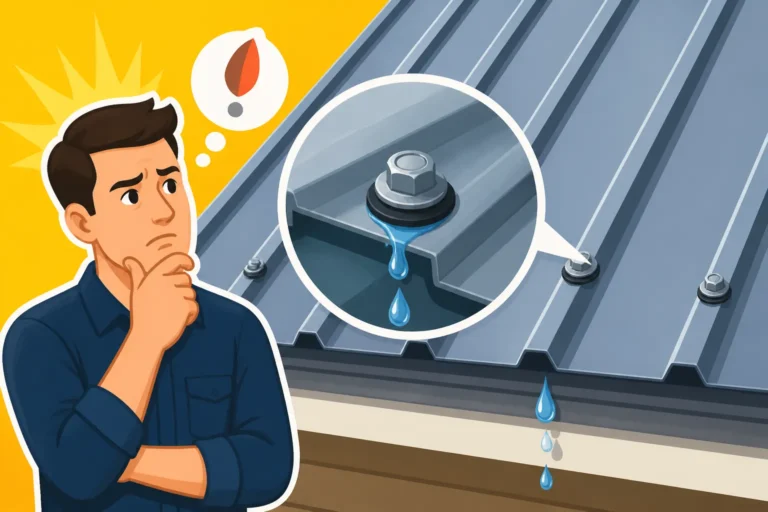
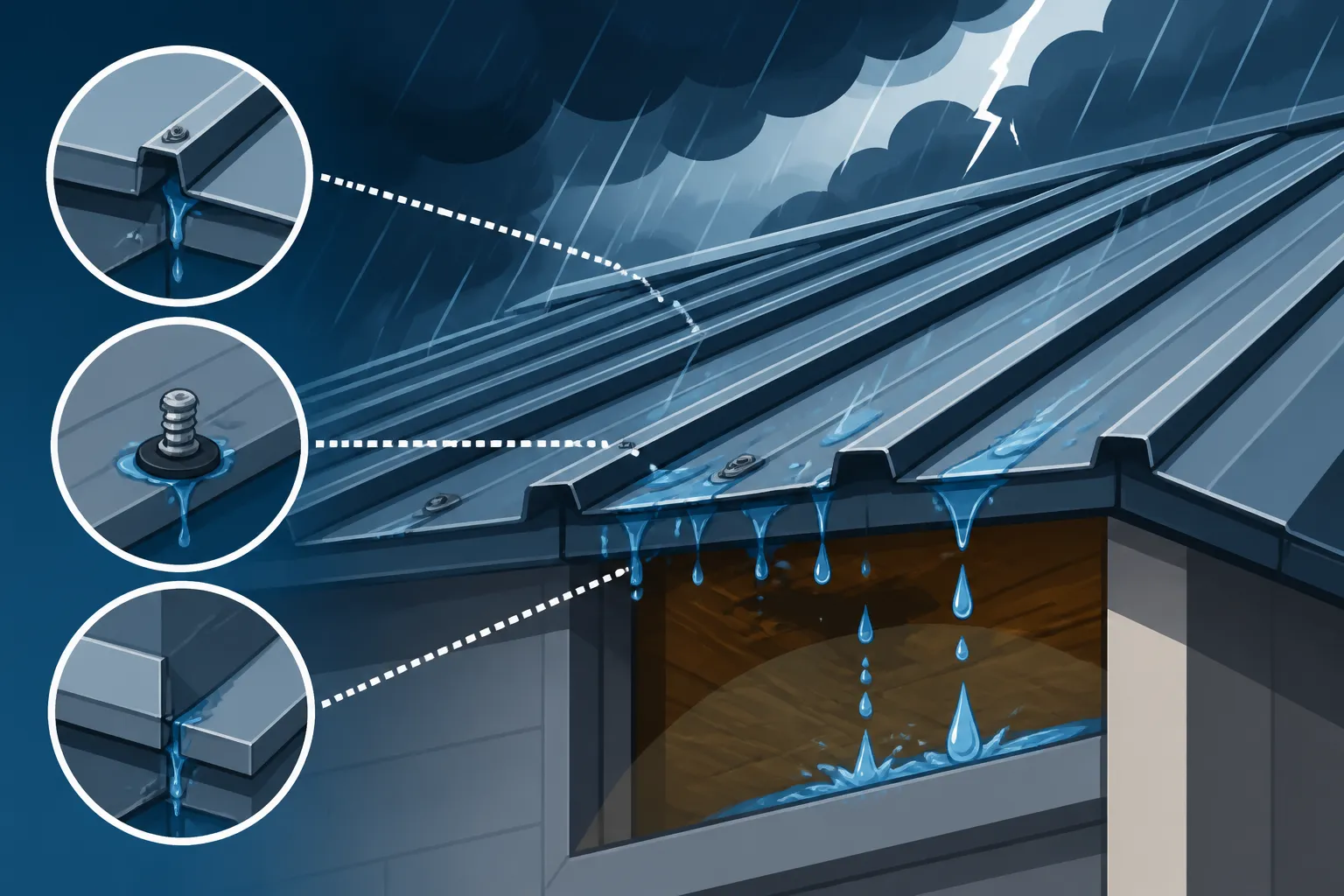
One of the most frequent culprits for leaks in metal roofs, particularly those with exposed fasteners like corrugated or R-panel systems, relates directly to the screws and their seals. When screws aren't driven properly – either overtightened, undertightened, or angled incorrectly – they compromise the integrity of the watertight seal. An overtightened screw can strip the hole or crush the rubber washer, while an undertightened one won't create a sufficient compression seal. An improperly angled screw might not sit flush, leaving a tiny gap.
Over time, even perfectly installed fasteners can succumb to the elements. The rubber washers beneath the screw heads are crucial for creating a watertight seal, but they degrade due to UV exposure and extreme temperature fluctuations. They become brittle, crack, or completely disintegrate, allowing water to penetrate around the screw shank and into the roofing system. During heavy rain, the constant flow of water makes these compromised seals prime entry points for leaks. Sometimes, screws can even back out slightly due to the constant expansion and contraction of the metal panels, further exacerbating the problem. If you're experiencing leaks, inspecting your fasteners should be high on your list of priorities. You can learn more about how to fix these issues in our guide on How to Replace Metal Roof Screws and Fasteners.
Flashing Failures Around Penetrations
Flashings are the unsung heroes of any roofing system, critical components that divert water away from vulnerable areas where the roof meets other structures or elements, such as chimneys, skylights, vents, and wall abutments. If these flashings are installed incorrectly, use an unsuitable material, or simply deteriorate over time, they become major liabilities during heavy rain.
Common flashing issues include insufficient overlaps, improper sealing with caulk or mastic that has dried out and cracked, or even the wrong type of flashing used for a specific application. For instance, a pipe boot around a vent pipe might crack due to UV exposure, or a valley flashing might not be wide enough or properly crimped, allowing water to splash back under the panels during an intense downpour. Heavy rain often exacerbates these flaws because the sheer volume of water makes it easier for it to find a path through tiny gaps or over poorly diverted edges. A detailed inspection of all roof penetrations and junctions is essential to identifying these often-hidden leak sources. For more on this, check out our piece on Metal Roof Flashing Repair.
Seam and Panel Disengagement
For standing seam metal roofs, which are lauded for their hidden fasteners and superior water shedding capabilities, seam integrity is paramount. These systems rely on panels being securely interlocked or seamed together. If the seams are not properly crimped or "zipped" during installation, or if excessive movement occurs due to thermal expansion/contraction or structural shifts, these seams can sometimes "unzip" or separate.
When a seam opens up, even by a millimeter, it creates a direct channel for water, especially during heavy, wind-driven rain. Similarly, for other panel systems, if panels are not adequately secured to the purlins or decking, they can lift or shift, compromising their overlaps and allowing water to penetrate. The intense pressure and volume of water during a storm will quickly exploit these structural weaknesses, leading to leaks that might be hard to trace until the interior damage is evident. Ensuring proper panel alignment and secure seaming is a critical step in Metal Roof Installation Process: Step by Step.
Design, Maintenance, and Environmental Factors
Beyond installation and general wear, there are several other factors related to the fundamental design of your roof, how well it's maintained, and the environmental conditions it faces that can contribute to leaks during heavy rain. Sometimes, the issue isn't a "flaw" per se, but rather a combination of circumstances that overwhelm the roof's intended design.
Insufficient Roof Pitch and Drainage Issues
The pitch, or slope, of your roof is a critical design element that dictates how effectively water drains. While metal roofs can perform well on lower slopes than many other roofing materials, there's still a limit. If a metal roof is installed on a pitch that is too low for the specific panel system chosen, heavy rain can easily lead to pooling or "ponding" of water. This creates hydrostatic pressure that will relentlessly push water through even the tiniest gaps in seams or fasteners.
Furthermore, issues with overall roof drainage can compound this problem. Valleys that are too shallow, inadequate gutter systems, or obstructions can hinder the rapid flow of water off the roof. During an intense downpour, if water can't evacuate quickly, it will simply sit and search for any weakness. Modernize can help connect you with experienced roofers who understand the nuances of roof pitch and drainage, ensuring your system is optimized for your local climate. This is particularly important for areas prone to heavy rainfall, where every detail of water management counts. Proper ventilation and underlayment also play a crucial role in preventing moisture issues, which you can learn more about in our Metal Roof Underlayment and Ventilation Guide.
Clogged Gutters and Ice Dams Even in Heavy Rain
You might think of ice dams as a winter problem, but clogged gutters can lead to similar issues during heavy rainfall, even without ice. When gutters are packed with leaves, twigs, and other debris, they can't effectively channel rainwater away from your roof and foundation. During a torrential downpour, the overflowing water has nowhere to go but to cascade down the sides of your house or, more problematically, back up and over the edge of your roof.
When water backs up against the fascia or lower roof edge, it can seep underneath the metal panels, especially if the drip edge or underlayment isn't perfectly installed. This standing water creates continuous pressure against the roof system, eventually finding its way into your home. Even in regions without harsh winters, heavy rain can create a "dam" effect if gutters are neglected. Regular gutter cleaning is a simple yet vital part of overall Metal Roof Maintenance Guide that often gets overlooked until a leak appears. It’s a classic case of a small, preventable issue leading to a much larger, more frustrating problem.
Extreme Weather and Debris Damage
Sometimes, leaks aren't a reflection of poor installation or age, but rather the direct consequence of extreme weather events or debris impact. High winds that accompany heavy rain can lift or buckle metal panels, compromising seams and fastener integrity. A strong gust might not completely rip off a panel, but it could bend an edge or pry open a seam just enough for water to enter during the subsequent rainfall.
Hail, another common companion to heavy storms, can cause dents in metal panels. While metal roofs are often highly impact-resistant, especially certain types like stone-coated steel, extremely large or jagged hail can still cause cosmetic damage or, in severe cases, compromise the protective coating and even the substrate, creating potential leak points. Falling branches or other storm debris can also cause direct impact damage, puncturing panels or bending flashing. Even smaller debris, like leaves and dirt, can accumulate in valleys or around flashing points, creating miniature dams that force water to pond and eventually find a way in. These factors underscore why it's so important to perform a post-storm inspection and address any Warning Signs Your Metal Roof Needs Attention.
Addressing the Problem: What to Look For
When you discover a metal roof leak during heavy rain, the immediate stress can be overwhelming. The key is not to panic, but to methodically identify the source. Understanding what to look for, both inside and outside, is the first step toward effective remediation. Sometimes, the visual evidence within your home can be misleading, as water can travel a fair distance before appearing through your ceiling or wall.
Identifying the Leak Source Interior Versus Exterior
When water stains appear on your ceiling, it's natural to assume the leak is directly above that spot. However, water often travels along rafters, pipes, or ceiling joists before dripping down. This means the actual entry point on your roof could be several feet away from where you see the interior damage. Start by tracing the leak path backward as much as possible. Look for darker streaks on insulation, water lines on wood, or visible drips.
On the exterior, after the rain has stopped and it's safe to do so, a careful inspection is needed. Start by looking at the most common leak points: around chimneys, skylights, plumbing vents, and any other roof penetrations. Examine the flashing around these areas for cracks, gaps, or signs of dislodgement. Inspect all exposed fasteners, checking for missing or cracked rubber washers or screws that have backed out. Look for any bent, punctured, or significantly dented panels. Pay close attention to roof valleys and edges, ensuring there are no debris blockages or signs of water backing up. If you're unsure or uncomfortable getting on your roof, don't hesitate to call a professional. For specific guidance, our article on How to Repair a Leaking Metal Roof offers helpful steps.
The Importance of Professional Inspection
While it’s good to have a basic understanding of what might be causing a leak, accurately diagnosing and repairing a metal roof leak, especially one that only appears during heavy rain, often requires the expertise of a seasoned professional. A qualified metal roofing contractor has the experience, tools, and safety equipment to conduct a thorough inspection. They can safely access all areas of your roof, identify subtle issues that might be missed by an untrained eye, and understand the intricate mechanics of different metal roofing systems.
A professional will not only pinpoint the exact source of the leak but also assess the underlying cause, whether it's an installation error, component degradation, or damage. They can also provide an objective assessment of the roof's overall condition, helping you decide between a simple repair or if more extensive work, like a partial replacement, is necessary. Using resources like Modernize can help you find reputable local contractors who specialize in metal roofing and can provide expert opinions and reliable solutions. It's an investment that can save you a lot of headache and potential further damage down the line. A professional can also advise on the nuances of your specific metal roofing types explained panels and whether they are suitable for your roof's pitch.
Common Metal Roof Leak Causes and Solutions
Understanding the cause is the first step, but knowing potential solutions can help you have a more informed conversation with your roofing professional.
| Leak Cause Category | Specific Problem | Typical Symptoms / Locations | Potential Solution |
|---|---|---|---|
| Installation Issues | Improper Fastener Installation | Exposed fastener roofs, water around screw holes | Replace fasteners, reseal with quality washers |
| Flashing Errors | Around vents, chimneys, skylights, valleys | Repair/replace flashing, apply new sealant | |
| Unzipped/Loose Seams | Standing seam roofs | Re-crimp/re-seam panels, secure panels | |
| Wear & Tear | Degraded Fastener Washers | Exposed fastener roofs | Replace all compromised washers |
| Cracked/Aged Sealants | Around flashing, panel overlaps | Remove old sealant, apply new high-quality sealant | |
| Panel Corrosion/Punctures | Anywhere on the roof, especially low points | Patch small holes, replace damaged panels | |
| Environmental | Clogged Gutters | Eaves, fascia, interior walls near edges | Clear debris, ensure proper gutter slope |
| Debris Damage (e.g., branches) | Punctures, bent panels | Repair/replace damaged panels | |
| Hail/Wind Damage | Dents, lifted panels, compromised seals | Panel replacement, flashing repair | |
| Design Issues | Insufficient Roof Pitch | Low-slope areas, wide valleys | Consider adding crickets, improving drainage, or re-sloping |
It's clear that while metal roofs are durable, vigilance and timely intervention are crucial. Regular inspections, especially after severe weather, can catch minor issues before they escalate into major leaks. If you're facing persistent leaks, it's often a sign that it might be time for a more comprehensive assessment to determine if you need Metal Roof Repair vs Replacement: How to Decide.
Disclaimer
Please remember that this article is intended for informational purposes only and should not be taken as professional advice. Always consult with a qualified and licensed metal roofing contractor for any specific issues or before undertaking any repairs on your roof. Roofing work can be dangerous, and improper repairs can lead to further damage or safety hazards.