How to Maintain a Metal Roof on a Barn
Keeping a barn's metal roof in top shape can feel like a never-ending battle against the elements, especially when you consider the harsh weather, agricultural activity, and sheer size of these structures. You want your barn to stand strong for decades, protecting your livestock, equipment, and harvests, but knowing exactly what to do and when can be overwhelming. This guide is here to walk you through all the practical, no-nonsense steps for maintaining your metal barn roof, helping you extend its lifespan and avoid costly surprises down the road.
Understanding the Unique Challenges of Barn Metal Roofs
Barn roofs aren't like the ones on our homes. They face a distinct set of challenges that can accelerate wear and tear if not properly managed. You might think, "It's just a roof, right?" but the reality is, barns have their own particular demands that require a tailored maintenance approach.
Environmental Factors Affecting Barn Roofs
Think about what a barn endures. It’s often in an open field, exposed to the full brunt of sun, wind, rain, and snow without much shielding from neighboring buildings or trees. This constant exposure takes a toll. The intense UV rays can degrade coatings, leading to fading and eventual chalking, which exposes the underlying metal to corrosion. Hailstorms can leave behind unsightly dents and compromise the panel integrity, while heavy winds can loosen fasteners and even peel back panels if not installed correctly. Then there's the sheer amount of precipitation. Barns often have large roof surfaces, meaning more water runoff during storms, which can exacerbate issues if gutters aren't clear or drainage is poor. In agricultural settings, barns are frequently subjected to chemical exposures from fertilizers, pesticides, or even animal waste, which can accelerate corrosion on certain metal types if not regularly cleaned.
The local climate also plays a huge role. In regions with harsh winters, the freeze-thaw cycle can wreak havoc, causing fasteners to expand and contract, potentially loosening them over time. Heavy snow loads can put immense stress on the roof structure, and the subsequent snow melt can lead to ice dams if ventilation isn't adequate. Coastal areas, on the other hand, contend with salt spray, which is a notorious accelerant for rust and corrosion, especially on galvanized steel roofs if their protective coatings are compromised. Understanding these specific environmental pressures helps you anticipate problems before they become major headaches.
Structural Considerations and Usage Patterns
Unlike a residential roof, a barn roof often serves a working purpose beyond just shelter. It might cover hay storage, house livestock, protect farm machinery, or even provide space for workshops. This varied usage influences maintenance. For instance, a barn housing livestock generates more internal moisture and ammonia fumes, which can create a corrosive environment from the inside out. Proper ventilation becomes absolutely critical to mitigate this, preventing condensation from forming on the underside of the panels and leading to rust or wood rot in the decking.
The size and shape of barn roofs also present unique structural challenges. Many barns feature large, sweeping roof planes, often with a lower pitch than residential roofs, which can affect drainage and debris accumulation. Walkability can be an issue for maintenance, requiring specialized equipment or experienced professionals to safely access all areas. Furthermore, the framing beneath a barn roof might be less robust than a residential structure, especially in older barns, meaning that any significant roof damage or leaks could quickly compromise the integrity of the entire building. The continuous movement of heavy farm equipment in and out of the barn can also generate vibrations that, over many years, could contribute to fastener loosening. Considering how your barn is used and its particular structural design is key to developing an effective maintenance plan.
Essential Routine Maintenance Steps for Barn Metal Roofs
The secret to a long-lasting metal barn roof isn't magic; it's consistent, thoughtful routine maintenance. Just like you wouldn't let your tractor go without an oil change, you shouldn't neglect your barn roof. Proactive steps can save you a fortune in repairs and ensure your barn remains a reliable asset for years to come.
Regular Cleaning and Debris Removal
One of the simplest yet most effective maintenance tasks is keeping the roof surface clean. Over time, leaves, twigs, dirt, bird droppings, and even moss or algae can accumulate, especially in valleys or near dormers. This debris traps moisture against the metal panels, creating an ideal environment for corrosion and premature wear of protective coatings. It can also block water flow, leading to standing water that seeks out the smallest imperfection to seep through.
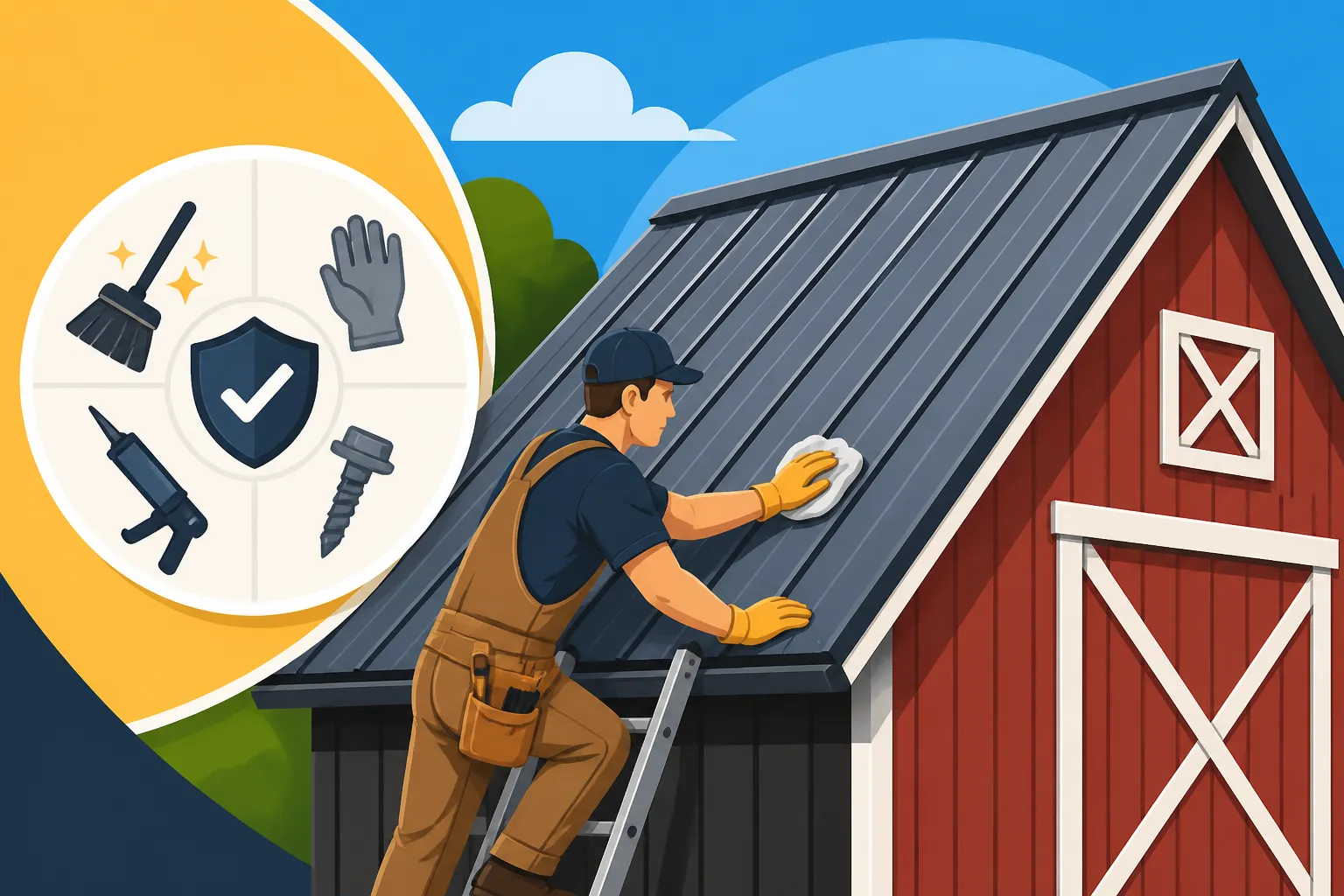
For lighter debris, a soft-bristled broom or a leaf blower can work wonders. For more stubborn grime, consider a gentle wash with a mild detergent and water, applied with a soft brush or a low-pressure washer. Be incredibly careful with pressure washers, though; too much pressure can damage coatings or force water into seams. Always rinse thoroughly to remove any cleaning solution residue. For barns, where cleanliness is sometimes an afterthought compared to homes, this step is particularly vital. It's often recommended to do a full sweep and wash at least once a year, preferably in spring or fall, to clear away seasonal accumulations. If you live in an area with a lot of tree cover, more frequent checks might be necessary. This also provides an excellent opportunity for a quick visual inspection of the entire roof surface for any new issues.
Fastener and Sealant Inspections
Metal roofs, especially those with exposed fasteners like many corrugated or R-panel barn roofs, rely heavily on their fasteners and sealants to remain watertight. These components are often the first to show signs of wear and are frequent culprits behind leaks. The rubber washers beneath exposed fasteners can degrade due to UV exposure and temperature fluctuations, becoming brittle and cracking over time. This allows water to seep directly through the screw holes.
You should plan to inspect all fasteners at least once every 2-3 years, or annually in areas prone to severe weather. Look for screws that appear to be backing out, have rusted heads, or show cracked or missing washers. Any loose fasteners should be gently tightened, but be careful not to overtighten, which can strip the decking or damage the panel. For severely rusted fasteners or those with completely compromised washers, replacement is the best course of action. When replacing, ensure you use screws of the correct length and gauge, often self-tapping screws with oversized EPDM washers designed for metal roofing.
Beyond fasteners, inspect any areas where sealants have been used, such as around vents, skylights, or flashing. Look for cracking, shrinking, or peeling sealant. These areas should be cleaned and new, compatible sealant applied to maintain a watertight seal. This diligent inspection of fasteners and sealants is a cornerstone of preventing problems. You might be surprised at how many "How to Prevent Leaks on a Metal Roof" issues trace back to these small but critical components.
Gutter and Downspout Care
While not every barn has gutters, those that do rely on them heavily for proper water diversion. Gutters and downspouts play a crucial role in directing rainwater away from the barn's foundation and walls, preventing erosion, basement flooding, and moisture damage to the structure itself. When clogged with leaves, straw, bird nests, or other debris, they can become completely ineffective.
A clogged gutter means water has nowhere to go but over the sides, often cascading directly onto the barn walls or saturating the ground around the foundation. This constant moisture can lead to wood rot, paint damage, and foundation issues. In winter, clogged gutters can exacerbate ice dam formation, pushing ice and water back up under roof panels.
Clean gutters and downspouts at least twice a year, more frequently if your barn is surrounded by trees. Remove all visible debris by hand or with a scoop. Flush them with a hose to ensure water flows freely. If a downspout is clogged, try flushing it from the top or using a plumber's snake to dislodge the blockage. Consider installing gutter guards, especially in areas with heavy leaf fall, though even these require periodic checking and cleaning. Good drainage is paramount to the overall health of your barn.
Addressing Common Issues and Repairs on Barn Metal Roofs
Even with the best routine maintenance, barn metal roofs can develop issues. Recognizing these problems early and knowing how to address them is crucial to preventing minor concerns from escalating into major, expensive repairs.
Rust, Corrosion, and Coating Maintenance
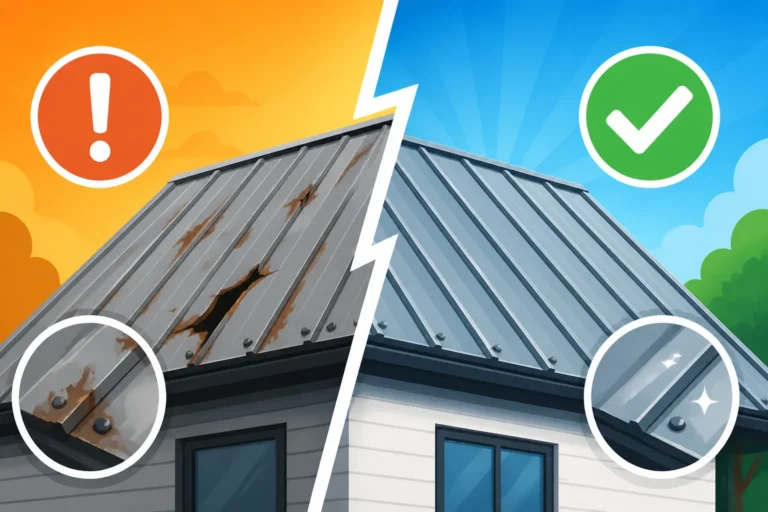
Rust is perhaps the most common enemy of a metal roof, especially on steel panels that haven't been properly protected or where their protective layers have been compromised. Corrosion can appear as reddish-brown spots, particularly around fasteners, cut edges, or areas where the coating has been scratched. If left unchecked, rust will spread, weaken the metal, and eventually lead to perforations and leaks.
The first step in dealing with rust is to clean the affected area thoroughly. Remove any loose rust with a wire brush or sandpaper. For more extensive rust, a rust converter product can chemically treat and stabilize the area. Once clean and dry, apply a high-quality rust-inhibiting primer specifically designed for metal roofing. Following the primer, a compatible metal roof paint or coating should be applied. These coatings not only restore the aesthetic appeal but, more importantly, provide a new layer of protection against the elements. You can find more in-depth guidance on Metal Roof Rust and Corrosion Treatment.
When it comes to broader coating maintenance, sometimes a roof will simply look dull, chalky, or faded without significant rust. This is a sign that the protective paint system, often a Kynar 500 (PVDF) or SMP coating, is starting to break down. While not an immediate structural threat, it does mean the underlying metal is less protected. In such cases, cleaning and then repainting and recoating a metal roof can significantly extend its life. This isn't just about aesthetics; it's about restoring that vital protective barrier. Companies like Modernize can help connect you with professionals who specialize in metal roof restoration, ensuring the right products and techniques are used.
Leak Detection and Repair Strategies
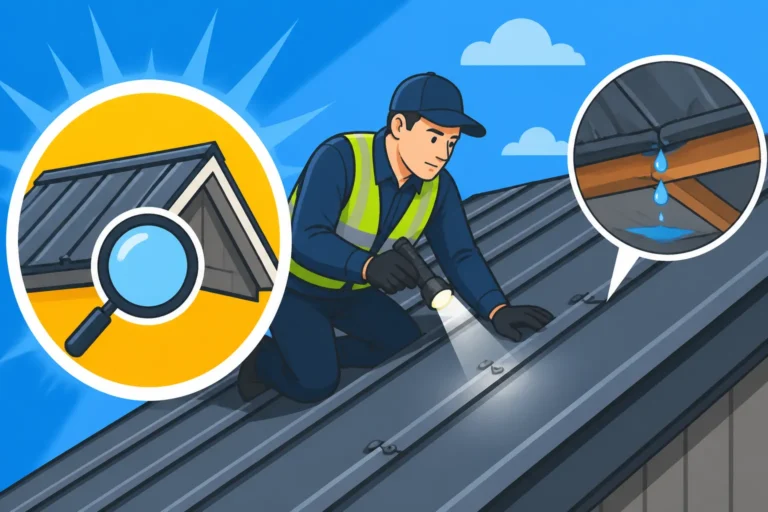
Leaks are the most obvious and frustrating sign that something is amiss with your barn roof. The challenge often lies not in seeing the leak inside the barn, but in finding its exact source on the roof, as water can travel a long way before dripping down. Common leak points include compromised fasteners, faulty flashing around vents or chimneys, seams that have separated, or panels damaged by impact.
To detect leaks, a systematic approach is best. During daylight, go inside the barn, turn off all lights, and look for pinpoint shafts of light coming through the roof. On the roof, visually inspect the most common culprits first: check all fasteners, examine flashing around any penetrations (pipes, vents, skylights), and look for any visible damage like holes, cracks, or severe dents in the panels. Pay close attention to valleys and ridge caps. Sometimes, running a hose over a suspected area while someone is inside watching can pinpoint the source.
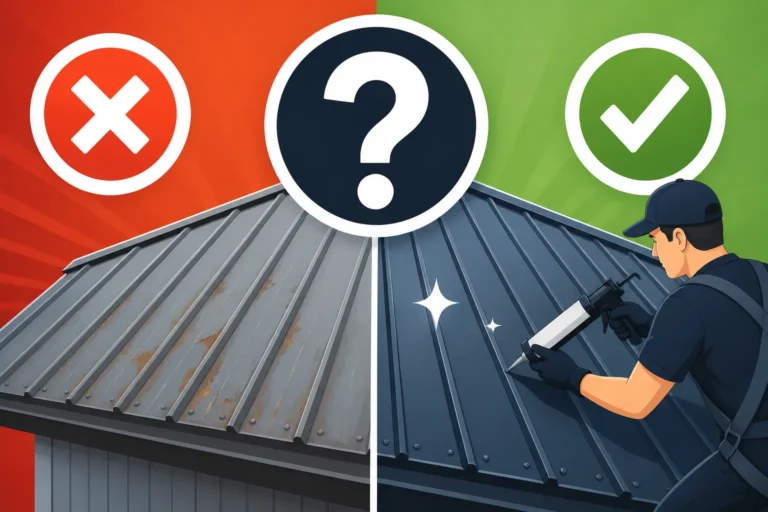
Once a leak source is identified, repair strategies vary. For loose or rusted fasteners, replace them with new, longer screws that hit fresh wood and have proper washers. For small holes or cracks, a high-quality butyl tape or a compatible elastomeric sealant can provide a temporary or even long-term fix, depending on the damage. Larger holes or severely damaged panels might necessitate replacing individual panels, which is a more involved process. Always ensure any repair materials are compatible with your metal roof type. If you're dealing with persistent leaks, especially on a large barn, it might be time to get a professional to do a thorough Metal Roof Leak Repair Guide inspection.
Damage from Weather and Pests
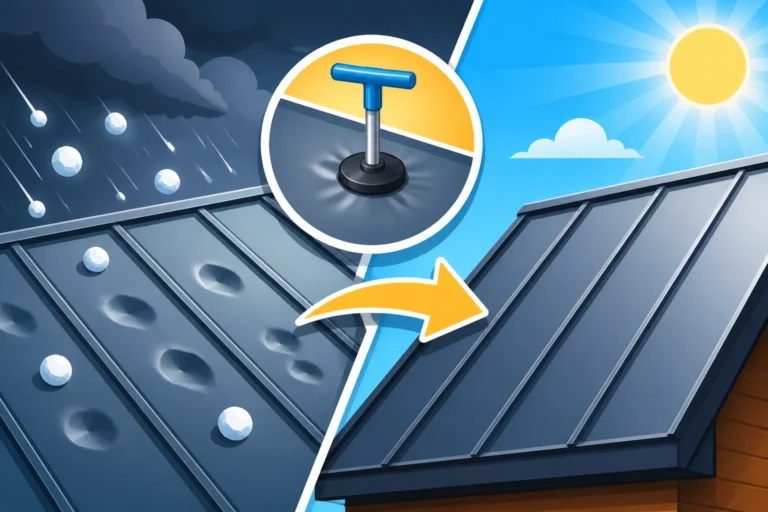
Barns, by their nature, are often more exposed to extreme weather events and wildlife than residential homes. Heavy winds can lift and bend panels, particularly at the edges, or rip out fasteners. Hail can cause widespread denting, which might seem cosmetic but can damage protective coatings, leading to rust. Falling tree branches can cause significant impact damage, creating holes or large dents. Even seemingly minor events like severe storms warrant a post-storm inspection to check for new damage.
Pests, while less common for direct roof damage, can contribute to problems. Birds or rodents might nest in roof voids or attics, potentially damaging insulation or creating blockages in vents. In some rare cases, persistent pecking or gnawing could even compromise softer metal components over a very long period.
For weather damage, immediate assessment is key. Bent panels can sometimes be carefully straightened, though often they're better replaced to ensure structural integrity and appearance. Hail dents, if they haven't compromised the coating, are usually cosmetic, but if the paint is chipped, the area should be treated for rust prevention. Larger holes from falling debris require patching or panel replacement. Consider adding additional fasteners to vulnerable areas before hurricane season or high-wind events if your roof seems susceptible. To learn more about protecting your roof, check out information on Metal Roof Storm, Hail & Wind Damage.
Proactive Measures for Long-Term Barn Roof Health
While addressing existing problems is crucial, true longevity for your barn's metal roof comes from taking proactive steps that fortify it against future challenges. Thinking ahead can save you time, money, and headaches in the long run.
Professional Inspections and Preventative Coatings
Even if you're diligent with your DIY maintenance, nothing beats the experienced eye of a professional metal roofing contractor. They have the expertise to spot subtle issues you might miss, identify potential weak points, and recommend the most effective preventative measures. A professional Metal Roof Inspection: What to Check should be scheduled every 5-7 years, or more frequently if your barn is older or in a high-risk weather area. They can assess the overall condition of your panels, fasteners, flashing, and substructure, providing a comprehensive report on your roof's health. Many reputable contractors, like those found through Modernize, offer inspection services that can provide peace of mind and detailed plans for future maintenance.
Preventative coatings can also play a huge role in long-term protection. Beyond simply repainting a faded roof, specialized elastomeric or reflective coatings can add years to a roof's life. These coatings can seal minor imperfections, enhance UV resistance, and in some cases, even improve energy efficiency by reflecting solar radiation. They are particularly beneficial for older roofs where the original coating is nearing the end of its life but the metal panels themselves are still sound. Applying such a coating is typically a job best left to professionals to ensure proper surface preparation and application for maximum effectiveness and warranty coverage.
Enhancing Ventilation and Insulation
Good ventilation is absolutely critical for the health of any barn roof, and often overlooked. Without proper airflow in the attic space or directly under the roof deck, condensation can become a significant issue. As warm, moist air from inside the barn rises and meets the cooler underside of the metal roof, it condenses into water droplets. This moisture can lead to:
- Rust: Direct contact with moisture from condensation is a prime cause of rust on the underside of metal panels.
- Wood Rot: If the roof deck is wood, persistent condensation can lead to rot, weakening the structure.
- Insulation Degradation: Wet insulation loses its effectiveness and can become a breeding ground for mold and mildew.
Ensuring adequate ridge vents and soffit vents (if your barn structure allows) can create a continuous airflow, drawing moist air out. For barns with an open interior, sometimes simply creating enough openings in the gable ends or using cupolas can help with passive ventilation. Additionally, proper insulation beneath the roof deck can prevent the interior warm air from contacting the cold metal, further mitigating condensation. Consult a specialist to assess your barn's specific ventilation needs; solutions can range from simple modifications to installing powered fans.
Planning for Future Upgrades or Replacement
No roof lasts forever, even a durable metal one. While metal roofs boast an impressive lifespan, often 40-70 years or more, eventually, a point will come where repairs become too frequent or too costly to justify. Having a long-term plan can help you budget and make informed decisions.
Keep records of all maintenance and repairs, including dates, costs, and the companies involved. This history is invaluable when assessing the roof's overall condition and predicting its remaining service life. As your roof ages, start researching options for a potential replacement. This might involve exploring different metal roofing types, such as Standing Seam vs Corrugated Metal Roof, or considering more durable materials like aluminum or copper.
For example, a corrugated steel roof on a barn might last 30-40 years, while a standing seam aluminum roof could easily go for 60-70 years. Knowing when your current roof is approaching the end of its typical lifespan can help you avoid emergency replacements during inconvenient times or after a major storm. You might even consider whether a full replacement is truly necessary, or if a thorough coating system can give you another decade or two of reliable service. Understanding the Metal Roof Cost vs Lifespan Value will help you project future expenses. Companies like Modernize can help homeowners and barn owners connect with qualified local roofing professionals to discuss long-term planning, provide estimates, and ensure you're making the best decision for your property.
| Maintenance Task | Frequency | Key Actions | Benefits |
|---|---|---|---|
| Debris Removal & Cleaning | Annually (or bi-annually with heavy tree cover) | Clear leaves, twigs, dirt from roof surface and valleys. Gently wash with mild detergent if needed. | Prevents moisture trapping, corrosion, and maintains aesthetic. |
| Fastener Inspection | Every 2-3 years (annually in harsh climates) | Check for loose, rusted, or missing screws/washers. Tighten carefully; replace if damaged. | Prevents leaks, maintains structural integrity, extends roof life. |
| Sealant Inspection | Annually | Examine sealants around penetrations (vents, flashing) for cracks or shrinkage. Reapply as needed. | Ensures watertight seals, prevents leaks around vulnerable points. |
| Gutter/Downspout Cleaning | Bi-annually (more if surrounded by trees) | Remove all debris from gutters and flush downspouts to ensure free flow. | Prevents water damage to foundation, walls, and avoids ice dams. |
| Rust/Corrosion Treatment | As needed | Clean, treat with rust converter, prime, and repaint affected areas. | Stops corrosion spread, protects metal, maintains appearance. |
| Professional Inspection | Every 5-7 years | Comprehensive assessment of roof health by a qualified contractor. Identifies hidden issues. | Proactive problem detection, expert advice, long-term planning. |
| Ventilation Check | Annually | Ensure ridge, soffit, or gable vents are clear and functioning. Check for signs of condensation. | Prevents condensation, rust, wood rot, and improves air quality inside barn. |
Disclaimer
Please remember that this guide provides general information for maintaining a metal roof on a barn. The specific needs and recommendations for your roof may vary based on its age, material, installation, local climate, and usage. Always prioritize safety when performing roof inspections or maintenance, and consider consulting a qualified metal roofing professional for complex repairs, major issues, or if you are unsure about any steps. They can provide expert advice and ensure compliance with local building codes.