Do Metal Roofs Attract Lightning?
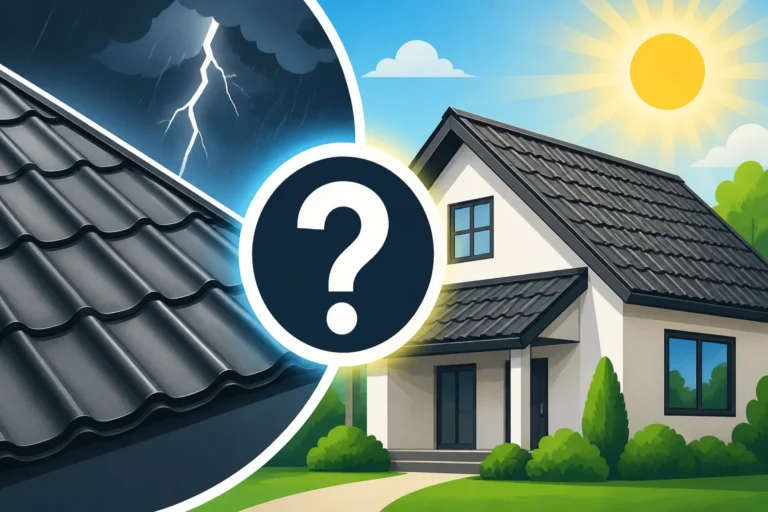
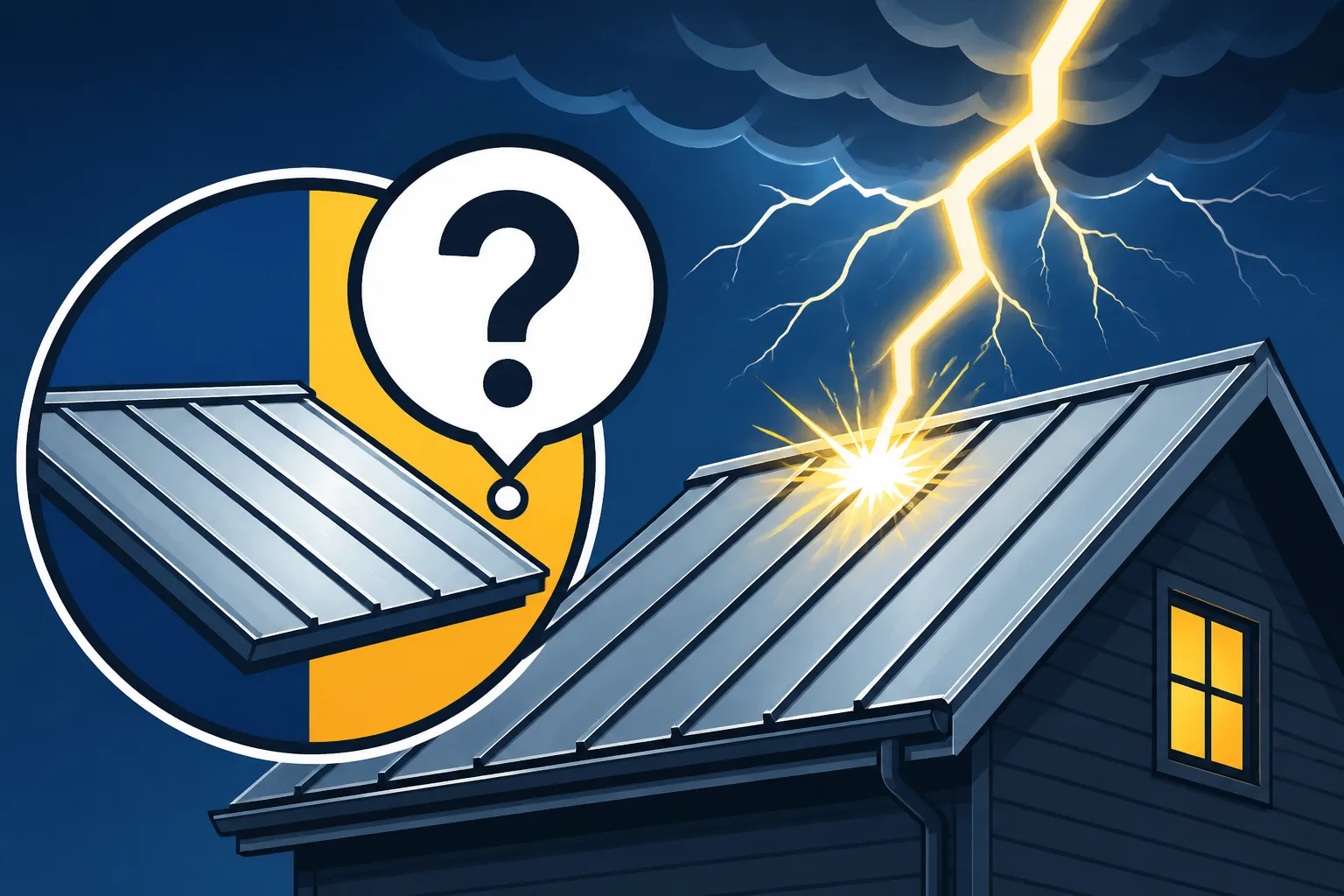
It's a common, completely understandable fear that many homeowners grapple with: "If I put a big sheet of metal on my roof, won't it just act like a giant lightning rod, inviting disaster?" The image of lightning striking a metal roof, especially during a fierce summer storm, can be pretty terrifying. This concern often holds people back from considering all the amazing benefits a metal roof can offer. Let's dig into the science and separate fact from fiction when it comes to metal roofs and lightning. This guide will clarify whether metal roofs truly attract lightning and, more importantly, how they handle a strike.
The Core Misconception: Do Metal Roofs Attract Lightning?
The idea that a metal roof is a lightning magnet is perhaps one of the most persistent myths in homeownership. It sounds logical at first glance – metal conducts electricity, so surely it must attract it, right? But the reality of how lightning behaves is far more nuanced, and thankfully, less alarming than the myth suggests.
Understanding Lightning's Path
To really get a grip on this, we need a quick refresher on how lightning works. Lightning isn't actively "looking" for a specific material to strike; rather, it's a massive discharge of electricity that seeks the path of least resistance between a charged cloud and the ground. Think of it like water flowing downhill – it will take the easiest route. This path is almost always the tallest object in the immediate vicinity, whether that's a tree, a telephone pole, or, yes, a house.
When a storm brews, positive and negative charges build up in the atmosphere. When the difference in charge becomes too great, a "stepped leader" (an invisible channel of ionized air) descends from the cloud, while "streamers" of positive charge reach upwards from the ground. Where these two meet, a circuit is completed, and boom – lightning strikes. The material of your roof, whether it's metal, asphalt, or tile, plays virtually no role in determining where lightning decides to make its grand entrance, beyond the roof's height relative to its surroundings.
Metal's Role in a Lightning Strike
So, if a metal roof doesn't attract lightning, what does it do? If a lightning strike does happen to choose your home as its target (which is incredibly rare, regardless of your roof type), the metal roof actually acts as an excellent conductor. This is where the misunderstanding often lies. People confuse "attraction" with "conduction."
A good conductor, like metal, allows electricity to pass through it easily. This is a beneficial trait in the event of a lightning strike. Instead of resisting the charge and potentially superheating or exploding like some other materials, a metal roof provides a clear, uninterrupted path for the electrical energy to travel. This means the enormous surge of electricity can quickly and efficiently move across the roof's surface, down through the structure (ideally via a dedicated grounding system), and safely into the earth. It's like having a well-paved highway for the lightning to travel on, rather than a bumpy, resistant dirt road.
The "Attraction" Myth Debunked
Let's lay this myth to rest once and for all. Studies and electrical engineers confirm that the material of your roof has no measurable effect on the probability of your home being struck by lightning. Lightning's primary determinants are height, pointedness, and isolation from other tall objects. A metal roof is no more likely to be struck than an asphalt shingle roof on a house of the same height and surrounding environment. It simply doesn't create some invisible magnetic pull on the electrical discharge.
Consider tall skyscrapers in major cities like New York or Chicago. Many of these are clad in metal and are frequently struck by lightning during storms. This isn't because the metal "attracts" the lightning, but because they are the tallest structures around. They are designed with robust lightning protection systems specifically to handle these inevitable strikes safely, guiding the immense electrical charge away from the building's interior and into the ground. Your home's metal roof, while on a much smaller scale, operates on the same principle of safe conduction rather than dangerous attraction. If you're looking into a new roof, focus on the durability and longevity benefits, and rest assured that you're not putting your home at greater risk.
How Metal Roofs Handle Lightning Strikes Safely
While a metal roof doesn't attract lightning, it's fair to wonder what happens if your home is struck. This is where the conductive properties of metal truly shine, offering a significant safety advantage over traditional roofing materials.
Dissipation and Grounding
The beauty of a metal roof during a lightning strike is its ability to disperse the electrical current quickly and broadly. Unlike non-conductive materials that might resist the charge, causing heat buildup and potential ignition, a metal roof provides multiple paths for the electricity to flow. The entire interconnected surface of the roof becomes a conduit. For maximum safety, it's crucial that this conductive pathway is integrated with a proper grounding system. This system ensures that if your home is struck, the massive electrical charge is efficiently channeled from the roof, through dedicated conductors (often thick copper or aluminum cables), and directly into the earth via grounding rods.
This direct, low-resistance path is paramount. Without proper grounding, even a conductive roof could still pose a risk by allowing the charge to seek less predictable paths through your home's framing, plumbing, or electrical systems. When properly grounded, however, a metal roof effectively acts as part of a distributed lightning protection system, safely shunting the electrical energy away from your home's vulnerable internal systems and away from people inside. This is why when you're considering a new installation, understanding the details of your Metal Roof Installation Process: Step by Step is so important, especially regarding grounding.
Enhanced Fire Safety
This is a huge benefit often overlooked when people worry about metal roofs and lightning. Traditional roofing materials like asphalt shingles are combustible. If lightning strikes an asphalt roof, the intense heat and electrical discharge can easily ignite the roofing materials, leading to a house fire. This is a very real and significant danger with non-metal roofs.
Metal roofs, on the other hand, are inherently non-combustible. Steel, aluminum, copper – none of these materials will ignite when struck by lightning. While a strike might leave a localized burn mark on the coating or finish, the underlying metal will not catch fire. This makes metal roofs one of the safest options in terms of fire protection, especially in areas prone to thunderstorms or even wildfires. It's a key reason why they often receive high Metal Roof Wind and Fire Ratings Explained, contributing to greater overall home safety.
Structural Integrity After a Strike
Another significant advantage of metal roofing is its resilience after a lightning strike. When lightning hits a non-metal roof, the sudden surge of energy can cause extensive damage. Materials can explode, shingles can be blown off, and underlying decking can be splintered or scorched. The structural integrity of the roof can be severely compromised, requiring costly and extensive repairs, or even a full roof replacement.
A metal roof, due to its ability to conduct and dissipate the charge, is far less likely to suffer severe structural damage. While the strike might create a small pit or burn mark on the panel, and perhaps some localized cosmetic damage, the vast majority of the roof's structure remains intact. The energy is spread out and channeled away, rather than concentrated at the point of impact. This dramatically reduces the repair work needed and, critically, means your home's primary protective layer remains largely functional after a traumatic event. It's a testament to the robust nature of Metal Roofing Types Explained: Profiles & Panels and their inherent durability.
Protecting Your Home from Lightning: Beyond the Roof Material
While we've established that metal roofs don't attract lightning and actually handle strikes better than most, true lightning protection goes beyond just your roofing material. It involves a dedicated system designed to intercept and safely discharge lightning.
The Importance of a Lightning Protection System (LPS)
If you live in an area with frequent thunderstorms, or if your home is one of the taller structures in your neighborhood, considering a dedicated Lightning Protection System (LPS) is a smart move, regardless of your roof type. An LPS is specifically engineered to protect structures from lightning damage by providing a low-resistance path for the electrical current to follow, guiding it safely to the ground. This system essentially makes your home a less appealing target for lightning to find its own, uncontrolled path.
An LPS works on the principle of interception and conduction. It’s designed to provide a preferential path for lightning, ensuring that if your home is struck, the electrical energy is captured and directed away from vulnerable components like wiring, plumbing, and sensitive electronics, thereby preventing structural damage, fires, and potential injury to occupants. It's an investment in peace of mind, much like understanding the long-term value in your Metal Roof Cost: Complete 2026 Guide.
Components of an Effective LPS
A comprehensive lightning protection system typically consists of three main components, all working in concert to safeguard your home:
- Air Terminals (Lightning Rods): These are the pointed or blunt-tipped metal rods installed at the highest points of your roof and along its ridges. Their purpose is to be the first point of contact for a lightning strike. They are specifically designed to intercept the strike, providing an intentional, safe target.
- Main Conductors (Downconductors): These are heavy-gauge cables, usually made of copper or aluminum, that connect the air terminals to the grounding system. They provide the low-resistance pathway for the lightning current to travel safely down the side of your home. These conductors are securely fastened and routed to minimize bends and kinks, ensuring a smooth path for the immense electrical energy.
- Grounding Electrodes (Ground Rods): At the base of the downconductors, these are long metal rods driven deep into the earth. Their job is to safely dissipate the lightning current into the ground, where it can spread out and neutralize. A properly installed LPS will have multiple grounding electrodes to ensure efficient and safe dissipation.
In addition to these core components, an LPS also includes bonding to other metallic systems in the house (like plumbing, gas pipes, and electrical conduits) to prevent side-flashes, and surge protection devices on your main electrical panel to protect sensitive electronics from voltage spikes that can occur even from nearby strikes.
Professional Installation is Key
Installing a lightning protection system is absolutely not a DIY project. It requires specialized knowledge and adherence to strict safety standards, such as those set by the National Fire Protection Association (NFPA 780, Standard for the Installation of Lightning Protection Systems) and Underwriters Laboratories (UL). A properly installed system is critical for effective protection.
You need to hire a certified lightning protection specialist. These professionals are trained to assess your home's unique characteristics, local climate, and building codes to design and install a system that provides optimal protection. They understand the nuances of conductor placement, bonding requirements, and grounding electrode installation. Platforms like Modernize can be a helpful resource for finding reputable, certified professionals in your area who specialize in these kinds of installations. Don't cut corners here; the safety of your home and family depends on it. A good specialist will ensure your LPS complements your metal roof perfectly. When you're reviewing quotes, pay close attention to the details of the proposed LPS and don't hesitate to ask about their certifications.
Debunking Other Metal Roof Myths
Beyond the lightning myth, a few other misconceptions about metal roofs tend to pop up. Let's briefly tackle them to give you a clearer picture of what to expect if you choose this durable roofing option.
Noise During Rain
One of the most common concerns I hear is, "Will a metal roof be incredibly loud during a rainstorm?" It's a valid question, as the thought of heavy rain drumming on metal can conjure images of a noisy tin shack. However, for a properly installed residential metal roof, this concern is largely unfounded. Most modern metal roofs are installed over a solid substrate, such as plywood decking, which is then covered with an underlayment.
This solid deck, combined with attic insulation, acts as an excellent sound buffer. The sound of rain on a metal roof installed this way is often no louder than, or even quieter than, rain on an asphalt shingle roof. In fact, some homeowners report a pleasing, subtle pitter-patter rather than an obtrusive clang. The severity of the sound is usually more noticeable on structures like sheds or carports that lack a solid deck and insulation. If you're concerned about noise, make sure your Metal Roof Underlayment and Ventilation Guide includes solid decking and ample insulation.
Cell Service Interference
Another myth that sometimes circulates is that a metal roof will interfere with your cell phone signal or Wi-Fi reception. The idea here is that the metal acts as a "Faraday cage," blocking electromagnetic signals. While metal can create a Faraday cage effect, the way metal roofs are constructed on residential homes means this is rarely an issue for signals coming from outside.
Your home's metal roof is not a sealed, continuous box; it has openings, vents, and isn't typically grounded in a way that would create a complete Faraday cage around your entire home. Plus, most cell signals and Wi-Fi operate on frequencies that can penetrate typical building materials, and modern phones and routers are designed to work effectively even within environments that have some level of metallic shielding. Unless you live in an area with extremely weak cell service to begin with, or your home is a very unusual, airtight metal box, a metal roof is highly unlikely to negatively impact your cell or Wi-Fi signals.
Heat Retention
People often assume that a metal roof will make their house hotter, envisioning a giant oven-like surface radiating heat downwards. While metal does get hot in direct sunlight, modern metal roofing is actually incredibly energy-efficient and can significantly reduce cooling costs, especially compared to darker asphalt shingles.
This is due to several factors. Many metal roofing panels come with advanced reflective coatings (often called "cool roof" technology) that are designed to reflect a high percentage of solar radiant heat away from the building. These coatings, usually light in color or with special pigments, can keep the roof surface significantly cooler. Additionally, metal roofs can be installed with a ventilated air space between the metal panels and the roof deck. This air gap allows heat to dissipate, preventing it from transferring into the attic and subsequently into your living space. This makes metal roofs an excellent choice for keeping your home comfortable and saving on energy bills, particularly in hotter climates. You might even find information on specific panels for the Best Metal Roof for Hot Climates and Heat Reflection.
Metal Roofs and Lightning: A Comparison
To put it all into perspective, here's a quick comparison of how metal roofs stack up against other common roofing materials when it comes to lightning strikes.
| Feature | Metal Roof | Asphalt Shingle Roof | Tile Roof |
|---|---|---|---|
| Attraction to Lightning | No more likely to be struck than other materials of same height. | No more likely to be struck. | No more likely to be struck. |
| Conduction of Strike | Excellent conductor; safely dissipates charge if properly grounded. | Poor conductor; resists charge. | Poor conductor; resists charge. |
| Fire Risk from Strike | Non-combustible; very low fire risk. | Combustible; high fire risk. | Non-combustible, but can explode/shatter. |
| Structural Damage | Minimal, mostly cosmetic pitting/scorch marks. Less prone to catastrophic damage. | Significant; shingles blown off, decking splintered, fire. | Moderate to significant; tiles can shatter, sub-structure damaged. |
| Energy Dissipation | Spreads charge quickly across entire surface, channeled to ground. | Concentrates heat and energy at strike point. | Concentrates heat and energy at strike point, potential for explosion. |
| Protection System | Benefits greatly from integrated grounding as part of LPS. | Benefits from traditional lightning rod systems. | Benefits from traditional lightning rod systems. |
Final Thoughts on Metal Roofs and Lightning
The pervasive myth that metal roofs attract lightning is just that—a myth. The scientific consensus and real-world experience consistently show that your metal roof is no more likely to be struck by lightning than any other roofing material on a home of similar height and surroundings. In fact, if your home does happen to be in the path of a lightning bolt, a metal roof, especially when paired with a professional grounding system, offers superior protection. Its non-combustible nature and excellent conductive properties mean it can safely dissipate the electrical energy, reducing the risk of fire and extensive structural damage.
Choosing a metal roof means you're investing in incredible durability, energy efficiency, and a long lifespan—not inviting electrical danger. Don't let old wives' tales prevent you from exploring the many benefits a modern metal roof can offer your home.
Disclaimer
Please note that the information provided in this article is intended for general informational purposes only and does not constitute professional advice. While we strive to offer accurate and up-to-date content, roofing and electrical systems are complex. Always consult with a qualified and licensed roofing contractor, electrical engineer, or lightning protection specialist for advice tailored to your specific situation and local building codes. Safety standards and regulations can vary by location.