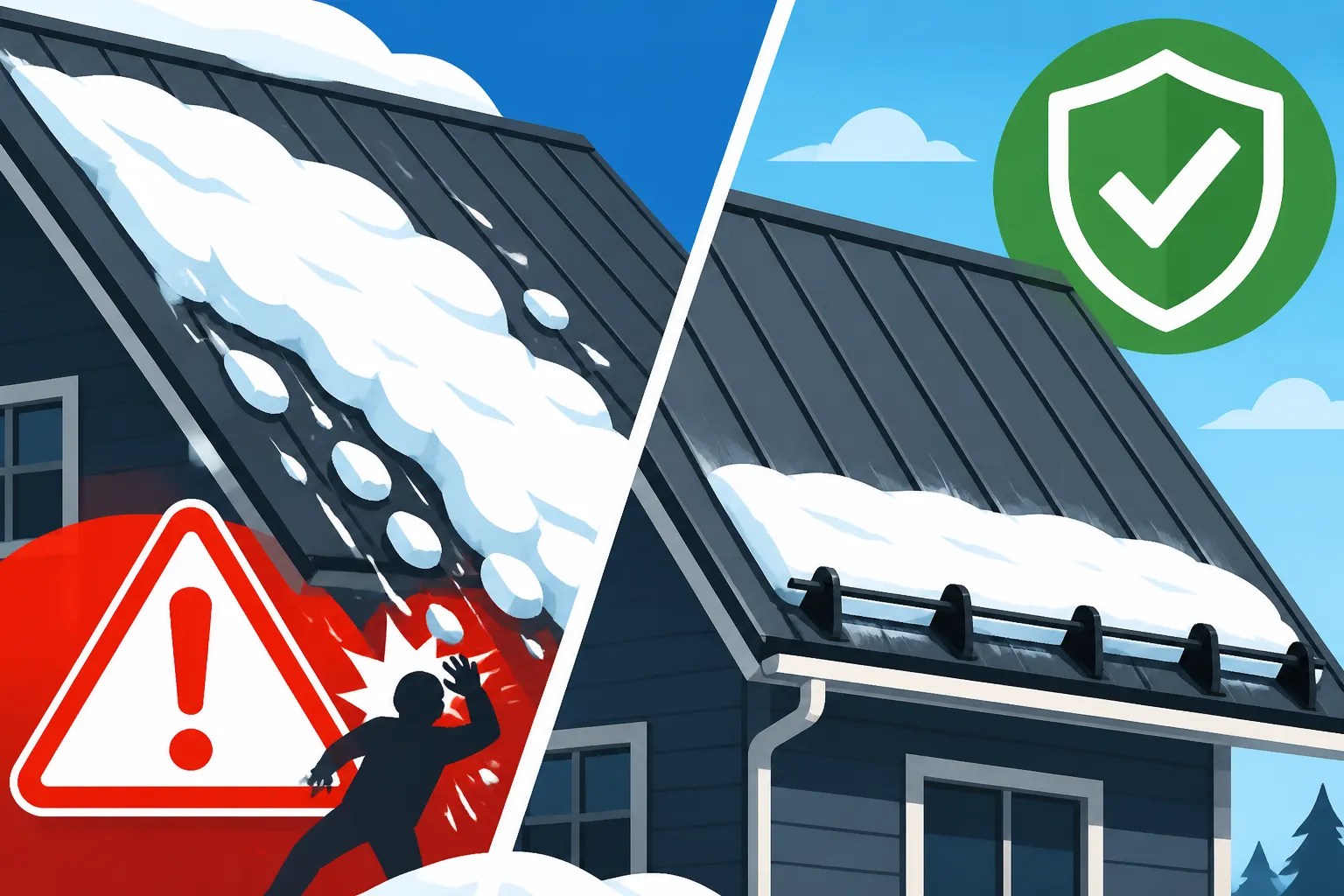
Metal Roof Snow Slides: Dangers and Prevention
Few things are more unsettling as a homeowner than hearing that ominous whoosh followed by a thunderous THUD as a massive slab of snow and ice slides off your metal roof. It’s not just a loud noise; it’s a genuinely dangerous occurrence that can threaten everything from your precious landscaping to the safety of your loved ones or even damage your home’s exterior. This guide is here to walk you through the very real perils of metal roof snow slides and, more importantly, equip you with the knowledge and strategies to prevent them effectively.
Understanding Metal Roof Snow Dynamics
Metal roofs are incredibly durable, energy-efficient, and long-lasting, which is why so many of us are choosing them for our homes. But with all their benefits, there's a unique characteristic that needs careful consideration, especially if you live in a region that sees its fair share of winter weather: their propensity to shed snow and ice. It's not a flaw, but rather a function of how they're designed, and understanding this is the first step in managing it safely.
Why Metal Roofs Shed Snow So Easily
The primary reason metal roofs are so good at shedding snow comes down to a simple principle of physics: friction and heat transfer. Unlike rougher roofing materials, such as asphalt shingles, which have a granular, porous surface that acts like sandpaper to grip snow and ice, metal panels are remarkably smooth. This low-friction surface means that once snow accumulates, there's very little resistance to hold it in place.
Adding to this, metal is an excellent conductor of heat. Even on cold days, a certain amount of heat from your home's interior inevitably escapes into your attic space and then subtly warms the roof decking. This slight temperature increase, often just a few degrees above freezing, is enough to create a thin, lubricating layer of meltwater directly between the underside of the snowpack and the metal roof surface. Think of it like a giant sled on a slick, icy track – once that bottom layer melts, the entire mass is primed to slide. The specific profile of your metal roof, whether it's a sleek standing seam or a more textured stone-coated steel, can influence this slightly, but the fundamental principle of a slippery surface remains.
The "Avalanche Effect" in Residential Settings
When we talk about snow sliding off a metal roof, we’re not just talking about a gentle dusting blowing off in the wind. What often occurs is what’s commonly referred to as the "avalanche effect," and it’s every bit as dramatic and potentially destructive as it sounds. Snow accumulates on your roof, sometimes for days or weeks, forming a cohesive, heavy mass that can be many feet thick. The sheer weight of this snow, combined with its increasingly dense and frozen nature, creates a significant downward force.
Then, conditions shift. Perhaps the sun comes out, warming the roof surface, or the ambient temperature rises slightly, leading to that crucial meltwater layer forming beneath the snow. Once the gravitational pull on the snow mass overcomes the minimal friction provided by the metal surface, the entire accumulated slab of snow and ice detaches. It doesn't fall slowly; it slides off rapidly, often with surprising speed and force. Factors like your roof's pitch (steeper roofs are more prone to dramatic slides), the orientation of your home to the sun, and temperature fluctuations all play a role in timing and intensity. The result is a sudden, powerful discharge of snow that can displace an astonishing volume and weight, even from a relatively modest residential roof. This sudden release makes it particularly dangerous, as there's often no warning before it happens.
The Dangers of Metal Roof Snow Slides
It's easy to underestimate the power of falling snow, especially when you're thinking of fluffy flakes. But when that snow has compacted, frozen, and accumulated on a metal roof, it transforms into a dense, heavy, and extremely dangerous projectile. The consequences of such a slide can range from minor annoyances to catastrophic damage or even severe personal injury.
Property Damage Risks
The immediate aftermath of a metal roof snow slide often involves significant damage to anything directly beneath the eaves. Your home’s exterior features are particularly vulnerable. Gutters, for instance, are frequently the first casualty. They can be ripped clean off the fascia, bent into unusable shapes, or crushed beyond repair by the sheer weight and momentum of the sliding snow. This isn't just an aesthetic issue; damaged gutters can lead to improper water drainage, potentially causing foundation problems or siding damage when the snow finally melts.
Beyond the immediate house structure, your landscaping can suffer immensely. Beautifully manicured shrubs, delicate perennial gardens, young trees, and even established bushes can be crushed, snapped, or uprooted by the falling snow. Outdoor living spaces are also at high risk; decks, patios, pergolas, and outdoor furniture can be severely damaged or completely destroyed. Imagine an entire winter's worth of snow, several feet thick, suddenly dropping onto your patio furniture or the favorite grilling station. And let's not forget vehicles! A car parked too close to the house under a potential slide zone can sustain significant dents, broken windshields, or other structural damage. Lower-level roofs, attached sheds, or even adjacent portions of your main roof with a lower pitch can also be hit by sliding snow from higher sections, causing shingles to be torn, flashing to be dislodged, or panels to be bent. These unforeseen repairs can add up quickly, far outweighing the initial cost of prevention.
Personal Safety Hazards
While property damage is certainly a concern, the most terrifying aspect of metal roof snow slides is the profound risk they pose to personal safety. The sheer force of a large snow mass falling from a roof can cause serious injury or even be fatal to anyone caught underneath. This isn't an exaggeration; stories of severe injuries from roof avalanches are not uncommon.
Children playing in the yard, elderly residents walking to their cars, or even you just stepping out to grab the mail can be in the wrong place at the wrong time. The element of surprise is a huge factor here. Unlike a slow leak or a visible crack, a snow slide happens suddenly, often without any discernible warning sounds until it’s already in motion. There’s little to no time to react or move out of the way. Even a relatively small amount of dense, icy snow can be incredibly heavy, and when it falls from a height, it can deliver a crushing blow. Think about the density of packed snow and ice – it’s not soft. This is a very real hazard that needs to be addressed proactively to ensure the safety of everyone who lives in or visits your home.
Effective Prevention Strategies: Snow Guards and Retention Systems
The good news is that preventing snow slides from your metal roof is entirely possible and highly recommended. The most effective solution involves installing specialized snow retention systems, commonly known as snow guards. These aren't just decorative elements; they are essential safety components designed to manage snow accumulation and melting on your roof, transforming a potential hazard into a manageable process.
What are Snow Guards and How Do They Work?
At their core, snow guards are devices specifically engineered and installed on metal roofs to hold snow and ice in place, preventing it from sliding off in a single, dangerous avalanche. Their primary purpose isn't to prevent snow from ever leaving the roof entirely, but rather to break up the cohesive snow mass. By doing this, the snow can either melt gradually on the roof surface or, if it does fall, it descends in smaller, more manageable, and harmless chunks rather than a unified, destructive slab.
There are several types of snow retention systems available, each with its own design and method of attachment. The most common fall into two broad categories: individual "pad" style guards and continuous "bar" or "fence" style systems. Pad-style guards are typically individual units, often made of clear polycarbonate, cast aluminum, or brass, that are strategically placed across the roof. Bar-style systems, on the other hand, consist of one or more continuous rails that run parallel to the eave, effectively creating a "fence" to hold the snow back. The material and attachment method for these systems are critical, as they must be robust enough to withstand significant snow loads and compatible with your specific metal roof profile. A proper layout and spacing are paramount for their effectiveness, which often requires professional expertise.
Types of Snow Retention Systems
When it comes to choosing the right snow retention system, you'll generally be looking at two main types: pad-style and bar-style snow guards. Each has its advantages and is suited for different roof types, aesthetics, and snow load requirements. Many homeowners looking for reliable solutions turn to resources like Modernize to connect with experienced contractors who can guide them through these choices.
Pad-Style Snow Guards
Pad-style snow guards are individual, often low-profile units that are distributed strategically across the roof surface. They typically consist of a base that attaches to the roof and a small "pad" or "foot" that protrudes upwards to interrupt the sliding snow. Materials commonly include clear polycarbonate, which blends into the roof surface, or various metals like cast aluminum or brass for a more robust or classic look.
Installation methods vary depending on your roof type. For exposed fastener metal roofs (like corrugated or R-panel), pad guards are usually mechanically fastened through the panel into the roof decking, often with a watertight sealant. For standing seam metal roofs, they are attached using non-penetrating clamps that grip the standing seams, preserving the roof's integrity. The main advantage of pad-style guards is their less conspicuous appearance, making them a popular choice for homeowners who prioritize aesthetics. They work well for lighter to moderate snow loads and can be very effective at breaking up smaller snow masses. However, for very heavy snow accumulation or extremely long roof runs, they might require a greater number of units to be effective, which can sometimes negate their initial cost advantage over bar systems.
Bar-Style Snow Guards (Snow Fences/Rails)
Bar-style snow guards, often called snow fences or snow rails, offer a more continuous and robust solution. These systems consist of one or more continuous metal rails that run parallel to the eave of your roof, supported by brackets or clamps spaced at regular intervals. They effectively create a continuous barrier, much like a fence, to hold back the entire snow mass.
These systems are most commonly installed on standing seam metal roofs, where their brackets can securely clamp onto the vertical ribs without penetrating the panel surface. There are also systems available for exposed fastener roofs, though these typically require bolting through the panels. Bar-style guards are renowned for their high effectiveness, particularly in regions with heavy snow loads or on roofs with a steep pitch. They provide superior retention over longer roof runs and can be designed in multi-tiered configurations for extreme conditions. While they are more visually prominent than pad-style guards, their robust performance often makes them the preferred choice for maximum protection. They generally have a higher material cost per linear foot than individual pad guards, but their comprehensive coverage can make them a wise long-term investment.
Hybrid Systems
Sometimes, the best solution isn't one or the other, but a combination. Hybrid systems involve using both pad-style and bar-style snow guards in specific areas of the roof. For instance, a long, steep section might benefit from a bar system near the eave, while smaller, less critical sections or areas around dormers might use pad-style guards for additional localized retention. This approach allows for tailored solutions for complex roof designs or properties with varying snow load challenges, ensuring optimal protection without over-engineering every section. When planning your system, remember to consider your options carefully; a good contractor will provide insights into each system's benefits. For more in-depth information on components, check out our guide on Snow Guards and Winter Metal Roof Issues.
Other Prevention Methods and Considerations
While snow guards and retention systems are the primary defense against dangerous snow slides, there are several other factors related to your home's construction and design that can either exacerbate the problem or contribute to a safer environment. Understanding these can help you make more informed decisions, whether you're building new or planning a roof replacement.
Roof Pitch and Design Considerations
The pitch, or slope, of your roof is a significant determinant in how readily snow will slide off. Steeper roofs, while visually striking and excellent for rapid water shedding, are inherently more prone to dramatic and forceful snow avalanches. The greater the angle, the more easily gravity can overcome the minor friction of the metal surface once that meltwater layer forms. Conversely, very low-slope metal roofs might hold snow more readily, but could then face different issues like ponding water during melt cycles.
Furthermore, the overall design of your roof can create specific challenges. Valleys, where two roof planes meet, can funnel and concentrate snow into heavier, denser accumulations. Dormers and other roof penetrations can also cause snow to pile up unevenly, leading to concentrated loads that, when released, can be particularly destructive. If you're designing a new home or undertaking a major renovation, considering how snow will behave on different sections of your metal roof during the design phase is crucial. This foresight allows for the strategic placement of snow retention systems or even minor adjustments to architectural elements to mitigate risk. Understanding your roof's profile, such as a Metal Roof Cost by Profile: Standing Seam vs Corrugated vs Stone-Coated, can also help predict snow behavior.
Proper Insulation and Ventilation
One of the most insidious contributors to snow slides is often unseen: heat loss from your home's interior. When warm air leaks into your attic or unconditioned roof space, it warms the underside of your metal roof panels. This subtle warmth, even if it doesn't fully melt the entire snowpack, is enough to create that critical lubricating layer of water between the snow and the metal surface, triggering the avalanche effect.
The solution lies in good attic insulation and proper ventilation. Ensuring your attic has a robust layer of insulation acts as a thermal barrier, preventing heat from migrating upwards from your living spaces. Equally important is adequate attic ventilation, which helps to maintain a cold roof deck temperature, closer to the ambient outdoor temperature. This minimizes the basal melt and helps the entire snow mass stay frozen to the roof until it naturally sublimates or melts gradually from the top down. A properly insulated and vented roof creates a cold, stable surface where snow is less likely to suddenly release. Our guide on Metal Roof Underlayment and Ventilation Guide offers more insights into creating an efficient roof system.
Strategic Landscaping and Building Layout
Sometimes, the simplest prevention method is mindful planning of what's under your roof's eaves. While this doesn't stop the snow from sliding, it can significantly reduce the potential for damage and injury. When designing your property or planning new landscaping, consider where snow is most likely to slide and avoid placing vulnerable elements in those zones.
This means rethinking the placement of patios, walkways, highly trafficked entrances, valuable gardens, and even parking spots. If possible, create buffer zones where snow can accumulate harmlessly. Be extremely cautious about installing features like awnings or delicate overhangs directly below a metal roof, as they are almost guaranteed to be crushed by sliding snow. While some robust, specially designed overhangs might exist, a standard awning is no match for a dense snow slab. Thinking about the trajectory of potential snow slides and adapting your landscape and outdoor living spaces accordingly can save you a lot of headache and expense down the line.
Installation Best Practices for Snow Retention
Installing snow retention systems isn't a simple DIY project; it's a specialized task that requires precision, knowledge of specific roof dynamics, and adherence to manufacturer guidelines and local building codes. Cutting corners on installation can compromise the effectiveness of the system and potentially lead to costly damage or even safety failures.
Importance of Professional Installation
Given the immense weight and force of sliding snow, the proper installation of snow guards is absolutely critical. This isn't a task for the inexperienced homeowner or a general handyman. Professional metal roofing contractors who specialize in snow retention systems possess the necessary expertise to:
- Assess Snow Load: They understand how to calculate the anticipated snow load for your specific geographic region and roof pitch, which dictates the type and density of snow guards required.
- Ensure Correct Spacing and Layout: Snow guards aren't just randomly placed. Their layout, spacing, and number per square foot are meticulously calculated based on roof pitch, eave-to-ridge length, and expected snow load. Incorrect spacing can lead to system failure, where snow can either slide between guards or overpower them entirely.
- Use Proper Attachment Methods: Whether it's clamping onto a standing seam or mechanically fastening through an exposed fastener panel, the attachment must be watertight and incredibly strong. Improper attachment can damage your roof, void its warranty, and allow the system to fail.
- Comply with Warranties and Codes: Many metal roof warranties require specific installation methods for snow retention systems to remain valid. Additionally, local building codes may have requirements for snow retention, especially in high-snowfall areas. A professional contractor, like those found through Modernize, will ensure all these critical aspects are met. For a deeper dive into vetting contractors, consider our guide on How to Hire a Metal Roofing Contractor.
Attempting to install snow guards yourself without the proper knowledge can lead to a system that doesn't work, potentially damaging your roof or, worse, failing catastrophically and causing injury. It’s an investment that truly pays off when done right.
Choosing the Right Materials and Placement
Selecting the right snow retention system goes beyond just deciding between pad or bar style; it also involves critical material selection and strategic placement specific to your roof.
Firstly, material compatibility is key. For instance, if you have a unique metal roof like copper or zinc, you'll need snow guards made from compatible metals (e.g., aluminum or stainless steel for Copper Roof Cost or Zinc Roof Cost) to prevent galvanic corrosion, which can prematurely damage both the roof and the snow guards. The finish of the snow guard should also ideally match or complement your roof's aesthetic, considering both color and durability of coatings.
Secondly, placement is paramount. The primary run of snow guards is typically installed above the eaves, extending along the entire length of the roof section that needs protection. However, on very long roof runs, or roofs with complex designs (e.g., multiple levels, dormers, or skylights), additional rows of snow guards may be necessary higher up the roof. This helps to break the snow load into smaller, more manageable sections, preventing an excessive build-up of pressure on the lower eave-line guards. Manufacturer specifications are the ultimate authority here, providing detailed guidelines on density, spacing, and placement based on roof pitch and panel length. Always consult these specifications and local Metal Roof Building Codes Explained to ensure your chosen system will perform as intended. Remember, a robust system starts with informed choices about materials and a precise installation strategy. Learn more about the exact steps involved in our How to Install Snow Guards on a Metal Roof guide.
Metal Roof Snow Guard Comparison
To help you visualize the differences and benefits of the most common snow retention systems, here's a quick comparison:
| Feature | Pad-Style Snow Guards | Bar-Style Snow Guards (Snow Fences/Rails) |
|---|---|---|
| Appearance | Less conspicuous, often clear polycarbonate or low-profile metal units. Blends into roof. | More visible, creates a linear interruption, but can be color-matched. |
| Effectiveness | Good for moderate snow loads, primarily breaks up snow into smaller chunks. | Highly effective for heavy snow loads, creates a continuous barrier for maximum retention. |
| Installation | Individual units, requiring specific placement patterns. Attached via adhesive or mechanical fasteners (exposed fastener roofs) or clamps (standing seam). | Continuous rails, typically clamped to standing seam ribs. Fewer attachment points per linear foot than pad guards. |
| Cost (Material) | Generally lower per individual unit, but more units are needed for coverage. Overall cost can be comparable or higher for full coverage on steep, long roofs. | Higher per linear foot of rail and supports, but offers continuous protection. Potentially higher upfront material cost for extensive coverage. |
| Snow Load Capacity | Best suited for lighter to moderate snow loads; effectiveness decreases significantly with very heavy, dense snow. | Excellent for heavy and extreme snow loads, providing superior resistance to large, cohesive snow masses. Ideal for Best Metal Roof for Snow and Cold Climates. |
| Roof Types | Versatile; available for most metal roof profiles, including exposed fastener, standing seam, and some metal shingles. | Primarily designed for standing seam metal roofs. Some systems exist for exposed fastener roofs but may require through-fastening. |
| Maintenance | Check individual units for adhesion, fastener integrity, and damage after heavy snow seasons. | Check rail integrity, clamp tightness, and ensure clear path free of debris that could impede function. |
| Common Use Cases | Residential applications where aesthetics are a high priority, or for smaller roof sections. | Residential and commercial applications in high snowfall areas, or any situation prioritizing maximum safety and protection. |
Maintaining Your Snow Retention System
Once you've made the smart decision to install a snow retention system, your job isn't entirely done. Like any other part of your home, these systems require a little attention to ensure they remain fully functional and effective for years to come. Neglecting maintenance could lead to unexpected failures, defeating the purpose of your investment.
Regular Inspections and Repairs
Even the most robust snow retention systems aren't "set it and forget it" installations. They endure significant stress from heavy snow loads, ice expansion, and freeze-thaw cycles year after year. Therefore, regular inspections are crucial, ideally before and after the heavy snow season. A visual inspection from the ground with binoculars can often reveal obvious issues, but a professional roof inspection will be far more thorough.
During an inspection, look for any signs of wear, damage, or dislodgement. Are any pad-style guards missing, loose, or cracked? Are the clamps on your bar-style system still tight and secure on the standing seams, or do any appear stressed or bent? Check for any visible damage to the roof panels around the snow guards, which could indicate excessive stress or improper installation. If you notice any issues, no matter how minor, it's essential to address them promptly. A small repair, like tightening a clamp or replacing a single pad, can prevent a much larger and more costly problem down the line, potentially saving your roof from damage or preventing a system failure. Consistent Metal Roof Maintenance Guide practices will keep your whole roof in top shape.
Addressing Potential Issues and Winter Preparations
Beyond physical inspections, there are a few proactive steps you can take to prepare your snow retention system for winter and manage potential issues. Before the first significant snowfall, ensure that your gutters (if you have them) are completely clear of leaves and debris. While snow guards hold snow on the roof, the gradual melt can sometimes overload clogged gutters, leading to ice dams or water backing up under the eaves.
Keep an eye on the roof during and after heavy snowfalls. Are there any unusual accumulation patterns? Is snow building up in an unexpected way that might indicate a compromised section of your snow retention system or a unique microclimate on your roof? While a good system will hold snow, you should still be aware of how it's performing. In rare cases, extremely heavy, wet snow, followed by deep freezes, can put unprecedented stress on any system. Being observant can help you catch early warning signs. For example, some homeowners may even find value in occasionally clearing light snow from bar systems if local conditions lead to rapid refreezing and potential blockage. However, always exercise extreme caution and never climb onto a snowy or icy roof yourself. When you need help managing these scenarios, reaching out to a company like Modernize can connect you with contractors experienced in handling Snow Guards and Winter Metal Roof Issues safely.
Disclaimer
Please remember that this article provides general information and should not be considered professional advice. Metal roofing systems, installation processes, and local building codes can vary significantly. Always consult with a qualified and licensed metal roofing contractor or building professional for specific advice tailored to your property and local regulations. DIY work carries inherent risks, and improper installation can lead to serious damage or injury.