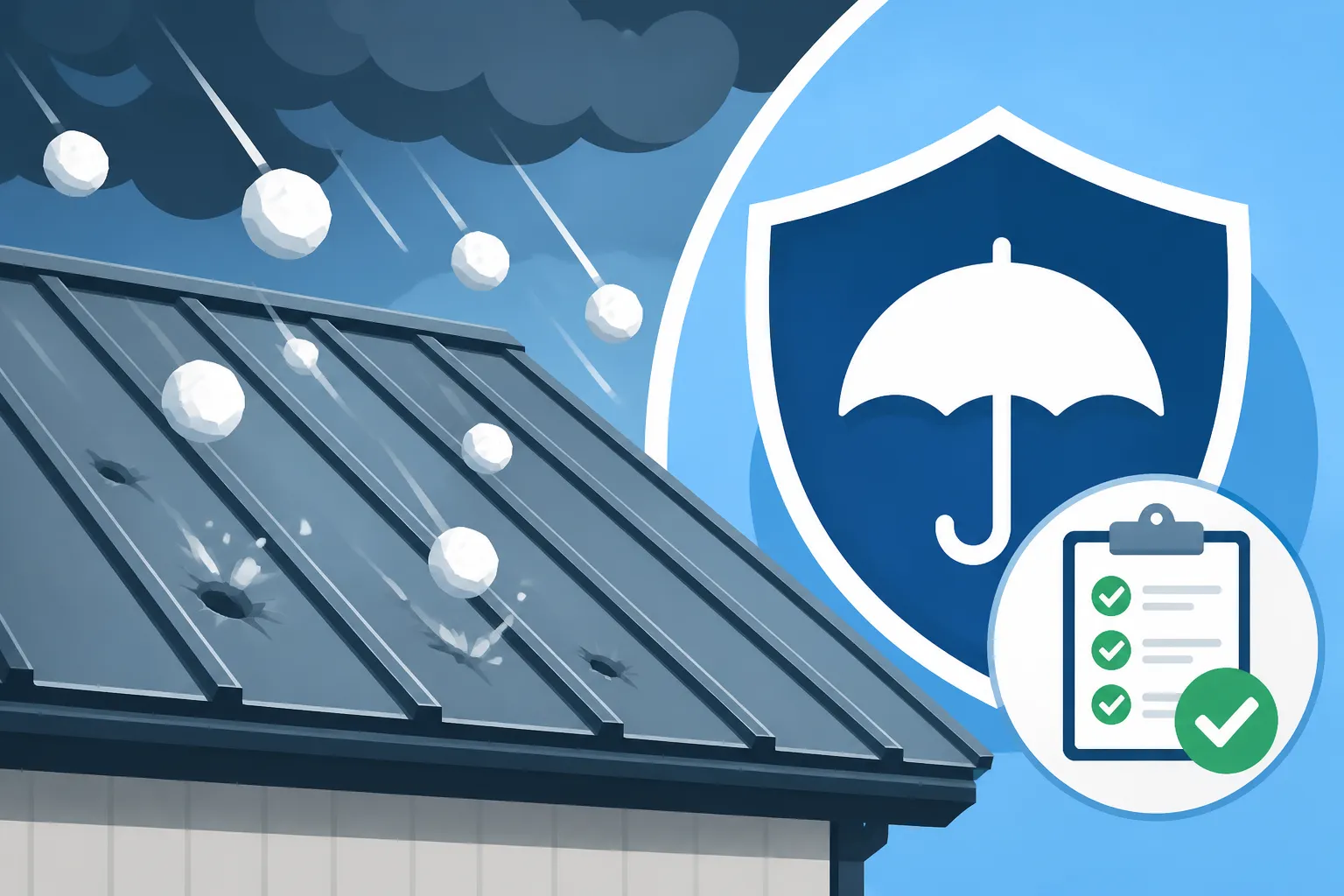
Is Hail Damage to a Metal Roof Covered?
When a severe hailstorm rolls through your neighborhood, leaving behind shattered windows and dented cars, the first thing many homeowners rush to check is their roof. For those of us with a metal roof, there's often a fleeting sense of relief, knowing how tough these roofs are. But then, as you get a closer look, you might spot those tell-tale dimples and dings. That's when the anxiety sets in: is hail damage to a metal roof covered by insurance, or are you looking at a massive out-of-pocket expense? This guide is here to shed light on this complex topic, helping you understand your policy, identify damage, and navigate the claims process.
Understanding Your Homeowners Insurance Policy
Navigating insurance policies can feel like trying to read ancient hieroglyphs. Most homeowners just want to know that if something bad happens, they're covered. But when it comes to a significant event like hail damage to a metal roof, the devil is truly in the details of your specific policy.
The Basics of Roof Damage Coverage
Typically, standard homeowners insurance policies (HO-3 or HO-5 forms being the most common) do cover damage from perils like hail, wind, and fire. Your roof is a primary component of your home's structure, and its integrity is crucial to protecting everything inside. So, in broad strokes, if a hailstorm compromises the functionality of your metal roof, your insurance is likely to step in. This coverage is designed to help restore your home to its pre-loss condition, minus your deductible, of course. However, "compromises functionality" is the key phrase here. It's not just about what it looks like; it's about whether the roof can still do its job protecting your home effectively.
For instance, if large, jagged hail stones tear through your metal panels, creating holes or severe cracks that lead to leaks, that's undeniably functional damage. The same goes for hail that might dislodge panels, rip seams, or damage flashing, leaving your home vulnerable to water intrusion. These types of scenarios usually trigger coverage without much debate from your insurer. It's when the damage is less about structural integrity and more about aesthetics that things can get tricky. Understanding the nuances of your policy can make a huge difference in the outcome of a claim. You might want to review your policy details, especially if you live in a region known for severe weather, to see if there are any specific clauses related to extreme weather events or Metal Roof Storm, Hail & Wind Damage.
Replacement Cost Value vs. Actual Cash Value
One of the most critical distinctions in your homeowners insurance policy, especially when dealing with roof claims, is whether your coverage is based on Replacement Cost Value (RCV) or Actual Cash Value (ACV). This difference can literally mean thousands, or even tens of thousands, of dollars in your pocket versus out of your pocket.
- Replacement Cost Value (RCV): An RCV policy is generally the most favorable for homeowners. It means that your insurance company will pay to replace the damaged property with new materials of similar kind and quality, without deducting for depreciation. So, if your 10-year-old metal roof is damaged beyond repair by hail, an RCV policy would cover the cost of a brand-new metal roof, up to your policy limits. You might initially receive an ACV payment, with the depreciation held back until the repairs are completed and invoices are submitted, but ultimately, you get the full replacement cost.
- Actual Cash Value (ACV): An ACV policy, on the other hand, factors in depreciation. This means the insurance company will pay you the cost to replace the damaged roof minus the estimated depreciation for its age and condition. If that same 10-year-old metal roof is damaged, an ACV policy would only pay you what that 10-year-old roof was worth at the time of the damage, not the cost of a new one. Given that metal roofs can last 40-70 years, a 10-year-old roof still has a lot of life left, but depreciation can significantly reduce the payout. This can leave a considerable gap between what the insurance pays and what it actually costs to replace your roof, potentially making a new roof unaffordable without substantial personal investment.
Many older policies or policies for homes in high-risk areas might default to ACV for roofs to manage insurer risk. It's vital to know which type of coverage you have before a storm hits. If you're unsure, contact your insurance agent to clarify and consider upgrading to RCV if possible, especially when investing in a durable roof like metal. For a deeper dive into the financial aspects, exploring topics like Is a Metal Roof Worth It? ROI, Resale & Payback can provide valuable context on long-term value.
How Hail Affects Metal Roofs and What Insurers Look For
Metal roofs are renowned for their durability, often shrugging off weather that would devastate other roofing materials. However, hail, especially large or irregularly shaped stones, can still leave its mark. Understanding these types of damage and how insurers evaluate them is crucial for a successful claim.
Types of Hail Damage to Metal Roofs
Hail damage to a metal roof isn't always obvious, and it's certainly not always uniform. The type, size, and density of the hail, coupled with the metal type and roof profile, all play a role in how a roof is affected.
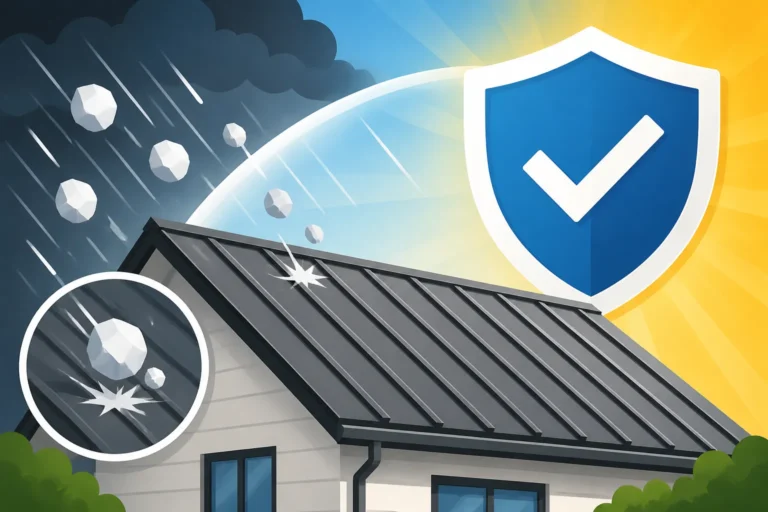
- Denting: This is the most common and visible type of hail damage. Hailstones can cause depressions or "pockmarks" on the metal panels. On smooth, flat panel systems like a standing seam metal roof, these dents can be quite prominent. On ribbed or corrugated profiles, the damage might be less noticeable initially, as the ribs provide some structural rigidity. While small dents might seem purely cosmetic, larger, deeper dents can impact the metal's protective coating, potentially leading to future issues like premature corrosion.
- Coating Damage: Metal roofs are often finished with durable paint or metallic coatings (like Kynar 500 or SMP) that protect the underlying metal from UV radiation, moisture, and wear. Hail impact, even if it doesn't create a deep dent, can abrade, chip, or crack these coatings. Once the coating is compromised, the exposed metal can become vulnerable to rust, especially in humid or coastal environments. This kind of damage can significantly shorten the lifespan of your roof, even if it doesn't cause an immediate leak.
- Punctures and Fractures: While less common with smaller hail, large, severe hail (golf-ball sized or larger) can have enough force to actually puncture a thinner gauge metal panel or cause stress fractures in the metal. This is particularly true for roofs made of softer metals like aluminum or copper, or for thinner gauge steel panels (e.g., 29 gauge). Punctures or fractures are clear indicators of functional damage, as they create direct entry points for water.
- Seam and Fastener Damage: Metal roofs are installed with various fastening systems. Exposed fastener roofs use screws that go through the metal panels, often with rubber washers to create a seal. Hail can damage these washers, causing them to degrade prematurely, leading to leaks around the fasteners. On standing seam roofs, hail can potentially damage the seams themselves, especially if the impact distorts the interlocked panels, affecting their weather-tight seal.
When an insurance adjuster inspects your roof, they're looking for signs that the hail has impaired the roof's ability to protect your home. They're trained to differentiate between cosmetic blemishes and actual functional damage. This is where an independent assessment by a qualified How to Hire a Metal Roofing Contractor can be invaluable, as they can provide a detailed report outlining all types of damage.
The "Cosmetic Damage Exclusion" Dilemma
Here’s where things get really frustrating for many metal roof owners. You've invested in a durable, long-lasting metal roof, perhaps spending more upfront because you understood the benefits of a Metal Roof Cost vs Lifespan Value. Then a hailstorm leaves it looking like a golf ball, but there are no leaks. You file a claim, expecting coverage, only to be told it's "cosmetic damage" and excluded from your policy.
This is a growing trend in the insurance industry, particularly in hail-prone states like Texas, Oklahoma, and Colorado. Some insurers have added specific "Cosmetic Damage Exclusion" clauses (or similar terminology) to their policies. These clauses state that if hail damage affects only the appearance of the roof, without compromising its ability to shed water or its structural integrity, it will not be covered.
Why do insurers do this? Metal roofs are incredibly resilient. Small dents from hail, while unsightly, often do not immediately lead to leaks or structural failure. Insurers argue that paying to replace an entire roof for purely aesthetic reasons, when the roof is still performing its function, is not what the policy is designed for. They want to avoid paying out full replacement costs for superficial damage on a roof that could otherwise last decades.
This can be a tough pill to swallow for homeowners, especially if they chose a metal roof partly for its sleek, modern appearance. Imagine installing a beautiful dark bronze standing seam roof, only for it to be covered in dimples after a storm. While it still functions, the aesthetic value is significantly diminished. If your policy has a Metal Roof Cosmetic Damage Insurance Exclusion, you might be out of luck unless you can prove that the cosmetic damage has led to, or will inevitably lead to, functional problems like coating failure and premature corrosion. This often requires expert assessment and clear documentation.
The Claim Process: What to Expect When Filing for Hail Damage
Filing an insurance claim for metal roof hail damage can feel like a daunting task, especially when you're already dealing with the aftermath of a storm. Knowing the steps involved and what to prepare for can significantly smooth the process.
Documenting the Damage
The moment you suspect hail damage, your first instinct might be to call your insurance company. However, before you do, thorough documentation is your best friend. This isn't just a suggestion; it's a critical step that can make or break your claim.
Start by photographing everything. Take wide shots of your entire home and roof (if safe to do so) to show the overall condition before zooming in. Then, take close-up photos of every single dent, chip, scratch, or sign of coating damage you can find on your metal panels. Use a ruler or a common object like a quarter in your photos to provide a sense of scale for the hail marks. Don't forget to check gutters, downspouts, siding, and even outdoor units like air conditioners, as hail often damages these too. If you find any interior leaks, document those extensively with photos and videos as well.
Here’s a helpful checklist for your documentation:
| Item to Document | Details to Capture |
|---|---|
| Overall Roof Condition | Wide shots from different angles, showing the entire roofline and visible damage patterns. |
| Specific Hail Dents | Close-ups of individual dents, chips, and impact marks. Use a coin or ruler for scale. |
| Coating Damage | Photos showing scraped, cracked, or missing paint/coating, especially where the base metal might be exposed. |
| Seams and Fasteners | Close-ups of distorted seams, damaged sealant, or cracked/missing rubber washers around screws. |
| Flashing Areas | Inspect around chimneys, skylights, vents, and wall intersections for damage to flashing or sealants. |
| Gutters & Downspouts | Denting, detachment, or other damage. |
| Other Exterior Items | Siding, windows, outdoor AC units, light fixtures, decks, or anything else that might have sustained hail impact. |
| Interior Leaks (if any) | Photos/videos of water stains, drips, or actual water intrusion, especially if linked to roof damage. |
| Date and Time | Note the date and time of the hailstorm and when you took your inspection photos. |
It's also a good idea to gather any weather reports or local news coverage of the storm, which can serve as corroborating evidence of the event. The more evidence you have, the stronger your position will be when you File an Insurance Claim for Metal Roof Hail Damage. Remember, this documentation isn't just for your insurance company; it's also for your records and potential discussions with contractors.
Working with Adjusters and Contractors
Once you've thoroughly documented the damage, it's time to contact your insurance company to initiate the claim. Be prepared to provide them with all the information you've gathered. The insurer will then typically assign an insurance adjuster to inspect your property.
When the adjuster arrives, be present if possible. Walk them through your observations, share your photos, and point out all the areas of concern. Don't be afraid to ask questions about their findings and how they're evaluating the damage. Remember, their primary goal is to assess the damage in line with your policy.
Here's a crucial tip: consider getting an independent assessment from a reputable metal roofing contractor before the adjuster comes, or at least before you accept any settlement. Many experienced contractors specialize in storm damage and can provide a detailed report on the condition of your metal roof, including issues that an adjuster might overlook or categorize differently. This external report can provide a vital second opinion, especially if there's a disagreement about whether the damage is merely "cosmetic" or truly functional. They can also provide an estimate for any necessary How Much Does Metal Roof Repair Cost? or replacement.
When choosing a contractor, look for someone with specific experience in metal roofing, not just general roofing. Ask them about their certifications and their experience dealing with insurance claims. Getting multiple quotes from different contractors can also help ensure you're getting a fair price and a comprehensive assessment of the work needed. Be wary of contractors who pressure you to sign contracts on the spot or who offer to "handle" your entire claim without you being involved. You should always be the primary point of contact with your insurance company. For tips on vetting professionals, check out Questions to Ask a Metal Roofing Contractor Before You Hire.
A good contractor can help you compare metal roof bids apples to apples and ensure that all aspects of the damage and repair are accounted for in your claim.
Steps to Take After Hail Damage
Discovering hail damage on your metal roof can be disheartening, but taking the right steps promptly can significantly reduce stress and improve the outcome of your insurance claim and repair process.
Immediate Actions
The moments immediately following a hailstorm are critical for both your home's safety and your insurance claim. Don't delay in taking these essential first steps:
- Prioritize Safety First: Before anything else, ensure it's safe to assess the damage. If there's standing water, downed power lines, or structural concerns, stay clear and contact emergency services. Never climb onto a damaged roof yourself unless you are trained and have proper safety equipment. Your safety and that of your family is paramount.
- Prevent Further Damage: If you notice active leaks inside your home, take immediate steps to prevent further damage. Place buckets under drips, move furniture and valuables away from water, and try to cover damaged areas with tarps if it's safe to do so from the ground. Keep receipts for any emergency repairs or materials, as these may be reimbursable by your insurance company. This demonstrates that you acted responsibly to mitigate additional losses, which insurers appreciate.
- Initial Visual Inspection: Once it's safe, perform a visual inspection from the ground. Look for obvious dents, punctures, or lifted panels. Check your gutters for shingle granules if you also have asphalt components, or metal fragments that might indicate severe impact. Note any damage to other exterior elements like siding, windows, and outdoor HVAC units. This initial scan helps you gauge the extent of the problem without putting yourself at risk.
- Contact Your Insurance Company: As soon as you've assessed the situation and taken preventive measures, contact your insurance provider to report the damage and initiate a claim. Be prepared to provide details of the storm, the type of damage you've observed, and the date it occurred. They will guide you through their specific claims process and likely schedule an adjuster to visit your property. Remember the importance of having already documented the damage with photos and notes. You might ask them about their specific process for Metal Roof Hail Damage and Insurance Claims.
Getting Professional Assessments
After the initial steps, getting professional input becomes crucial. This isn't just about getting a repair estimate; it's about ensuring all damage is identified and properly addressed.
- Hire a Qualified Metal Roofing Contractor: This is perhaps the most important step. Don't rely solely on the insurance adjuster's assessment. Find a reputable local roofing contractor who specializes in metal roofs and has experience with hail damage claims. They can provide an independent, expert assessment of your roof's condition, identifying subtle damage like coating fractures or compromised panel seams that an adjuster might miss or downplay. Ask for a detailed report that outlines all damage, including photos, and provides a comprehensive estimate for repair or replacement. This report can serve as strong evidence in your claim, especially if there's a dispute over the extent of the damage. You can learn more about finding the right professional in Metal Roofing Contractors Near Me: How to Find & Vet.
- Understand Repair vs. Replacement: Based on the professional assessment, you'll need to decide whether your metal roof needs repair or full replacement. Minor, isolated dents might be repairable, but widespread damage, especially to coatings or seams, could necessitate a full roof replacement to maintain its long-term integrity and warranty. Your contractor can help you weigh the costs and benefits of Metal Roof Repair vs Replacement: How to Decide, considering factors like the age of your roof and the extent of the damage.
- Review Your Contractor's Proposal: Once you have a detailed proposal from your contractor, review it carefully. Ensure it includes all necessary steps, materials, and labor, and aligns with the findings from your professional assessment. This proposal will be critical for your insurance company to approve the scope of work and release funds. Make sure the proposal explicitly outlines the type of metal, gauge, and finish that will be used, matching or exceeding your current roof's specifications. Don't hesitate to ask for clarification on any part of the proposal, and ensure all warranty information is clear, including both Metal Roof Warranties: Workmanship vs Manufacturer guarantees. A comprehensive proposal is not just about cost; it's about ensuring the quality and longevity of your repaired or new metal roof.
Following these steps meticulously can help you navigate the often-stressful aftermath of hail damage and ensure your metal roof is restored to its proper condition.
Disclaimer
Please remember that this article provides general information and guidance regarding metal roof hail damage and insurance claims. Every insurance policy is unique, and coverage can vary significantly based on your specific policy terms, endorsements, exclusions, and your geographical location. The information provided herein is not a substitute for professional legal advice or direct consultation with your insurance provider or a qualified roofing contractor. Always refer to your individual insurance policy documents and consult with a licensed professional to understand your coverage and options.