Does a Metal Roof Qualify for a Wind Mitigation Discount?
Investing in a new roof is a huge decision, and for many homeowners, the thought of protecting their biggest asset from severe weather is a top priority. You might be weighing the impressive durability of metal roofs against traditional options, all while wondering if this significant upgrade will also translate into tangible savings on your homeowners insurance. It's a valid question – after all, a more resilient home should mean lower risk for insurers, right? This guide will unpack how metal roofs absolutely can qualify you for valuable wind mitigation discounts, helping you understand the financial and protective benefits of your roofing choice.
Understanding Wind Mitigation and Its Crucial Role
When you hear "wind mitigation," it might sound like some complicated technical jargon, but it's actually a pretty straightforward concept: it's about making your home more resistant to damage from high winds, whether that's a summer storm, a tornado, or a full-blown hurricane. For folks living in coastal states like Florida or hurricane-prone regions across the Gulf Coast and Southeast, this isn't just about saving money; it's about safeguarding your family and your property. We've all seen the devastating pictures after a major storm, and a strong roof is often the first line of defense.
What is a Wind Mitigation Inspection?
A wind mitigation inspection is a specialized assessment of your home's ability to withstand high winds. It’s typically performed by a licensed inspector who will look at several key features of your house, not just the roof. They're checking for things like how your roof is attached to the walls, the shape of your roof, and what kind of secondary water resistance it has. The results of this inspection are then compiled into a uniform report, often known as Form OIR-B1-1802 in Florida, which your insurance company uses to determine if you qualify for discounts. Without this official documentation, proving your home's resilience to your insurer can be an uphill battle, even if you know you’ve got a robust system in place.
Why Wind Mitigation Matters for Homeowners
Beyond the obvious benefit of increased safety and structural integrity during a storm, qualifying for wind mitigation discounts can significantly reduce your homeowners insurance premiums. In some areas, these discounts can be substantial, making a real difference in your annual budget. Think about it: insurance companies are all about risk assessment. If your home is less likely to suffer catastrophic damage from wind, it means fewer claims, less payout for them, and they pass those savings on to you. It's a win-win scenario, especially in regions with high insurance costs. It's not uncommon for homeowners to save hundreds, sometimes even over a thousand dollars, annually on their premiums by taking the right steps.
How Metal Roofs Boost Your Home's Wind Resistance
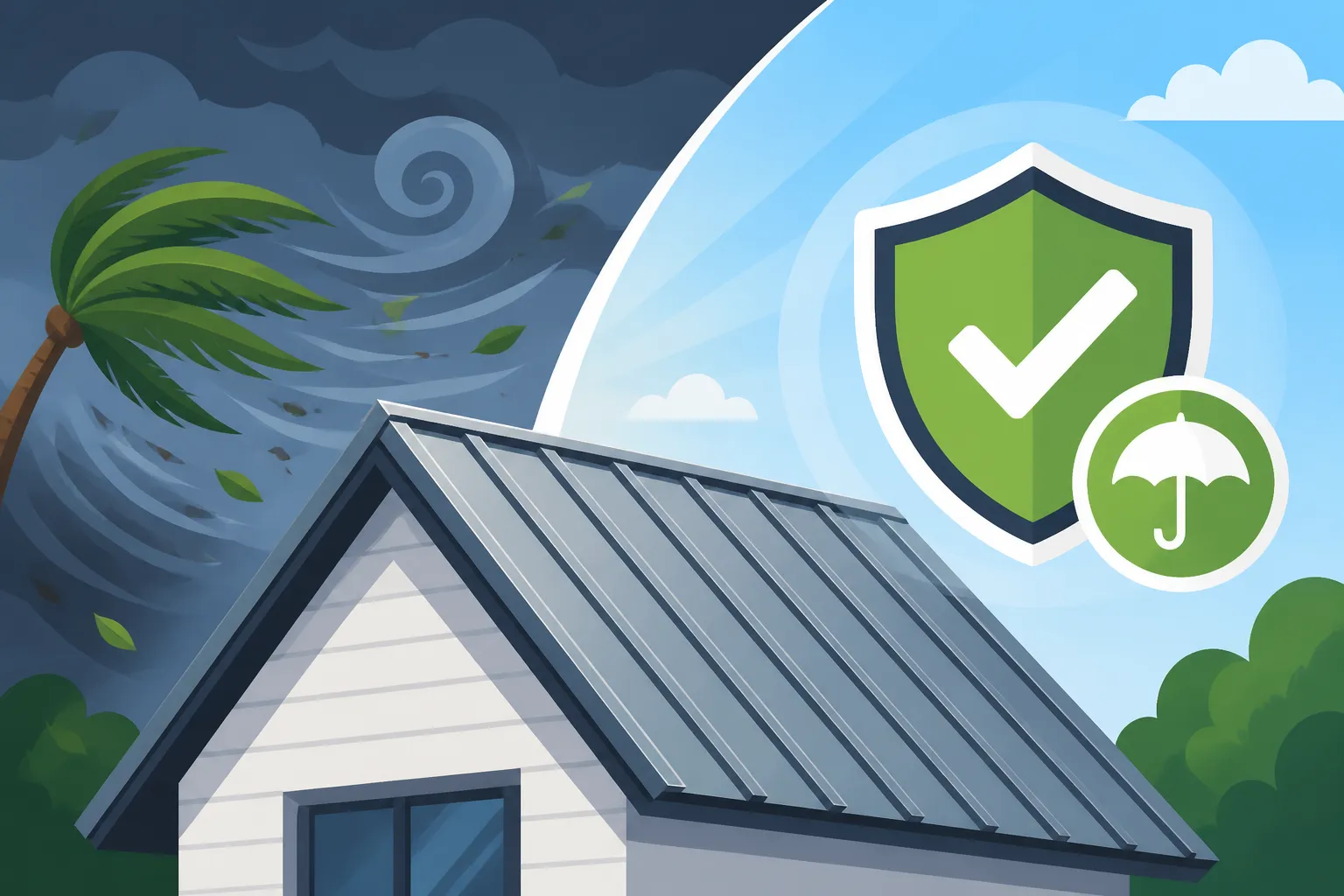
Now, let's get to the star of the show: metal roofs. These aren't just pretty faces; they are inherently built to stand up to some serious weather, including intense winds. Unlike asphalt shingles that can lift and tear off one by one, a properly installed metal roof offers a continuous, interlocking shell of protection. This is why many homeowners choose them, especially in areas constantly battered by strong gusts and tropical storms.
Superior Design and Attachment Methods
One of the biggest reasons metal roofs excel in wind resistance is their design and how they're fastened. Many metal roofing systems, especially modern standing seam profiles, feature interlocking panels that create a monolithic surface over your home. These panels are often secured with hidden fasteners, meaning the screws and clips are protected beneath the metal panels themselves, shielding them from direct wind uplift and water infiltration. This contrasts sharply with exposed fastener systems, where every screw head is a potential point of vulnerability if not properly maintained or installed.
Consider the common 5V Crimp metal roof, often seen on older homes or barns, and compare it to a modern standing seam system. While both are metal, the interlocking design of a standing seam roof provides a much more robust defense against uplift than the lapped and screwed panels of a 5V Crimp roof. The way panels are connected and the quality of the underlying roof deck attachment, which ensures the roof structure is firmly anchored to the walls, are critical elements inspectors will scrutinize. For a deeper dive into how these roofs are put together, check out our guide on the Metal Roof Installation Process: Step by Step.
Inherent Material Strength and Durability
Metal itself is an incredibly durable material. Steel, aluminum, copper, and zinc are naturally strong and much heavier than individual shingles, making them less susceptible to being lifted by strong winds. Beyond raw strength, the way these materials are engineered into panels further enhances their performance. For instance, a 24-gauge steel panel is much more rigid and less prone to flexing and fatiguing under wind pressure than a lighter 29-gauge panel. The coatings applied to modern metal roofs, like Kynar 500 or Hylar 5000 (often referenced with brands like Valspar or Sherwin-Williams), also contribute to their longevity and ability to withstand environmental stressors without degrading quickly, ensuring the roof's integrity over decades.
Qualifying for a Wind Mitigation Discount with a Metal Roof
So, you've got a metal roof, or you're planning on getting one – fantastic! But how do you actually make sure it translates into those sweet, sweet insurance savings? It's not just about having a metal roof; it's about having the right metal roof, installed correctly, and documented properly.
Key Factors for Discount Eligibility
Insurance companies look at several specific criteria when assessing wind mitigation discounts, and a metal roof ticks many of these boxes. Here's what they're generally looking for:
- Roof-Deck Attachment: This is perhaps the most critical factor. How is your roof sheathing (plywood or OSB) attached to your roof trusses or rafters? Stronger attachments, like larger nails or screws placed closer together, provide superior resistance to uplift. Metal roofs typically require a robust deck, and good contractors will ensure this is up to code.
- Roof-to-Wall Attachment: How is your entire roof structure connected to your home's walls? Clips, hurricane straps, or other reinforcing methods that ensure the roof won't simply lift off are huge for discounts. A metal roof itself doesn't directly provide this, but contractors installing them will often ensure these foundational elements are robust.
- Roof Shape: Believe it or not, the shape of your roof plays a role. Hip roofs (where all sides slope downward to the walls) generally perform better in high winds than gable roofs (two sloped sides with vertical ends) and often qualify for greater discounts.
- Secondary Water Resistance (SWR): This is an extra layer of protection under your metal roof panels. Think of it as a backup shield. Options like high-quality synthetic underlayment or ice and water barrier membranes can prevent water from entering your home even if your primary roof covering is compromised. Many metal roof installations include superior underlayment, and this is a significant factor in qualifying for discounts. You can learn more about this in our detailed guide on Metal Roof Underlayment and Ventilation Guide.
- Specific Metal Roof Features: The type of metal panel, its gauge (thickness), the fastening system (hidden vs. exposed), and how the panels interlock or are seamed all contribute to its wind resistance rating. A properly installed standing seam metal roof, for instance, generally offers superior wind resistance compared to a thinner, exposed fastener corrugated panel. This is often where metal roofs truly shine, providing ratings far exceeding what conventional shingles can offer.
The Wind Mitigation Inspection Process
To actually get your discount, you'll need a certified wind mitigation inspector to come to your property. They will assess your home and generate a report. Here’s a typical rundown:
- Scheduling: You contact a licensed home inspector who offers wind mitigation services. Prices can vary, but it's typically a few hundred dollars.
- The Inspection: The inspector will check inside your attic to see how the roof deck is attached and how the roof is secured to the walls. They'll also get on the roof to examine your roofing material, its installation, and any secondary water resistance measures visible. They might even ask for your roofing permits or installation documents if you have them.
- The Report: The inspector will then fill out the official wind mitigation form, detailing all the findings, including the wind resistance of your metal roof. They'll assign ratings to each component, which directly impacts the potential discounts.
- Submission: You submit this completed report to your homeowners insurance provider. They will review it and apply any eligible discounts to your policy. It's often helpful to submit it before your policy renews.
For anyone in Florida, understanding Florida Metal Roof Codes: FBC, HVHZ & Approvals is absolutely critical, as the requirements are particularly stringent and well-defined there due to hurricane risk.
Maximizing Your Wind Mitigation Savings
Getting a discount is good, but maximizing it is even better! With a metal roof, you’re already ahead of the game, but there are nuances that can further enhance your savings.
Professional Installation is Paramount
This cannot be stressed enough: the quality of your metal roof installation is just as important, if not more important, than the material itself. A top-tier metal panel installed poorly won't perform as expected and might not qualify for the best discounts. A reputable, experienced metal roofing contractor understands the specific requirements for wind resistance and will ensure proper fastening, sealing, and adherence to local building codes. They'll know about crucial details like proper fastener spacing, panel overlap, and effective flashing at critical junctures. An installation that ensures strong roof-to-wall connections and a robust roof deck is what an inspector wants to see. When hiring, always ask about their experience with specific metal roofing systems and their understanding of wind mitigation requirements. This is why learning How to Hire a Metal Roofing Contractor is such a crucial first step.
Understanding Wind Ratings and Certifications
Metal roofing materials often come with specific wind uplift ratings, sometimes referred to as ASTM E1592 or UL 580 ratings. These ratings indicate how much wind pressure a system can withstand without failing. Manufacturers like McElroy Metal, Metal Sales, and PAC-CLAD provide detailed specifications for their products, including their wind resistance. If your metal roof has a high wind rating, or if it's certified under programs like FORTIFIED Roof, which focuses on superior installation techniques for storm resilience, you're in an excellent position for substantial discounts. Your installer should be able to provide documentation for the product's ratings. Exploring specific topics like Metal Roof Wind and Fire Ratings Explained can give you a clearer picture of what to look for.
| Wind Mitigation Feature | Description | Impact on Discount Potential (Metal Roofs) |
|---|---|---|
| Roof-Deck Attachment | How plywood/OSB is fastened to trusses (e.g., 8d nails every 6 inches) | High. Stronger attachment means the roof deck stays on, a critical baseline for any roof. |
| Roof-to-Wall Attachment | Connectors like hurricane clips or straps securing trusses/rafters to walls. | High. Prevents entire roof structure from lifting off. Essential for severe weather zones. |
| Roof Geometry (Shape) | Hip roofs typically perform better than gable roofs. | Moderate. While not directly tied to metal, a metal roof on a hip roof often gets the best combined discount. |
| Secondary Water Resistance (SWR) | Underlayment that prevents water intrusion if outer roof covering is damaged (e.g., peel-and-stick). | High. Crucial for protecting the interior from water damage, which can be expensive to repair. Metal roofs often use superior SWR. |
| Roof Covering Material | The material itself (e.g., metal, shingles, tile). | High. Metal roofs are inherently more wind-resistant than asphalt shingles due to strength, interlocking panels, and fastening methods. |
| Fastening Method (Metal Roofs) | Exposed vs. Hidden Fasteners. Hidden fasteners offer superior wind uplift resistance. | High. Hidden fastener systems (like standing seam) are inherently more robust against wind uplift and typically qualify for higher discounts. |
| Gauge (Thickness) | Thickness of the metal panels (e.g., 24-gauge vs. 29-gauge). | Moderate. Thicker metal offers greater rigidity and durability against deflection and wind fatigue. (See: 24 vs 26 Gauge Metal Roof: Cost Difference) |
The Role of Your Insurance Provider
Not all insurance companies offer the same level of discounts, and some might require specific certifications or inspections that others don't. It’s always a good idea to speak directly with your insurance agent or carrier about their specific requirements for wind mitigation discounts before and after your metal roof installation. Some major carriers like State Farm, Travelers, and Allstate are known to offer these discounts, but policies vary. In some cases, a new metal roof can lead to significant Metal Roof Insurance Savings & Discounts.
Don't be afraid to shop around! Once you have your wind mitigation report in hand, you might find that different insurers offer varying premium reductions based on the same report. Comparing multiple quotes is key to truly maximizing your savings.
Common Misconceptions and Additional Considerations
There are always a few myths and misunderstandings floating around when it comes to home improvements and insurance. Let’s clear some of those up.
"All Metal Roofs Are Created Equal"
This is simply not true, especially when it comes to wind mitigation. As we've discussed, there's a huge difference between a thin, exposed fastener agricultural panel and a heavy-gauge, mechanically seamed standing seam roof. While any metal roof will likely offer better wind resistance than a standard asphalt shingle roof, the extent of the discount will depend heavily on the specific type and installation quality. Knowing about Metal Roofing Types Explained: Profiles & Panels is important for making an informed decision.
For example, a robust standing seam metal roof in a high-wind area of South Florida, installed to meet stringent Miami-Dade NOA (Notice of Acceptance) standards, will likely earn a much higher discount than a basic corrugated roof in an area with less severe weather. The nuances matter to insurance underwriters.
The Lifetime Cost vs. Upfront Investment
While a metal roof might have a higher upfront cost than asphalt shingles, the long-term savings, including potential wind mitigation discounts, contribute significantly to its overall value proposition. These roofs last 40-70 years, often outliving two or three asphalt shingle roofs. When you factor in the annual insurance savings, reduced maintenance, and superior durability against extreme weather, the Metal Roof Cost vs Lifespan Value truly becomes apparent. Over decades, those small annual discounts add up to a significant amount of money back in your pocket.
Local Building Codes and Requirements
Building codes are not suggestions; they are mandates, especially in areas prone to severe weather. For instance, in coastal regions or areas prone to hurricanes, local building codes often specify higher wind load requirements, stronger fastening schedules, and mandatory secondary water barriers. A metal roof installed to these rigorous standards will inherently qualify for better wind mitigation credits because it's built to withstand the worst. Always ensure your contractor pulls the necessary permits and follows all local codes, as this documentation can be vital for both insurance and resale value. This attention to detail is essential for a proper Metal Roof Installation Process: Step by Step.
Final Thoughts on Your Metal Roof and Wind Mitigation
Choosing a metal roof is a smart decision for many reasons, not least of which is its incredible resilience against high winds. While the initial investment might seem significant, the long-term benefits, including the potential for substantial wind mitigation discounts on your homeowners insurance, make it a truly worthwhile upgrade. By understanding what inspectors look for, ensuring professional installation, and obtaining the proper documentation, you can not only safeguard your home but also enjoy considerable savings for decades to come. Don't leave money on the table; leverage the strength of your metal roof to protect both your home and your wallet!
Disclaimer
Please remember that building codes, insurance policies, and discount availability can vary significantly by location and insurance provider. Always consult with a licensed roofing contractor, a qualified wind mitigation inspector, and your insurance agent to get the most accurate and up-to-date information specific to your property and policy. This article is intended for informational purposes only and does not constitute professional advice.