Can You Put a Metal Roof on a Low-Slope Roof?
The idea of putting a sleek, durable metal roof on a home with a gently sloping roofline can be exciting, offering a modern aesthetic and incredible longevity. However, many homeowners worry that metal roofing is only suitable for steeply pitched roofs, or they've heard stories about leaks and complications on flatter surfaces. This guide is here to cut through the confusion and explain exactly when and how a metal roof can be successfully installed on a low-slope roof, detailing the specific systems, critical installation steps, and expert insights you'll need to make an informed decision.
Understanding Low-Slope Roofs and Their Unique Challenges
Before diving into how metal roofing fits into the picture, it's crucial to understand what defines a "low-slope" roof and the inherent challenges they present, especially when considering traditional roofing materials. This will help frame why specific metal roofing solutions are designed to overcome these hurdles.
Defining "Low-Slope" in Roofing Terms
In the roofing world, pitch or slope is usually measured in "rise over run." This means for every 12 inches of horizontal distance (the run), the roof rises a certain number of inches. A truly "low-slope" roof is generally considered to be anything with a pitch less than 3:12, meaning it rises less than 3 inches for every 12 inches it runs horizontally. Many residential roofs are often steeper, but carports, additions, modern architectural homes, and even some porches feature these lower pitches.
While a "flat roof" is technically 0:12, even commercial flat roofs usually have a very slight slope (like 1/4 inch per foot or 1:48) to encourage drainage. For residential applications, a 1:12 to 3:12 pitch is where the low-slope considerations truly kick in for metal roofing. Anything below 1:12 usually requires specialized commercial-grade flat roofing systems, not typical residential metal panels.
Common Issues with Traditional Roofing on Low Slopes
Traditional roofing materials like asphalt shingles are a homeowner's go-to for pitched roofs, but they simply aren't designed for low slopes. Shingles rely on gravity to shed water quickly, with each shingle overlapping the one below it like scales. On a low-slope roof, water moves too slowly, increasing the risk of "backwater laps." This is when water backs up under the shingles, seeping through the felt or reaching the roof deck.
This slow drainage can lead to a host of problems, from water infiltration and wood rot to mold and mildew growth in the attic or roof structure. Additionally, organic debris like leaves and pine needles can easily accumulate on a low-slope roof, trapping moisture and accelerating deterioration. Even ice dams, a common winter menace, are exacerbated on low-slope roofs where melting snow has nowhere to go but back under the roofing material.
Why Metal Roofing is Often Considered Challenging for Low Slopes
It's a common misconception that metal roofs, with their seemingly impermeable surfaces, are inherently suitable for any roof pitch. While metal is waterproof, the joints and fasteners are the critical elements, and these behave differently depending on the slope. For many popular metal roofing types, especially those with exposed fasteners, low slopes present significant challenges.
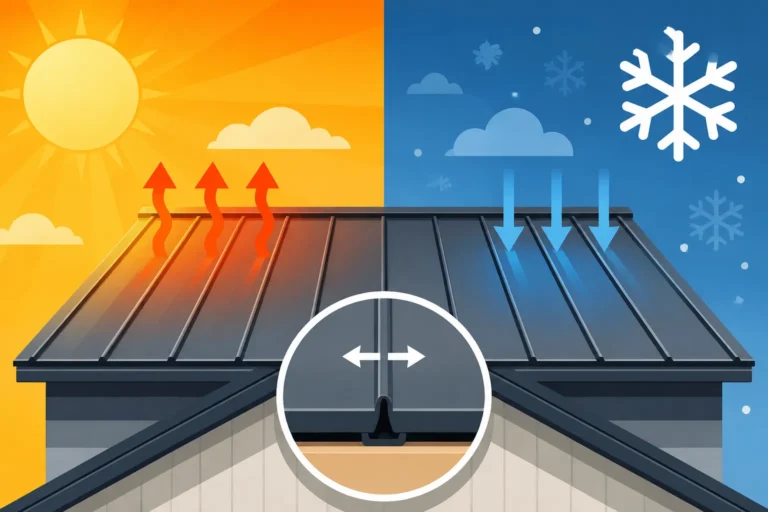
Consider a corrugated metal roof or an R-panel roof, which use screws to fasten the panels directly to the roof deck or purlins. Each screw creates a penetration point, and while these are sealed with neoprene washers, standing water or very slow drainage on a low slope significantly increases the risk of water eventually working its way past these seals. Thermal expansion and contraction of the metal panels also put stress on these fasteners over time, potentially loosening them and compromising the seal. Therefore, while incredibly durable, not all metal roofing is created equal when it comes to very low pitches.
Types of Metal Roofs Suitable for Low-Slope Applications
When you're dealing with a low-slope roof, your choice of metal roofing material becomes much more critical. It's not just about aesthetics anymore; it's about engineering that prevents water intrusion where gravity isn't helping as much.
Standing Seam Metal Roofing: The Gold Standard
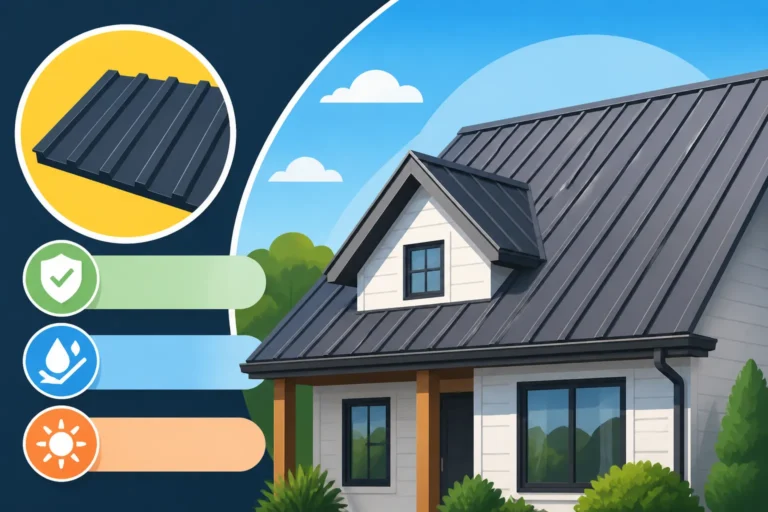
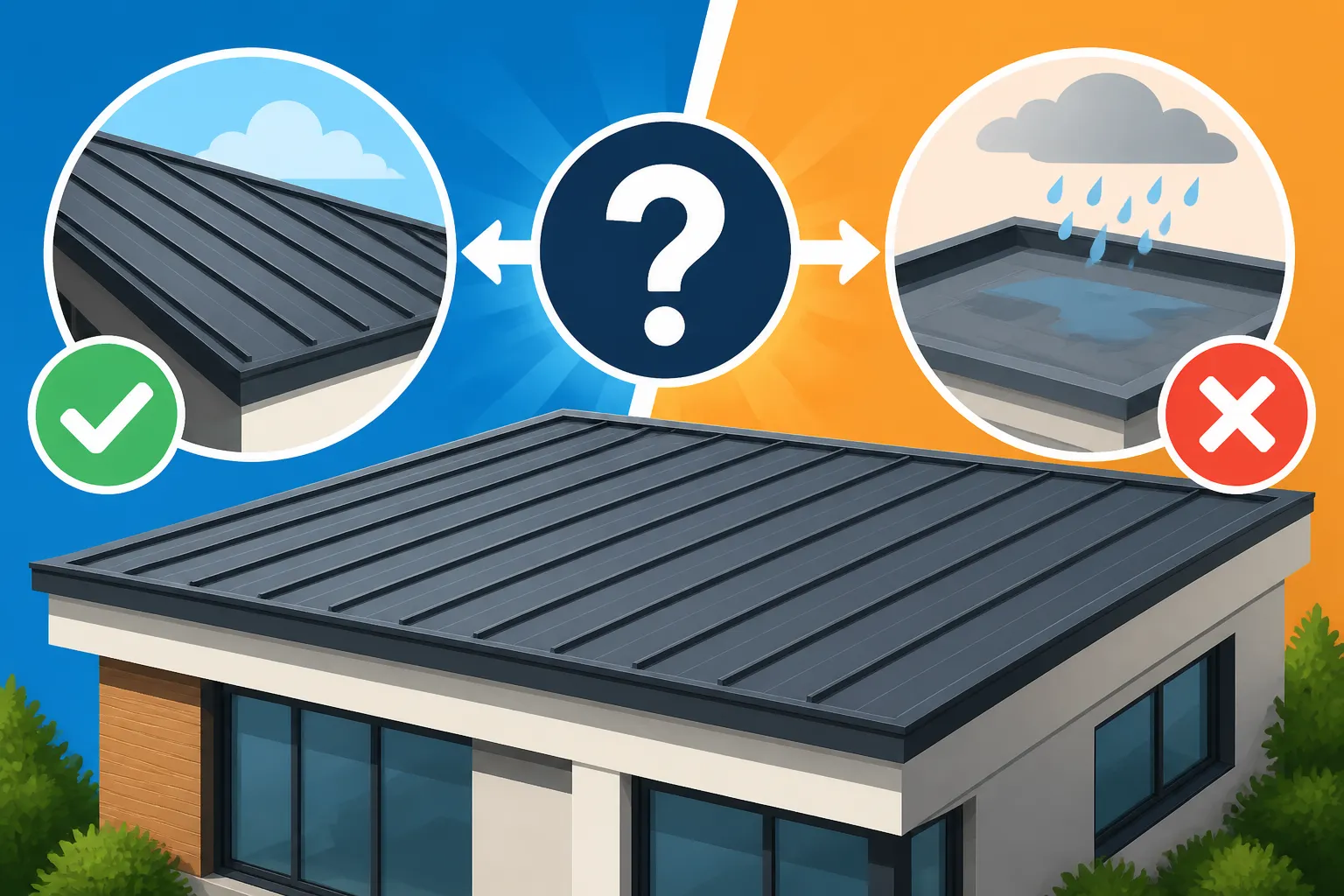
If you're serious about putting a metal roof on a low-slope application, standing seam metal roofing is almost always the answer. This system is considered the gold standard for a reason: its design actively mitigates the primary concerns of low-pitch roofs. Instead of exposed fasteners, standing seam panels feature raised seams that interlock or are mechanically seamed together above the flat surface of the roof panel. This crucial design element keeps fasteners hidden and protected beneath the panels, eliminating hundreds, sometimes thousands, of potential leak points.
The vertical seams create natural channels for water runoff, preventing it from pooling or migrating laterally. Furthermore, the panels are typically custom-fabricated to the length of the roof, minimizing horizontal seams which are another potential leak source. The robust interlocking system, combined with continuous panels, ensures that water, even if it moves slowly, is directed off the roof effectively without penetrating the roofing system. This is why you'll see standing seam metal roofs on everything from commercial buildings with minimal slopes to modern residential designs. When discussing Standing Seam Metal Roof Cost, it's important to remember that this investment reflects its superior performance on challenging pitches.
Mechanically Seamed vs. Snap-Lock Systems
Within the standing seam category, there are two primary types of seaming mechanisms: snap-lock and mechanically seamed (or double-lock). Understanding the difference is vital for low-slope applications.
Snap-lock standing seam panels, as the name suggests, simply "snap" together during installation. They feature an integral seam that interlocks when pressed down. While quicker to install and often more budget-friendly, snap-lock systems generally require a minimum roof pitch of 1:12 or 2:12, depending on the manufacturer. For pitches below this, or in areas prone to extreme winds or heavy snow loads, the additional security of a mechanically seamed system becomes paramount. These are suitable for some low-slope applications, but you need to pay close attention to the manufacturer's specific recommendations for the minimum pitch.
Mechanically seamed standing seam systems offer the highest level of weatherproofing and are the preferred choice for truly low-slope roofs, often capable of being installed on pitches as low as 0.5:12 or even 0.25:12 (though professional engineering is usually required for pitches this low). With this system, the installer uses a specialized seaming machine to fold and crimp the edges of adjacent panels together, creating a watertight, double-locked seam. This creates an incredibly strong, virtually impenetrable seal that can withstand significant wind uplift and water pooling without compromise. It’s a more labor-intensive process, which can impact the overall Metal Roof Labor Cost, but it offers unmatched peace of mind on challenging roof angles.
Other Metal Panel Options and Their Limitations
While standing seam is the clear winner for low-slope, other metal panel types are worth a brief mention, primarily to explain their limitations in this context.
Exposed fastener systems, such as corrugated panels, R-panels, or 5V Crimp panels, are common and cost-effective for barns, sheds, and commercial buildings with moderate to steeper slopes. However, as previously touched upon, every fastener is a potential leak point. On a low-slope roof, where water may sit longer or drain slowly, the integrity of these screw seals is severely tested. Most manufacturers specify a minimum pitch of 3:12 or even 4:12 for exposed fastener systems to ensure proper drainage and prevent leaks. Going against these recommendations is a recipe for expensive repairs and premature roof failure down the line. You can learn more about the differences in Standing Seam vs Corrugated Metal Roof systems.
Metal shingles, shakes, and tiles, designed to mimic traditional roofing materials, are another category. While aesthetically pleasing, these are generally not suitable for truly low-slope applications. Like asphalt shingles, they rely on overlapping patterns that require a certain pitch for effective water shedding. Most metal shingle systems require a minimum pitch of 3:12 or 4:12. Attempting to install them on a flatter roof would lead to the same backwater issues seen with traditional shingles, undermining the very benefits of metal roofing.
| Metal Roof Type | Minimum Recommended Pitch (approx.) | Fastener Type | Water Management | Low-Slope Suitability |
|---|---|---|---|---|
| Mechanically Seamed SS | 0.5:12 to 1:12 | Hidden | Excellent | High |
| Snap-Lock SS | 1:12 to 2:12 | Hidden | Good to Excellent | Medium to High |
| Exposed Fastener (R-Panel, Corrugated) | 3:12 to 4:12 | Exposed | Fair | Low |
| Metal Shingles/Tiles | 3:12 to 4:12 | Hidden/Exposed | Fair | Low |
Note: Always consult specific manufacturer guidelines for exact minimum pitch requirements.
Critical Installation Considerations for Low-Slope Metal Roofs
Installing a metal roof on a low-slope roof isn't just about choosing the right panel; it's about meticulous attention to detail during installation. Every step, from the underlayment to the flashing, plays an outsized role in the roof's long-term performance and watertight integrity.
The Importance of Proper Underlayment
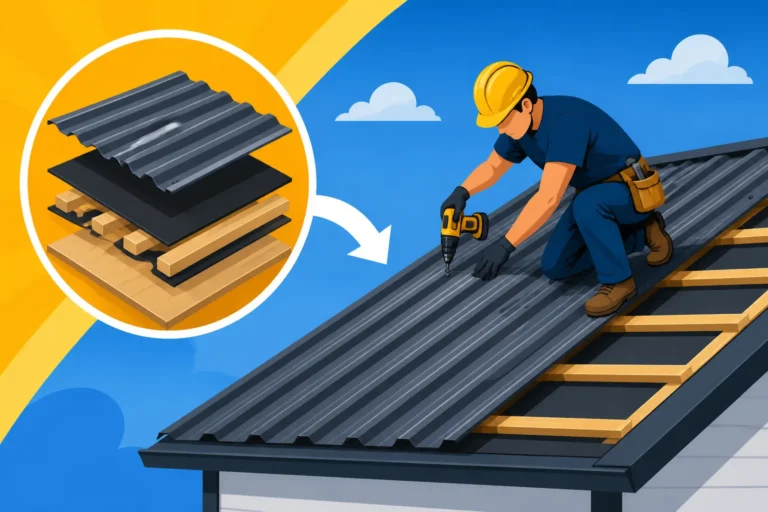
On a low-slope roof, the underlayment isn't just a secondary barrier; it's often the primary water-shedding layer, especially in the event of any moisture penetration through the metal panels themselves. For low-slope metal roofs, a high-quality, self-adhering membrane (often referred to as ice and water shield) is not just recommended, it's often a mandatory requirement by manufacturers and local building codes.
This specialized underlayment adheres directly to the roof deck, creating a continuous, watertight seal. Unlike traditional felt paper, which can wrinkle or tear, self-adhering membranes seal around fasteners and can prevent water from migrating laterally beneath the membrane if a breach occurs. This "belt and suspenders" approach provides an essential layer of redundancy. Without it, even the best standing seam system could be compromised by capillary action or extreme weather events on a low slope. For a deeper dive, check out our Metal Roof Underlayment and Ventilation Guide.
Sealing and Flashing Techniques
Flashing is the unsung hero of any roof, but for low-slope metal roofs, it becomes critically important. Flashing refers to the metal pieces used to direct water away from vulnerable areas, such as around chimneys, skylights, vents, and roof edges. On a low-slope, water has more time to test these transition points.
Expert installers employ specific techniques for low-slope metal roofs. This often involves continuous flashing, higher upstands at transitions, and meticulous sealant application. For instance, step flashing used on steeper roofs won't cut it. Instead, continuous flashing components that are mechanically seamed or welded to the main roof panels are typically used at walls or dormers. High-quality sealants, compatible with the metal and the coating, are applied strategically and generously, not just as a quick fix, but as an integral part of the system. In high-risk areas, a "pitch pocket" filled with liquid sealant might be used around pipe penetrations to ensure a watertight seal. This careful attention to detail is paramount to How to Prevent Leaks on a Metal Roof.
Addressing Drainage and Water Management
Even with the best metal roof system, if the underlying drainage isn't handled correctly, you're inviting problems. Low-slope roofs are inherently prone to ponding water – where water doesn't drain completely and sits on the roof surface. While a mechanically seamed metal roof is designed to withstand ponding for short periods, prolonged standing water can accelerate the degradation of coatings, lead to premature corrosion, and stress seam integrity.
Proper roof design for low slopes should always consider adequate drainage pathways. This might involve precise gutter sizing and placement, or even introducing subtle internal drainage systems. Some installations might incorporate slight tapered insulation to enhance the slope where needed, ensuring water moves off the roof efficiently. Additionally, preventing debris accumulation is crucial. Regular maintenance to keep gutters and roof surfaces clear of leaves, branches, and dirt will help maintain effective drainage and prevent ponding that could compromise the roof's long-term performance.
Benefits and Potential Drawbacks of Metal Roofs on Low Slopes
Deciding on a metal roof for a low-slope application involves weighing the significant advantages against some very real considerations. It's not a decision to be taken lightly, but with the right approach, the benefits often far outweigh the challenges.
Enhanced Durability and Lifespan
One of the most compelling reasons to choose a metal roof for a low-slope application, despite the complexities, is its unparalleled durability and lifespan. A properly installed standing seam metal roof can last 40 to 70 years, sometimes even longer. This far outstrips the typical lifespan of asphalt shingles, which might only manage 15-30 years, especially on low slopes where they degrade faster. This means fewer roof replacements over the home's lifetime, saving significant money and hassle in the long run.
Metal roofs are inherently resistant to fire, rot, mildew, and pests. They also stand up incredibly well to extreme weather, including high winds and hail, far better than many other roofing materials. The robust, interlocking seams of a mechanically seamed system on a low-slope roof offer incredible wind uplift resistance, a crucial benefit in storm-prone regions. This resilience contributes to the overall peace of mind and long-term value that a quality metal roof provides.
Energy Efficiency and Weather Resistance
Metal roofs are celebrated for their energy efficiency, and this benefit extends to low-slope applications. Many metal panels, especially those with lighter colors or specialized coatings, can reflect a significant portion of the sun's radiant heat. This reduces heat absorption into the attic space, which in turn lowers cooling costs during hot summer months. The ENERGY STAR label, often seen on metal roofing products, signifies a material's ability to reduce energy consumption.
Beyond heat reflection, metal roofs offer superior weather resistance. Their smooth, hard surfaces shed snow easily, preventing the heavy buildup that can strain roof structures. While proper snow guards might be necessary to control snow slides, the roof itself is not prone to damage from snow and ice. The watertight seams also make them impervious to heavy rains, performing exceptionally well in climates with frequent downpours. This combination of energy savings and robust weather protection makes a metal roof an excellent long-term investment.
Higher Upfront Cost and Installation Complexity
The primary drawback of installing a metal roof on a low-slope is the upfront cost, which is significantly higher than traditional asphalt shingles. This is due to several factors: the cost of the metal materials themselves (especially premium standing seam panels), the need for specialized underlayment, and the highly skilled labor required for proper installation. Mechanically seamed systems, which are often necessary for very low pitches, require specialized tools and trained technicians, further adding to the labor costs. You can get an idea of typical expenses by looking at the Standing Seam Metal Roof Cost.
The installation process itself is also more complex and time-consuming than a conventional shingle roof. Precise measurements are critical, and panels are often fabricated on-site or custom-ordered. Flashing and sealing around penetrations demand meticulous attention to prevent leaks, which can be particularly challenging on low-slope roofs. Cutting corners during installation will inevitably lead to costly problems down the line. Therefore, selecting an experienced contractor is not just recommended, it's absolutely essential to protect your investment.
Navigating Permits, Codes, and Contractor Expertise
Embarking on a low-slope metal roofing project involves more than just material selection and installation know-how. You'll need to navigate local regulations and, most importantly, find a contractor with the specific expertise needed for such a specialized job.
Local Building Codes and Pitch Requirements
Before you even think about picking out a color, you need to understand your local building codes. Building codes are designed to ensure safety and structural integrity, and they often have specific requirements for roofing materials based on roof pitch. While federal guidelines exist, most requirements are set at the state or local level. For example, some jurisdictions might have stricter requirements for underlayment on low-slope roofs, or mandate certain panel gauges depending on expected snow loads or wind speeds.
It’s not uncommon for local codes to specify a minimum pitch for certain roofing materials. While metal roofing, particularly standing seam, is generally approved for lower pitches than shingles, verifying these details with your local building department is non-negotiable. Skipping this step or ignoring regulations could lead to costly rework, fines, and even issues with insurance or resale later on. A reputable contractor will always pull the necessary permits and ensure compliance. To understand the general landscape, you can consult resources like Metal Roof Building Codes Explained.
Finding an Experienced Low-Slope Metal Roofing Contractor
This is arguably the most critical step in a low-slope metal roofing project. Installing a standing seam metal roof on a low slope is not a job for a general roofer or a handyman. It requires specialized knowledge, tools, and experience. Look for contractors who specifically highlight their expertise in metal roofing, particularly standing seam systems, and even better, those who have a track record with low-slope applications.
When vetting contractors, ask for references from past low-slope metal roof projects and actually follow up on them. Inquire about their training and certifications, especially if they are factory-certified installers for specific metal roofing manufacturers. A manufacturer certification indicates they've undergone rigorous training on proper installation techniques, which is vital for warranty validity. You'll want to ask questions about their crews' experience – how many low-slope metal roofs have their crews installed, not just the company. Services like Modernize can be incredibly helpful in connecting you with vetted, local professionals who specialize in metal roofing, helping you ensure you're getting bids from qualified experts. It's truly worth the effort to How to Hire a Metal Roofing Contractor for this kind of work.
Ensuring Proper Warranties and Guarantees
A metal roof is a significant investment, and its longevity is a key selling point. Therefore, understanding and securing comprehensive warranties is paramount. There are typically two types of warranties to consider: the manufacturer's warranty on the materials (panels, coatings, fasteners) and the contractor's warranty on the workmanship.
For low-slope applications, both are critical. The manufacturer's warranty should cover the performance of the metal and its finish for decades, ensuring it won't prematurely rust, fade, or peel. For this warranty to be valid, specific installation procedures must be followed, which is where a certified installer comes in. The contractor's workmanship warranty should cover any defects in the installation itself, typically for a period of 5-10 years. Make sure all warranty details are clearly spelled out in your contract before any work begins. If a contractor offers a warranty that seems too short or vague, consider it a red flag. A reliable company will stand behind their work for years to come.
Maintenance and Longevity of Low-Slope Metal Roofs
Once your beautiful new metal roof is installed on your low-slope home, the journey isn't over. While metal roofs are famously low-maintenance, a little proactive care goes a long way, especially for roofs where gravity isn't always doing all the work.
Regular Inspections and Cleaning
Even the most durable metal roof benefits from routine inspections. For a low-slope metal roof, aim for at least an annual inspection, and ideally after any major storm events. These inspections should ideally be performed by a qualified roofing professional who knows what to look for. They’ll check for any signs of debris buildup, especially in valleys or around penetrations where water might pond. They’ll also inspect the integrity of the seams, flashing, and sealant around vents, chimneys, and skylights.
Cleaning is also important. While a smooth metal roof naturally sheds most debris, leaves, pine needles, and even dirt can accumulate over time, especially on lower pitches. This debris can trap moisture and promote algae or moss growth, which can prematurely degrade coatings or clog drainage pathways. A gentle cleaning with a soft brush and water, or a specialized roof cleaner, can keep your roof looking great and functioning optimally. Avoid harsh chemicals or high-pressure washers, which can damage the finish. Consistent cleaning and inspection is a key part of extending the life of your metal roof.
Addressing Potential Issues Like Leaks or Ponding
Despite the best installation, no roof is entirely impervious to issues, especially over decades of service. On a low-slope metal roof, the most common issues would be related to minor leaks around penetrations or flashing, or localized ponding. The good news is that these are usually minor and repairable if caught early.
If you notice any signs of a leak – water stains on your ceiling, dripping sounds, or visible moisture in the attic – it's crucial to address it immediately. A professional metal roofing contractor can quickly diagnose the source, which might be a compromised sealant bead, a damaged flashing component, or even an issue with an accessory like a vent or skylight. Similarly, if you observe consistent ponding in a specific area after rain, it might indicate a minor sag in the roof deck or a blockage preventing proper drainage. Addressing these quickly prevents small problems from escalating into major, costly repairs. You can consult guides like Metal Roof Leak Repair Guide for more information.
Maximizing Your Investment's Lifespan
The impressive lifespan of a metal roof – often exceeding 50 years – is one of its biggest selling points. To truly maximize this investment, the combination of correct installation, proactive maintenance, and timely repairs is essential. Choosing high-quality materials from reputable manufacturers, like those offered by companies such as McElroy Metal or Petersen Aluminum (PAC-CLAD), ensures you're starting with a product designed for longevity.
Beyond the initial installation, regular maintenance, as discussed, is key. Think of it like a fine automobile; routine check-ups and cleanings prevent minor wear and tear from becoming catastrophic failures. Staying vigilant for any signs of trouble, no matter how small, and calling in an expert quickly for assessment and repair will protect your roof's integrity. By doing so, you're not just extending the roof's life; you're preserving its aesthetic appeal, energy efficiency, and the overall value it adds to your home for many decades to come.
Disclaimer
Please note that this guide provides general information about installing metal roofs on low-slope applications. Building codes, product specifications, and best practices can vary significantly by location and specific product. Always consult with a qualified, licensed, and insured local metal roofing contractor and your local building authority before undertaking any roofing project. They can provide accurate assessments and recommendations tailored to your specific roof and local regulations.