Ice and Water Shield for Metal Roofs
There's a common misconception that because metal roofs are so incredibly durable and long-lasting, you can just slap them on and forget about the underlying layers. But I'm here to tell you that's a dangerous thought process, especially when it comes to safeguarding your home from one of its most persistent enemies: water infiltration, particularly from ice and wind-driven rain. This comprehensive guide will walk you through everything you need to know about ice and water shield for metal roofs, explaining why this often-overlooked component is absolutely critical for your peace of mind and your home's longevity.
Understanding the Role of Ice and Water Shield (IWS)
Many homeowners think of their roof as just the visible layer—shingles, tiles, or in our case, beautiful metal panels. But just like a house has a foundation and framing hidden beneath its finished surfaces, a robust roof system relies on crucial underlayers that you rarely see. Ice and water shield is one of those unsung heroes, a specialized roofing underlayment designed to offer superior protection where traditional felts or synthetics might fall short.
What Exactly Is It? The Self-Sealing Marvel
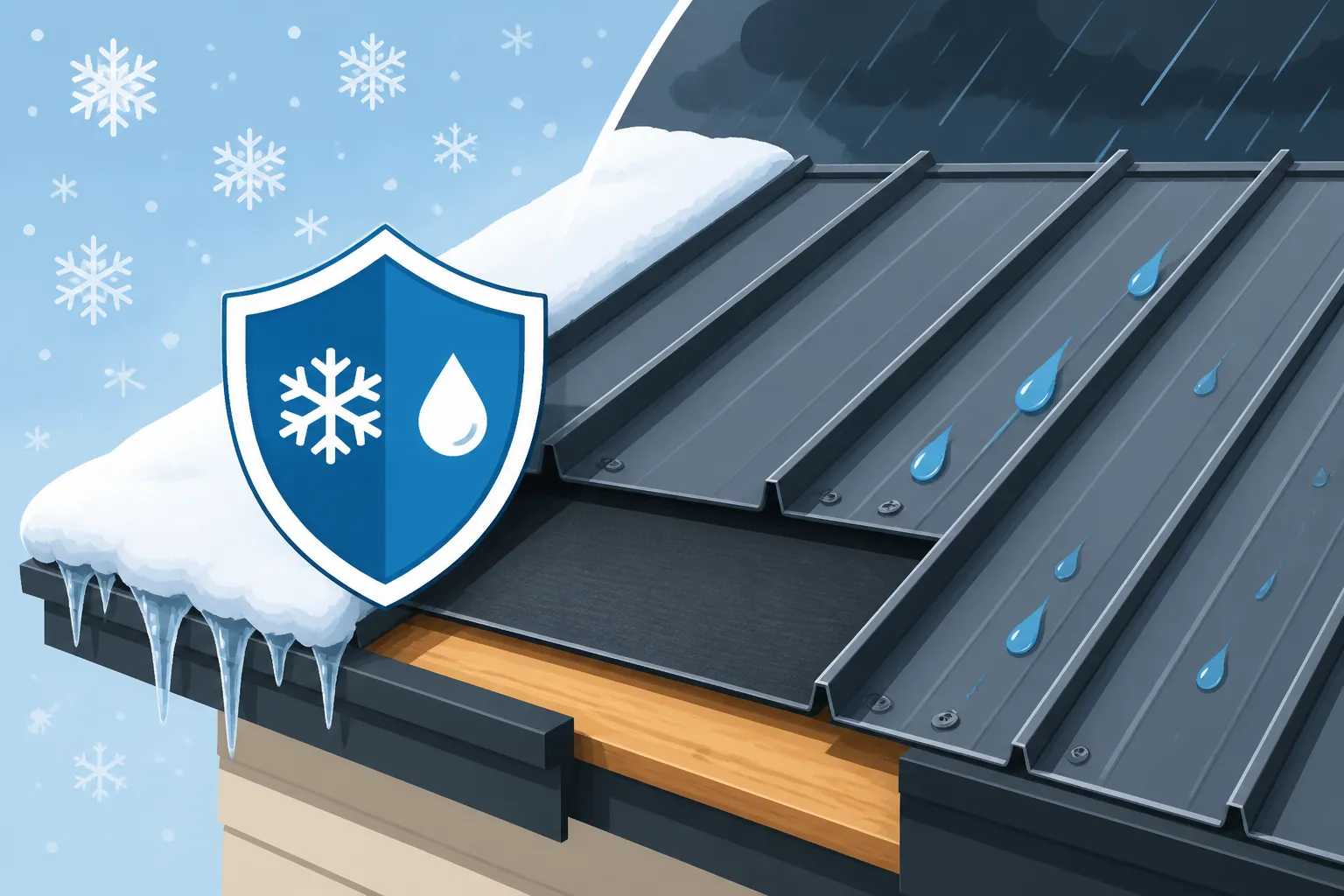
At its core, an ice and water shield is a self-adhering, self-sealing membrane. Unlike standard felt paper or even synthetic underlayments that are simply laid down and fastened, IWS has an adhesive backing that sticks directly to your roof decking. This sticky layer is a game-changer, creating a watertight bond that acts as a secondary barrier against moisture intrusion. But the "self-sealing" part is where it really earns its stripes. When fasteners (like the screws used in metal roofing) penetrate the membrane, the rubberized asphalt or modified bitumen material actually flows around the fastener shank, sealing the hole and preventing water from seeping through. Imagine a tiny rubber gasket forming around every single screw – that's the magic of IWS.
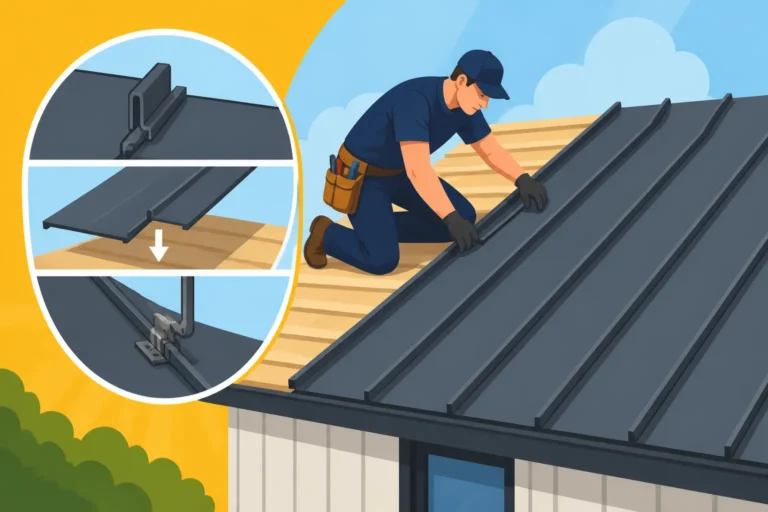
This unique property is particularly vital for metal roofing systems, which, despite their strength, still rely on hundreds, if not thousands, of fasteners to hold the panels in place. While the exposed fasteners of a corrugated or R-panel system are visible, even a hidden fastener standing seam roof has clips or screws penetrating the deck. Each of those penetrations is a potential pathway for water, especially under extreme conditions. A high-quality IWS provides a robust line of defense, adding decades of leak protection and preventing frustrating issues like wood rot or mold in your attic space.
How It Differs from Standard Underlayment
It's easy to lump all underlayments together, but there's a significant difference between a standard roofing felt or even a modern synthetic underlayment and a self-adhering ice and water shield. Traditional asphalt-saturated felt papers, like 15 lb or 30 lb felt, primarily serve as a temporary weather barrier during installation and a separation layer between the roof deck and the roofing material. They offer minimal protection against standing water or ice dams. Synthetic underlayments are a step up, providing stronger, lighter, and more tear-resistant barriers, often with better water resistance than felt. However, most synthetic underlayments are mechanically fastened and don't have the self-sealing adhesive property of IWS.
Think of it this way: standard underlayment is like a good rain jacket, it protects you from most rain. Ice and water shield, on the other hand, is like a dry suit, designed to keep you absolutely bone dry even if you're submerged. While a good synthetic underlayment like those from Drip Edge or Sharkskin can offer excellent protection as a full-deck covering, it typically won't self-seal around fasteners in the same way IWS does. This means that while a full roof of synthetic underlayment is a fantastic idea for a metal roof, critical areas should still ideally be protected by a true self-adhering ice and water barrier for that extra layer of impenetrable defense. It's about redundancy and absolute leak prevention.
Why Metal Roofs Really Need This Extra Layer
You might be thinking, "Metal roofs are watertight, right? Why do I need more protection?" It's a valid question, and one I hear all the time. While metal panels certainly form a formidable primary barrier against the elements, there are specific characteristics and challenges inherent to metal roofing that make ice and water shield not just a good idea, but often an essential one. Ignoring these factors can lead to costly and frustrating issues down the line.
Beyond the Basics: Metal's Unique Challenges
Metal roofing, for all its strengths, introduces a few unique considerations that IWS is perfectly suited to address. First, let's talk about condensation. Metal is an excellent thermal conductor. On a cold morning, if there's warm, humid air in your attic, condensation can form on the underside of your metal panels. Over time, this drip-drip-drip can lead to moisture damage to your decking, insulation, and even interior ceilings. A properly installed IWS acts as a vapor barrier and also prevents any condensation that does form from reaching the roof deck.
Next, consider thermal movement. Metal panels expand and contract significantly with temperature changes. This movement puts stress on fasteners and can, over many years, lead to the widening of screw holes in the decking or the loosening of fasteners. While metal roofing screws are designed to accommodate this, the self-sealing nature of IWS ensures that the membrane maintains its tight seal around the fastener shank even as the metal moves. Without this, those tiny shifts could, eventually, compromise the seal and allow water in. This is especially critical for systems with exposed fasteners like corrugated or R-panel roofs.
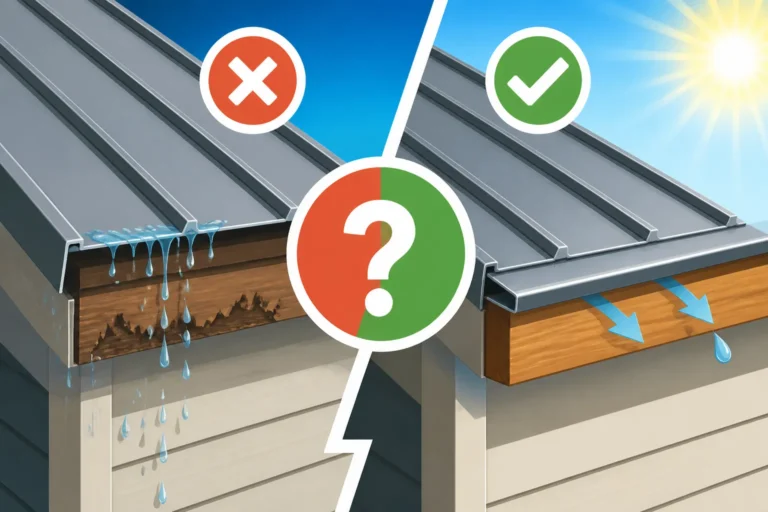
Finally, and perhaps most importantly, we have ice dams. While all roofs are susceptible to ice dams in colder climates, metal roofs can sometimes exacerbate the problem due to their smooth, slippery surface. As snow melts on the warmer parts of the roof and refreezes at the colder eaves, it creates a dam. When subsequent meltwater gets trapped behind this dam, it can back up underneath the metal panels. Standard underlayment won't stop this water; it needs a membrane that is fully adhered and self-sealing. The ability of IWS to protect against this kind of sustained water backup is why it's often a code requirement in regions prone to heavy snow and ice. You can read more about how to proactively prevent issues with ice and snow in our guide on Snow Guards and Winter Metal Roof Issues.
The Cost of Skipping This Layer
Let's be blunt: skipping ice and water shield to save a few dollars upfront can be one of the most expensive mistakes you make when installing a metal roof. The cost of materials and installation for IWS is a fraction of what you'd pay for even a minor leak repair. Imagine a persistent drip that goes unnoticed for months, quietly rotting away your roof decking, soaking your insulation, and eventually staining your ceilings. The repair would involve removing metal panels, replacing damaged wood, re-insulating, patching drywall, and repainting. That’s a headache and a major hit to your wallet.
Beyond direct repair costs, there are implications for structural integrity and warranties. Many metal roofing manufacturers and reputable installers will specify the use of IWS in critical areas, especially in regions with cold weather or high wind. Failing to follow these recommendations could void parts of your warranty, leaving you exposed if a leak occurs. Additionally, insurance companies often look favorably upon enhanced roofing systems that include IWS, sometimes even offering discounts because it significantly reduces the risk of water damage. A properly protected roof contributes directly to your home's long-term value and structural soundness. This is why investing in quality underlayment is often listed as a "hidden cost" that you absolutely shouldn't cut corners on.
Choosing the Right Ice and Water Shield
Just like there are different types of metal roofing materials—steel, aluminum, copper, zinc—there are also variations in ice and water shield products. Knowing the differences and understanding which type best suits your climate and specific metal roofing system can make a big difference in the long-term performance and peace of mind you get from your roof. It's not a one-size-fits-all product.
Material Breakdown: Modified Bitumen vs. Rubberized Asphalt
The two primary types of self-adhering underlayments you'll encounter are those made with modified bitumen and those made with rubberized asphalt. While both offer excellent self-sealing properties and watertight adhesion, they have slightly different characteristics and ideal applications.
-
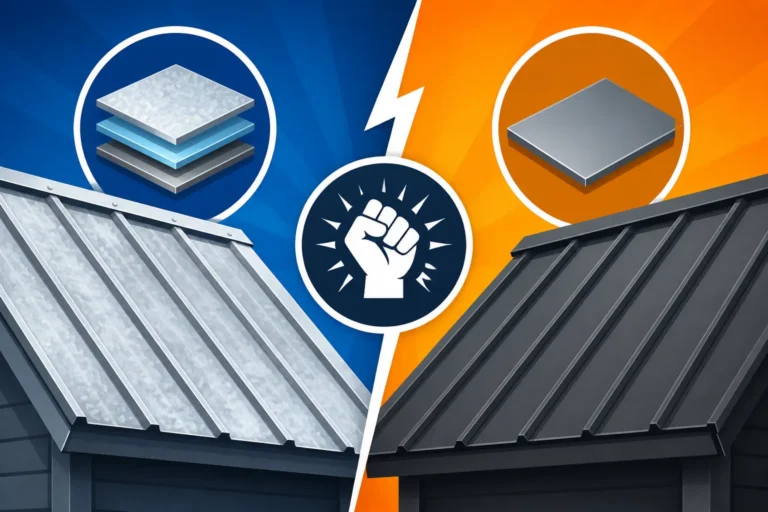
Modified Bitumen (SBS or APP): These products often consist of a polyester or fiberglass mat saturated and coated with asphalt that has been modified with polymers. SBS (Styrene-Butadiene-Styrene) modified bitumen is typically more flexible and offers better low-temperature performance, making it a good choice for colder climates where the membrane needs to remain pliable during installation and in freezing conditions. APP (Atactic Polypropylene) modified bitumen tends to have better high-temperature performance and UV resistance. Modified bitumen products are generally very robust and durable, providing a thick, resilient layer.
-
Rubberized Asphalt (Butyl or Asphalt-based): These are often thinner but still highly effective membranes. They typically use a synthetic rubber polymer (like butyl) or a highly rubberized asphalt compound to achieve their adhesive and self-sealing properties. Rubberized asphalt can offer superior adhesion to various substrates, sometimes even in colder temperatures, and often has excellent flexibility. These are widely used and trusted by many metal roofing professionals. Some manufacturers, like Grace Ice & Water Shield, are industry leaders in this category, offering products specifically designed for various climates and roofing materials.
When making your choice, consider your local climate extremes. If you're in a region with brutally cold winters, an SBS modified bitumen or a highly flexible rubberized asphalt product might be a better fit. If you're in a scorching hot climate, ensuring the product has good high-temperature stability is crucial to prevent "bleeding" or excessive softening.
Adhesion and Temperature Ratings
It’s not just about the material; it’s about how that material performs in the real world. Every ice and water shield product will have specific temperature ratings for both application and service.
- Application Temperature: This specifies the temperature range in which the product can be successfully installed. Trying to apply a membrane when it's too cold can compromise the adhesive bond, leading to poor adhesion and potential failures. Conversely, installing on an extremely hot day can make the material overly pliable and difficult to handle without stretching or wrinkling. Always check the manufacturer's guidelines; some products are designed for low-temperature application, allowing for installation even when the mercury drops.
- Service Temperature: This refers to the temperature range in which the product will perform effectively once installed. This is critical for metal roofs, which can reach extremely high surface temperatures in direct sunlight. A product with poor high-temperature service ratings could delaminate, soften excessively, or lose its self-sealing properties over time when exposed to the intense heat radiating from a metal panel. You’ll want an IWS that can handle the extreme swings your roof will experience.
Choosing a reputable brand is also important. Manufacturers like Grace, CertainTeed, and Henry offer a range of products with specific performance characteristics. When discussing your project with a metal roofing contractor, ask them about the specific IWS product they recommend and why, ensuring it aligns with both your climate and the specific metal roofing system you're installing. A good contractor will be able to explain the nuances and find the right solution for your home, and finding such a professional is easier with platforms like Modernize.
Ice and Water Shield Product Comparison
Here's a quick look at how some common types of IWS stack up:
| Feature | Rubberized Asphalt (e.g., Grace Ice & Water Shield) | SBS Modified Bitumen (e.g., Polyglass Polystick) |
|---|---|---|
| Composition | Blend of asphalt, polymers, and synthetic rubber | Asphalt modified with SBS rubber |
| Thickness | Generally 20-40 mil | Generally 40-80 mil |
| Flexibility | Excellent, especially at low temperatures | Excellent, particularly SBS |
| Adhesion | Very strong, often designed for aggressive bond | Strong, forms robust bond |
| Self-Sealing | Exceptional | Exceptional |
| High Temp Resistance | Good, look for specific ratings | Good, APP modified often better |
| Low Temp Installation | Many formulations allow colder application | Some formulations allow colder application |
| Cost | Mid-range to High | Mid-range to High |
| Typical Use | Eaves, valleys, penetrations, full deck | Eaves, valleys, penetrations, full deck |
Strategic Placement: Where IWS Shines Brightest
It's tempting to think that if some IWS is good, more is always better, and you should just cover your entire roof deck. While a full-deck application of ice and water shield offers the ultimate protection and is often recommended, it’s not always strictly necessary or within every homeowner's budget. Understanding the critical areas where IWS provides the most significant benefit is key to getting the best value and protection for your metal roof.
The Eaves and Rakes: Your First Line of Defense
The eaves—the edges of your roof that overhang the walls—are undeniably the most crucial area for ice and water shield installation, particularly in colder climates. This is precisely where ice dams form. As we discussed, snow melts on the warmer parts of the roof (over the heated living space) and then refreezes at the colder eaves (which are less insulated and often over unheated overhangs). This creates a barrier of ice that prevents subsequent meltwater from draining off the roof. This trapped water can then back up under your metal panels and seep into your home.
IWS at the eaves provides an impenetrable barrier against this backup. Building codes in regions prone to ice and snow, like the Northeast or Midwest, typically mandate IWS installation extending from the eave edge inward a certain distance—often 24 inches past the interior wall line, not just 24 inches from the edge of the roof. This ensures that even if water backs up significantly, it won't be able to bypass the IWS and enter your home. The rake edges (the sloped edges of the roof) are also important, as wind-driven rain can be forced sideways under the panels here. Extending the IWS along these edges, even a foot or two, offers additional protection against such weather. For those interested in deeper dives on roof components, our article on Metal Roof Underlayment Cost breaks down expenses.
Valleys, Penetrations, and Low-Slope Areas
Beyond the eaves, several other parts of your metal roof are highly susceptible to leaks and demand the robust protection of IWS.
- Valleys: These are the V-shaped channels where two roof planes meet. They collect a significant amount of water runoff, snow, and debris, making them high-risk areas for leaks. Water tends to flow faster and in greater volume through valleys, and if a metal valley flashing is ever compromised or installed incorrectly, the consequences can be severe. Applying a wide strip of IWS beneath the valley metal creates a redundant, watertight seal. This is non-negotiable for a truly resilient roof.
- Penetrations: Every element that pokes through your roof—chimneys, skylights, plumbing vents, exhaust fans—is a potential leak point. Flashing around these penetrations is vital, but even the best flashing can be imperfect over time or if installed incorrectly. Wrapping IWS around the base of chimneys or extending it up and around vent pipes before flashing is installed creates an incredibly secure, self-sealing barrier against water intrusion. This protects against both direct leaks and capillary action where water can creep into tiny gaps.
- Low-Slope Areas: While metal roofing can be installed on very low-slope roofs, these areas present unique challenges because water drains slowly or can even pool. Any seam or fastener in a low-slope application is under more hydrostatic pressure than on a steeper roof. Full-deck coverage with IWS is often highly recommended, if not required, for metal roofs with very low pitches (e.g., below 3:12). The self-adhering properties of the membrane ensure that water can't penetrate, even with prolonged contact. You can learn more about suitable applications in our guide, Can You Put a Metal Roof on a Low-Slope Roof?.
By focusing IWS application on these high-risk areas, you effectively create a "fortress" against water, ensuring that even if your primary metal panels are challenged by extreme weather, there's a powerful secondary defense system in place. This strategic application provides critical protection without necessarily requiring a full-deck expense, though a full-deck system is certainly the gold standard.
Installation Process and Best Practices
Proper installation of ice and water shield is just as important as choosing the right product. Even the highest-quality IWS can fail if it's not applied correctly. This isn't a DIY job for the faint of heart, or for anyone without significant roofing experience, especially when it comes to metal roofing's specific requirements. Working with a certified and experienced metal roofing contractor, potentially found through a service like Modernize, is always the best approach.
Surface Preparation and Overlap
Before any IWS can be laid down, the roof deck must be thoroughly prepared. This means ensuring the decking is:
- Clean and Dry: Absolutely no dust, debris, or moisture should be present. The adhesive won't bond effectively to a dirty or damp surface, leading to weak spots and potential delamination.
- Smooth and Even: Any protruding nails, splinters, or rough edges on plywood or OSB decking must be removed or sanded down. These imperfections can puncture the membrane or create air pockets, compromising its integrity.
- Structurally Sound: Any soft spots, rotted wood, or damaged decking should be repaired or replaced before installation. The IWS needs a solid substrate to adhere to.
Once the surface is ready, the installation typically begins at the lowest edge of the roof (the eaves) and works its way upwards. The key principle here is shingle fashion: each successive course of IWS overlaps the one below it, ensuring that water flows over the seams, not into them.
- Release Liner Removal: IWS comes with a release liner on its adhesive side. This liner is peeled back slowly as the membrane is unrolled and pressed firmly onto the deck. It's a delicate dance to prevent wrinkles and ensure a smooth, bubble-free application.
- Proper Overlap: Manufacturers specify minimum overlap requirements, typically 3 to 6 inches for horizontal laps and 6 inches for vertical laps. These overlaps are crucial for creating a continuous, watertight seal. At the eaves, the IWS should overhang the fascia board by about 3/8 to 3/4 inches, allowing water to drip clear of the fascia.
- Roller Application: After the membrane is laid, it's typically rolled with a heavy, smooth roller to ensure maximum adhesion across its entire surface. This eliminates air bubbles and presses the adhesive firmly into the decking material.
This meticulous preparation and application are critical steps in the overall Metal Roof Installation Process: Step by Step, often taking more time than homeowners might expect but adding immense value.
Working with Different Roof Pitches and Temperatures
Installing IWS isn't always straightforward, and various factors can complicate the process, requiring expertise and careful technique.
- Roof Pitch: On steeper roofs, gravity can be an enemy, making it harder to keep the heavy membrane from sliding or wrinkling during application. Installers often use temporary fasteners or a two-person team to manage the rolls safely and effectively. On very low-slope roofs, extra care is needed to ensure absolutely no wrinkles or voids that could trap water.
- Temperature: We've already touched on application temperature ratings, but it's worth reiterating the practical implications. Installing IWS in very cold weather can make the membrane stiff and the adhesive less tacky, hindering proper bonding. In contrast, extreme heat can make the material excessively pliable, prone to stretching, and can also make the adhesive so aggressive that repositioning a sheet becomes impossible without damaging it. Professional installers will often schedule IWS application for temperate days or utilize products specifically designed for wider temperature ranges. Some may even store materials indoors to bring them to an optimal temperature before installation on a cold day.
- Complexity: Roofs with multiple valleys, dormers, skylights, and other penetrations require precise cutting and careful detailing of the IWS. Each cut and seam is a potential weak point if not executed perfectly. This is where the experience of a dedicated Metal Roofing Contractors Near Me: How to Find & Vet truly shines. They know the tricks of the trade for flashing complex areas with IWS to create an impregnable barrier. Incorrectly installed IWS can be a significant source of future roof problems, undermining the investment in your metal roof.
Long-Term Value and Common Questions
After going through the details, you might still have lingering questions about the true necessity and long-term implications of ice and water shield for your metal roof. Let's tackle some of those head-on and clarify why this underlying protection is an investment in your home's future, not just an added expense.
Protecting Your Investment: Longevity and Warranties
You're investing in a metal roof for its incredible durability and lifespan, often expecting it to last 50 years or more. Doesn't it make sense to ensure the layers beneath it are just as robust? A metal roof installed over a compromised or inadequate underlayment is like putting a fancy new engine in a car with a rusted-out frame. The main component might last, but everything around it will fail prematurely.
Ice and water shield significantly extends the effective lifespan of your entire roofing system by preventing the slow, insidious damage caused by moisture. It protects your roof deck from rot and mold, preserves your insulation's R-value by keeping it dry, and safeguards your home's interior finishes. This proactive protection means fewer costly repairs down the line, reducing your Metal Roof Repair vs Replacement: How to Decide considerations significantly.
Furthermore, manufacturer warranties for metal roofing often have specific requirements for underlayment, particularly in high-risk areas or for certain panel types. Failing to install IWS as specified could invalidate your warranty, leaving you without recourse if a leak develops due to an ice dam or wind-driven rain. Always review the warranty documentation carefully with your contractor. Choosing an underlayment that complements the longevity of your metal panels, often up to 50 years or more, ensures your entire roof system performs as expected for its full intended life.
Addressing Myths and Concerns
There are a few common misconceptions about ice and water shield and metal roofs that we should clear up.
- "My metal roof is sealed; I don't need IWS." While metal panels create an excellent primary seal, remember that every fastener, seam, and penetration is a potential entry point for water under extreme conditions like sustained ice dams, wind-driven rain, or structural shifts. IWS provides a crucial secondary barrier that self-seals around fasteners and adheres directly to the deck, offering protection that the metal panels alone cannot.
- "It's just an upsell; felt paper worked fine for generations." Modern building science and weather patterns (increasingly severe storms) have shown that "fine" is often not good enough. Felt paper offers minimal protection against water backup and doesn't self-seal around fasteners. IWS is a superior product designed to meet modern demands for extreme weather resilience. For more on underlayment options, see our guide on Metal Roof Underlayment and Ventilation Guide.
- "It costs too much." Yes, IWS is more expensive per square foot than standard felt or even some synthetics. However, when you weigh the cost against the potential damage from leaks—deck replacement, insulation damage, mold remediation, interior repairs—it quickly becomes clear that IWS is a cost-effective insurance policy. The added cost for IWS, especially when applied strategically in critical areas, is a small percentage of the total Metal Roof Cost: Complete 2026 Guide, but it delivers disproportionately large benefits in terms of protection and peace of mind. Consider it a necessary part of the Is a Metal Roof Worth It? ROI, Resale & Payback calculation.
Ultimately, choosing to install ice and water shield, especially in critical zones, is about making a smart, informed decision that protects your home and your investment in a long-lasting metal roof. It ensures that the beauty and durability of your metal panels are backed by an equally robust, watertight foundation.
Disclaimer
Please note that this guide provides general information and recommendations. Building codes, product specifications, and best practices can vary significantly by location and specific roofing system. Always consult with a qualified, licensed metal roofing professional in your area to assess your specific needs and ensure compliance with local regulations.