Metal Roof Cost Compared to PAC-CLAD Pricing
Trying to figure out why one metal roofing quote looks like a modest car payment while another, specifically one featuring PAC-CLAD, looks like the price of a small vacation home can be incredibly frustrating. This guide demystifies that price gap, comparing standard residential metal roofing to the architectural-grade systems of PAC-CLAD so you can decide if the premium investment actually makes sense for your specific home and budget.
Understanding the PAC-CLAD Premium: What Drives the Price?
When you start looking into high-end architectural brands, the first thing you’ll notice is that the conversation changes from "how much per square" to "what is the performance specification." PAC-CLAD, a brand under Petersen Aluminum Corporation, isn't your run-of-the-mill hardware store metal. It is designed for high-end residential and commercial applications where aesthetics and longevity are non-negotiable.
The primary driver of the cost is the substrate material. While many entry-level roofs use thinner, galvanized steel, PAC-CLAD focuses heavily on high-quality Galvalume and aluminum. If you look at the Metal Roof Cost by Material: Steel vs Aluminum vs Copper vs Zinc, you will see that aluminum naturally carries a higher price tag because of its inherent rust resistance, especially in coastal environments. PAC-CLAD aluminum products are often the gold standard for homes near the ocean, where salt spray would eat through a standard steel roof in a decade.
Another massive factor is the coating. PAC-CLAD uses Kynar 500 (PVDF) resin-based finishes. Most budget-friendly metal roofs use SMP (Silicone Modified Polyester) paints. SMP paints are fine for a few years, but they tend to chalk and fade under intense UV pressure. Kynar 500, on the other hand, is the "forever" paint of the roofing world. It maintains its color and gloss for decades. When you pay for PAC-CLAD, you are paying for the chemical engineering that ensures your "Charcoal Gray" roof doesn't turn "Ash Silver" after five summers.
Finally, there is the architectural versatility. PAC-CLAD offers an enormous array of profiles, from traditional standing seam to flush panels and even wall cladding. This variety allows for a level of design customization that standard residential installers simply can't match with "off-the-shelf" corrugated panels. However, this level of precision requires more detailed engineering and tighter manufacturing tolerances, which naturally pushes the Metal Roof Cost Per Square Foot higher than the industry average.
Comparing PAC-CLAD Costs to Residential Standard Metal Roofs
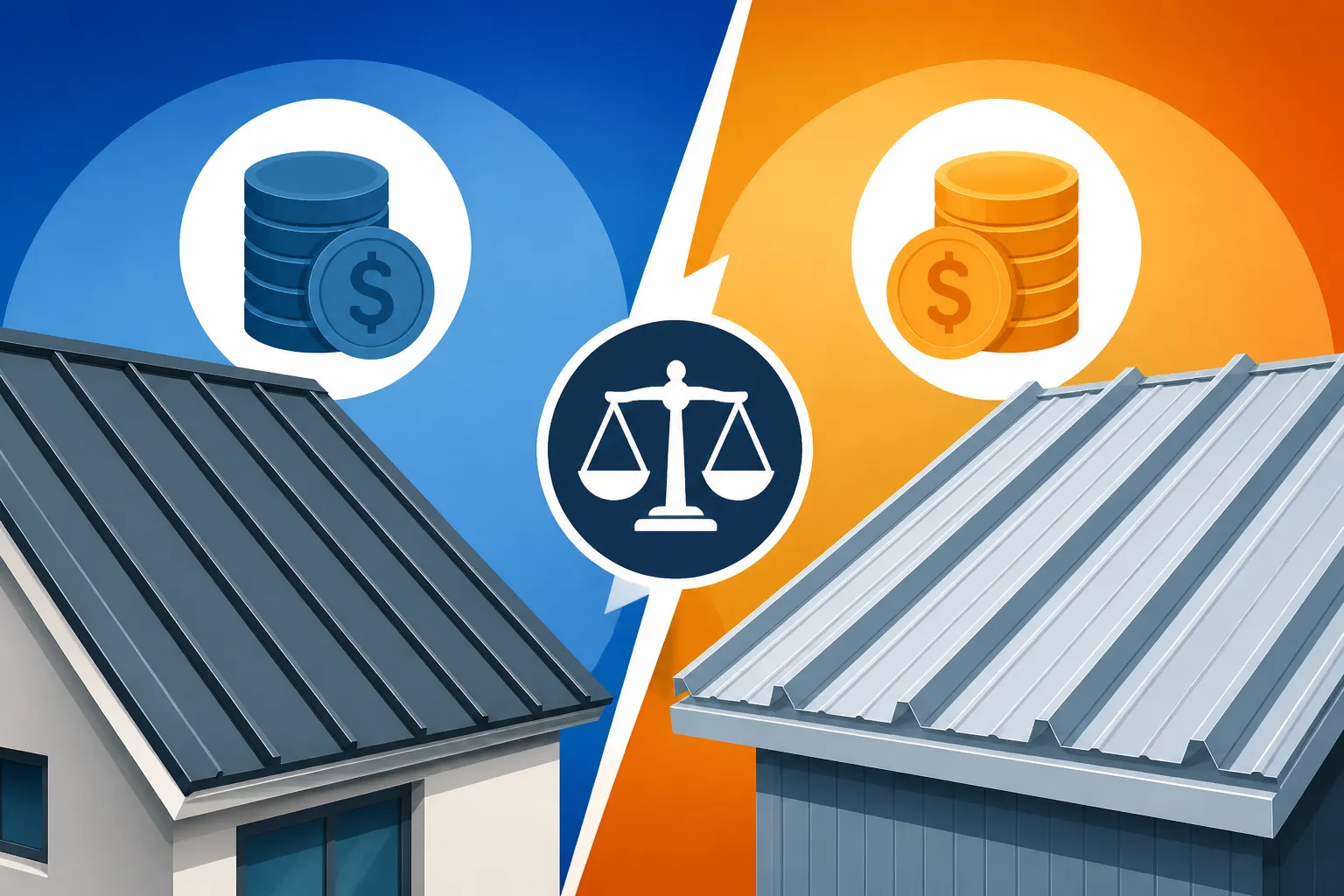
To really understand the value, we have to look at the numbers side-by-side. A standard residential metal roof—often an exposed fastener system or a thin-gauge snap-lock panel—usually costs significantly less upfront. But as any veteran roofer will tell you, the "upfront" price is rarely the "total" price over the life of the home.
PAC-CLAD systems are almost exclusively "hidden fastener" systems. This means the screws are tucked away under the metal, protected from the elements. This is a far cry from corrugated metal where thousands of screws are drilled directly through the face of the panel. If you are comparing a PAC-CLAD standing seam system to a basic corrugated roof, the price gap can be 2x or even 3x. But even when comparing it to other residential standing seam products, PAC-CLAD often sits at the top of the price bracket because of its heavier gauges.
Most residential roofs use 26 or even 29-gauge steel. PAC-CLAD typically pushes for 24-gauge steel or .032 to .040-inch thick aluminum. The difference in durability is massive. A 24-gauge panel is much stiffer and less prone to "oil canning"—that wavy, distorted look that happens when thin metal expands and contracts in the heat. You can read more about this in our breakdown of the 24 vs 26 Gauge Metal Roof: Cost Difference. By choosing the heavier gauge, you're paying for a roof that looks smoother and handles high winds much more effectively.
| Feature | Standard Residential Metal | PAC-CLAD Architectural |
|---|---|---|
| Typical Material | 26-29 Ga Steel (Galvanized) | 24 Ga Steel or .032-.040 Aluminum |
| Paint Finish | SMP (Silicone Modified Polyester) | Kynar 500 / PVDF |
| Fastener Type | Often Exposed (Screws show) | Concealed (Standing Seam) |
| Warranty Length | 20-30 Years (Limited) | 30-50+ Years (Finish & Substrate) |
| Wind Resistance | Moderate | High (Tested for Hurricanes) |
| Price Range | $5.00 – $9.00 per sq. ft. | $12.00 – $18.00+ per sq. ft. |
It is also important to remember that Metal Roof Labor Cost for a PAC-CLAD system will be higher. You cannot hire a general "jack-of-all-trades" contractor to install these panels. They require specialized tools, like power seamers, and a deep understanding of thermal expansion. If the installer messes up the floating clips on a PAC-CLAD standing seam roof, the panels will buckle. You are paying for a specialist's time and expertise, which is a significant part of the overall Standing Seam Metal Roof Cost.
The Hidden Financial Factors of Architectural Systems
When people look at PAC-CLAD pricing, they often only look at the price of the panels. This is a mistake. On a complex residential roof with dormers, valleys, and chimneys, the "accessories" can account for 20% to 30% of the total material cost. PAC-CLAD provides color-matched flashing, trim, and even snow guards that are all finished with the same high-end Kynar coating.
Standard roofing often uses "universal" trim that might be a slightly different shade or a lower-quality paint. Over time, that trim will fade faster than the roof, leaving your home looking like a patchwork quilt. Investing in the full PAC-CLAD system means your Metal Roof Trim and Flashing Cost will be higher, but the visual continuity is what gives the home that "premium" curb appeal.
Then there is the issue of logistics. Standard residential panels are often stocked locally or rolled on-site using a portable machine. PAC-CLAD panels are frequently factory-formed to precise specifications and shipped on specialized trailers to ensure they arrive without a single scratch. This shipping and handling fee is a "hidden" cost that many homeowners don't see until the final quote. However, factory-formed panels often have tighter seams and better weather-tightness than those rolled out of the back of a truck.
Don't overlook the technical support and warranty backing either. When you purchase a PAC-CLAD system, you are entering a relationship with a manufacturer that provides detailed shop drawings and engineering specs. This is crucial for passing strict local building codes, especially if you live in a high-wind zone. Comparing Metal Roof Warranties: Workmanship vs Manufacturer shows that high-end brands often offer much more robust "weather-tightness" warranties that give you peace of mind that a standard residential shingle or basic metal roof simply can't offer.
Is PAC-CLAD Worth the Investment for Your Home?
The million-dollar question (or at least the $30,000 question) is whether you actually need this level of quality. If you are living in a "starter home" that you plan to sell in five years, PAC-CLAD is likely overkill. You won't see the full return on investment in such a short window. However, for a "forever home," or a home in a harsh climate, the math changes completely.
Think about the environmental stress your roof faces. If you deal with heavy snow loads, intense coastal salt air, or the blistering heat of the Southwest, the cheaper materials will fail. A standard roof might need significant repairs or a full repaint in 15 years. A PAC-CLAD roof will likely look identical in year 20 as it did on day one. When you evaluate Is a Metal Roof Worth It? ROI, Resale & Payback, you have to factor in the "avoided costs" of future replacements.
Furthermore, the impact on home value shouldn't be ignored. Architectural metal is a "prestige" material. When a potential buyer sees a 24-gauge standing seam roof with a Kynar finish, they see a maintenance-free future. This can be a major selling point that allows you to list your home at a premium. The Metal Roof Cost vs Lifespan Value of a PAC-CLAD system is often much better than asphalt shingles, even if the initial price is triple.
Finally, consider the complexity of your roof. If you have a simple "up and over" gable roof, you might get away with a mid-range product. But if your roof has steep pitches, multiple transitions, or integrated gutters, you need the precision of an architectural system. You can learn more about how these variables change your quote in our guide on What Affects Metal Roof Cost: Gauge, Pitch, Complexity & Tear-Off. In the end, PAC-CLAD isn't just about buying metal; it's about buying an engineered system designed to protect your biggest asset for the rest of your life.
Disclaimer
The pricing information provided in this guide is based on national averages and industry standards as of 2026. Actual costs for PAC-CLAD products and installation vary significantly based on your geographic location, local labor rates, material surcharges, and the specific complexity of your roof design. Always obtain at least three detailed quotes from manufacturer-certified contractors before making a final decision on your roofing project.