How Much Does a Tin Roof Cost Today
Many homeowners start their search for a "tin roof" only to realize that true tin hasn't been a standard roofing material for over a century. You are likely frustrated by the vague pricing you find online that ranges from $5 to $20 per square foot without explaining why. This guide clarifies modern "tin" costs, detailing materials like Galvalume and steel to help you budget accurately in 2026.
What Does a Tin Roof Actually Mean in 2026
When people talk about a tin roof today, they are almost never talking about actual tin. In the 18th and 19th centuries, "tin" roofs were actually iron or steel plates dipped in tin, known as Terne plate. While beautiful and long-lasting, they are extremely rare and expensive today. If you go to a contractor in a city like Nashville or Charlotte and ask for a tin roof, they are going to assume you mean either galvanized steel or Galvalume. Understanding this distinction is the first step in not getting overcharged.
Modern galvanized steel consists of a steel core dipped in a protective zinc coating. This is the material that gives you that classic "farmhouse" look that many people associate with old-fashioned tin. It is durable, relatively affordable, and works wonders for agricultural buildings or modern residential homes looking for an industrial aesthetic. However, because it is essentially steel, the price fluctuates based on global metal markets, which have been quite volatile lately.
Galvalume is the other major player often called "tin." It is a steel base coated with a mix of aluminum and zinc. It offers better corrosion resistance than traditional galvanized steel, especially in environments with high humidity. If you are looking at Metal Roof Cost by Material: Steel vs Aluminum vs Copper vs Zinc, you’ll find that Galvalume often sits in the "sweet spot" of being more durable than basic steel but cheaper than pure aluminum.
Breaking Down the Cost per Square Foot
The most common question is the bottom line: how much will this cost per square foot? On average, for a modern residential "tin" roof (Galvalume or Steel), you are looking at a range of $7.00 to $13.00 per square foot installed. This is a massive jump from architectural shingles, but the longevity usually justifies the expense. If you are pricing out a standard 2,000-square-foot home, your total project cost could range anywhere from $14,000 to $26,000.
The Steel Roof Cost Per Square Foot specifically varies based on the gauge of the metal. A 29-gauge panel is thinner and cheaper, often used for barns or sheds. For a residential home, you should really be looking at 26-gauge or 24-gauge. The thicker the metal, the more it costs, but it also resists hail and wind much better. In hail-prone areas like Denver or Oklahoma City, investing in a thicker gauge is almost mandatory if you want to avoid a total replacement after the first major storm.
Then there is the choice between corrugated panels and standing seam. Corrugated panels, often referred to as "exposed fastener" roofs, are the most affordable option. They are what most people think of when they imagine an old tin roof. However, they require more maintenance because the screws are exposed to the elements. Standing seam, on the other hand, hides the fasteners, providing a sleek look and better leak protection, though it can easily double the labor cost. You can see the detailed breakdown in our guide on Standing Seam vs Corrugated Metal Roof.
Typical Costs for Modern Metal Roofing Materials
| Material Type | Cost per Sq. Ft. (Materials) | Cost per Sq. Ft. (Installed) | Expected Lifespan |
|---|---|---|---|
| Corrugated Galvalume | $1.50 – $3.50 | $6.50 – $9.00 | 30-40 Years |
| Galvanized Steel (G90) | $2.50 – $4.50 | $8.00 – $12.00 | 40-50 Years |
| Aluminum Panels | $4.00 – $6.50 | $11.00 – $16.00 | 50+ Years |
| Standing Seam Steel | $4.50 – $8.00 | $12.00 – $18.00 | 50+ Years |
Labor Costs and Regional Pricing Variance
Labor is where your "tin" roof quote can get really complicated. Unlike shingles, which almost any general laborer can slap onto a roof, metal requires a specialized skill set. A contractor in Houston might charge significantly less for labor than one in Seattle due to the cost of living and the availability of experienced crews. Generally, labor accounts for 50% to 60% of the total project cost.
If your roof is a simple "up and over" gable roof with no dormers, valleys, or chimneys, your labor costs will stay on the lower end of the spectrum. However, if you have a Victorian-style home with multiple peaks and complex angles, the price will skyrocket. The Metal Roof Labor Cost is high because the panels must be custom-cut and flashed perfectly to prevent leaks. One small mistake in a valley can lead to thousands of dollars in water damage inside your home.
Regional factors like local building codes also play a role. For instance, if you are looking at Metal Roof Cost in Florida, you have to account for high-velocity hurricane zone (HVHZ) requirements. This means the roof needs more fasteners and specific underlayment that can withstand 150+ mph winds. These requirements add both material and labor time to the project, making a "tin" roof in Miami much more expensive than one in a landlocked state.
The Importance of Underlayment and Accessories
When budgeting for a tin roof, don't just look at the panels. The components "under the hood" are what actually keep your house dry. Many people try to save money here, but that is a recipe for disaster. Traditional felt paper is rarely used for metal roofs today because the metal can get hot enough to degrade the felt over time. Instead, we use synthetic underlayment, which is more durable and provides a secondary water barrier.
The Metal Roof Underlayment Cost usually adds about $0.50 to $0.90 per square foot to your estimate. You also have to consider the "trim and flashing." This includes the ridge caps, drip edges, and valley covers. These pieces are often made of the same high-quality metal as your panels and are essential for a finished look and a watertight seal. In many cases, the trim alone can cost $1,000 to $3,000 for a medium-sized house.
Another cost factor is the "tear-off." Are you putting the new metal over your old shingles, or are you stripping the roof down to the wood? While putting metal over shingles can save you $1,500 to $3,000 in labor and disposal fees, it isn't always the best move. If the old shingles are curling or if there is underlying rot in the decking, you are just burying a problem that will cost more to fix later. Check out Metal Roof Cost With Tear-Off Included to see if the extra investment is worth it for your specific situation.
Long-Term ROI: Is a Tin Roof Worth the Investment?
It is easy to get sticker shock when comparing a metal roof to asphalt shingles. A standard shingle roof might cost $8,000, while the "tin" equivalent costs $18,000. However, the math changes when you look at the 30-year horizon. Most asphalt roofs in harsh climates like Phoenix or Atlanta need to be replaced every 12 to 15 years. A well-installed metal roof will easily last 40 to 60 years.
There are also immediate savings to consider. Metal roofs are incredibly energy-efficient. They reflect solar radiant heat rather than absorbing it, which can reduce cooling costs by 10% to 25% during the brutal summer months. If you are in a high-fire-risk area like California, a metal roof can also lead to significant insurance discounts. For many homeowners, Is a Metal Roof Worth It? ROI, Resale & Payback is a resounding yes because the roof effectively pays for itself through energy savings and increased home value over time.
Furthermore, there is the "resale factor." When you go to sell your home, a metal roof is a massive selling point. Potential buyers love the idea of never having to replace a roof during their period of ownership. Real estate data often shows that homeowners recoup about 85% to 95% of the cost of a metal roof in home value. When you look at Does a Metal Roof Increase Home Value?, it becomes clear that this isn't just a repair; it's a home improvement project.
Choosing the Right Contractor for the Job
Because metal roofing is so specialized, you cannot afford to hire the cheapest guy with a ladder. You need someone who understands thermal expansion and contraction. Metal grows and shrinks as it heats up and cools down. If a contractor pins the panels too tightly without allowing for this movement, the roof will start to "oil can" (ripple) or the screws will eventually back out, causing leaks.
I always recommend getting at least three quotes and asking very specific questions about their experience with the material you’ve chosen. If you are looking for a specific look, such as a corrugated style, ask them How Much Does a Corrugated Metal Roof Cost for a 26-gauge versus a 29-gauge option. A reputable contractor should be able to explain the pros and cons of each without pushing you toward the most expensive option.
Finally, check their warranty. A good metal roof should come with two warranties: one from the manufacturer for the paint and finish (usually 30-40 years) and one from the contractor for the workmanship (usually 2-10 years). If a contractor refuses to stand by their work for at least five years, walk away. In cities like Dallas or Austin, where storms are frequent, you need that peace of mind. You can find more advice on How to Hire a Metal Roofing Contractor to ensure you are protected.
Detailed Price Comparison: Tin vs Other Materials
To give you a better sense of where "tin" (modern steel/Galvalume) sits in the market, it helps to compare it to other popular materials. While it is more expensive than shingles, it is significantly more affordable than luxury options like copper or slate.
- Asphalt Shingles: $4 – $7 per sq. ft. (The baseline, but shortest lifespan).
- Modern Tin (Galvalume): $7 – $12 per sq. ft. (The best balance of cost and durability).
- Aluminum: $11 – $16 per sq. ft. (Ideal for salt-air environments).
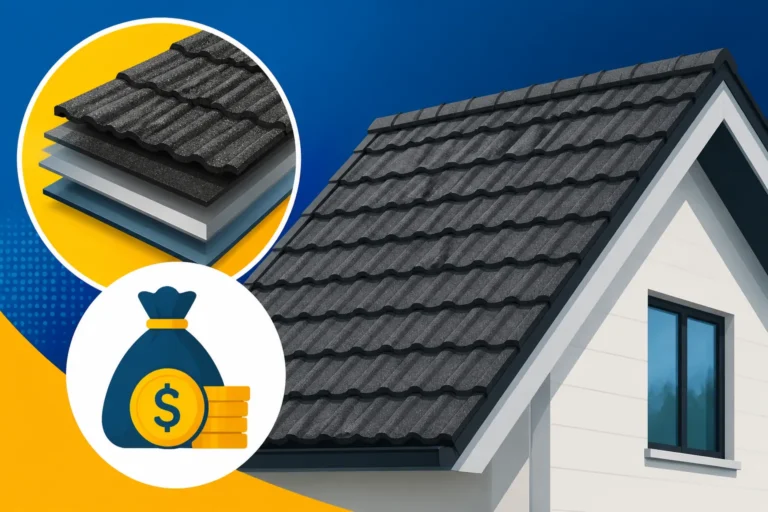
- Stone-Coated Steel: $12 – $18 per sq. ft. (Gives the look of tile or shake with the strength of steel).
- Copper: $25 – $40 per sq. ft. (The "forever" roof, but incredibly pricey).
When you look at Metal Roof vs Asphalt Shingle Cost, you realize that while the upfront cost is higher, the "cost per year" of a metal roof is actually lower. If you plan on staying in your home for more than 15 years, the modern tin roof is almost always the more financially sound choice. It protects your biggest investment, lowers your bills, and gives your home a unique, timeless look that shingles simply cannot match.
Disclaimer
The pricing information provided in this guide is based on national averages and current market trends for 2026. Roofing costs can vary significantly based on local labor rates, material availability, and the specific complexity of your roof structure. Always consult with a licensed and insured professional roofing contractor to obtain a formal quote tailored to your home. This guide is for informational purposes only and does not constitute a legal contract or guaranteed pricing.