Metal Roof Cost Compared to Metal Sales Pricing
Sticker shock is a very real phenomenon when you first start looking at metal roofing quotes, especially when you realize the price of the metal itself is only one piece of a complex financial puzzle. You are likely trying to weigh the massive long-term benefits of a lifetime roof against a budget that feels increasingly tight, and that is exactly why this guide exists. We are going to break down how the industry-standard Metal Roof Cost: Complete 2026 Guide stacks up against the specific pricing structures of Metal Sales, one of the nation’s largest manufacturers, so you can decide if their products are the right fit for your home and your wallet.
Understanding General Metal Roofing Cost Drivers
Before we can look at how a specific brand like Metal Sales positions itself, we have to talk about the baseline. Most homeowners walk into a project thinking they are just buying "metal," but the reality is that the market is divided into wildly different price brackets based on how the panels are formed and how they are attached to your house. When you look at the Metal Roof Cost Per Square Foot, you are seeing a blend of low-end agricultural panels and high-end architectural systems.
Material Grades and Gauges
The thickness of the metal, known as the gauge, is one of the most significant variables in your final bill. In the residential world, you will mostly encounter 24-gauge and 26-gauge steel. The lower the number, the thicker and stronger the metal. A 24-gauge panel is the gold standard for residential standing seam because it offers superior wind resistance and minimizes the visual distortion known as oil canning. However, if you are looking for the Cheapest Metal Roof Options, you might be steered toward 29-gauge or 26-gauge exposed fastener panels.
Metal thickness doesn't just affect the price of the raw material; it affects how the roof handles the elements. For example, a homeowner in a hail-prone area like North Texas or Colorado would be making a mistake by choosing a thinner gauge just to save a few dollars upfront. The durability of a thicker panel often qualifies you for better insurance rates, which we discuss in our look at Metal Roof Insurance Savings & Discounts.
Labor and Installation Complexity
It is a common misconception that the metal is the most expensive part of the job. In reality, Metal Roof Labor Cost often accounts for 60% to 70% of the total quote. This is because metal requires a specialized skillset that a standard shingle roofer simply doesn't have. If your roof has a steep pitch, multiple dormers, or complex valleys where different roof planes meet, the labor costs will skyrocket.
Imagine a simple "up and over" ranch-style home versus a Victorian with turrets and intricate flashing requirements. The ranch might take a crew three days to dry in and finish, while the Victorian could take two weeks. Every hour of that expert labor is billed, and when you are dealing with a brand like Metal Sales, which offers everything from simple ribbed panels to complex snap-lock systems, the labor gap between those products can be thousands of dollars.
Metal Sales Pricing and Product Tiers
Metal Sales is a juggernaut in the industry because they serve both the "DIY-friendly" agricultural market and the high-end residential architectural market. Because they have dozens of manufacturing facilities across the United States, they often have lower shipping costs than smaller, boutique brands. However, their pricing is tiered based on the specific system you choose.
Architectural vs. Agricultural Panels
When you look at Metal Sales' catalog, you’ll see names like Pro-Panel II and Classic Rib. These are "exposed fastener" panels, meaning the screws are driven right through the face of the metal. These are typically the most affordable products they offer. While they are incredibly durable for barns or outbuildings, some homeowners choose them for residential use to save money. If you are comparing Corrugated Metal Roof Cost to other systems, Metal Sales' ribbed panels often come in at the lower end of the spectrum.
On the other side of the coin, you have their architectural "standing seam" lines, such as Image II or Magna-Loc. These systems use a hidden fastener design where the screws are tucked away under the ribs, protected from the rain and sun. This is a much more expensive system because the panels are harder to manufacture and significantly more difficult to install. If you are asking Is a Standing Seam Roof Worth the Extra Cost, the answer usually depends on how long you plan to stay in the home and how much you value a leak-free guarantee over 50 years.
Coating and Finish Options
Metal Sales utilizes different paint systems, primarily SMP (Silicone Modified Polyester) and PVDF (Kynar 500). SMP is a solid, mid-range coating that holds up well but will eventually fade or "chalk" over several decades. PVDF is the premium option; it is essentially a high-performance resin that keeps its color and gloss for 30 to 40 years, even in intense UV environments like Florida or Arizona.
Choosing a Kynar 500 finish from Metal Sales will add a premium to your material cost, but it is often the difference between a roof that looks new for a lifetime and one that looks "tired" after fifteen years. When evaluating What Affects Metal Roof Cost: Gauge, Pitch, Complexity & Tear-Off, don't overlook the paint. A cheaper coating might save you $1,000 today, but it could cost you double that in lost resale value or the need for a professional recoating down the road.
Head-to-Head Comparison: Metal Sales vs. Industry Averages
To give you a clearer picture of where Metal Sales sits in the market, we have compiled a comparison of their major product categories against general market averages. These numbers represent the total installed price for a standard residential project.
| System Type | Metal Sales Product Example | Avg. Installed Cost (Industry) | Metal Sales Estimated Cost | Best Use Case |
|---|---|---|---|---|
| Exposed Fastener | Pro-Panel II / Classic Rib | $5.50 – $8.50 per sq. ft. | $4.75 – $7.50 per sq. ft. | Barns, Garages, Low-Budget Homes |
| Snap-Lock Standing Seam | Image II | $12.00 – $18.00 per sq. ft. | $11.00 – $16.00 per sq. ft. | Standard Residential Homes |
| Mechanically Seamed | Magna-Loc | $15.00 – $22.00 per sq. ft. | $14.00 – $19.00 per sq. ft. | Low-Slope or High-Wind Regions |
| Stone-Coated Steel | Stile (Specific regions) | $11.00 – $16.00 per sq. ft. | $10.50 – $15.00 per sq. ft. | Neighborhoods requiring tile-look |
Cost Efficiency and Value
Metal Sales tends to be highly competitive because of its massive distribution network. If you live in a city where they have a local branch, your contractor isn't paying $2,000 in freight to get the panels to your driveway. This "local" advantage often makes them more affordable than brands like McElroy Metal or PAC-CLAD in certain zip codes. You are getting a high-quality, American-made product without the "boutique" markup that sometimes comes with smaller manufacturers.
However, "cheap" isn't always the goal. When you look at Metal Roof Cost vs Lifespan Value, the value of a Metal Sales standing seam roof is found in its longevity. You might pay $30,000 for a standing seam roof today, whereas an asphalt shingle roof might cost $12,000. But if that shingle roof needs to be replaced every 15 years, you’ll end up spending $60,000+ over the next 45 years once you account for inflation and multiple labor bills.
Long-term ROI
Investing in a brand with the history of Metal Sales also helps when it comes time to sell your home. Buyers recognize a quality metal roof as a "set it and forget it" feature. If you have documentation showing you used a 24-gauge Image II system with a PVDF coating, that is a major selling point. We often see homeowners ask Does a Metal Roof Increase Home Value?, and the data suggests that you can recoup a significant portion of the installation cost—often 60% to 85%—in increased property value, which is much higher than the ROI for asphalt shingles.
Factors That Could Inflate Your Metal Sales Quote
Even if you choose a mid-range Metal Sales panel, your final invoice can still vary wildly based on local market conditions and the specifics of your roof’s architecture. It is rarely as simple as "price per square foot times roof size."
Regional Availability and Logistics
Metal Sales has a huge footprint, but they are not everywhere. If you are in a remote area, the cost to transport 30-foot long panels can be substantial. Furthermore, local labor markets dictate much of the price. A contractor in Seattle or San Francisco has much higher overhead—insurance, wages, fuel—than a contractor in rural Alabama. This is why it is vital to look at a Metal Roof Cost Calculator by Zip Code rather than relying on national averages you found on a forum.
The time of year also plays a role. If you are trying to get your roof replaced in the peak of summer or right after a major storm, every roofer in town is busy. They will likely bid higher because they don't need the work. Scheduling your Metal Sales installation during the "shoulder" seasons—late fall or early spring—can sometimes lead to a 5% to 10% discount just because the crews are looking to fill their calendars.
Custom Trim and Flashing Requirements
One of the "hidden" costs of any metal roof is the trim. Most people focus on the large flat panels, but the edges, ridges, valleys, and chimney flashings are where the real work happens. Metal Sales provides matching trim for all their systems, but if your roof has unique angles, your contractor might need to custom-bend pieces on-site using a portable brake.
This custom work is labor-intensive. If you have three skylights and two chimneys, your Metal Roof Trim and Flashing Cost could easily add $2,000 to $4,000 to the project. This is a critical area where you do not want to cut corners. Using cheap, generic flashing with a high-end Metal Sales panel is a recipe for a leak. Always ensure your quote includes the manufacturer-recommended accessories to maintain your warranty.
Underlayment and Substrate Preparation
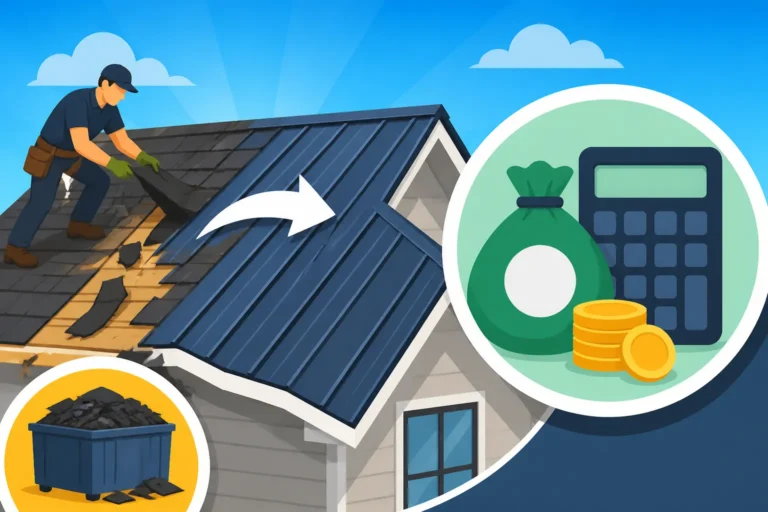
What goes under the metal is just as important as the metal itself. Modern metal roofs require a high-temperature synthetic underlayment, as the metal can get hot enough to melt standard felt paper. If your current roof has multiple layers of shingles, you’ll also have to factor in the Metal Roof Cost With Tear-Off Included. While some people consider Installing a Metal Roof Over Shingles to save money, most professional contractors recommend a full tear-off so they can inspect the wood decking for rot. If your contractor finds "soft spots" in the plywood, replacing those sheets will be an additional "change order" cost that won't be in the original estimate.
Disclaimer
The pricing information provided in this guide is based on general market trends, historical data, and typical manufacturer offerings for Metal Sales products as of 2024-2026. However, roofing costs are highly volatile and subject to changes in raw steel prices, local labor availability, and specific project complexities. Always obtain at least three written estimates from licensed, insured, and manufacturer-certified contractors in your local area to get an accurate quote for your specific home. These estimates should include a detailed breakdown of materials, labor, permits, and warranties.