How Much Does a 29 Gauge Metal Roof Cost
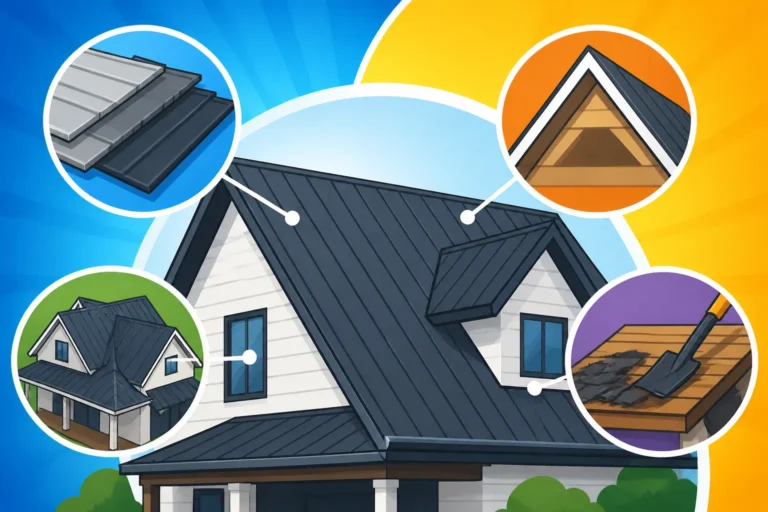
Homeowners often feel overwhelmed when faced with the technical jargon of roofing, especially when a contractor asks if they want 24, 26, or 29 gauge steel. If you are working with a tight budget and need a durable solution without the premium price tag, you are likely looking at 29 gauge. This guide breaks down the true costs, durability tradeoffs, and regional price variations to help you decide if this thinner metal is the right fit for your home or outbuilding.
Understanding 29 Gauge Metal Roofing: The Entry-Level Standard
When you start shopping for metal roofs, the first thing you’ll notice is that the numbers work backward: the higher the gauge, the thinner the metal. A 29 gauge panel is significantly thinner than a 26 or 24 gauge panel, measuring approximately 0.014 to 0.018 inches in thickness. While that might sound flimsy, it is the industry standard for "economy" or agricultural-grade roofing. In places like rural Georgia or the vast farmlands of Iowa, you will see 29 gauge steel on everything from hay barns to detached garages because it offers a massive upgrade over traditional shingles at a fraction of the cost of premium metal systems.
The material itself is typically a cold-rolled steel base coated with either a galvanized or Galvalume finish. Galvalume is a favorite among veteran installers in coastal-adjacent areas like Houston or parts of Florida because the aluminum-zinc alloy provides better corrosion resistance than straight zinc galvanization. However, it is important to realize that 29 gauge is essentially the "budget" tier of the metal world. If you are looking for Cheapest Metal Roof Options, this is almost always where you will land. It provides the aesthetic of a metal roof and the fire resistance you want, but it doesn't have the same structural "heft" as its thicker counterparts.
One of the most common applications for 29 gauge is the classic ribbed panel or "AG panel." These panels are usually 36 inches wide and feature exposed fasteners. Because the metal is thinner, the ribs (the raised parts of the panel) are essential for providing structural rigidity. Without those ribs, a 29 gauge sheet of metal would be far too flexible to span the rafters of a roof safely. This is why you rarely see 29 gauge used in standing seam systems; the thinness of the metal would lead to extreme "oil canning" or visible waving in the flat areas of the panels.
Breaking Down the 29 Gauge Metal Roof Cost Factors
Budgeting for a 29 gauge roof involves more than just looking at the price per linear foot at a local lumber yard or big-box store. On average, the material cost for 29 gauge metal roofing panels ranges from $1.00 to $2.50 per square foot. However, your total "out the door" price depends heavily on the complexity of your roof and whether you are doing a "layover" or a full tear-off. If you are looking at a standard residential structure, you have to account for Metal Roof Labor Cost, which can often double or triple the material price depending on your location and the contractor’s experience.
Labor for installing 29 gauge panels is generally lower than for standing seam systems because these panels are faster to install. A professional crew in a city like Nashville or Charlotte might charge between $3.00 and $5.00 per square foot for labor. Because 29 gauge panels are lightweight and come in large 36-inch widths, a skilled team can cover a massive amount of square footage in a single day. This efficiency is a major reason why the total installed cost is so attractive compared to other materials. You are often looking at a total price of $5.00 to $8.00 per square foot, installed.
Beyond the panels and labor, you have to consider the "trim package." This includes the ridge caps, eave flashing, rake trim, and—most importantly—the thousands of screws required to hold the roof down. Because 29 gauge is an exposed-fastener system, every single screw has a rubber washer that is exposed to the elements. These components might seem like small details, but they can add $500 to $1,500 to the total project cost. To get a better sense of how this compares to other styles, you might want to look at Metal Roof Cost by Profile: Standing Seam vs Corrugated vs Stone-Coated to see if the savings on 29 gauge are worth the long-term maintenance of those exposed screws.
| Component | Estimated Cost (Per Sq. Ft.) | Notes |
|---|---|---|
| 29 Gauge Metal Panels | $1.00 – $2.50 | Prices vary by coating (SMP vs. PVDF) |
| Installation Labor | $3.00 – $5.50 | Higher in urban areas like Denver or Seattle |
| Underlayment & Trim | $0.50 – $1.25 | Includes synthetic felt and ridge caps |
| Fasteners (Screws) | $0.15 – $0.30 | High-quality EPDM washers are essential |
| Total Estimated Cost | $4.65 – $9.55 | Fully installed residential price |
29 Gauge vs. 26 Gauge: Is the Savings Worth the Sacrifice?
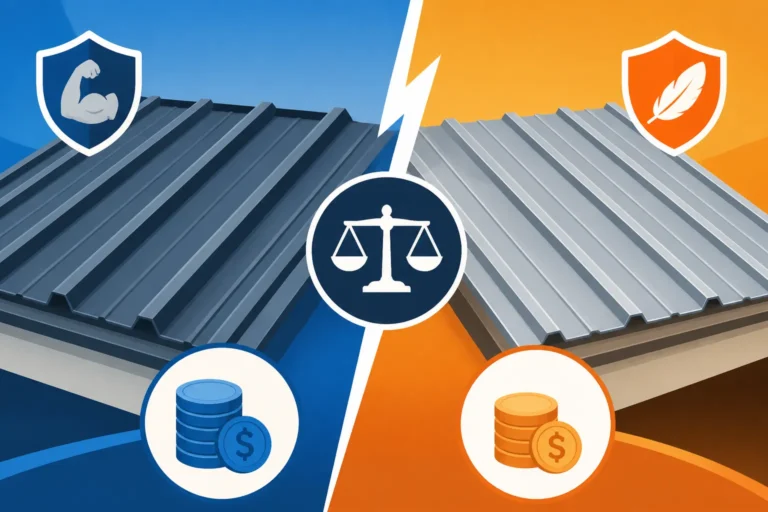
This is the most frequent debate homeowners have when looking at quotes. A 26 gauge roof is roughly 25% to 30% thicker than a 29 gauge roof. While the price difference for materials might only be $0.50 to $0.80 more per square foot, the performance gap can be significant. If you live in a region prone to heavy hail, such as Dallas or Oklahoma City, 29 gauge can be problematic. Thinner metal is much more likely to show visible "dimpling" from hail stones. While these dents might not cause the roof to leak immediately, they can ruin the curb appeal and may lead to paint chipping over time.
When comparing the two, you should ask yourself: Is 26 Gauge Metal Roof Good Enough for a House? For most residential applications, 26 gauge is considered the "minimum" for long-term peace of mind, while 29 gauge is often reserved for barns, sheds, or budget-conscious residential flips. The thinner 29 gauge metal is also more susceptible to "tearing" at the fastener points during extreme wind events. In hurricane-prone zones like Miami or Tampa, local building codes often mandate 26 gauge or thicker to ensure the roof doesn't peel away during high-velocity winds.
However, if you are roofing a simple ranch-style home in a mild climate, the savings from 29 gauge can be redirected into higher-quality insulation or better gutters. The key is to look at the 24 vs 26 Gauge Metal Roof: Cost Difference to see the hierarchy of strength. If your budget is the absolute priority, 29 gauge will still outperform asphalt shingles in terms of longevity and heat reflection. It’s just important to have realistic expectations about the "popping" noises and potential for minor denting that comes with thinner steel.
Real-World Cost Estimates and Budgeting Tips
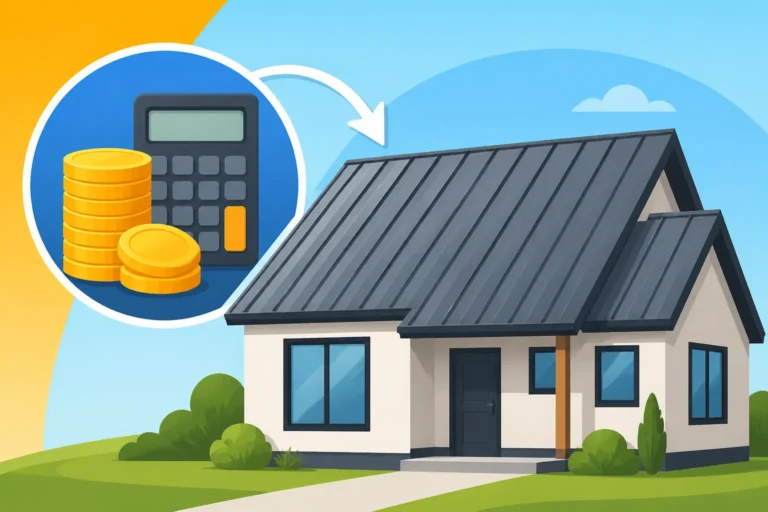
To put these numbers into perspective, let's look at a typical 2,000 square foot home. This is a common size for many suburban dwellings in the Midwest or the South. If you use a Metal Roof Cost Calculator: How to Estimate, you'll find that a 2,000 square foot roof area actually requires about 2,200 to 2,300 square feet of material to account for waste and overlaps. For a 29 gauge system, your total project cost for a Metal Roof Cost for a 2,000 Sq Ft House would likely land between $10,000 and $16,000. For comparison, a 26 gauge system might push that toward $18,000, and a standing seam 24 gauge roof could easily exceed $30,000.
One way to keep costs down is to consider a "roof-over" installation. Since 29 gauge metal is incredibly light, many jurisdictions allow you to install it directly over a single layer of existing asphalt shingles using furring strips. This saves you the $1,500 to $3,000 cost of a professional tear-off and disposal fee. If you go this route, you must ensure your contractor uses the correct screws that are long enough to penetrate the furring strips and bite deep into the roof decking. It is a common way to manage the Metal Roof vs Asphalt Shingle Cost gap while still getting the benefits of a metal surface.
Finally, don't forget to check the paint warranty. Even with 29 gauge, you should look for a "Siliconized Modified Polyester" (SMP) paint system at a minimum. Some ultra-cheap 29 gauge panels use a basic polyester paint that will fade or chalk within 5 to 10 years, especially in high-UV areas like Phoenix or Tucson. Spending an extra few hundred dollars on a better paint finish will ensure your budget-friendly roof still looks good a decade from now. If you're curious about the specifics of the panel design you're buying, check out How Much Does a Ribbed Panel Metal Roof Cost for a deeper dive into that specific profile.
While 29 gauge isn't the "forever" roof that a heavy-duty copper or zinc system is, it provides a functional, fire-resistant, and aesthetically pleasing alternative to shingles. For many homeowners, the ability to get a metal roof installed for under $15,000 is the ultimate win, even if it requires a little more attention to the fasteners every 15 years. If you're still on the fence, comparing it directly against How Much Does a 26 Gauge Metal Roof Cost will help you see exactly how much you're saving for that slight decrease in thickness.
Disclaimer
This guide is intended for informational purposes only. Metal roofing prices vary significantly based on fluctuating steel market rates, local labor laws, and specific architectural requirements. Always consult with a licensed and insured local roofing contractor to obtain a formal estimate tailored to your specific property. All cost figures provided are averages based on 2025 and 2026 market projections and should not be taken as a guaranteed quote.