Metal Roof Cost on a Mobile Home
Thinking about upgrading your mobile home's roof to metal? It's a fantastic idea for durability and longevity, but the big question always looms: "How much is this actually going to cost me?" It’s a common frustration, trying to budget for a significant home improvement without clear figures, especially when mobile homes have their own unique considerations. This comprehensive guide will break down all the factors influencing the cost of a metal roof on a mobile home, helping you understand the investment and plan effectively.
Understanding Mobile Home Metal Roof Costs: The Basics
When you're looking at a metal roof for your mobile home, it's easy to get overwhelmed by the sheer number of options and price points. Unlike traditional site-built homes, mobile homes often present a different set of challenges and opportunities that can influence the final cost. But before we dive into the nitty-gritty of pricing, let's explore why a metal roof might be the perfect fit for your manufactured home and what sets mobile home roofing apart.
Why Metal for a Mobile Home?
Choosing a metal roof for your mobile home isn't just about aesthetics; it's a smart long-term investment that brings a host of practical benefits. Many mobile homes originally come with asphalt shingles or even rubber roofs, which, while initially cheaper, often require more frequent maintenance and replacement. Metal, on the other hand, offers unparalleled durability. You're looking at a roof that can last 40 to 70 years, sometimes even longer, which is a significant upgrade over the 15-30 years you might get from traditional asphalt shingles.
Beyond sheer longevity, metal roofs are excellent at shedding snow and ice, a major plus if you live in a colder climate. They're also highly resistant to fire, wind, and hail, often qualifying for insurance discounts because of their robust nature. Imagine the peace of mind knowing your home is better protected against harsh weather. And let's not forget energy efficiency! Many metal roofs are designed with cool-roof technology, meaning they reflect solar radiant heat, which can lead to noticeable savings on your air conditioning bills, especially here in scorching places like Phoenix or Miami. This reflective quality can significantly reduce heat absorption, keeping your mobile home cooler in the summer.
What's Different About Mobile Home Roofing?
Roofing a mobile home isn't quite the same as roofing a stick-built house, and these differences can definitely impact the cost. For starters, mobile homes often have lower-pitched roofs compared to traditional homes, which can sometimes make installation a bit trickier, or in some cases, simpler depending on the panel type. The structural integrity of a mobile home's roof decking also needs careful assessment. Older mobile homes, especially, might have thinner decking or less robust framing, which could necessitate additional reinforcement before a new, heavier metal roof is installed. This isn't always the case, but it's a crucial point your contractor should inspect.
Another key difference is the prevalence of existing roof materials. Many mobile homes come with either TPO (thermoplastic polyolefin) rubber roofs or asphalt shingles. If you’re replacing an existing asphalt shingle roof, a "roof-over" installation might be an option, where the new metal roof is installed directly over the old one. This can save on tear-off costs but requires careful consideration of the existing roof's condition and local building codes. Conversely, if you have a rubber roof, it's often recommended to remove it completely to ensure proper adhesion and a clean base for your new metal system. Understanding these initial conditions is vital to getting an accurate estimate. You can learn more about the implications of this decision in our guide on Tear-Off vs Metal Over Shingles: Cost Difference.
Key Factors Influencing Your Mobile Home Metal Roof Price Tag
When you're trying to figure out the actual cost of putting a metal roof on your mobile home, it’s not as simple as a single price per square foot. There are several moving parts, each contributing to the overall expense. Think of it like baking a cake – you need to consider the ingredients, the size of the cake, and how fancy you want the decoration. Similarly, your metal roof cost will depend heavily on the materials, the style of the panels, and the size and complexity of your particular mobile home's roof.
Material Choices and Their Impact
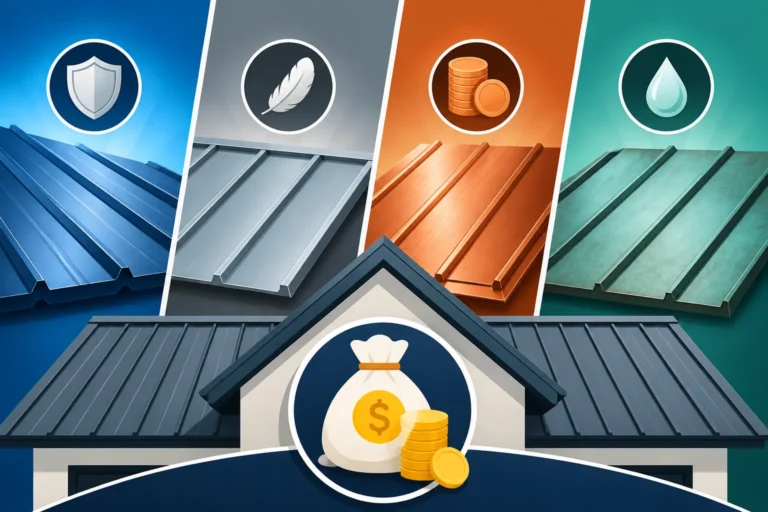
The type of metal you choose for your mobile home's roof is one of the biggest drivers of cost. Each material comes with its own set of advantages, disadvantages, and, of course, price points.
- Galvanized Steel and Galvalume Steel: These are arguably the most common and budget-friendly options for mobile homes. Galvanized steel is coated with zinc to prevent rust, while Galvalume adds aluminum to the zinc coating for enhanced corrosion resistance, especially in coastal areas. They offer excellent durability and come in a wide array of colors. You can expect to pay roughly $4.00 to $9.00 per square foot installed for these materials, though prices can vary by region and current steel market conditions. They are a fantastic entry point for those seeking the benefits of metal without breaking the bank. For a deeper dive into the cost, check out our article on Galvalume Roof Cost.
- Aluminum: If you live in a coastal region where salt spray is a constant concern, aluminum is a top contender. It naturally resists rust and corrosion, making it incredibly durable in these harsh environments. Aluminum is also lighter than steel, which can be a benefit for some mobile home structures. The trade-off? It typically comes at a higher price point than steel, often ranging from $6.00 to $12.00 per square foot installed. While it might cost more upfront, its superior corrosion resistance can mean fewer long-term maintenance headaches. Our guide on Aluminum Roof Cost offers more insights.
- Copper and Zinc: These are the luxury materials of the metal roofing world, known for their exceptional longevity and unique aesthetic appeal that develops a beautiful patina over time. However, their cost is significantly higher, often starting at $20.00 to $40.00 per square foot or more, installed. While they're incredibly durable and can last well over a century, they are rarely chosen for mobile homes due to the substantial investment. If you're curious about these high-end options, you might find our articles on Copper Roof Cost and Zinc Roof Cost interesting.
Panel Types: Exposed Fastener vs. Standing Seam
Beyond the material, the style of metal panel you choose also plays a critical role in both cost and performance. The two main categories are exposed fastener systems and concealed fastener (standing seam) systems.
- Exposed Fastener Panels: These are what many people picture when they think of a "metal roof." Panels like corrugated, R-panel, and 5V Crimp panels are secured directly to the roof deck or purlins using screws that are visible from the exterior. These systems are generally more affordable, often falling in the $4.00 to $9.00 per square foot range, installed. They are relatively easy to install, which keeps labor costs down, and individual panels can be replaced if damaged. However, because the fasteners are exposed, their rubber washers can degrade over time, potentially leading to leaks if not properly maintained. Our guide on Corrugated Metal Roof Cost offers specific pricing for this popular option.
- Concealed Fastener (Standing Seam) Panels: Standing seam roofs feature panels that are crimped or snapped together, with the fasteners hidden beneath the panels. This creates a sleek, continuous look and, more importantly, provides superior protection against leaks since there are no exposed screws. The concealed fasteners also allow the metal to expand and contract more freely with temperature changes, reducing stress on the panels and extending the roof's lifespan. The downside? Standing seam is a more premium product, requiring more specialized installation, which translates to higher costs – typically $8.00 to $15.00 per square foot or more, installed. While the upfront cost is higher, the enhanced durability and reduced maintenance often make it a worthwhile investment in the long run. You can explore this further in our detailed article on Standing Seam Metal Roof Cost.
Roof Size and Pitch Considerations
The square footage of your mobile home's roof is obviously a direct driver of material costs – bigger roof, more materials, more money. However, it also significantly impacts labor. Larger roofs take longer to install, and more time equals higher labor costs.
The pitch, or slope, of your mobile home's roof is another critical factor. Many mobile homes have low-slope roofs, which can sometimes be more challenging to work on safely, or may require specific panel profiles designed for lower pitches to ensure proper water drainage. A very steep pitch, though less common on mobile homes, would also increase labor costs due to safety equipment and the extra effort required to move materials. Complex rooflines with multiple valleys, hips, and dormers (again, less common but present on some manufactured homes) will also drive up costs as they require more custom cutting, flashing, and sealing, adding both material waste and labor time. A simple, rectangular single-wide mobile home will invariably be less expensive to roof than a multi-section manufactured home with more architectural features. If you're curious about general sizing, our Metal Roof Cost for a 2,000 Sq Ft House article provides a good benchmark.
Breaking Down the Installation Costs
Understanding the raw material costs is only part of the equation. A significant portion of your mobile home metal roof project will be tied up in the installation itself. This isn't just about the crew on your roof; it encompasses everything from getting the old roof off to ensuring all the necessary legal boxes are checked. Overlooking these aspects can lead to unwelcome surprises on your final bill, which is exactly what we want to help you avoid.
DIY vs. Professional Installation
The thought of saving a few thousand dollars by installing a metal roof yourself on a mobile home can be tempting. And for simple, exposed fastener panels on a very low-slope, easily accessible roof, it might be feasible for a very experienced DIYer. However, it comes with significant caveats.
- DIY Installation: If you're considering DIY, you're primarily saving on labor costs, which typically account for 40-60% of the total project. You'd still need to purchase all the materials, rent specialized tools (like a metal shear or panel former, depending on the system), and potentially cover permit fees. The challenge lies in ensuring the installation is done correctly to avoid leaks, warranty voidance, and safety hazards. Metal roofing, especially standing seam, requires precision, specialized techniques, and often specific training. Improper installation can lead to expensive repairs down the line, potentially negating any initial savings. Plus, many manufacturer warranties require professional installation by a certified contractor.
- Professional Installation: Hiring a professional metal roofing contractor is generally the recommended route, even for mobile homes. They bring expertise, proper tools, and insurance to the job. While the upfront cost is higher, it ensures the roof is installed correctly, adheres to building codes, and typically comes with a workmanship warranty in addition to the manufacturer's material warranty. This peace of mind and long-term reliability are invaluable. A reputable contractor will also handle the permitting process and advise on the best materials and methods for your specific mobile home. You can often get multiple quotes to compare prices and services, which is a great way to ensure you're getting a fair deal. Our guide on How to Hire a Metal Roofing Contractor can walk you through the process.
Labor Costs: What to Expect
Labor costs for installing a metal roof on a mobile home can fluctuate quite a bit based on a few key factors:
- Geographic Location: Just like housing prices, labor rates vary significantly by region. Installing a metal roof in a high-cost-of-living area like Southern California or the Northeast will naturally be more expensive than in a state like Oklahoma or Arkansas. For instance, the labor cost for a metal roof in Florida might differ substantially from that in Ohio due to regional demand and prevailing wages.
- Roof Complexity: While many mobile homes have relatively simple, low-pitch roofs, any deviation from a straightforward rectangle will add to labor time. Features like skylights, chimneys, vents, or unusual roof shapes require more intricate cutting, flashing, and sealing, increasing the skilled labor hours needed.
- Type of Metal System: Standing seam roofs, with their concealed fasteners and specialized seaming techniques, demand a higher level of skill and more time to install compared to exposed fastener systems. This is directly reflected in higher labor costs per square foot for standing seam. You can get more details on Metal Roof Labor Cost in our in-depth article.
Generally, labor costs for metal roofing on a mobile home can range from $2.50 to $6.00 per square foot, but this can certainly go higher for complex standing seam installations in high-wage areas.
Additional Installation Expenses
Beyond the core material and labor, several other costs can pop up during a metal roof installation on a mobile home. Being aware of these helps you budget more accurately.
- Old Roof Removal (Tear-Off): If your existing mobile home roof (be it shingles or an old rubber membrane) needs to be removed before the new metal roof goes on, you'll incur tear-off costs. This includes the labor for removal and disposal fees for the old materials. Depending on the size of your mobile home and the type of material, this can add $0.75 to $2.00 per square foot. While some mobile homes allow for a metal roof to be installed over existing shingles, ensuring the existing structure can handle the additional weight is paramount.
- Underlayment: Every metal roof needs a high-quality underlayment to provide an extra layer of protection against moisture. Synthetic underlayments are commonly used and offer superior performance to traditional felt paper. The cost of underlayment, including installation, typically adds $0.50 to $1.50 per square foot. This isn't an area to cut corners, as a good underlayment is crucial for preventing leaks and extending your roof's life. We have a comprehensive guide on Metal Roof Underlayment Cost that can help you understand the options.
- Flashing and Trim: These essential components seal the edges, valleys, and penetrations (like vents and pipes) on your roof. Custom flashing and specialized trim pieces add to the material and labor costs. The complexity of your roofline will dictate how much flashing and trim are needed, impacting the overall expense. Think about it: every angle, every pipe, every skylight needs careful attention to prevent future leaks. Our article on Metal Roof Trim and Flashing Cost delves into these details.
- Permits: Most local jurisdictions require a permit for roof replacement, even on mobile homes. The cost of a permit varies widely by city and county, typically ranging from $100 to $500, but it can be higher in some areas. This fee covers the cost of inspections to ensure the work meets local building codes and safety standards. Always ensure your contractor pulls the necessary permits. Skipping this step can lead to fines and potential issues when selling your home. You can find more information on this in Do You Need a Permit for a Metal Roof?.
- Structural Repairs: If your mobile home's existing roof decking or framing is found to be rotted, damaged, or insufficient to support a metal roof, you'll need to factor in the cost of repairs. These unforeseen expenses can significantly impact your budget, which is why a thorough inspection before the project begins is so important.
Real-World Scenarios and Cost Ranges
It's one thing to talk about general costs, but it's another to see how those numbers apply to actual mobile homes. Let's look at some real-world scenarios to give you a clearer picture of what you might expect to pay for a metal roof, depending on the size of your mobile home and the choices you make. Remember, these are estimates, and local market conditions, specific contractors, and the exact complexity of your roof can cause variations.
Small Mobile Home (e.g., Single-Wide)
Imagine you own a cozy single-wide mobile home, perhaps around 14 feet wide and 60 feet long, giving you roughly 840 square feet of roof area. For a smaller footprint like this, the overall costs will naturally be on the lower end of the spectrum.
- Budget-Friendly Option (Exposed Fastener Steel): If you opt for an exposed fastener system using Galvalume or galvanized steel, which is very common for mobile homes, your material costs might be around $4.00 to $6.00 per square foot. Adding labor (let's say $2.50 to $4.00 per square foot) and a conservative estimate for underlayment, trim, and permit, you're looking at a total installed cost of roughly $6.50 to $10.00 per square foot. For an 840 sq ft roof, this could range from $5,460 to $8,400. This option offers significant durability and weather resistance compared to shingles, all without breaking the bank.
- Mid-Range Option (Standing Seam Steel): If you desire the cleaner look and superior leak resistance of a standing seam roof for your single-wide, the costs will increase. Standing seam steel panels typically run $8.00 to $12.00 per square foot for materials and installation. With additional components, you might expect to pay $6,720 to $10,080 for your 840 sq ft roof. This is a considerable upgrade in terms of aesthetics and long-term performance, offering greater peace of mind against the elements.
Larger Mobile Home (e.g., Double-Wide)
Now, let's consider a larger, multi-section mobile home, like a double-wide measuring 28 feet by 60 feet, giving you approximately 1,680 square feet of roof. The larger size means more materials and more labor, but the per-square-foot cost might slightly decrease due to economies of scale on materials.
- Budget-Friendly Option (Exposed Fastener Steel): For a double-wide, choosing exposed fastener steel panels, you could expect to pay the same $6.50 to $10.00 per square foot. For your 1,680 sq ft roof, this translates to a total installed cost of $10,920 to $16,800. This is still a very cost-effective way to get a durable and low-maintenance roof for your larger mobile home.
- Mid-Range Option (Standing Seam Steel/Aluminum): For a standing seam system on a double-wide, or perhaps upgrading to aluminum for coastal resilience, the price per square foot could be $8.00 to $14.00, depending on the material and specific profile. This would put the total installed cost somewhere between $13,440 and $23,520 for a 1,680 sq ft roof. While a bigger investment, the longevity and reduced maintenance of a standing seam or aluminum roof can provide excellent value over several decades. Our Metal Roof Cost by Material: Steel vs Aluminum vs Copper vs Zinc article can provide more context on material cost differences.
Here's a quick summary table for common mobile home sizes and metal roof types:
| Mobile Home Size (Approx. Sq Ft) | Metal Roof Type | Estimated Cost Per Sq Ft (Installed) | Total Estimated Cost Range |
|---|---|---|---|
| Small (840 sq ft) | Exposed Fastener (Steel) | $6.50 – $10.00 | $5,460 – $8,400 |
| Standing Seam (Steel) | $8.00 – $12.00 | $6,720 – $10,080 | |
| Medium (1,200 sq ft) | Exposed Fastener (Steel) | $6.50 – $10.00 | $7,800 – $12,000 |
| Standing Seam (Steel) | $8.00 – $12.00 | $9,600 – $14,400 | |
| Large (1,680 sq ft) | Exposed Fastener (Steel) | $6.50 – $10.00 | $10,920 – $16,800 |
| Standing Seam (Steel) | $8.00 – $14.00 | $13,440 – $23,520 |
Note: These ranges are estimates and can vary based on your specific location, contractor, roof complexity, and current material prices.
Premium vs. Budget Options
It's important to understand that within each category, there's a spectrum.
- Budget Options: The absolute cheapest metal roof options will typically involve lighter gauge (29 gauge or 26 gauge) exposed fastener steel panels, likely corrugated or R-panel. These are still vastly superior to asphalt shingles in terms of lifespan and durability but might require more vigilant maintenance on fasteners over the decades. They represent an excellent value for homeowners prioritizing cost efficiency. You can explore Cheapest Metal Roof Options for more ideas.
- Premium Options: At the higher end, you're looking at heavier gauge (24 gauge) standing seam steel or aluminum, potentially with specialized coatings for enhanced color retention or energy efficiency. These systems offer the best performance, longest warranties, and lowest long-term maintenance. While the initial investment is higher, the extended lifespan and reduced hassle often make it a compelling choice for those planning to stay in their mobile home for many years. Comparing 24 vs 26 Gauge Metal Roof: Cost Difference can help you understand the impact of gauge on both cost and durability.
Maximizing Value and Saving Money on Your Mobile Home Metal Roof
Investing in a metal roof for your mobile home is a big decision, and naturally, you want to ensure you're getting the best possible value for your money. While it's crucial not to cut corners on quality, there are definitely smart strategies you can employ to optimize your investment and potentially save some cash, both upfront and in the long run.
Smart Material and Profile Selections
The choices you make regarding the type of metal and panel profile can have a profound impact on your overall cost. It's about finding the sweet spot between your budget, your aesthetic preferences, and the specific environmental conditions your mobile home faces.
- Prioritize Steel for Budget-Friendliness: If budget is a primary concern, galvanized or Galvalume steel in an exposed fastener profile (like corrugated or R-panel) is usually your most economical starting point. These materials offer excellent performance and longevity at a fraction of the cost of more exotic metals. They come in a wide range of colors to complement your mobile home's exterior. Our article on Metal Roof Cost by Profile: Standing Seam vs Corrugated vs Stone-Coated can help you compare different looks and their associated costs.
- Consider Aluminum for Coastal Areas: If your mobile home is located near the coast or in a high-humidity area, investing in an aluminum roof, even if it's slightly more expensive than steel, can be a money-saver in the long run. Aluminum naturally resists salt corrosion, preventing premature rust and the need for costly repairs or replacements down the road. It's a prime example of where a slightly higher upfront cost prevents significant future expenses.
- Gauge Matters for Durability: While 29-gauge steel is often the most economical, moving up to a 26-gauge or even 24-gauge panel, especially for standing seam, can provide enhanced durability against impacts and oil canning. A thicker gauge means a more robust roof, and while it adds to the initial cost, it can contribute to a longer, trouble-free lifespan, improving your Metal Roof Cost vs Lifespan Value.
Finding a Reputable Contractor
This might be the single most important factor in ensuring you get a good deal and a quality installation. A great contractor can guide you to the right choices, provide a fair price, and ensure the work is done to last.
- Get Multiple Quotes: Never settle for the first quote you receive. Contact at least three different, reputable metal roofing contractors in your area. This allows you to compare not just prices, but also the scope of work, warranty offerings, and proposed materials. Be wary of quotes that seem too good to be true, as they often hide inferior materials or shoddy workmanship. Our guide on How Many Metal Roof Quotes Should You Get offers advice on this.
- Check Credentials and References: Always verify that the contractor is licensed, bonded, and insured. Ask for references from past clients, particularly those with mobile home installations, and actually follow up on them. Look for contractors who specialize in metal roofing and have a strong track record. You can find out more about verifying credentials in How to Verify a Roofing License by State.
- Understand the Warranty: A reputable contractor will offer a workmanship warranty on their installation, in addition to the manufacturer's warranty on the metal panels. Make sure you understand what both warranties cover, for how long, and any conditions that might void them. This protects your investment should any issues arise after installation. For more details, refer to Metal Roof Warranties: Workmanship vs Manufacturer.
Long-Term Savings and ROI
While the upfront cost of a metal roof on a mobile home is higher than traditional asphalt shingles, the long-term financial benefits are substantial and contribute to a strong return on investment (ROI).
- Longevity: A metal roof can last 2 to 3 times longer than an asphalt shingle roof. This means you avoid the cost of replacing your roof every 15-20 years, which can add up significantly over the lifespan of your mobile home. This long-term saving is often the most compelling financial argument for metal.
- Energy Efficiency: As mentioned earlier, metal roofs reflect solar heat, keeping your mobile home cooler in the summer. This can lead to noticeable reductions in your air conditioning bills, providing ongoing savings year after year. The specific savings will depend on your climate and current energy usage.
- Insurance Discounts: Many insurance companies offer discounts for homes with metal roofs due to their superior resistance to fire, hail, and high winds. These savings might not be huge, but they add up annually and are a nice perk for choosing a durable roofing material. Ask your insurance provider about potential Metal Roof Insurance Savings & Discounts.
- Increased Home Value: While often overlooked for mobile homes, a new metal roof can indeed increase your property's value. It's a significant upgrade that appeals to buyers, as it means they won't have to worry about roof replacement for decades. This can make your mobile home more attractive and potentially command a higher resale price. For more information, check out Does a Metal Roof Increase Home Value?.
Disclaimer
Please remember that all cost estimates provided in this guide are general averages and can vary significantly based on your specific geographic location, the complexity of your mobile home's roof, the particular contractor you choose, current material prices, and any unforeseen structural issues. It is always recommended to obtain multiple detailed quotes from qualified local professionals before making any decisions. This article is intended for informational purposes only and does not constitute professional advice.