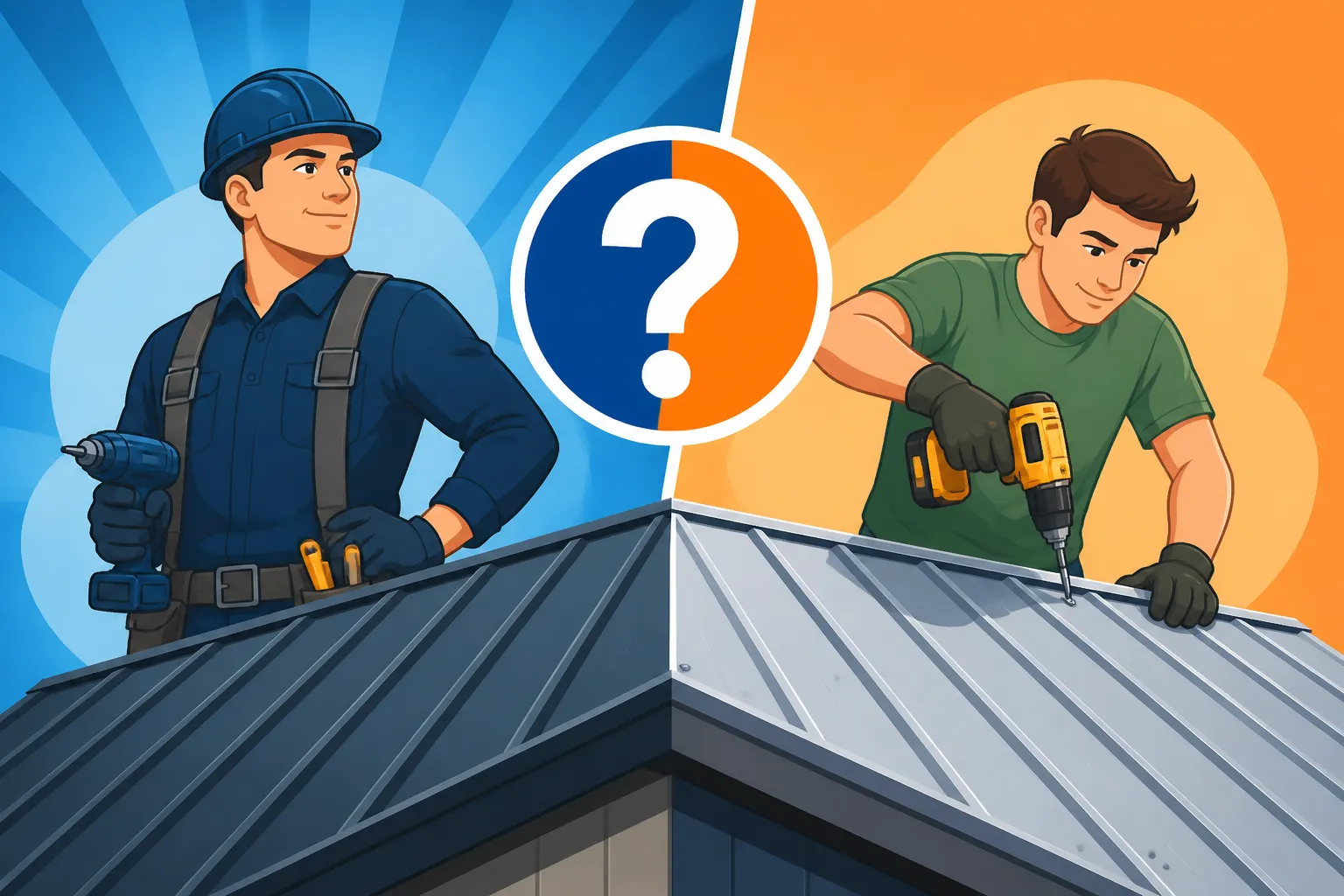
Should You Hire a Contractor or DIY Your Metal Roof?
Staring at a five-figure roofing estimate can make any homeowner's heart skip a beat, leading to the inevitable question: can I just do this myself? While the prospect of saving thousands on labor is tempting, metal roofing is a precision-oriented craft that punishes small mistakes with expensive leaks. This guide explores the realistic demands of DIY versus professional installation to help you decide.
Assessing Your Skill Level and Comfort with Heights
The first and most honest conversation you need to have is with yourself regarding your actual construction experience. Metal roofing isn't like painting a bedroom or even laying down a laminate floor; it is a high-stakes structural project. If you have spent years on a ladder, understand the basics of flashing, and feel comfortable using power shears, you might be a candidate for DIY. However, most homeowners underestimate the sheer physical toll and the mental fatigue that comes with working on a slope for eight hours a day.
Understanding the Steepness Factor
The pitch of your roof changes everything. A "walkable" roof (typically anything under a 6:12 pitch) is manageable for someone with good balance and a harness. Once you get into steeper territory, you aren't just roofing; you are essentially mountain climbing while trying to align 20-foot metal panels. Professional crews use specialized brackets, roof jacks, and fall-arrest systems that allow them to move quickly and safely. As a DIYer, you will likely find that 70% of your time is spent just trying to stay stable, leaving only 30% for actual installation.
Imagine trying to handle a long, thin sheet of metal in a light breeze while standing on a 30-degree incline. The metal acts like a sail, and if you aren't prepared, it can easily pull you off balance. Professionals have the "muscle memory" for these movements, whereas a beginner often spends their energy fighting the materials rather than installing them. Before you commit, get on a ladder and spend thirty minutes at your roof's peak. If your knees start to shake, that is a clear sign to look into How to Hire a Metal Roofing Contractor rather than going it alone.
The Precision of Metalwork vs Asphalt
If you mess up an asphalt shingle, you can usually tear it off and nail a new one down in seconds. Metal is much less forgiving. Most residential metal roofs utilize long panels that run from the eave to the ridge. If your first panel is off by even an eighth of an inch at the bottom, that error will "telegraph" and grow as you move across the roof. By the time you reach the other side, your panels could be several inches out of alignment, resulting in a crooked finish and gaps at the ridge cap.
Beyond alignment, there is the issue of cutting. You cannot use a standard circular saw with a wood blade to cut metal panels, as the heat can destroy the protective Galvalume coating and lead to premature rusting. Learning how to use nibblers or specialized metal blades takes time. If you aren't confident in your ability to make perfectly straight, clean cuts on expensive materials, the waste factor alone might eat up your projected savings. In these cases, checking Metal Roof Labor Cost might reveal that the professional fee is a small price to pay for a roof that actually fits together.
The Financial Reality of DIY vs Professional Installation
The primary driver for DIY is almost always the budget. It is true that labor often accounts for 50% to 60% of a professional quote. On a $20,000 project, that is a cool $10,000 back in your pocket. However, that $10,000 isn't pure profit for the contractor; it covers insurance, specialized tools, waste disposal, and the overhead of a crew that can finish the job in three days instead of three weeks. When you DIY, you inherit all those hidden costs yourself.
Hidden Costs of DIY Tools and Equipment
To do the job right, you can't just rely on a hammer and a screwdriver. You will need a high-quality impact driver, metal snips (left, right, and straight), a "seamer" for standing seam ribs, a specialized metal-cutting saw, and safety gear. A single professional-grade fall protection kit can cost several hundred dollars. Then there are the "consumables" like high-quality drill bits and thousands of color-matched screws with neoprene washers.
Furthermore, you have to consider the cost of delivery and storage. When you order from a local distributor, they will drop the crates on your driveway. You are then responsible for getting those heavy, awkward panels onto the roof without bending or scratching them. If you scratch the paint during the move, you have to buy specialized touch-up pens or risk the panel rusting in five years. You might find that after buying tools and replacing ruined materials, your savings are much thinner than you expected. This is why services like Modernize are so helpful; they allow you to get multiple quotes to see if the price gap is truly large enough to justify the DIY headache.
The Value of a Professional Workmanship Warranty
When you install a roof yourself, you are the warranty. If a leak develops over your kitchen two years from now, you are the one climbing back up there to find it. Most professional contractors offer a workmanship warranty that lasts anywhere from 2 to 10 years (or more). This is separate from the manufacturer's material warranty. If you make a mistake in the way you overlapped the flashing, the manufacturer will not cover the damage because it was an "installation error."
A professional crew understands the nuances of Metal Roof Underlayment and Ventilation Guide requirements. They know how to ensure that air flows correctly to prevent attic moisture buildup. If they get it wrong, their insurance and bond cover the repairs. When you DIY, a single missed screw or a poorly crimped seam can lead to thousands of dollars in interior water damage that your homeowners insurance might refuse to cover because the work wasn't performed by a licensed professional. If you want peace of mind, it is often better to use Modernize to find a vetted pro who stands behind their work.
| Feature | DIY Installation | Professional Contractor |
|---|---|---|
| Average Labor Cost | $0 (Sweat Equity) | $5.00 – $12.00 per sq. ft. |
| Timeline | 2-4 Weeks (Weekends) | 2-5 Days |
| Warranty | Material Only | Material + Workmanship |
| Tool Requirement | High (Must Buy/Rent) | Included |
| Risk of Leaks | Moderate to High | Low |
| Safety Risk | High | Managed via OSHA Standards |
Time Commitment and Project Timeline
Time is the most undervalued asset in the DIY debate. A professional crew of four or five men can strip an old roof and dried-in a new metal roof in a single weekend. As a lone DIYer, or even with a helpful friend, you are looking at a much longer horizon. You have to account for the learning curve, the logistics of moving materials, and the inevitable "oops" moments that require a trip back to the hardware store.
The Learning Curve for First-Timers
Every roof has unique challenges: chimneys, dormers, valleys, and skylights. These aren't just obstacles; they are potential leak points. Learning How Is a Standing Seam Metal Roof Installed? involves understanding complex folding and lapping techniques for these areas. A pro has done this hundreds of times. You will be doing it for the first time while perched on a slope.
You should expect to spend at least 40 to 60 hours researching, watching tutorials, and practicing on small scraps before you ever touch the actual roof. If you value your time at even $30 an hour, that is nearly $2,000 of "soft cost" just in the education phase. For many busy professionals, it is more efficient to spend those hours at their actual job and pay a contractor to handle the specialized labor.
Weather Risks and Exposure
This is the biggest "stress multiplier" for DIYers. Once you tear off your old shingles, your home is vulnerable. If you are doing the work over three consecutive weekends, you have to "dry-in" the roof perfectly every Sunday night. If a rogue thunderstorm hits on a Tuesday while you are at your day job, and your temporary tarps blow off, you are looking at a catastrophe.
Contractors have the manpower to tear off only what they can cover in a day. They also have access to heavy-duty, commercial-grade underlayments that can remain exposed to the elements for weeks if necessary. As a DIYer, you are constantly racing the weather app. The anxiety of seeing a 60% chance of rain on the forecast when you still have half a roof to finish is a weight many homeowners aren't prepared to carry. This is why reading How to Read and Compare Metal Roof Quotes is vital; you need to see how a pro handles the "weather-tight" phase of the project.
Safety Risks and Insurance Implications
Roofing is consistently ranked as one of the most dangerous professions in the country. It isn't just the height; it's the environment. Metal surfaces become incredibly slick with just a tiny bit of morning dew or dust. They also get hot enough to cause contact burns in the summer sun. If you don't have the proper safety equipment and the knowledge of how to use it, you are taking a massive gamble with your physical well-being.
Fall Protection and OSHA Standards
A professional roofing company is required by law to follow OSHA safety standards, which include specific tie-off points and harness requirements. Most DIYers try to "get by" with a ladder and a pair of grippy shoes. One slip is all it takes to change your life forever. Even if you buy a harness, do you know where to anchor it? An anchor screwed into a weak rafter won't do much if you actually fall.
Moreover, handling metal panels is a recipe for deep cuts. The edges of a 26-gauge steel panel are essentially giant razor blades. Professionals wear cut-resistant gloves and specialized clothing. If you are up there in a t-shirt and jeans, you are one gust of wind away from a trip to the emergency room. When you look at the Metal Roof Labor Cost, remember that a portion of that money goes toward the insurance premiums that protect the workers (and you) in case of an accident.
Liability and Homeowners Insurance Coverage
What happens if you drop a panel and it slices through your neighbor's fence, or worse, hits a parked car? What if your friend who is "helping" you falls off the ladder? Your standard homeowners insurance policy might have exclusions for "major structural work" performed by unlicensed individuals. You could find yourself personally liable for medical bills or property damage.
Licensed contractors carry general liability insurance and workers' compensation. This shields you from the financial fallout of accidents. If a pro's ladder falls and breaks your window, their insurance pays for it. If you do it, it's coming out of your pocket. Before deciding to DIY, call your insurance agent and ask point-blank: "Will I be covered if I fall off my roof or if my DIY roof leaks?" The answer might move you toward How to Hire a Metal Roofing Contractor very quickly.
Comparing Profiles: Which are DIY-Friendly?
Not all metal roofs are created equal. Some systems are designed specifically for the residential DIY market, while others should never be attempted by an amateur. Choosing the wrong profile for your skill level is a recipe for frustration and a wasted investment.
Exposed Fastener Panels (Corrugated/Ribbed)
If you are determined to DIY, exposed fastener systems (like corrugated or R-panels) are the most realistic option. These panels overlap and are screwed directly through the metal into the decking or purlins. Because the screws are visible, it is much easier to see if you are staying in a straight line.
However, even "easy" panels have pitfalls. You must understand 24 vs 26 Gauge Metal Roof: Cost Difference to ensure you aren't buying material that is too thin and will "oil can" (wrinkle) the moment you step on it. You also have to be perfect with your screw tension; too tight and you crush the washer, too loose and water seeps in. While this is the most DIY Metal Roof Installation: What to Know friendly option, it still requires a high attention to detail.
Standing Seam: The Professional Standard
Standing seam is the "gold standard" of metal roofing because the fasteners are hidden under the ribs, meaning there are no holes for water to enter. However, it is significantly more difficult to install. It requires specialized folding tools for the eaves and ridges, and often involves a "snap-lock" or "mechanically seamed" process that is very difficult for a beginner to master.
I have seen many homeowners start a standing seam project only to give up halfway through because they couldn't get the valleys to sit flush. If you want the sleek, modern look of standing seam, it is almost always better to hire a specialist. You can use Modernize to find contractors who specifically focus on this profile. Trying to DIY a standing seam roof is like trying to perform your own dental work—you might have the tools, but you lack the years of tactile experience required for a successful outcome.
Long-Term ROI and Resale Value
A roof is one of the most visible parts of your home. If you do a "B-grade" job on a DIY installation, it will show. When it comes time to sell your house, a savvy home inspector will spot amateur flashing or crooked panels from a mile away. Instead of the roof being a selling point, it becomes a liability that buyers will use to negotiate a lower price.
Curb Appeal and Installation Quality
A professional installation looks crisp. The lines are straight, the trim is perfectly mitered, and there are no visible scratches or "oil canning." This professional finish contributes significantly to your home's value. In fact, many studies on Is a Metal Roof Worth It? ROI, Resale & Payback show that a professionally installed metal roof can recoup a high percentage of its cost at resale.
Conversely, a DIY roof that looks "DIY" can actually decrease your home's value. Buyers worry about what else might be hidden underneath the panels. Did you use the right underlayment? Is the ventilation adequate? If you can't provide a receipt from a licensed roofing company, many buyers will factor in the cost of a full roof replacement into their offer.
Transferable Warranties and Documentation
When you hire a pro, you get a paper trail. You get a contract, a receipt, and a warranty certificate. These documents are gold when you go to sell your home. A "fully transferable workmanship warranty" is a massive incentive for a buyer. It tells them that if the roof leaks in three years, they aren't on the hook for the repair.
As a DIYer, you have no such documentation. You can show them the receipts for the materials, but that doesn't prove they were installed correctly. For a long-term investment, the "stamp of approval" from a professional company is often worth more than the $10,000 you saved on labor. If you’re unsure how to evaluate these pros, reading How to Read and Compare Metal Roof Quotes will help you understand what kind of documentation you should be looking for.
Making the Final Decision
So, should you hire a contractor or DIY? It really comes down to a balance of three things: risk tolerance, available time, and your specific roof's complexity. If you have a simple, low-slope ranch house and a month of free time, DIY might be a rewarding challenge. But for most homeowners, the stakes are simply too high.
When to Pull the Trigger on DIY
DIY might be the right move if:
- Your roof is a simple "up and over" (no valleys, dormers, or chimneys).
- The pitch is low enough that you can walk comfortably without feeling like you're falling.
- You already own most of the necessary power tools and have experience with metalwork.
- You have a team of 2-3 reliable people who can help you for several days straight.
- You have read the DIY Metal Roof Installation: What to Know guide and feel confident in every step.
When to Call the Pros
You should absolutely hire a contractor if:
- Your roof has multiple levels, valleys, or steep pitches.
- You want a Standing Seam vs Corrugated Metal Roof system (specifically standing seam).
- You are worried about your homeowners insurance coverage or future resale value.
- You don't have the time to spend 2-3 weeks on a ladder.
- You want the security of a workmanship warranty.
In the end, your roof is the only thing protecting your family and your belongings from the elements. It is the one area of home improvement where "good enough" isn't good enough. If you have any doubts at all, use a service like Modernize to connect with local professionals. Getting a few quotes doesn't cost anything, and it will give you a clear picture of what you are actually paying for: safety, speed, and a roof that will last a lifetime.
Disclaimer
The information provided in this guide is for informational purposes only and does not constitute professional construction, legal, or financial advice. Roofing is a dangerous activity; always prioritize safety and consult with licensed professionals and local building authorities before beginning any structural project on your home.