Red Flags When Hiring a Metal Roofing Company
Embarking on a metal roofing project can feel like a monumental task, and the stress of choosing the right contractor often adds to the pressure. Many homeowners find themselves overwhelmed by conflicting quotes, confusing jargon, and the fear of making a costly mistake. This guide is designed to cut through the noise, helping you identify critical red flags that signal a potentially unreliable or unethical metal roofing company, ensuring you protect your investment and peace of mind.
Why Spotting Red Flags Early Matters
Choosing a metal roofing contractor isn't just about getting a new roof; it's about investing in the long-term protection and value of your home. The consequences of hiring the wrong company can be far-reaching, impacting your finances, the structural integrity of your home, and your daily life. It’s not just an inconvenience; it can be a nightmare of repairs, legal battles, and endless frustration. Taking the time to understand common warning signs can save you a world of trouble down the line.
The Financial Pitfalls of Bad Hires
One of the most immediate and painful impacts of a subpar contractor is the financial toll. Imagine paying a significant deposit, only for the work to stall, the materials to be incorrect, or the job to be abandoned altogether. You might be left with a half-finished roof, or worse, one that leaks and causes interior damage, requiring even more money to fix. These scenarios aren't just hypothetical; they're unfortunately common for those who don't properly vet their roofing company.
Beyond the initial costs, a poorly installed metal roof can lead to ongoing repair expenses that chip away at the supposed long-term savings a metal roof offers. Issues like improper fastening, inadequate underlayment, or poorly sealed seams can lead to leaks, corrosion, and structural damage that manifest years later. What was meant to be a 50-year investment can become a costly liability, completely negating the Metal Roof Cost vs Lifespan Value. It’s a situation no homeowner wants to be in, and it underlines the importance of making a smart choice upfront.
Protecting Your Home and Peace of Mind
Your home is likely your biggest asset, and its roof is its primary shield against the elements. A faulty installation doesn't just look bad; it compromises this shield, leaving your home vulnerable to water damage, pests, and even severe structural issues, especially in areas prone to harsh weather. The thought of your home being unprotected, or facing the anxiety of a looming leak every time it rains, can be incredibly stressful.
Beyond the physical damage, the emotional and psychological toll of dealing with an unprofessional or dishonest contractor can be immense. Endless phone calls, arguments, and the feeling of being taken advantage of can turn what should be an exciting home improvement into a source of constant dread. By learning how to spot the red flags early, you're not just safeguarding your home; you're safeguarding your mental well-being and ensuring your home remains a source of comfort, not stress. This is why thorough vetting is crucial, and platforms like Modernize can be a great starting point for finding reputable professionals.
Common Red Flags During Initial Contact
The first impressions a roofing company makes are often the most telling. From the moment you pick up the phone or schedule an initial consultation, you should be evaluating more than just their quoted price. These early interactions can reveal a lot about a company's ethics, professionalism, and overall reliability. Trust your gut feeling, but also pay attention to these specific warning signs.
High-Pressure Sales Tactics and Unrealistic Promises
Be extremely wary of any roofing contractor who tries to strong-arm you into signing a contract on the spot. Phrases like "This price is only good today" or "We have a cancellation, so we can start tomorrow if you sign now" are classic high-pressure tactics. A reputable company understands that a new roof is a significant investment and homeowners need time to consider their options, get multiple bids, and do their research. They won't rush you or make you feel guilty for wanting to think it over.
Equally concerning are promises that seem too good to be true. If a contractor guarantees a lower price than everyone else by a wide margin, or promises features and benefits that other professionals say are impossible or exorbitantly expensive, it's a major red flag. For instance, if they promise a full Copper Roof Cost for the price of standard steel, something is definitely off. Unrealistic promises often lead to disappointment, hidden costs, or shortcuts in materials and workmanship. Be especially cautious of "storm chasers" who appear after a major weather event, often pushing immediate, low-cost solutions without proper local credentials or long-term commitment. You can learn more about avoiding these scenarios in our guide on Storm-Chaser and Door-Knocker Roofing Scams.
Lack of Professionalism or Transparency
A lack of professionalism can manifest in many ways during initial contact. This might include showing up late for appointments without explanation, having unbranded vehicles or attire, or simply being disorganized. If a contractor can't manage their schedule or present themselves professionally for a sales call, how will they manage a complex roofing project? Similarly, watch out for evasiveness when you ask questions about their business, experience, or process. A reliable company should be an open book, happy to share details and provide clear answers.
Transparency also extends to their communication style. Do they explain things clearly, or do they use overly technical jargon without offering clarification? Do they provide a clear breakdown of the proposed work, materials, and timeline, or is their initial quote just a single, vague number? A company that values your business will take the time to educate you and ensure you understand every aspect of the project. If you feel like you're constantly being kept in the dark or getting half-answers, it's a sign that they might not be as straightforward as you need them to be.
Vague or Extremely Lowball Bids
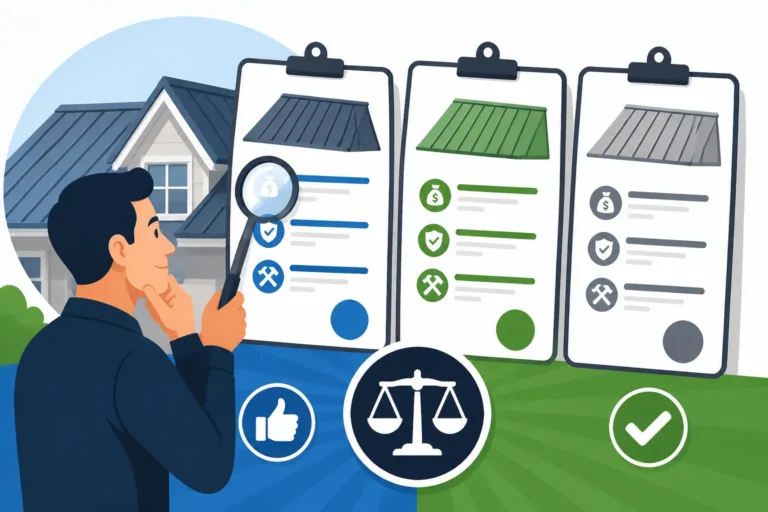
Getting multiple quotes is a smart strategy, but you need to know how to compare them. A bid that is significantly lower than all others should immediately raise a red flag. While everyone loves a bargain, an unbelievably cheap quote often means the contractor is cutting corners. This could involve using inferior materials, neglecting crucial steps in the installation process, employing untrained laborers, or simply failing to include all necessary work (like tear-off or proper underlayment) in the initial estimate. These omissions often lead to costly change orders mid-project or premature roof failure. Our comprehensive Metal Roof Cost: Complete 2026 Guide can help you understand realistic pricing.
On the other hand, a vague bid that lacks detail is just as problematic. A proper metal roofing quote should be itemized, detailing the type of metal (e.g., steel, aluminum), gauge (e.g., 24 vs 26 Gauge Metal Roof: Cost Difference), panel profile (e.g., standing seam, corrugated), coating type (like PVDF or SMP), underlayment specifications, flashing, ventilation, labor costs, and any tear-off or disposal fees. If a contractor provides a one-page quote with just a total price and no breakdown, you won't know what you're truly paying for, making it impossible to compare accurately or hold them accountable. This is why learning How to Read and Compare Metal Roof Quotes is so important.
Warning Signs During the Vetting Process
Once you've moved past initial contact, the vetting process begins in earnest. This is where you dig deeper into a company's history, credentials, and reputation. Skimping on this due diligence can leave you vulnerable to inexperienced or unreliable contractors. Take your time, ask tough questions, and verify everything they tell you.
Missing or Incomplete Credentials
One of the most critical red flags is a contractor who cannot or will not provide complete and verifiable credentials. Every reputable roofing company should be properly licensed, bonded, and insured. Licensing ensures they meet state or local requirements for their trade, while bonding protects you financially if the contractor fails to complete the job or meet contractual obligations. Insurance (specifically liability and worker's compensation) protects you from being held responsible for accidents or injuries that occur on your property during the project.
If a contractor hesitates to show you proof of these documents, or if the documents appear expired or fraudulent, walk away. You can often verify licenses through state or county licensing boards. Don't just take their word for it. For instance, in Texas, you'd want to verify their general contractor license (though specific roofing licenses vary by municipality). This is non-negotiable for your protection. Understanding Metal Roof Contractor Licensing, Bonding & Insurance is vital. Furthermore, inquire if they have any manufacturer certifications for the specific metal roofing products they install. Some manufacturers like McElroy Metal or Englert offer training and certification programs, ensuring their products are installed correctly.
Poor Online Reviews or Lack of References
In today's digital age, a company's online reputation speaks volumes. While a single negative review might not be a deal-breaker, a pattern of complaints regarding shoddy workmanship, missed deadlines, poor communication, or unresolved issues is a huge red flag. Check multiple platforms like Google, Yelp, the Better Business Bureau, and industry-specific sites. Look for consistency in feedback. Conversely, a complete lack of online presence or reviews can also be concerning, especially for established businesses. How to Check Online Reviews for Roofers is a skill every homeowner needs.
Beyond online reviews, always ask for local references—preferably clients whose metal roofs were installed a few years ago so you can assess the long-term quality of the work. If a contractor is hesitant to provide references or only offers distant or vague contacts, it’s a warning sign. A reputable company with satisfied clients will be proud to share their successes. When you contact references, ask specific questions about the contractor's reliability, professionalism, communication, quality of work, and how they handled any issues that arose. Don't forget to inquire about the specific type of roof, such as a Standing Seam Metal Roof Cost or a corrugated one, as this often indicates their specialization.
Unclear or Unfavorable Contract Terms
The contract is your legal protection, and it should be clear, comprehensive, and fair. If a contractor presents a vague contract with boilerplate language, missing key details, or terms that seem overly favorable to them, proceed with extreme caution. The contract should explicitly outline the scope of work, including preparation, installation steps, cleanup, materials specifications (brand, type, color, gauge), payment schedule, warranty information for both materials and labor, and a clear timeline for completion. It should also include provisions for change orders and dispute resolution.
Watch out for clauses that demand an unusually large upfront deposit. While some deposit is standard (typically 10-30%), asking for 50% or more, especially before any materials are delivered or work begins, is a significant red flag. This can tie up your funds and leave you vulnerable if the contractor disappears or abandons the project. Always insist on a detailed, written contract, and don't be afraid to have it reviewed by an attorney if you have any doubts. Our guide on What a Metal Roof Contract Should Include provides a detailed checklist for what to look for. Companies like Modernize can often connect you with contractors who offer transparent, detailed contracts.
Red Flags to Watch For During Installation
Even after you've thoroughly vetted a contractor and signed a contract, the work itself can reveal further red flags. Staying vigilant during the installation process is crucial to ensure the job is being done correctly and according to agreement. Issues that arise during this phase can impact the longevity and performance of your metal roof.
Demand for Excessive Upfront Payment
We touched on this during the contract phase, but it bears repeating: be incredibly wary if a contractor demands a substantial portion of the total cost upfront, especially before any work has commenced or materials have been delivered. While a reasonable deposit is standard for materials and initial mobilization, anything exceeding 30-40% could indicate financial instability on their part or, worse, a scam. They might be using your money to fund another job, or they might simply take the money and disappear.
A fair payment schedule will typically involve an initial deposit, followed by progress payments tied to specific milestones (e.g., materials delivered, old roof removed, new panels installed) and a final payment upon satisfactory completion. Never pay the full amount until the job is completely finished and you've had a chance to inspect the work. If a contractor insists on cash payments only, or pressures you for larger payments than agreed upon in the contract, it's a huge warning sign. Refer to our article on Normal Deposit and Payment Schedule for a Roof for typical industry practices.
Substandard Materials or Workmanship
Keep an eye on the materials being delivered and installed. They should match what was specified in your contract, down to the brand, gauge, and finish. For example, if you paid for a high-quality 24-gauge standing seam system with a durable PVDF coating, but you see 29-gauge corrugated panels being delivered, that's a serious breach of contract. Don't be afraid to ask to see the material invoices or product labels. Inferior materials can drastically reduce the lifespan and performance of your metal roof, leading to premature rusting, fading, or structural issues. Learn more about metal roof specifications in Metal Roofing Materials Compared: Steel, Aluminum, Copper & Zinc and Metal Roof Gauges Explained: 22, 24, 26 & 29.
Beyond materials, observe the quality of the workmanship. Are the installers experienced and methodical, or do they seem rushed and careless? Look for things like misaligned panels, improperly fastened screws, scratched coatings, or sloppy flashing work around chimneys and vents. Pay attention to how they handle debris and maintain a safe worksite. A truly professional team will be organized, meticulous, and focused on precision. If you notice signs of shortcuts or poor quality, address them immediately. Document everything with photos and communicate your concerns in writing.
Communication Breakdowns and Delays
While unexpected delays can happen in any construction project due to weather or material availability, a consistent pattern of poor communication and unexplained delays is a major red flag. If your calls and emails go unanswered for days, if project managers are constantly unavailable, or if you receive vague excuses without concrete solutions, it indicates a lack of respect for your time and investment. A reliable contractor will keep you informed of any changes, explain the reasons, and provide adjusted timelines.
Moreover, if they start deviating significantly from the agreed-upon timeline without proper justification or communication, it’s a problem. A project that drags on indefinitely not only causes inconvenience but can also lead to additional costs if you have to arrange alternative living situations or deal with prolonged disruptions. This is where the importance of a clear contract with a specified completion date, or at least a projected schedule, becomes evident. Modernize can help you find contractors who prioritize clear communication from start to finish.
Here's a quick summary of key red flags to watch for:
| Red Flag Category | What It Looks Like | Why It's a Problem | What to Do |
|---|---|---|---|
| High-Pressure Sales | "Limited time offer," forced immediate decisions, refusal to leave a quote for review. | Rushes you into a bad decision, often signals desperation or dishonesty, prevents comparative shopping. | Politely decline, insist on time to review, get other quotes. |
| Vague/Lowball Bids | Extremely cheap quotes without detail, one-page summary with only a total price, no material or labor breakdown. | Hidden costs, inferior materials, shortcuts, impossible to compare apples-to-apples, leads to disputes. | Demand detailed, itemized quotes. If too low, ask for clarification on everything included. |
| Missing Credentials | No proof of license, bonding, or insurance; expired documents; evasiveness when asked. | Lack of legal compliance, financial protection for you, risk of liability for accidents. | Verify all credentials independently. Do not proceed without proof. |
| Poor Online Reputation | Consistent negative reviews, complaints on BBB, many unresolved issues, or no online presence/references at all. | Indicates a pattern of dissatisfaction, poor service, or inexperience. | Research online, ask for recent local references, and follow up thoroughly. |
| Excessive Upfront Pay | Demand for 50%+ deposit before work starts, insistence on cash only, pressured for payments ahead of schedule. | Contractor may be financially unstable, might abandon job, leaves you with little leverage. | Adhere to a reasonable, milestone-based payment schedule; never pay in full upfront. |
| Substandard Materials | Materials delivered don't match contract (wrong gauge, type, brand), visible damage, cheap substitutions. | Compromises roof durability, lifespan, and warranty; leads to premature failure and costly repairs. | Inspect materials upon delivery. Document discrepancies. Demand correct materials as per contract. |
| Poor Workmanship | Misaligned panels, exposed fasteners where hidden were promised, scratched coatings, sloppy flashing, messy site. | Leads to leaks, reduces aesthetic appeal, voids manufacturer warranties, decreases roof lifespan. | Document with photos. Address issues immediately in writing. Do not make final payment until corrected. |
| Communication Issues | Unanswered calls/emails, vague responses, unexplained delays, project manager constantly unavailable. | Causes stress, slows progress, makes it hard to resolve issues, signals disorganization. | Insist on regular communication. Document all exchanges. Set clear expectations for updates. |
By keeping a sharp eye out for these red flags, you’ll be much better equipped to select a metal roofing company that is not only competent but also trustworthy. Your home deserves nothing less than the best, and a little vigilance goes a long way in ensuring your metal roof installation is a successful and stress-free experience.
Disclaimer
Please note that the information provided in this guide is for general informational purposes only and does not constitute professional advice. Always consult with a qualified metal roofing contractor and legal professional for advice tailored to your specific situation and local regulations. Building codes, licensing requirements, and warranty terms can vary significantly by location and product.