Storm-Chaser and Door-Knocker Roofing Scams
Dealing with the aftermath of a massive hailstorm or high-wind event is stressful enough without predatory contractors knocking on your door while you are still picking up debris. This guide breaks down the predatory tactics used by storm-chasers and door-knockers to help you distinguish between a legitimate local professional and a scammer looking to make a quick buck at your expense.
Understanding the Storm-Chaser Business Model
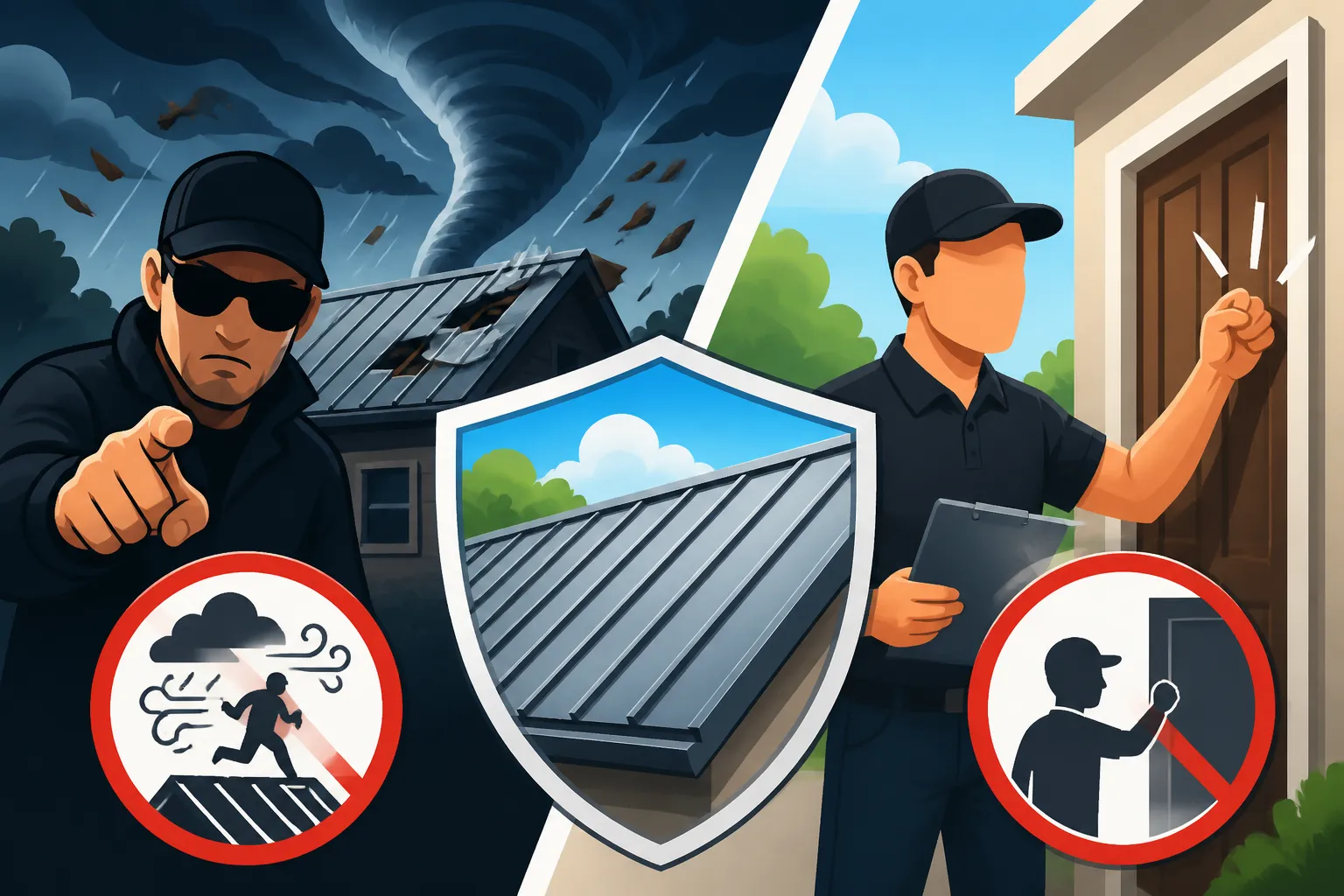
When we talk about "storm-chasers," we aren't talking about meteorologists in armored SUVs. In the roofing world, storm-chasers are companies—often based out-of-state—that follow severe weather patterns across the country. They use sophisticated weather-tracking software to identify neighborhoods with high probabilities of hail or wind damage and descend upon those areas within hours of a storm passing. Their goal is to sign as many contracts as possible, collect insurance checks, and move on to the next disaster zone before the first leak in their subpar work appears.
The Post-Storm Blitz
The hallmark of a storm-chasing operation is the sheer volume and speed of their arrival. You might see a fleet of unmarked trucks or vehicles with temporary magnetic signs suddenly populating your street. These crews are built for speed, not for longevity. They often hire "canvassers" who may not even be roofers; these are simply sales reps trained to get a signature on a "contingency agreement." This agreement often blindsides homeowners, essentially locking them into a contract before they have even spoken to their insurance adjuster.
I have seen neighborhoods where every single house has a different colored flyer on the door within four hours of a storm. It is an overwhelming experience for a homeowner who is already worried about their property value. Before you sign anything in a moment of panic, it is vital to understand Metal Roof Scams and Red Flags to Avoid so you don't end up with a lien on your house or a roof that fails in three years.
The Free Inspection Trap
The most common "foot in the door" is the offer of a free, no-obligation roof inspection. While many reputable local companies also offer free inspections, storm-chasers use this as an opportunity to manufacture or exaggerate damage. There have been documented cases of unscrupulous door-knockers using coins or specialized tools to create "hail dents" on soft metal flashing or even scuffing shingles to mimic wind uplift.
If a contractor is the one who initiated the contact and they are insistent on getting on your roof immediately, be wary. They are looking for "proof" to present to your insurance company to trigger a claim. This is a high-stakes game because if you file a claim based on fabricated damage, you could be flagged for insurance fraud, even if you were unaware of the contractor's actions. It is always better to reach out to a trusted professional through platforms like Modernize to ensure you are dealing with someone who has been vetted.
Out-of-State Operations and "Tailgate" Warranties
The biggest risk with storm-chasers is the lack of a local physical presence. These companies typically set up shop in a local motel or rent a temporary warehouse space for a few months. Once the "work" is done and the insurance money is collected, they vanish. This leads to what we in the industry call a "tailgate warranty"—the warranty is only good as long as you can see the contractor's tailgate driving away.
If your new metal roof starts leaking during the next rainy season, you will likely find their phone number disconnected and their "local" office abandoned. This is why verifying a company's history is non-negotiable. You want to see years of local operation, not just a flashy website that was registered three weeks ago. Understanding Metal Roofing Contractors Near Me: How to Find & Vet is your best defense against these transient crews.
Common Red Flags of Door-Knocker Scams
Recognizing a scam artist often comes down to their behavior and the language they use. These individuals are trained in high-pressure sales psychology. They want to make you feel like you are losing out on a "limited-time" deal or that your home is in immediate, catastrophic danger if you don't act within the next hour.
High-Pressure Sales Tactics
A reputable contractor understands that a roof is a major investment. They will provide an estimate and give you the space to review it, compare it with other bids, and talk to your spouse or financial advisor. A storm-chaser, conversely, will use "today only" pricing or tell you they have a crew "just around the corner" and can give you a massive discount if you sign right now.
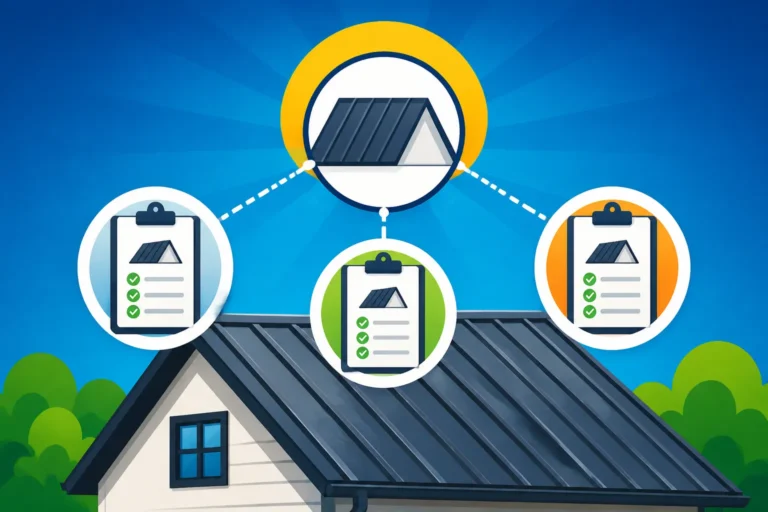
These tactics are designed to bypass your logical reasoning. They might even try to prevent you from getting other quotes by saying their pricing is "pre-negotiated" with your insurance carrier. This is rarely true. In reality, you should always aim to How Many Metal Roof Quotes Should You Get—usually three—to ensure the pricing is fair and the scope of work is accurate.
Demands for Large Upfront Deposits
One of the most dangerous red flags is a demand for a large cash deposit upfront, especially if they claim it’s for "ordering materials." While a reasonable deposit is common in the industry, especially for custom metal panels, you should never hand over 50% or more of the project cost to someone who knocked on your door uninvited.
Scammers often take these deposits and simply disappear, leaving the homeowner with a damaged roof and a lighter bank account. Or, they may start the "tear-off" process, leaving your home exposed to the elements, and then demand more money to finish the job. For a baseline of what to expect, research the Normal Deposit and Payment Schedule for a Roof so you know what a fair agreement looks like.
Unsolicited Inspections and Property Damage
If you didn't call them, don't let them on your roof. It sounds simple, but these canvassers are very persuasive. They might claim they were "just working on your neighbor's house" (a classic lie) and noticed some "concerning" damage on your ridge cap. Once they are up there, you have no way of knowing what they are doing.
I’ve heard horror stories of door-knockers purposefully damaging shingles or metal panels to ensure an insurance payout. If you suspect your roof has storm damage, take your own photos from the ground if possible, then call a local, licensed professional to perform a documented inspection. Knowing How to Spot an Underqualified Metal Roofer can save you from a lot of heartache and potential legal trouble with your insurance provider.
The Difference Between Reputable Local Roofers and Transient Crews
Distinguishing between a pro and a pretender requires a bit of detective work. Local roofers have "skin in the game." Their reputation in the community is their most valuable asset, and they depend on word-of-mouth referrals. Storm-chasers depend on the next storm.
Establishing Local Roots
A reputable roofer will have a permanent physical office in your area—not just a P.O. Box. They will have local phone numbers, local license plates on their trucks, and a history of working with local suppliers. When you use a service like Modernize, you are often connected with professionals who have established these roots.
Ask the contractor for a list of local references from projects completed two or three years ago, not just projects from last week. A roof that looks great the day it's finished might fail after one winter cycle. You want to talk to homeowners who have lived with the contractor's work through several seasons. Check out How to Check Roofing Contractor References for a list of specific questions to ask those past clients.
Verification of Licensing and Insurance
This is the "boring" part of hiring a contractor, but it is the most critical. Every state has different requirements for roofing professionals. A storm-chaser might have a license in their home state, but that doesn't mean they are authorized to work in yours. Furthermore, their insurance might not cover out-of-state work, leaving you liable if a worker falls off your roof.
Before signing a contract, ask for a copy of their certificate of insurance (COI) and their state license number. Then, actually verify it. You can usually do this online through your state's department of professional regulation. For example, knowing What License Does a Roofer Need in Texas is essential if you live in the Lone Star State, as the requirements there differ significantly from Florida or California.
Reviewing Past Performance
In today's digital age, a scammer can't hide forever. Look for online reviews, but look at them critically. A sudden influx of fifty 5-star reviews all posted within the same month is a major red flag—it often suggests the company paid for fake reviews to mask a poor reputation.
Instead, look for consistent, long-term feedback. A company that has been around for ten years will likely have a few 3 or 4-star reviews where they had to resolve an issue. This is actually a good sign; it shows they are a real company dealing with real-world challenges. You can learn more about How to Check Online Reviews for Roofers to help filter out the noise and find the true craftsmen.
| Feature | Local Professional | Storm-Chaser / Door-Knocker |
|---|---|---|
| Physical Office | Permanent local address | Hotel room or temporary warehouse |
| Initial Contact | You call them based on research | They knock on your door uninvited |
| License/Insurance | Locally verified and up-to-date | Often out-of-state or non-existent |
| Sales Tactics | Educational and patient | High-pressure, "today-only" deals |
| Warranty | Long-term manufacturer & labor | "Tailgate" warranty (vanishes quickly) |
| References | Local homes you can drive by | None, or only very recent ones |
Navigating the Insurance Claim Process Safely
The primary goal of a storm-chaser is to get their hands on your insurance claim money. They often try to insert themselves as the middleman between you and your insurance company, which can lead to significant complications.
The Danger of Giving Over Assignment of Benefits (AOB)
One of the most dangerous documents a door-knocker might ask you to sign is an "Assignment of Benefits" or AOB. This legal document signs over your insurance claim rights to the contractor. It allows them to file the claim, negotiate the settlement, and receive the checks directly from the insurance company—all without your involvement or approval.
Once you sign an AOB, you lose control of the project. The contractor could do a cheap, subpar job and keep the remaining insurance money, and you would have very little legal recourse. Many states are passing laws to limit the use of AOBs because of widespread fraud. Always keep the power in your hands and ensure the insurance checks are made out to you or your mortgage company. This is a key part of How to Choose a Roofer for an Insurance Claim.
Coordinating with Your Own Adjuster
A legitimate roofer will encourage you to have your insurance adjuster present during the inspection. They should be willing to meet the adjuster on the roof to point out the damage they found. This "apples-to-apples" comparison ensures that everyone is on the same page regarding the scope of work.
If a contractor tells you that you don't need to involve your adjuster or that they can "handle everything" without the insurance company seeing the roof, walk away. This is a common tactic used to hide overcharging or insurance fraud. Understanding the timeline and expectations of Metal Roof Insurance Claim After a Storm will help you manage this process with confidence.
Understanding Supplement Fraud
"Supplements" are additional costs submitted to the insurance company after the initial claim is filed, usually for items that were hidden until the old roof was removed (like rotted decking). While supplements are a normal part of the business, storm-chasers often use them to "pad" the bill with unnecessary charges.
They might claim they used more materials than they actually did or charge for high-end components like Metal Roof Underlayment Cost while actually installing the cheapest felt paper available. Always ask for documentation, photos, and invoices for any supplemental charges before they are submitted to your insurance. Transparency is the mark of a pro.
How to Vet a Roofing Contractor After a Disaster
When the pressure is on, having a systematic way to vet contractors is your best defense. Don't let the urgency of a leak force you into a bad decision. Even a temporary tarp is better than a permanently bad roof.
Utilizing Trusted Networks like Modernize
One of the best ways to avoid the "wild west" of post-storm door-knockers is to use a structured network like Modernize. These services do a lot of the heavy lifting for you by pre-screening contractors for basic requirements like licensing and insurance.
By starting your search through a trusted platform, you are significantly less likely to encounter a transient storm-chasing crew. It allows you to review profiles, read verified feedback, and connect with professionals who are actually interested in building a long-term business in your community rather than just chasing the next hailstorm.
Interviewing Multiple Candidates
I cannot stress this enough: never hire the first person who knocks on your door. Even if they seem nice and their price seems right, you have no baseline for comparison. Take the time to interview at least three different companies.
During these interviews, pay attention to their expertise in metal specifically. Installing a metal roof requires different skills and tools than asphalt shingles. Ask them about Questions to Ask a Metal Roofing Contractor Before You Hire to gauge their technical knowledge. A true pro will be happy to explain the nuances of gauges, fasteners, and thermal expansion.
Inspecting the Fine Print of the Contract
A contract should be a detailed roadmap of the project, not a one-page "contingency agreement." It should specify the exact materials to be used, the estimated start and completion dates, and the total cost. If they are vague about the materials—for instance, saying "metal roof" without specifying if it's Standing Seam vs Corrugated Metal Roof—that's a problem.
Make sure the contract includes a "right to rescind" clause, which is legally required in many states, allowing you to cancel the contract within three days. Also, ensure the warranty terms are clearly defined. A good contract will protect both you and the contractor. For more detail on what to look for, see What a Metal Roof Contract Should Include.
Disclaimer
This guide is for informational purposes only and does not constitute legal or professional insurance advice. Roofing regulations and insurance laws vary significantly by state and municipality. Always consult with a licensed local contractor and your insurance agent before signing any contracts or filing claims.