How to Spot an Underqualified Metal Roofer
Finding a contractor who claims they can do it all is easy, but finding one who actually understands the nuances of metal is an entirely different battle. Many homeowners are lured in by low bids only to face a lifetime of leaks, oil canning, and voided warranties because their installer treated metal like asphalt. This guide reveals the critical warning signs of an underqualified roofer so you can protect your investment.
The Dangerous Myth of the Universal Roofer
One of the biggest pitfalls homeowners encounter is the assumption that a roofer is a roofer. In reality, the skills required to nail down asphalt shingles are almost entirely different from those needed to engineer a high-quality metal roofing system. If you are talking to a pro who spends 95% of their time on shingles and says metal is "basically the same thing," you are looking at a major red flag.
Why Asphalt Experience Does Not Translate to Metal
Asphalt shingles are a forgiving material. If a shingle is slightly off-center or a nail is driven a bit too deep, the integrity of the system usually remains intact. Metal roofing, however, is a game of precision. It requires an understanding of metallurgy, physics, and advanced geometry. A contractor who is used to the high-speed, high-volume world of asphalt might lack the patience for the meticulous Metal Roof Installation Process: Step by Step required for a lasting result.
When a contractor treats a metal panel like a giant shingle, they often skip essential steps like pre-drilling or accounting for the thickness of the underlayment. They might not understand how to properly handle the panels without scratching the protective PVDF or SMP coatings, which leads to premature rusting. If they don't have a dedicated crew that specializes in metal, they are likely learning on your dime.
The Hidden Costs of a Budget Metal Installation
It is incredibly tempting to go with the lowest bid, especially when you see the Metal Roof Cost: Complete 2026 Guide and realize the initial investment is significant. However, an underqualified roofer often provides a lower quote because they are cutting corners on the "invisible" parts of the roof. They might use cheaper, thinner fasteners, or they might skip the high-temp underlayment that metal roofs desperately need to prevent "cooking" the roof deck.
I have seen countless cases where a homeowner saved $4,000 on the initial install, only to spend $10,000 five years later to fix systemic leaks. These "budget" installers often disappear the moment a problem arises, leaving you with no recourse. Using a vetting service like Modernize can help you find contractors who have a proven track record, rather than just the lowest price in the neighborhood.
Red Flags During the Initial Consultation
The very first meeting is your best opportunity to vet a contractor's expertise. An underqualified roofer will often focus on the aesthetics and the "lifetime" nature of the roof without explaining the technical details of how it stays waterproof. Pay close attention to how they describe the project and what they suggest for your specific home.
Lack of Specific Tool Knowledge
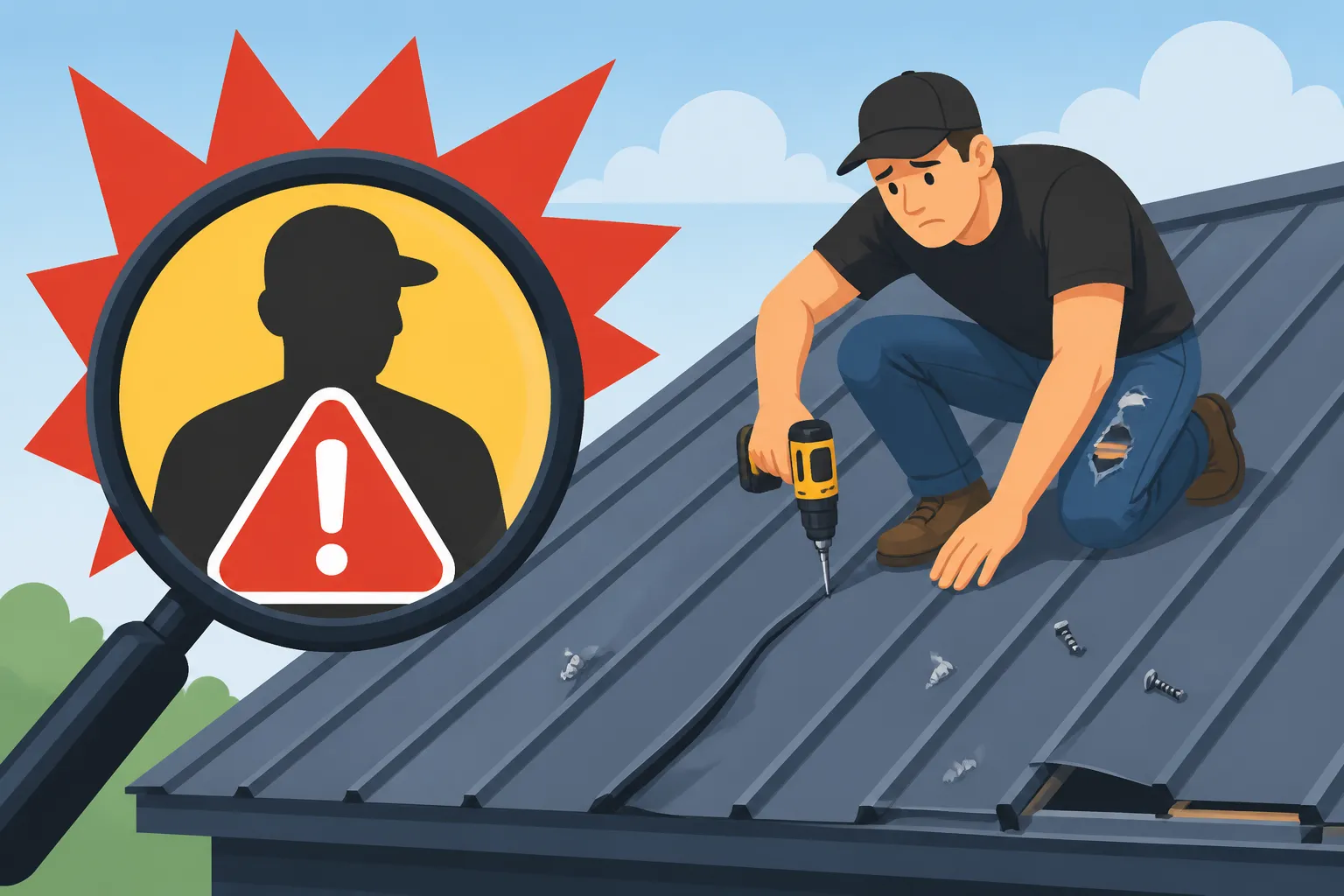
If you see a roofer bring out a standard circular saw with a plywood blade or an angle grinder to cut your metal panels, stop them immediately. High-speed heat from a grinder "burns" the factory finish off the edge of the metal, inviting rust to start from day one. A qualified professional uses specialized tools like nibblers, electric shears, or dedicated cold-cut saws that keep the edge cool and preserved.
Ask them directly what tools they use for cutting and bending. If they seem confused or dismissive, it's a sign they don't invest in the proper equipment for metal. They should also be talking about hand-seamers if you are looking at a standing seam profile. If they don't own these tools, they aren't a metal roofing company; they are a general roofing company trying to fake it.
Vague Answers About Expansion and Contraction
Metal is a dynamic material. Depending on where you live—whether it's the intense sun of Phoenix or the fluctuating temperatures of Denver—your roof panels will grow and shrink by significant margins throughout the day. An underqualified roofer will often pin the panels down too tightly, which leads to a phenomenon known as oil canning (wavy, buckled panels) or causes the fasteners to "back out" over time.
A true pro will talk to you about thermal movement. They will explain how a Standing Seam vs Corrugated Metal Roof handles expansion differently. For example, in a standing seam system, the panels are designed to "float" on clips, allowing them to slide back and forth as they heat up and cool down. If your contractor doesn't mention clips or thermal movement, they are likely planning to screw the panels directly into the deck, which is a recipe for disaster.
Pushing Metal Over Shingles Without Inspection
You will often hear that you can save money by Installing a Metal Roof Over Shingles. While this is technically possible and often allowed by code, an underqualified roofer will suggest it as a default to lower their labor costs without ever stepping foot in your attic. This is dangerous.
A qualified contractor will insist on inspecting your roof deck first. They need to know if there is existing rot, if the decking is thick enough to hold metal fasteners, and if the ventilation is adequate. If they are willing to slap a new metal roof over two layers of old shingles without a thorough inspection, they are prioritizing speed over your home's structural health.
| Warning Sign | Why It Matters | What a Pro Does Instead |
|---|---|---|
| Uses an Angle Grinder | Destroys the rust-proof coating on the edges. | Uses cold-cut shears or nibblers. |
| Doesn't mention underlayment | Standard felt will stick to metal and tear. | Installs high-temp synthetic underlayment. |
| No portfolio of metal jobs | They are likely "shingle guys" trying something new. | Shows 5-10 local metal projects from the last year. |
| Only uses 29-gauge metal | This is often too thin for residential homes. | Explains the benefits of 24 vs 26 Gauge Metal Roofing: Which Is Best?. |
| Demands 100% upfront | This is a classic "storm chaser" scam. | Follows a standard deposit and milestone schedule. |
Technical Deficiencies and Warning Signs
Once you get into the nitty-gritty of the quote, an underqualified roofer's lack of knowledge will start to show in the terminology they use—or fail to use. Metal roofing has a language of its own, and if they aren't speaking it fluently, you should be wary.
Misunderstanding Metal Gauges and Profiles
The "gauge" of the metal refers to its thickness, and it is counter-intuitive: the lower the number, the thicker the metal. I’ve heard underqualified contractors tell homeowners that 29-gauge is "plenty strong" for a house. In reality, 29-gauge is often reserved for agricultural buildings or sheds. For a residential home, you generally want a 24 or 26-gauge panel.
Beyond the thickness, they should understand the application of different profiles. They should be able to explain why a Standing Seam vs Stone-Coated Steel might be better for your specific roof pitch. If they only offer one type of panel and claim it works for every roof, they probably only know how to install that one type, regardless of whether it’s the right fit for your home's architecture.
Improper Fastening Techniques
If you are going with an exposed-fastener roof (like corrugated or R-panel), the way those screws are driven is the difference between a dry house and a moldy attic. An underqualified roofer will often over-drive the screws, crushing the neoprene washer until it cracks, or under-drive them, leaving a gap for water to seep through.
They also need to understand fastener spacing. If they are just "eyeballing" where the screws go, they aren't following the manufacturer’s specifications. This can lead to the roof vibrating or "humming" in high winds, and it could even lead to the panels blowing off entirely during a storm. A professional will often use a chalk line to ensure every single screw is perfectly aligned and driven to the exact torque required.
Vetting the Paperwork and Professionalism
A contractor’s "back office" often reflects their "on-site" quality. If the paperwork is messy, incomplete, or missing altogether, you can bet the roof installation will be too.
Missing or Incomplete Insurance and Licensing
This is the most common area where sub-par contractors cut costs. Metal roofing is dangerous work, and the insurance premiums for it are high. An underqualified roofer might have a general liability policy but lacks workers' compensation, or they might have an "asphalt-only" exclusion on their policy. If a worker falls off your roof and the contractor isn't properly insured, you could be held liable.
Don't just take their word for it. Ask for the certificates and call the insurance agency to verify that the policy is active and covers "metal roofing installation." You should also check Licensed vs Insured vs Bonded: What's the Difference to ensure you have the full trifecta of protection.
Lack of Manufacturer Certifications
High-end metal roofing manufacturers (like McElroy Metal or Sheffield Metals) don't just sell their best products to anyone with a truck. They have certification programs where they train installers on the exact specifications of their systems. If a contractor is one of the Manufacturer-Certified Metal Roof Installers Explained, it means they have been vetted by the people who actually make the material.
If your contractor says certifications don't matter or that "the manufacturer's instructions are just suggestions," run. Many of the best "lifetime" warranties are only valid if the roof is installed by a certified professional. By hiring an uncertified roofer, you are effectively throwing your warranty in the trash before the first panel is even laid.
The Disappearing Act and Payment Red Flags
Expert metal roofers are usually busy. If a contractor can "start tomorrow" and is pressuring you to sign a contract immediately, be careful. This often indicates they don't have a steady stream of work, which is rarely a good sign in the trades.
Furthermore, you should be wary of any contractor who asks for more than a 33% deposit upfront. While metal materials are expensive and a deposit is normal to secure the order, a request for 50% or more before a single panel arrives at your house is one of the biggest Metal Roofing Scams and Red Flags to Avoid. A reputable pro will have lines of credit with suppliers and won't need your entire project budget just to get the truck moving. Platforms like Modernize can help you connect with pros who follow ethical billing practices.
Questions to Ask a Metal Roofing Contractor Before You Hire
To truly separate the experts from the amateurs, you need to go beyond "how much does it cost?" and dive into the technical process. A qualified roofer will enjoy answering these questions because it shows you value quality. An underqualified one will get defensive or give one-word answers.
Portfolio and References
Don't just ask for photos; ask for addresses. Go look at a roof they installed three or four years ago. A new metal roof almost always looks good on day one, but how does it look after a few seasons of rain and sun? Look for signs of fading, rust at the edges, or panels that look wavy.
When calling references, ask:
- Did the crew clean up the metal shavings (swarf) every day? (Leftover shavings will rust and stain the new roof).
- How did the contractor handle any leaks that appeared after the first big rain?
- Was the final price consistent with the How to Read and Compare Metal Roof Quotes they provided?
The Equipment Question
Ask them how they plan to get the panels onto the roof. For a 2,000 sq. ft. house, panels can be long and heavy. If they plan to just man-handle them up a ladder, they are going to bend and crease the metal. A professional will often use a specialized lift or even a roll-former that creates the panels right on-site. This ensures the panels are perfectly straight and custom-fitted to your roof's specific dimensions.
Resources to Find Vetted Professionals
Sifting through hundreds of local listings is exhausting and often leads to decision fatigue. This is where modern technology can actually help you avoid a "cowboy" contractor. Using a service like Modernize allows you to bypass the trial-and-error phase by connecting you with contractors who have already been screened for the necessary credentials and experience levels.
Remember, the goal isn't just to find someone who can "put on a roof." It's to find a craftsman who treats your home like a piece of engineering. Metal roofing is a "buy once, cry once" investment. If you do it right the first time, you’ll never have to worry about it again. If you hire an underqualified roofer, you’ll be crying every time the clouds turn gray.
Taking the time to ask Questions to Ask a Metal Roofing Contractor Before You Hire and verifying their technical knowledge will save you thousands of dollars and years of stress. Don't be afraid to be the "difficult" customer who asks for insurance papers and tool lists. A real pro will respect your diligence because they know they have nothing to hide.
Metal Roofing Contractor Vetting Disclaimer
The information provided in this guide is for educational and informational purposes only. Metal roofing is a complex construction project that requires specialized skills, tools, and adherence to local building codes. While we strive to provide accurate advice on identifying qualified professionals, we recommend that homeowners conduct their own thorough due diligence, including verifying licenses, insurance, and references, before signing any contracts. Always consult with a licensed professional engineer or a certified roofing consultant for specific structural advice regarding your property. Use of third-party vetting services is at the homeowner's discretion and does not guarantee a specific project outcome.