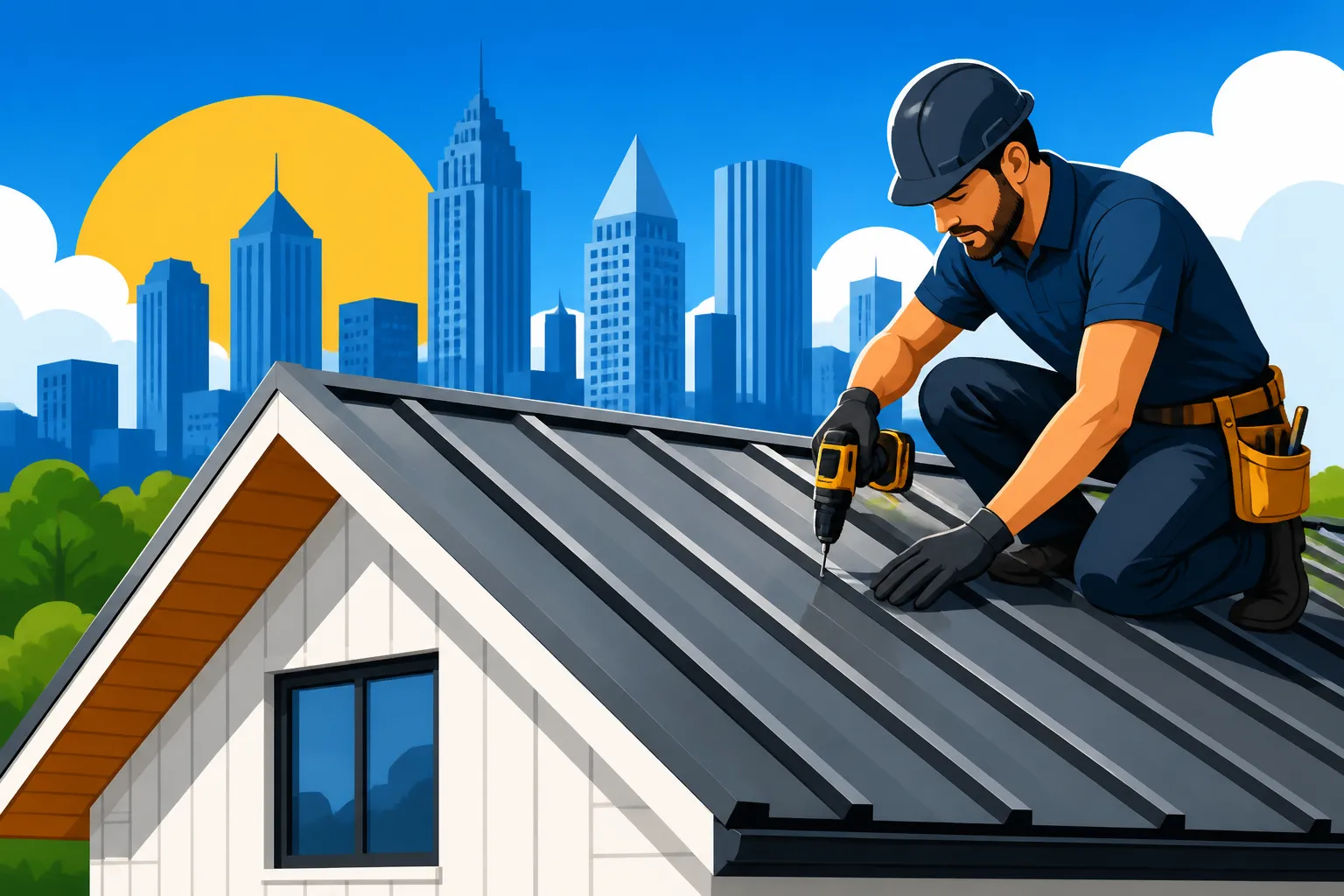
Metal Roofing Contractors in Atlanta
Trying to find a reliable metal roofing contractor in Atlanta often feels like trying to navigate the Downtown Connector at 5:00 PM on a Friday—confusing, stressful, and seemingly endless. This guide is designed to cut through the noise, providing you with a clear roadmap for vetting local professionals, understanding Georgia-specific codes, and securing the best value for your home.
The Reality of Hiring Metal Roofing Contractors in Atlanta
Living in the Atlanta metro area comes with a specific set of challenges that your roof has to handle every single day. We aren't just dealing with the standard "hot" weather; we are dealing with that thick, soul-crushing Georgia humidity and those sudden, violent afternoon thunderstorms that roll through in July. When you start looking for a contractor, you need someone who understands that an Atlanta roof isn't just a covering—it is a thermal barrier and a drainage system that has to work overtime.
One of the biggest frustrations I hear from homeowners in places like Marietta, Decatur, and Alpharetta is the "storm chaser" phenomenon. You know exactly what I’m talking about. A nasty hail storm rips through North Georgia, and suddenly your front door is a revolving door for guys in reflective vests promising a "free roof" from your insurance company. Many of these crews are from out of state and disappear the moment the last check clears. Finding a local contractor who actually has a physical office in the metro area and a reputation to protect is your first and most important hurdle.
Furthermore, the Atlanta heat creates what we call the "urban heat island effect." Because of all the asphalt and concrete in the city, the temperature in neighborhoods like Midtown or Buckhead can be significantly higher than in the surrounding rural areas. A high-quality metal roofing contractor will talk to you about "cool roof" technology and emissivity. If they are just trying to sell you the cheapest tin they have in the warehouse without discussing how it reflects solar radiant heat, they aren't the right partner for your Georgia home.
Navigating the Post-Storm Contractor Surge
When a major weather event hits the 404 or 770 area codes, the demand for roofing spikes instantly. This is when the most mistakes happen. Homeowners feel pressured to sign the first contract put in front of them because they are worried about leaks. I always tell people to take a breath. A quality metal roof is a 50-year investment. Rushing into a contract with a "tailgate contractor" who doesn't specialize in metal is a recipe for a leak three years down the road.
You need to look specifically for crews that have a dedicated metal division. Installing a standing seam system requires entirely different tools and skills than slapping down architectural shingles. If a contractor tells you "we do everything," ask to see their specific metal-forming equipment. Do they have a roll-former on-site, or are they ordering pre-cut panels that might not fit the unique architectural quirks of an older Craftsman home in Virginia-Highland? These are the nuances that separate the professionals from the amateurs. Metal Roofing Contractors Near Me: How to Find & Vet is a great resource to help you start this narrowing-down process.
Understanding the Humidity and Ventilation Factor
In Atlanta, the humidity isn't just a comfort issue; it’s a structural one. If a metal roof is installed without proper ventilation or the correct underlayment, you can end up with a "sweating" roof. This happens when warm, moist air from your home hits the underside of the cool metal, causing condensation that can rot your decking or lead to mold in your attic.
A veteran Atlanta contractor will spend a significant amount of time looking at your soffit vents and ridge vents. They will explain why a synthetic underlayment is often superior to traditional felt in our climate. If you're talking to a contractor and they haven't mentioned attic airflow once, they are missing half the job. You want a system that breathes as well as it protects.
How to Vet Local Atlanta Installers
The vetting process in Georgia is a bit unique because of our state’s licensing laws. It is surprisingly easy for someone to claim they are a "roofer" without much oversight, which means the burden of proof is on you, the homeowner. You aren't just looking for someone who can do the work; you’re looking for someone who is legally and financially responsible if something goes wrong on your property.
I always suggest using platforms like Modernize to get a baseline of pre-screened professionals. It saves you the headache of cold-calling twenty different companies and getting ten busy signals. When you have your shortlist, your first question should always be about their Georgia Residential Basic or Residential-Light Commercial license. While Georgia doesn't have a specific "roofing license" per se, a reputable contractor will often hold a General Contractor license to prove they understand the structural integrity of the entire building.
Licensing and Insurance Requirements in Georgia
In the state of Georgia, you want to see three things: a current business license, a certificate of general liability insurance, and worker's compensation insurance. That last one is huge. If a worker falls off your two-story home in Sandy Springs and the contractor doesn't have worker's comp, that injured worker could technically come after your homeowner's insurance.
Don't just take their word for it. Ask them to have their insurance agent email you the certificate directly. It sounds like an extra step, but a real professional will have this done in ten minutes. For more specific details on what to look for, check out What License Does a Roofer Need in Georgia. This will give you the peace of mind that you aren't hiring a "chuck-in-a-truck" who might disappear if the job goes sideways.
Questions to Ask Before Signing an Atlanta Roofing Contract
Before any money changes hands, you need to sit down with the project manager and get granular. I’ve seen too many contracts that are basically one page of "install new roof" with a price at the bottom. That is not a contract; that is a suggestion. Your contract should detail the gauge of the metal, the type of paint finish (you want Kynar 500 or PVDF for the Atlanta sun), and exactly how they plan to handle the "tear-off."
Here are a few specific questions to ask:
- Are you an in-house crew or do you use subcontractors? In Atlanta, many big companies sub out the labor to crews they’ve never met. You want to know who is actually on your roof.
- How do you handle the "flashing" around chimneys and valleys? This is where 90% of metal roof leaks happen.
- What is your plan for the old shingles? In the metro area, disposal fees can be high, and you don't want a pile of debris sitting in your driveway for two weeks.
- Questions to Ask a Metal Roofing Contractor Before You Hire will give you a full list to keep on your clipboard during the estimate.
Choosing the Right Metal System for North Georgia
The "best" roof for a house in Smyrna might be different than the best roof for a modern farmhouse in Milton. Atlanta's diverse architecture means you have options, but those options come with different price points and performance levels. Most homeowners I talk to are torn between the classic look of standing seam and the more budget-friendly corrugated panels.
In our urban environment, I almost always lean toward What Is a Standing Seam Metal Roof? for residential properties. The reason is simple: hidden fasteners. With standing seam, the screws are tucked away under the metal. In the intense heat of a Georgia summer, metal expands and contracts significantly. Exposed fasteners (the screws you can see) can eventually back out or the rubber washers can dry rot, leading to tiny leaks. Standing seam eliminates that vulnerability entirely.
Standing Seam vs. Exposed Fasteners in the Metro Area
If you are looking at a commercial building or a detached garage in a less dense part of Gwinnett County, an exposed fastener system like an R-panel or corrugated roof might make sense. It’s significantly cheaper. However, for your primary residence, the long-term ROI usually favors the seam. You can compare the differences in-depth at Standing Seam vs Corrugated Metal Roof.
Think about the canopy of trees we have in Atlanta—we aren't called "The City in a Forest" for nothing. All those pine needles and oak leaves can get trapped in the ribs of a corrugated roof, holding moisture against the fasteners. A smooth standing seam roof allows that debris to slide right off into your gutters, keeping the system clean and dry.
Color Choice and the Urban Heat Island Effect
This is where you can actually save money on your monthly Georgia Power bill. The color of your roof matters more than you think. A dark bronze or black roof looks stunning on a modern home, but it’s going to soak up heat like a cast-iron skillet.
If you choose a lighter color—like a slate gray, silver, or even a "cool" white—you can reduce your attic temperature by up to 30 degrees. Most modern metal roofing manufacturers use pigments that reflect infrared light. When you're talking to a contractor, ask for the SRI (Solar Reflectance Index) of the colors you’re considering. Best Metal Roof for Georgia Weather dives deeper into which materials and colors withstand our specific climate the best.
| Metal Roof Type | Estimated Life Expectancy | Wind Rating | Best Application in Atlanta |
|---|---|---|---|
| Standing Seam (Steel) | 50+ Years | Up to 140 MPH | Primary Residences, Buckhead/Midtown |
| Aluminum Panels | 50+ Years | High | Coastal-style homes or high-moisture areas |
| Stone-Coated Steel | 40-50 Years | Very High | HOA neighborhoods requiring a "shingle" look |
| Corrugated (Exposed) | 20-30 Years | Moderate | Garages, Barns, Budget-conscious rentals |
Cost Factors and Estimating Your Project in the Metro Area
Let's talk about the elephant in the room: the price. A metal roof in Atlanta is going to cost you more upfront than a standard shingle roof. There is no way around that. However, when you factor in that you won't be replacing it in 15 years when the next big hail storm hits, the math starts to look very different.
Prices in the Atlanta market vary based on the complexity of your roof. If you have a simple ranch-style home in Sandy Springs, your labor costs will be much lower than if you have a steep, multi-gabled Victorian in Grant Park. Generally, you can expect to pay anywhere from $12 to $18 per square foot for a high-end standing seam installation. You can find more specific regional data at Metal Roof Cost in Georgia.
Finding Reliable Estimates Through Platforms
One of the most frustrating parts of this process is getting three different quotes that are $10,000 apart. Why does that happen? Often, it’s because one contractor is quoting a 29-gauge thin metal while the other is quoting a 24-gauge structural grade. Or one is including the "tear-off" and disposal of your old shingles while the other is planning to roof right over them.
Using a service like Modernize can help standardize this. They connect you with contractors who are used to providing detailed, transparent bids. When you have multiple professional estimates in front of you, you can see exactly where the money is going. Always ask for a "line-item" quote. If they just give you a lump sum, ask them to break out the material costs from the labor costs. This transparency is key to avoiding the "hidden costs" that often pop up halfway through a job. Check out How to Get a Metal Roof Estimate for a guide on how to read those bid sheets like a pro.
The Importance of Experience
Finally, don't be afraid to ask, "How Many Metal Roofs Should a Contractor Have Installed?" You don't want to be the "guinea pig" for a company that is just trying to break into the metal market. I always tell my friends to ask for three addresses of local Atlanta homes the contractor finished at least two years ago. Drive by those houses. Do the panels look straight? Is there any "oil canning" (the wavy look that happens when metal is installed too tight)?
If a contractor has been working in the Atlanta area for a long time, they should have a portfolio of work in neighborhoods you recognize. Whether it’s a sleek silver roof on a modern infill home in Old Fourth Ward or a classic copper-colored roof in Druid Hills, seeing their work in person is the ultimate vetting tool. Investing in a metal roof is a big decision, but with the right Atlanta-based partner, it’s the last roof you’ll ever have to buy for your home.
Disclaimer
The information provided in this guide is for informational purposes only and does not constitute professional construction, legal, or financial advice. Roofing costs, building codes, and contractor availability in Atlanta are subject to change. Always verify licenses and insurance with the Georgia Secretary of State and local municipal offices before hiring any contractor.