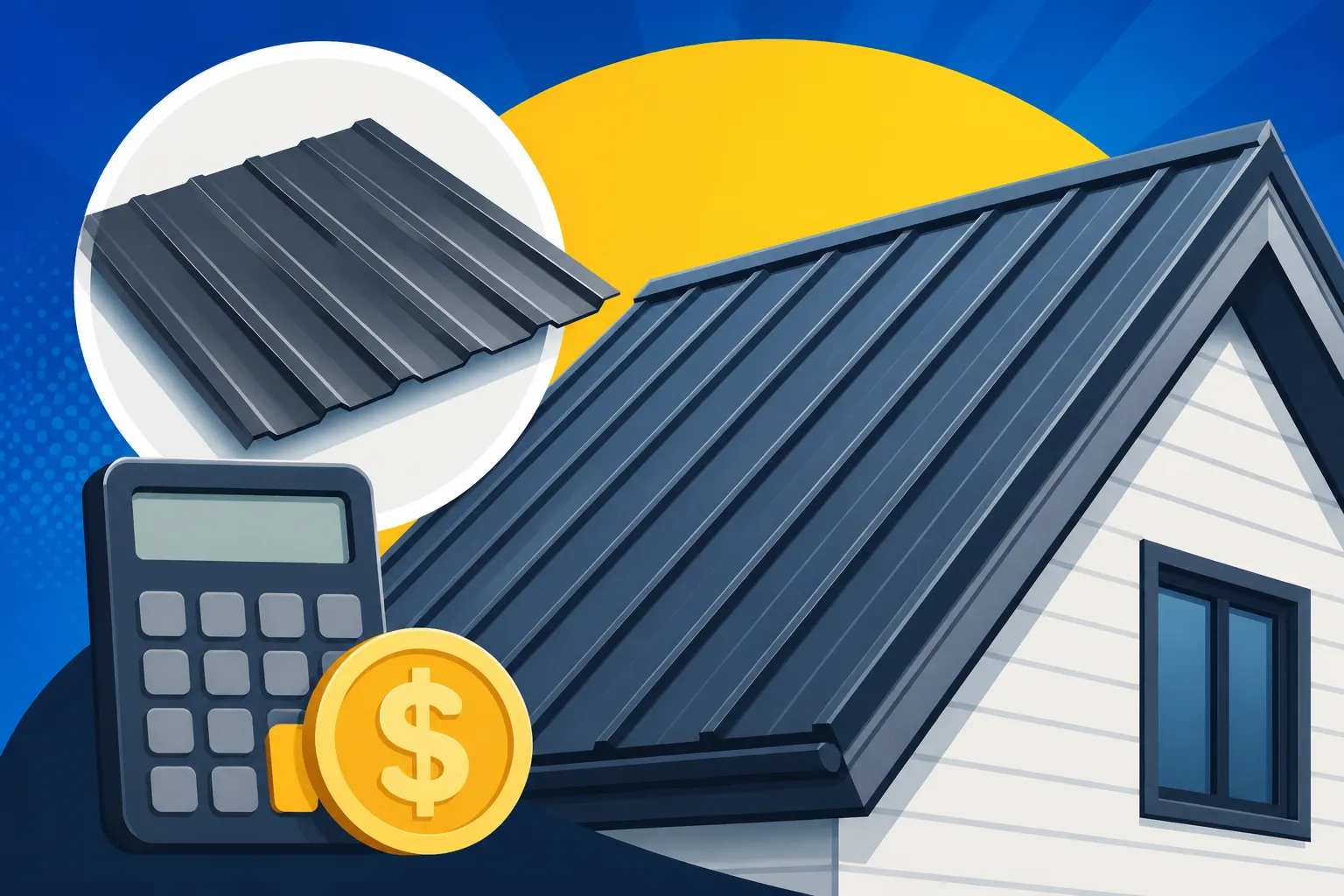
How Much Does a 26 Gauge Metal Roof Cost
Many homeowners find themselves caught in the "gauge gap," staring at roofing quotes and wondering if they are paying for too much or settling for too little. You want a roof that won't dent the moment a stray branch or heavy hail hits, yet you don't want to blow your entire renovation budget on industrial-grade materials meant for a skyscraper. This guide breaks down the actual investment required for a 26 gauge metal roof, helping you navigate the pricing maze with confidence.
Understanding the Real-World Cost of a 26 Gauge Metal Roof
When we talk about the cost of a 26 gauge metal roof, we are looking at a middle-of-the-road thickness that has become the darling of the residential world. On average, you can expect to pay anywhere from $4.50 to $12.00 per square foot for a fully installed 26 gauge system. This wide range exists because "metal roofing" isn't just one product; it's a category that includes everything from basic corrugated panels to high-end standing seam systems.
The material itself for 26 gauge steel typically falls between $1.50 and $4.00 per square foot. If you are looking at a more specialized material like aluminum in a similar thickness, those prices will naturally climb. Most homeowners find that the Metal Roof Cost Per Square Foot for 26 gauge offers the best balance between initial out-of-pocket expense and long-term durability. It is thick enough to resist the "oil canning" (that wavy, wrinkled look) often seen in thinner metals, but it is light enough that it doesn't require specialized structural reinforcement for most homes.
Labor is the other side of the coin. Installing a metal roof is a craft, not just a manual labor job. Depending on where you live—whether you are looking at Metal Roof Cost in Texas or the higher labor markets of the Northeast—the installation fee can range from $3.00 to $8.00 per square foot. The complexity of your roof, such as the number of valleys, dormers, and the steepness of the pitch, will play a massive role in how much time the crew spends on your rafters.
Why 26 Gauge Is the Standard for Residential Roofing
If you’ve been doing your homework, you’ve likely seen 24 gauge and 29 gauge mentioned alongside 26 gauge. In the world of metal, the higher the number, the thinner the material. Think of 29 gauge as the "economy" option, often used for barns or sheds, while 24 gauge is the "heavy-duty" commercial standard. This leaves 26 gauge sitting comfortably in the middle, providing enough "meat" to handle residential life without the excessive weight and cost of commercial-grade steel.
One of the biggest questions people ask is: Is 26 Gauge Metal Roof Good Enough for a House? The answer is a resounding yes. It provides significantly better impact resistance than 29 gauge. If a heavy hail storm rolls through, a 29 gauge roof might look like the surface of the moon afterward, whereas a 26 gauge roof is far more likely to emerge unscathed. Furthermore, 26 gauge is thick enough to support hidden fastener systems, which are generally considered the gold standard for residential aesthetics and leak prevention.
When comparing the 24 vs 26 Gauge Metal Roof: Cost Difference, you are usually looking at a 15% to 25% price jump to go to the thicker 24 gauge. For most suburban homes, that extra thickness doesn't actually provide a measurable benefit in lifespan or protection, making the 26 gauge the "Goldilocks" choice for the savvy homeowner. It’s tough, it looks great, and it won't break the bank.
| Feature | 29 Gauge | 26 Gauge | 24 Gauge |
|---|---|---|---|
| Thickness (Inches) | ~0.014 | ~0.018 | ~0.024 |
| Best Use | Barns, Sheds, Outbuildings | Standard Residential Homes | Commercial, High-Wind Coastal |
| Cost per Sq. Ft (Material) | $1.00 – $2.00 | $1.50 – $4.00 | $3.50 – $6.00 |
| Resistance to Oil Canning | Low | Moderate/High | High |
| Typical Fastener Type | Exposed | Exposed or Hidden | Hidden (Standing Seam) |
Hidden Factors That Impact Your Final Quote
The "sticker price" of the metal panels is rarely what shows up on the final invoice. To get an accurate picture of the Metal Roof Cost for a 2,000 Sq Ft House, you have to account for the components that keep the water out. Trim, flashing, and boots are the unsung heroes of your roof. For a 26 gauge roof, these accessories need to be made of the same gauge and material to ensure they age at the same rate and don't cause galvanic corrosion.
Underlayment is another critical factor. You cannot simply slap metal over old wood and call it a day. High-quality synthetic underlayment is essential for 26 gauge roofs to provide a secondary water barrier and to act as a thermal break. You should check the Metal Roof Underlayment Cost early in your planning phase, as this can add several hundred or even a few thousand dollars to a large project.
Then there is the issue of the old roof. While some people choose to save money by Installing a Metal Roof Over Shingles, most experts recommend a full tear-off. This allows the contractor to inspect the decking for rot or soft spots. If you go this route, make sure your estimate includes the Metal Roof Cost With Tear-Off Included, as disposal fees for old asphalt shingles have risen significantly in recent years due to environmental regulations.
Regional Pricing and Labor Variables
Where you live matters just as much as what you buy. A homeowner looking at Metal Roof Cost in Florida will face different challenges than someone in the rural Midwest. In coastal areas, building codes often require specific fastening patterns and even thicker gauges to withstand hurricane-force winds. This can drive up the labor cost significantly because the installation becomes much more technical and time-consuming.
In contrast, if you are looking for Cheapest Metal Roof Options in a region with mild weather, you might find that 26 gauge corrugated panels with exposed fasteners are incredibly affordable. These systems are faster to install, which slashes the Metal Roof Labor Cost. However, be aware that exposed fastener systems require more maintenance over time, as the rubber washers on the screws can degrade after 10–15 years of sun exposure.
It is also worth considering the long-term ROI. While the How Much Does a 26 Gauge Metal Roof Cost question focuses on the "now," the real value is in the "later." A well-installed 26 gauge roof can easily last 40 to 60 years. When you compare that to an asphalt roof that might need replacing every 15–20 years, the metal roof often pays for itself by the time you would have been buying your second or third shingle roof.
Comparing Panel Profiles in 26 Gauge
Not all 26 gauge roofs are created equal in terms of appearance. The "profile" or shape of the panel changes both the cost and the performance. The two most common profiles for 26 gauge are Standing Seam and Ribbed (or Corrugated) panels.
The Standing Seam Metal Roof Cost is higher because the panels interlock, hiding the fasteners underneath the metal. This creates a sleek, modern look and eliminates thousands of potential leak points. Because 26 gauge steel is stiff enough to hold its shape well, it is a perfect candidate for standing seam. On the other hand, How Much Does a Ribbed Panel Metal Roof Cost? Usually significantly less. Ribbed panels have exposed screws, which simplifies the manufacturing and installation process, bringing the price down but increasing the long-term maintenance needs.
If you are trying to stay within a strict budget, you might also look at How Much Does a 29 Gauge Metal Roof Cost or How Much Does a 24 Gauge Metal Roof Cost. You'll quickly see that 26 gauge is the point where you stop seeing diminishing returns on durability and start seeing the best value for your dollar. It’s heavy enough to feel substantial and quiet during rain, but not so heavy that it requires a commercial crane for delivery.
Making the Final Decision for Your Home
Choosing the right roof feels like a high-stakes game, but 26 gauge is rarely a "wrong" answer for a residential property. It offers the structural integrity needed to handle snow loads in the North and the reflectivity needed to bounce away the heat in the South. Before you sign a contract, ask your roofer specifically about the brand of steel they use and the paint finish. A 26 gauge panel with a high-quality Kynar 500 or PVDF coating will look new for decades, whereas a cheaper polyester finish might fade in just seven or eight years.
Finally, remember that the best materials in the world won't save a bad installation. Always vet your contractors and ask to see examples of their previous 26 gauge installs. A specialist who knows how to handle 26 gauge steel will ensure that the panels are hemmed correctly at the eaves and that the ridge vents are integrated seamlessly. This attention to detail is what transforms a simple "metal roof" into a lifetime protection system for your home and family.
Disclaimer
The information provided in this guide is for educational and informational purposes only. Roofing costs can vary significantly based on local labor rates, material availability, roof complexity, and specific regional building codes. Always obtain multiple quotes from licensed and insured professional roofing contractors in your area before making a financial commitment. We do not guarantee the accuracy of pricing as market conditions fluctuate.