Stone-Coated Steel vs Standing Seam Cost
Choosing a new roof for your home can feel like navigating a maze, especially when you're weighing options like stone-coated steel against standing seam metal roofing. Both are fantastic choices for durability and aesthetics, but their costs and the value they bring can vary significantly, leaving many homeowners scratching their heads about which one offers the best bang for their buck. This comprehensive guide is here to untangle the complexities of Stone-Coated Steel vs Standing Seam Cost, helping you understand the real financial implications of each beautiful, long-lasting roofing solution.
Understanding Stone-Coated Steel Roofing Costs
Stone-coated steel roofs are a popular choice for homeowners who want the aesthetic appeal of traditional roofing materials like tile, shake, or shingle, combined with the incredible durability and longevity of steel. But how does that translate into the initial investment? It’s not just about the panels themselves; there's a whole ecosystem of costs to consider.
Material Costs for Stone-Coated Steel
The material cost for stone-coated steel roofing panels typically falls in the mid-to-high range for metal roofing options. These aren't your typical corrugated sheets; they are precision-formed steel panels, often zinc-aluminum alloy coated (Galvalume), topped with an acrylic-bonded stone chip finish. This multi-layered construction is what gives them their unique look and exceptional resilience.
You can expect to pay anywhere from $4.00 to $10.00 per square foot for the materials alone, before installation. This range isn't arbitrary; it depends heavily on the specific profile you choose. For instance, a basic metal shingle profile might be on the lower end, while a more intricate tile or barrel-vaulted profile, designed to mimic high-end clay tiles, will naturally cost more due to the complexity of manufacturing. The quality of the stone coating and the underlying steel gauge also play a role. Premium coatings that resist fading and chipping for longer, or a heavier gauge steel for enhanced impact resistance, will push the per-square-foot price higher. Keep in mind that these costs are for the panels themselves, not including all the necessary trim, flashing, and underlayment materials that are equally crucial to a successful installation.
Installation Labor for Stone-Coated Steel
The installation of a stone-coated steel roof is a specialized craft, and the labor costs reflect this expertise. Unlike a simple exposed fastener metal roof, stone-coated panels require meticulous care, precise cutting, and often a multi-layered fastening system to ensure the interlocking panels form a watertight and aesthetically pleasing surface. This isn't a job for just any roofer; it demands contractors experienced with the specific product lines and installation techniques.
Labor costs for stone-coated steel can range from $4.00 to $8.00 per square foot. The complexity of the roof design, including multiple valleys, hips, dormers, and varying pitches, significantly impacts the labor hours required. A simple gable roof will be far less labor-intensive than a sprawling, multi-faceted roof with numerous architectural features. Furthermore, specialized tools and training are often necessary, contributing to the higher cost. Installers need to be skilled in handling the panels without damaging the stone finish, ensuring proper overlap and fastening to prevent leaks, and integrating specialized flashing around penetrations like chimneys and vents. This meticulous process ensures the roof performs as designed for its impressive lifespan.
Additional Cost Factors for Stone-Coated Steel
Beyond the basic materials and labor, several other elements contribute to the overall Stone-Coated Steel Roof Cost. These are often overlooked in initial estimates but are absolutely critical for a complete and durable roofing system.
- Underlayment: Every metal roof needs a robust underlayment to protect the deck and provide a secondary water barrier. While felt underlayment is an option, many stone-coated steel manufacturers recommend or even require high-quality synthetic underlayments or self-adhering ice and water shield products, particularly in regions prone to ice dams or heavy rain. These premium underlayments offer superior protection and longevity, but they also come with a higher price tag. You can learn more about this by checking out our guide on Metal Roof Underlayment Cost.
- Trim and Flashing: These components are essential for directing water away from vulnerable areas and giving the roof a finished look. Stone-coated steel roofs often require specialized trim and flashing pieces that match the panel profiles, ensuring a seamless and weather-tight installation. This includes ridge caps, rake trim, eave trim, valley flashing, and wall flashing. The complexity of your roofline will dictate the quantity and types of trim needed, adding to the material and labor costs. Our article on Metal Roof Trim and Flashing Cost offers a deeper dive into these expenses.
- Roof Complexity and Pitch: A roof with a steep pitch, multiple peaks, valleys, or dormers is inherently more challenging and time-consuming to work on. This means higher labor costs as installers need more safety equipment, take longer to move materials, and require more intricate cutting and fitting of panels. The overall complexity significantly impacts the total What Affects Metal Roof Cost: Gauge, Pitch, Complexity & Tear-Off.
- Old Roof Tear-Off and Disposal: If you're replacing an existing roof, the old material needs to be removed and disposed of. This tear-off process adds labor, dumpster rental fees, and disposal charges. While some metal roofs can be installed over existing shingles, stone-coated steel often requires a clean, flat deck, making tear-off a common necessity.
Delving into Standing Seam Metal Roofing Costs
Standing seam metal roofing is recognized for its sleek, modern aesthetic and unparalleled performance. It’s often considered the gold standard in residential metal roofing due to its concealed fasteners and robust design. But what does this level of quality entail in terms of cost?
Material Costs for Standing Seam
The materials for standing seam roofing represent a significant portion of the total project cost, usually ranging from $5.00 to $14.00 per square foot. This wide range is a direct reflection of the options available and the custom nature of these panels. Standing seam panels are typically made from steel (often Galvalume, a zinc-aluminum alloy coated steel), aluminum, or even more exotic metals like copper or zinc. The choice of metal has a massive impact on the price; steel is the most common and cost-effective, while copper roofing will dramatically increase the material cost. For a detailed breakdown, explore our guide on Metal Roof Cost by Material: Steel vs Aluminum vs Copper vs Zinc.
Another crucial factor is the gauge of the steel or aluminum. Gauge refers to the thickness of the metal; a lower gauge number means thicker, more durable metal. For residential applications, 24-gauge steel is often preferred for its superior strength and impact resistance, while 26-gauge is a common, slightly less expensive option. Thicker gauges will cost more per square foot. The paint finish also plays a role. High-performance PVDF (Kynar 500 or Hylar 5000) coatings offer excellent fade and chalk resistance, extending the aesthetic life of your roof, but they are more expensive than SMP (Silicone Modified Polyester) coatings. These details contribute to the varying Standing Seam Metal Roof Cost.
Installation Labor for Standing Seam
Installing a standing seam metal roof is a highly specialized skill, often commanding higher labor rates than other roofing types. The labor cost typically ranges from $5.00 to $10.00 per square foot, making it a substantial part of your overall Metal Roof Labor Cost. Why the higher price tag? It comes down to precision, expertise, and specialized equipment.
Standing seam panels are usually custom-fabricated to the exact lengths required for your roof, either in a shop or directly on-site with a portable roll-forming machine. This customization minimizes seams and potential leak points. The panels are then carefully hoisted into place and secured with concealed clips that are attached to the roof deck. The "standing seams" themselves are then mechanically seamed or snapped together, creating a watertight lock that hides all fasteners from view. This process requires trained technicians who understand how to handle large panels, ensure proper alignment, and operate the seaming tools correctly. Any misstep can compromise the integrity of the roof. The complexity of ensuring proper expansion and contraction with temperature changes also demands experienced installers.
Additional Cost Factors for Standing Seam
Just like with stone-coated steel, there are several other elements that contribute to the final price tag of a standing seam metal roof. These aren't just "extras"; they are integral components of a high-performance system.
- Clips and Fasteners: Unlike exposed fastener systems, standing seam roofs rely on specialized clips that attach the panels to the roof deck. These clips allow for thermal expansion and contraction of the metal, preventing buckling and extending the roof's lifespan. While small, the cost of these clips and the associated fasteners adds up across the entire roof, typically factored into the overall material and installation quotes.
- Custom Flashing and Trim: Standing seam roofs require meticulously fabricated flashing around chimneys, skylights, valleys, and wall junctures. These are often custom-bent pieces of metal that match the roof panels, ensuring a perfect seal and a clean, integrated look. The precise nature of this work contributes to higher material and labor costs for these finishing touches.
- Roof Pitch and Design: While standing seam roofs can accommodate a wide range of pitches, very low-slope roofs may require specific panel designs or additional sealing techniques, potentially increasing costs. Conversely, extremely steep roofs present safety challenges and increase labor time, influencing the final price. Every angle, every dormer, every unique architectural feature means more complex measuring, cutting, and seaming, all of which contribute to the total Metal Roof Cost: Complete 2026 Guide.
- Tear-Off of Existing Roof: As with stone-coated steel, if an old roof needs to be removed, that's an additional cost for labor and disposal. While it's sometimes possible to install standing seam over existing shingles, most reputable contractors prefer a clean deck to ensure the best possible installation and warranty adherence.
Direct Cost Comparison: Stone-Coated Steel vs. Standing Seam
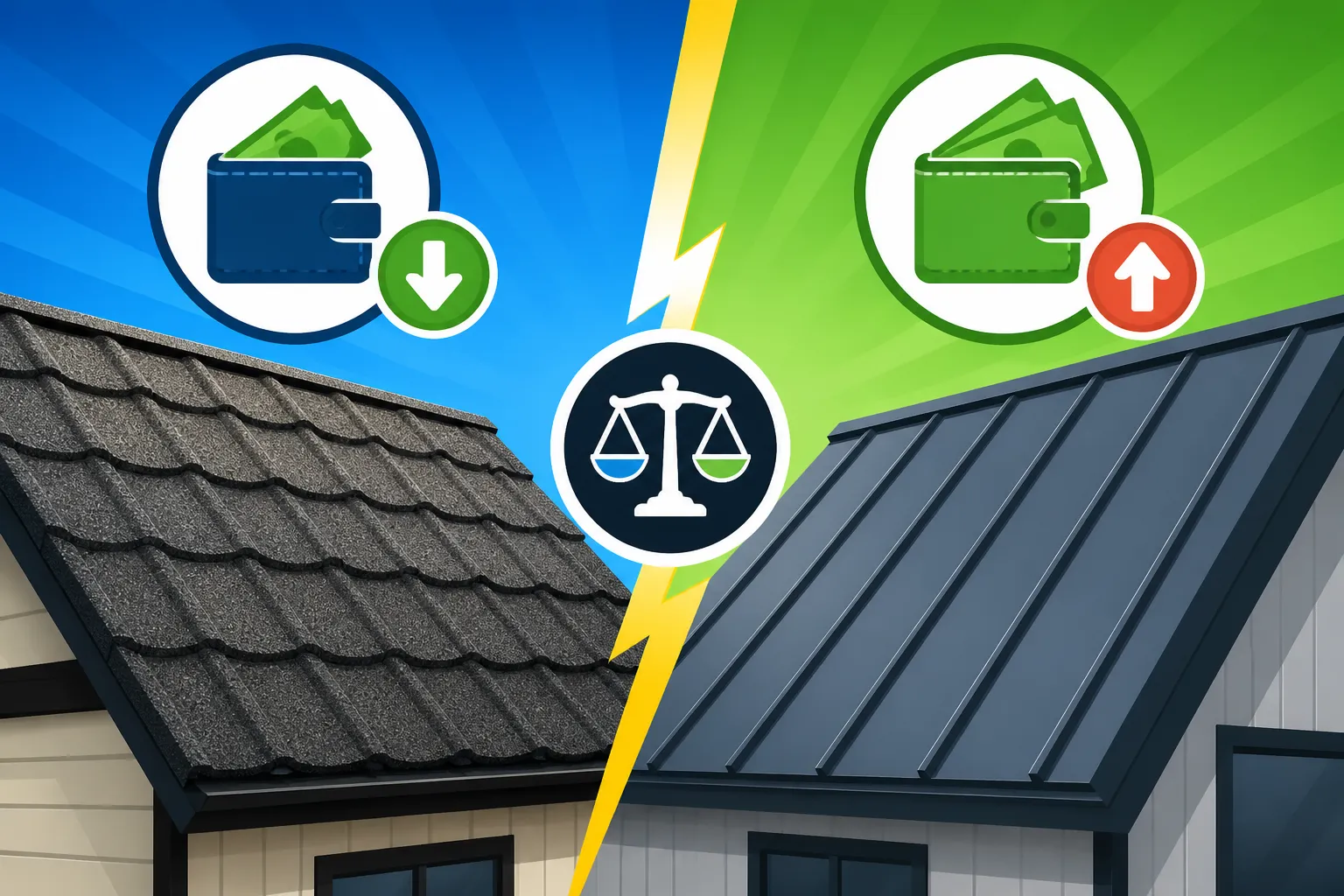
Now, let's get down to the brass tacks: how do these two fantastic metal roofing options stack up against each other financially? It’s not always as simple as comparing the initial sticker price, as long-term value plays a huge role.
Initial Investment
When you look at the upfront costs, stone-coated steel and standing seam metal roofs often fall into a similar price bracket, typically ranging from $8.00 to $18.00 per square foot, fully installed. However, there are nuances that can tip the scales one way or the other.
- Stone-Coated Steel: Generally, stone-coated steel can start at the lower end of this combined range, particularly for simpler shingle or shake profiles using standard gauge materials. The manufacturing process for the panels themselves is often more streamlined than custom-rolled standing seam panels. For a 2,000 sq ft house, you might expect to pay anywhere from $16,000 to $36,000 for a stone-coated steel roof.
- Standing Seam: Standing seam often lands in the middle to higher end of the range. While basic 26-gauge steel standing seam can be comparable to stone-coated steel, opting for thicker 24-gauge panels, premium PVDF coatings, or specialized metals like aluminum can quickly push the price upwards. For the same 2,000 sq ft house, a standing seam roof could cost anywhere from $18,000 to $48,000, and significantly more for exotic metals.
It's important to remember that these are broad averages. The specific contractor, your geographic location (e.g., Metal Roof Cost in Florida versus a less hurricane-prone area), and the current market prices for materials can cause these figures to fluctuate. Getting multiple, detailed quotes is essential to truly compare apples to apples. If you're wondering how to do that, our guide on How to Read and Compare Metal Roof Quotes can be a real lifesaver.
Long-Term Value and ROI
While the initial cost is important, thinking purely about the upfront expense when considering a roof that could last 50+ years is a common mistake. The true value of a metal roof, especially standing seam or stone-coated steel, shines in its long-term benefits and return on investment (ROI). Is a Metal Roof Worth It? ROI, Resale & Payback? Absolutely!
- Durability and Lifespan: Both stone-coated steel and standing seam roofs boast impressive lifespans, often 40-70 years. This dramatically outperforms traditional asphalt shingles, which typically last 15-30 years. This longevity means fewer roof replacements over your homeownership, saving you tens of thousands of dollars in future costs.
- Stone-Coated Steel: These roofs are incredibly resistant to hail, wind, and fire. The stone coating provides an extra layer of protection, and the interlocking panels prevent blow-offs. They maintain their aesthetic appeal for decades with minimal fading.
- Standing Seam: Known for exceptional wind uplift resistance and watertight seams. The concealed fasteners prevent common leak points, and the high-quality paint finishes ensure color retention. This profile is particularly good at shedding snow and ice.
- Maintenance: Both options require very little maintenance compared to other roofing materials. Occasional cleaning of debris and checking for any potential issues after severe storms is usually sufficient. This translates to lower ongoing costs.
- Energy Efficiency: Metal roofs are highly reflective, which can significantly reduce your home's cooling costs in warmer climates. Both stone-coated and standing seam options can contribute to a more energy-efficient home, sometimes even qualifying for Metal Roof Insurance Savings & Discounts.
- Resale Value: A metal roof is a significant upgrade that can boost your home's curb appeal and resale value. Potential buyers often appreciate the durability, longevity, and low maintenance associated with a metal roof, viewing it as a long-term asset. Studies suggest a metal roof can recoup a high percentage of its initial cost upon sale, making it a smart investment.
Factors Influencing Your Final Decision
Beyond the raw numbers, several qualitative factors should guide your decision between stone-coated steel and standing seam.
- Aesthetics: This is often a primary driver. Do you prefer the traditional look of shingles, shake, or tile that stone-coated steel so perfectly mimics? Or are you drawn to the sleek, clean lines and modern appeal of standing seam? The architectural style of your home might lend itself better to one over the other.
- Roof Pitch: While both can be installed on various pitches, standing seam often performs exceptionally well on low-slope roofs where water shedding is critical due to its continuous panels and watertight seams. Stone-coated steel is versatile but typically requires a minimum pitch, similar to traditional shingles or tiles, for optimal drainage.
- Climate: In heavy hail zones, both are excellent, but the Class 4 impact resistance often associated with metal roofs is a huge benefit. In areas with heavy snow, standing seam's smooth surface allows snow to slide off more easily (though snow guards might be needed for safety over pathways).
- Contractor Expertise: The quality of the installation is paramount for both roofing types. Always choose a contractor with proven experience in installing your chosen material. Look for Manufacturer-Certified Metal Roof Installers Explained to ensure the warranty remains valid.
Here’s a quick overview of the typical cost breakdown:
| Cost Factor | Stone-Coated Steel (per sq ft) | Standing Seam (per sq ft) | Notes |
|---|---|---|---|
| Material Costs | $4.00 – $10.00 | $5.00 – $14.00 | Varies by profile, gauge, coating quality, and metal type (e.g., steel vs. aluminum vs. copper) |
| Installation Labor | $4.00 – $8.00 | $5.00 – $10.00 | Varies by roof complexity, pitch, and local labor rates. Standing seam often requires more specialized skills. |
| Total Installed Cost | $8.00 – $18.00 | $10.00 – $24.00 | Includes panels, underlayment, trim, flashing, and labor. Excludes tear-off. |
| Tear-Off (Optional) | $1.00 – $3.00 | $1.00 – $3.00 | Additional cost if existing roof needs removal. |
Note: These are average ranges and can fluctuate based on location, specific materials chosen, and contractor rates. Always obtain detailed quotes for your specific project.
Making the Right Choice for Your Home
Deciding between stone-coated steel and standing seam metal roofing is a significant investment, and it’s one that will impact your home's protection, aesthetics, and value for decades to come. There’s no single "better" option, only the one that best aligns with your priorities, budget, and home's architectural style.
If your heart is set on maintaining a traditional look – perhaps a classic Spanish tile, rustic wood shake, or a dimensional shingle aesthetic – but you desire the unmatched durability of steel, then stone-coated steel is a superb choice. It offers incredible performance, excellent hail resistance, and a wide array of styles that can seamlessly blend with almost any neighborhood or home design. You get the best of both worlds: timeless appeal and modern strength. Just be sure to work with an installer who truly understands the nuances of this panel system, as proper installation is key to its long-term success.
On the other hand, if you're drawn to a sleek, contemporary, and incredibly robust roofing system, standing seam metal is likely your ideal. Its clean lines and hidden fasteners provide a minimalist elegance that's perfect for modern homes or for those looking to make a bold architectural statement. The continuous panels and mechanically seamed joints offer superior weather protection, making it a top performer in regions with heavy winds or snow. While the initial investment might sometimes be slightly higher, its virtually maintenance-free nature and extreme longevity often make it a wise financial decision over the long haul. Understanding its Metal Roof Cost vs Lifespan Value often highlights its true economic benefits.
Ultimately, whether you lean towards the textured beauty of stone-coated steel or the streamlined efficiency of standing seam, both options represent a premium, high-performance roofing solution. Take your time, weigh the pros and cons for your specific situation, gather detailed bids from reputable local contractors, and don't hesitate to ask questions about the Metal Roof Warranties: Workmanship vs Manufacturer. Your perfect roof is out there, waiting to crown your home for decades to come.
Disclaimer
Please remember that all cost estimates provided in this guide are averages and can vary significantly based on your geographic location, the specific materials and brands chosen, the complexity of your roof, and the contractor you select. Always obtain multiple detailed quotes from licensed and insured professionals before making any decisions. This content is for informational purposes only and should not be considered professional financial or construction advice.