What Is the Cosmetic Damage Exclusion on Metal Roofs?
There's nothing quite as disheartening as investing in a durable metal roof, expecting superior protection, only to find it's sustained some damage – perhaps from a recent hailstorm or falling debris – and your insurance company tells you it's "cosmetic." It's a frustrating, often confusing situation where you feel like your coverage isn't quite what you thought it was. This guide is here to shed light on a frequently misunderstood aspect of homeowners insurance: the cosmetic damage exclusion on metal roofs, explaining what it means, why it exists, and how to protect yourself.
Understanding Your Homeowners Insurance Policy
Navigating the labyrinthine world of homeowners insurance can feel like a full-time job, especially when it comes to something as vital and expensive as your roof. Many homeowners assume that if their roof is damaged, their insurance will cover it. While that's often true for significant, functional damage, the devil, as they say, is in the details – specifically, the clauses related to cosmetic damage.
The Basic Structure of Roof Coverage
Most standard homeowners insurance policies are designed to cover sudden and accidental damage to your roof. This typically includes damage from perils like fire, windstorms, hail, and falling objects (like trees). When severe weather hits, and a tree branch punctures your roof, or high winds rip off panels, your policy is usually there to cover the cost of repair or replacement. The key here is "functional" damage – meaning the roof's ability to protect your home from the elements has been compromised. A hole, a leak, or missing panels clearly fall into this category.
However, the interpretation of what constitutes "damage" can vary significantly. For years, particularly with traditional asphalt shingles, any noticeable ding or tear was often seen as a precursor to future leaks or structural issues, leading to full replacement coverage. Metal roofs, with their inherent durability, began to challenge this traditional interpretation.
The Rise of Cosmetic Damage Exclusions
As metal roofing gained popularity due to its incredible longevity and resilience, insurance companies started noticing a trend. While metal roofs held up remarkably well against severe weather, they weren't entirely impervious to aesthetic imperfections. A hailstorm might leave small dents, or falling acorns could cause minor dings. These imperfections, while visually unappealing, often didn't compromise the roof's water-shedding capabilities or its structural integrity.
Insurance companies realized they were frequently paying for full roof replacements solely based on visual damage, even when the roof was still fully functional. This led to a re-evaluation of policies and the introduction of what is now commonly known as a "cosmetic damage exclusion." Essentially, these clauses are designed to limit an insurer's liability for damage that affects only the appearance of a metal roof, without impairing its primary function. It's a way for insurers to manage costs and reflect the actual performance characteristics of modern metal roofing materials.
Distinguishing Cosmetic vs. Functional Damage
This is the absolute crux of the issue, and where most homeowners find themselves in a dispute with their insurer. Understanding the difference between cosmetic and functional damage is paramount.
Functional Damage refers to any impairment that directly affects the roof's ability to perform its core job: protecting your home from the elements. This includes things like:
- Punctures or holes: A sharp piece of debris or severe hail creates an opening.
- Missing panels or fasteners: Wind lift or impact removes parts of the roof, exposing the underlayment.
- Cracked or broken seams/seals: Water can now infiltrate.
- Significant deformation: Panels are bent or warped to the extent that water can pool, or seals are broken.
- Compromised underlayment: If the metal roof damage leads to damage of the waterproof barrier beneath.
In these cases, the roof's integrity is clearly compromised, and repair or replacement is usually covered.
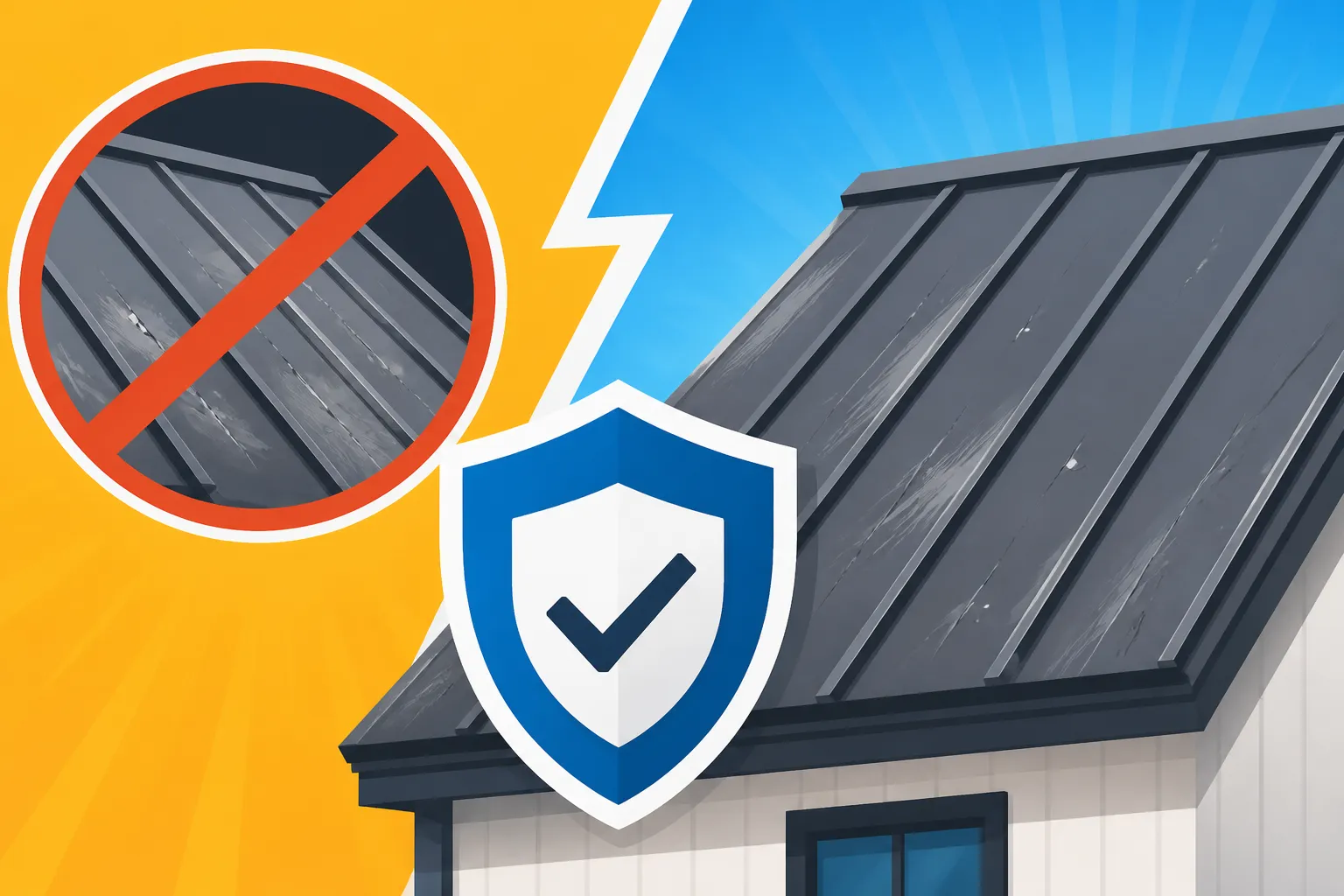
Cosmetic Damage, on the other hand, is purely aesthetic. It affects the visual appeal of the roof but does not hinder its ability to shed water or protect the structure below. Examples often cited by insurance companies include:
- Minor dents or dings: Small pockmarks from hail that don't break the coating or puncture the panel.
- Scratches or scuffs: Surface-level abrasions that don't penetrate the protective coating to the bare metal.
- Fading or discoloration: Changes in the roof's color over time due to UV exposure or weathering.
- Chalking: A powdery residue that forms on painted surfaces as the pigment degrades, which is common with certain paint systems like SMP, but doesn't affect protection.
- Oil canning: A visual distortion or waviness in the flat part of metal panels that is inherent to metal and doesn't affect performance.
The distinction can sometimes be a gray area, requiring professional assessment, but the core principle is about performance versus appearance.
What Exactly is "Cosmetic Damage" on a Metal Roof?
It's one thing to hear the term "cosmetic damage" and another to truly grasp what it looks like on your own roof. Metal roofs are incredibly tough, but they're not indestructible, and some minor impacts can leave their mark without causing a full-blown crisis.
Dings, Dents, and Scratches
Let's talk about the most common culprits: dings, dents, and scratches. Imagine a hailstorm rolling through your neighborhood in Dallas, Texas. Your metal roof, while significantly more resistant to large hail than asphalt, might still bear the brunt of it. Smaller, softer hail might bounce off with no trace. But golf-ball-sized hail, especially if it's dense, can leave behind subtle indentations on the surface of your metal panels. These aren't deep gouges that penetrate the metal or compromise the coating, but rather slight depressions.
Similarly, if you have a large oak tree looming over your house and a few acorns drop from a height, they could create tiny, shallow "pockmarks" in the metal. These are essentially mini-dents. While they might be visible from the ground, they haven't broken the paint finish or created a pathway for water. The roof continues to shed water efficiently. A scratch, too, could be superficial – perhaps from a falling twig or an accidental scrape during maintenance – affecting only the topmost layer of paint without exposing the underlying metal or compromising its weatherproofing.
The challenge here is that as a homeowner, you look at these imperfections and see a flawed roof, perhaps one that now looks significantly older or less appealing than it did before. The insurance company, however, will often see a roof that still functions perfectly. This is where the friction often arises. For more insights on how these materials hold up, consider reading our article on Metal Roofing Materials Compared: Steel, Aluminum, Copper & Zinc.
Fading, Chalking, and Discoloration
Time and the elements are relentless, even on a robust metal roof. Over years, especially in sunny climates like Florida or Arizona, the vibrant color of your metal roof can begin to fade. This is a natural process caused by UV radiation breaking down the pigments in the paint coating. While noticeable, fading doesn't impact the roof's protective qualities. The coating is still intact, still preventing rust and shedding water, it just doesn't look as new.
Chalking is another common aesthetic issue, particularly with certain paint systems like Siliconized Modified Polyester (SMP). It's a powdery residue that forms on the surface as the resin in the paint breaks down and releases pigment particles. You might notice it if you run your hand across the roof. Like fading, chalking is purely cosmetic. The underlying metal is still protected, and the roof's performance remains unaffected.
Discoloration, which might include streaking or uneven color changes, can also occur due to environmental factors, algae growth, or even runoff from other materials on your roof. Unless these discolorations indicate a degradation of the protective coating itself – which is rare with high-quality metal roofs – they are typically categorized as cosmetic. While they might make your home look less pristine, they don't mean your roof is failing or needs replacement.
"Oil Canning" and Aesthetic Imperfections
"Oil canning" is a term unique to metal roofing that homeowners often find concerning, but it's almost always considered a cosmetic issue. This phenomenon refers to visible waviness or distortion in the flat areas of metal panels. It's not a structural flaw, but rather an aesthetic characteristic inherent to light-gauge, cold-rolled metal. Factors like thermal expansion and contraction, variations in substrate, or even manufacturing tolerances can contribute to it.
For instance, on a long, wide standing seam panel, you might see subtle ripples or buckles in the flat section between the seams, especially when the light hits it just right. While highly skilled installers can minimize it, it's virtually impossible to eliminate completely in certain panel designs and lengths. Many homeowners, seeing these waves, worry about structural integrity or leaks, but oil canning does not compromise the roof's weather resistance or its lifespan. It's purely visual.
Other aesthetic imperfections might include slight variances in panel alignment (if not egregious), minor inconsistencies in paint application that don't affect coverage, or small wrinkles near edges that are not part of the primary water-shedding surface. The key takeaway for all these issues is that they don't impede the fundamental job of your roof: keeping your home dry and safe. You can learn more about how to address these nuances by reviewing our comprehensive guide on Metal Roof Repair vs Replacement: How to Decide.
Here's a quick comparison of damage types:
| Characteristic | Cosmetic Damage | Functional Damage |
|---|---|---|
| Appearance | Dents, dings, scratches, fading, chalking, oil canning | Punctures, holes, tears, significant bending/warping |
| Function | No impact on waterproofing or structural integrity | Compromises waterproofing, structural integrity, or stability |
| Risk | Primarily aesthetic concern | Risk of leaks, further structural damage, safety hazards |
| Repair Type | Surface-level touch-ups, aesthetic coatings, or acceptance | Panel replacement, sealing, structural reinforcement |
| Insurance | Often excluded | Typically covered |
The Impact of a Cosmetic Damage Exclusion
So, you’ve got a metal roof, it looks a little beat up from that last hailstorm, but it’s not leaking. You file a claim, and then the dreaded words come: "cosmetic damage exclusion." What does this really mean for you as a homeowner? It’s more than just a denial; it has real financial and practical ramifications.
Financial Implications for Homeowners
The most immediate and obvious impact of a cosmetic damage exclusion is the hit to your wallet. If your insurer determines the damage is cosmetic and your policy contains this exclusion, they will not cover the cost of repairs or replacement. This means you, the homeowner, are on the hook for 100% of the expenses.
Consider a scenario where a significant hailstorm leaves your 2,000 sq ft metal roof covered in small, non-functional dents. While the roof still performs, it looks unsightly. The cost to replace a metal roof, especially a standing seam one, can easily run into the tens of thousands of dollars. Without insurance coverage, this becomes an unexpected and substantial out-of-pocket expense. Even if you opt for purely cosmetic repairs, such as repainting or panel replacement, those costs can add up quickly. This is a tough pill to swallow, especially when you’ve been diligently paying your premiums, expecting protection. Understanding the full financial picture is critical, and articles like Metal Roof Cost: Complete 2026 Guide can offer more detail on potential costs.
Challenges with Insurance Claims
Dealing with insurance claims is rarely a straightforward process, and the presence of a cosmetic damage exclusion can complicate things even further. When you file a claim for hail damage, for example, the insurer will send an adjuster to inspect your roof. Their job is to determine if the damage is functional or merely cosmetic. This often involves a detailed inspection, sometimes even from a drone or by walking the roof (which itself has risks for certain metal panel types).
The challenge lies in the subjective nature of what constitutes "significant" cosmetic damage versus "minor" functional damage. What one adjuster might deem acceptable, another might view as warranting repair. Homeowners often feel frustrated because they see obvious damage, even if it's only visual, and expect their roof to be returned to its pre-damage condition. However, the insurance company is operating strictly within the confines of the policy language. You might find yourself arguing over the definition of a "dent" or whether a particular scratch actually compromises the protective coating. This can lead to delays, denials, and a great deal of stress for the homeowner.
Long-Term Consequences for Your Roof and Home Value
Even if cosmetic damage doesn't immediately compromise your roof's functionality, it can have long-term consequences, particularly for your home's value and curb appeal. A dented or discolored metal roof, while still protective, might signal neglect to potential buyers. When it comes time to sell, buyers are looking for a move-in ready home, and a roof with obvious cosmetic flaws could become a sticking point in negotiations or even deter buyers altogether.
Appraisers might also factor in the roof's appearance when determining a home's market value. While a metal roof generally enhances home value, a cosmetically damaged one might not provide the same return on investment. Furthermore, some minor cosmetic issues, if left unattended, could theoretically worsen over many years, although this is less common with high-quality metal systems. For example, a deep scratch that barely breaches the coating could, over decades of extreme weather exposure, eventually lead to localized corrosion if the underlying metal is exposed. However, most modern coatings are incredibly resilient. It's always a good idea to understand if Does a Metal Roof Increase Home Value? in your specific market.
Navigating Policies and Protecting Your Investment
Facing a cosmetic damage exclusion can feel like a punch to the gut, but there are proactive steps you can take to better understand your coverage and protect your metal roof investment.
Reviewing Your Current Policy for Exclusions
The single most important step you can take is to thoroughly review your current homeowners insurance policy. Don't wait until damage occurs to read the fine print! Look specifically for sections related to "roof coverage," "perils excluded," or "cosmetic damage." Many policies will explicitly state whether cosmetic damage from hail or wind is excluded.
If you can't find clear language, or if the terminology is confusing (which, let's be honest, insurance policies often are), contact your insurance agent directly. Ask specific questions: "Does my policy cover cosmetic damage to my metal roof from hail?" or "Under what circumstances would damage to my metal roof be considered cosmetic and not covered?" Get their answers in writing if possible. It's far better to know your limitations upfront so you can make informed decisions. Understanding your specific policy can save you immense grief later.
Seeking "Actual Cash Value" vs. "Replacement Cost Value" Coverage
Another crucial aspect of your policy to understand is whether your roof is covered at "Actual Cash Value" (ACV) or "Replacement Cost Value" (RCV). This isn't directly tied to cosmetic damage exclusions, but it significantly impacts your payout if functional damage is covered.
- Actual Cash Value (ACV): This coverage pays for the depreciated value of your roof at the time of loss. So, if your roof is 10 years old and has a 50-year lifespan, your payout will be significantly less than the cost of a new roof, as the "value" of your existing roof has diminished over time. This can leave you with a substantial gap to cover out-of-pocket, even for covered functional damage.
- Replacement Cost Value (RCV): This is generally preferred by homeowners. RCV coverage pays for the cost to repair or replace your roof with new materials of similar kind and quality, without deduction for depreciation. This means if your roof is damaged and covered, the policy will pay what it actually costs to fix it or put a new one on, up to your policy limits.
While an RCV policy won't bypass a cosmetic damage exclusion, it will provide much more comprehensive coverage if actual functional damage occurs. Some insurers might offer endorsements or riders that provide better cosmetic coverage or higher RCV for metal roofs, but these often come with higher premiums. It's always worth asking your agent about these options, especially given the significant investment a metal roof represents. Also, don't forget to ask about potential Metal Roof Insurance Savings & Discounts.
Proactive Measures and Maintenance
While you can't control hailstorms, you can take steps to mitigate the risk of cosmetic damage and extend the life of your metal roof. Regular maintenance is key.
- Regular Cleaning: Keeping your roof free of debris, leaves, and dirt can prevent staining and discoloration. Certain types of debris, especially if left to rot, can also hold moisture and potentially lead to localized surface corrosion over time, even on highly resistant coatings like Galvalume.
- Gutter Maintenance: Ensure your gutters are clean and draining properly. Overflowing gutters can cause water to sit on roof edges or splash onto walls, leading to cosmetic streaking and accelerated wear.
- Tree Trimming: Trim overhanging branches that could drop heavy debris (acorns, pinecones, branches) onto your roof, causing dents or scratches. This also reduces the risk of larger, functional damage during storms.
- Professional Inspections: Even if you can't spot issues from the ground, a professional metal roofing contractor can identify potential problems early. They can spot minor coating breaches before they become significant, or identify issues like loose fasteners that could lead to leaks. Our guide on Metal Roof Maintenance Guide provides an excellent checklist.
Choosing a Metal Roof with Durability in Mind
When selecting your metal roof, consider materials and coatings known for their resilience. While no roof is entirely immune to all damage, some options offer superior protection against cosmetic issues.
- Gauge: Thicker gauge metal (lower numbers, e.g., 24-gauge vs. 29-gauge) is more resistant to denting from hail and impacts. While it costs more upfront, it offers enhanced durability. For details, check out our article on 24 vs 26 Gauge Metal Roof: Cost Difference.
- Panel Profile: Ribbed or corrugated panels often show dents less noticeably than flat standing seam panels due to their texture. Stone-coated steel roofs are highly impact-resistant and designed to mimic traditional shingles, making cosmetic damage less of a visual concern.
- Coating Systems: High-quality paint systems like Kynar 500 (PVDF) are known for their exceptional color retention, fade resistance, and chalking prevention, offering superior aesthetic longevity compared to some lower-grade coatings. While more expensive, these premium coatings can keep your roof looking new for decades, minimizing purely cosmetic issues from weathering. Brands like Sherwin-Williams' WeatherXL or AkzoNobel's Ceranamel are examples of robust coil coatings.
Investing in a higher-quality system upfront can sometimes pay dividends by reducing the likelihood of cosmetic damage claims and ensuring your roof maintains its aesthetic appeal for its full lifespan.
What to Do If Your Metal Roof Has Cosmetic Damage
Despite your best efforts, your metal roof might still sustain cosmetic damage. It's a frustrating situation, but understanding your next steps can help you manage the outcome.
Documenting the Damage Thoroughly
If you suspect your metal roof has suffered damage, the very first thing you should do is document everything. This is critical whether you're filing an insurance claim or simply assessing the repairs yourself.
- Take High-Quality Photos and Videos: Get close-ups of every dent, scratch, or discolored area. Also, take wider shots that show the overall affected sections of the roof and how the damage appears from different angles and lighting conditions. Date and time-stamp your media. Use a drone if you have access, or hire a professional who does, to get clear overhead views.
- Write Detailed Notes: Describe the date and time of the incident (e.g., hailstorm, fallen branch). Detail the type of damage you observe (e.g., "small circular dents approximately 1/4 inch in diameter on south-facing panels," "linear scratch 6 inches long near chimney flashing"). Note the exact location on the roof.
- Gather Witness Statements: If neighbors also experienced similar damage or witnessed the event, their accounts could be useful, especially for documenting weather events.
- Keep Weather Reports: If the damage is from a storm, save local weather reports or news articles detailing the storm's intensity, hail size, and wind speeds. This factual data can be powerful evidence.
Thorough documentation creates an undeniable record, which is invaluable if you end up disputing an insurance adjuster's assessment or need to advocate for coverage.
Seeking Professional Assessment vs. DIY Repair
Once you've documented the damage, it's time to decide on the next steps.
- Professional Assessment: For any significant damage or if you're unsure whether it's cosmetic or functional, bringing in a reputable, independent metal roofing contractor for an assessment is highly recommended. They can provide an expert opinion on the nature of the damage and whether it affects the roof's integrity. An independent contractor's report can serve as a counter-argument if your insurer's adjuster deems the damage solely cosmetic. Look for contractors specializing in metal roofing, as they'll have the nuanced understanding needed. They can often provide a detailed estimate for repairs, even if they're cosmetic.
- DIY Repair for Minor Cosmetic Issues: For very minor scratches or scuffs that don't expose the bare metal, you might consider DIY touch-ups using color-matched paint from the original manufacturer. However, be extremely cautious. Ensure you use the correct type of paint, as improper repairs can void warranties or look worse than the original damage. Always test on an inconspicuous area first. For dents, DIY repair is generally not recommended as it can easily warp panels or damage coatings further. When in doubt, call a professional. Our guide on How to Repair a Small Hole in a a Metal Roof offers some context on simple fixes, but cosmetic dent repair is often more complex.
Understanding Your Rights and Options
If your insurance claim is denied due to a cosmetic damage exclusion, it doesn't necessarily mean the end of the road.
- Review the Denial Letter: Carefully read the official denial letter from your insurance company. It should state the specific reason for denial, citing the exact policy language. This is crucial for understanding their position.
- Appeal the Decision: You have the right to appeal an insurance company's decision. Gather all your documentation, including the independent contractor's report (if you got one), and formally appeal the denial. Clearly explain why you believe the damage is functional, or why the exclusion should not apply in your specific case. Sometimes, a second review by a different adjuster or a supervisor can yield a different outcome.
- Seek Legal Counsel: If you strongly believe your claim was unfairly denied and the damage is indeed functional, consider consulting with a public adjuster or an attorney specializing in insurance claims. They can help you navigate the appeals process, interpret complex policy language, and advocate on your behalf.
- Explore Alternative Financing: If the damage is truly cosmetic and your claim is denied, you might need to explore options like home equity loans, personal loans, or even a home improvement credit card to fund the repairs. While not ideal, it's sometimes necessary to restore your home's curb appeal. You can find more information on Metal Roof Financing Options if this becomes necessary.
Remember, patience and persistence are key. Dealing with insurance companies can be a battle, but being well-informed and prepared can significantly improve your chances of a favorable outcome.
Disclaimer
This article is for general informational purposes only and does not constitute professional advice. Laws, prices and regulations vary by location and change over time. Consult a qualified professional for guidance on your specific situation.