Do You Need a Permit for a Metal Roof in Charlotte?
Trying to figure out if you need a permit just to put a new roof on your home in Charlotte, North Carolina, can feel like navigating a maze blindfolded. It's a common frustration, and honestly, the rules aren't always crystal clear unless you know exactly where to look and what questions to ask. This guide is here to cut through the confusion, explaining precisely when a permit is necessary for your metal roof project in Charlotte, what that process entails, and how to avoid costly headaches down the line.
The Absolute Truth About Roofing Permits in Charlotte, NC
When you're considering a significant home improvement project like a new metal roof, the last thing you want is a surprise visit from a code enforcement officer or, even worse, issues down the road with insurance or resale value. That's why understanding the permitting process in Charlotte, North Carolina, is absolutely crucial. It's not just about jumping through bureaucratic hoops; it's about ensuring safety, quality, and compliance for your biggest investment – your home.
Why Permits Aren't Just Bureaucracy
Let's be real: nobody enjoys dealing with permits. The paperwork, the fees, the inspections – it can feel like a lot of extra work. But in Charlotte, like most developed areas, building permits for roofing projects serve a really important purpose. They're there to protect you, the homeowner, and to ensure that all work meets established safety and quality standards set by the local government. Think of it as a safety net. The Mecklenburg County Code Enforcement team wants to make sure that the materials used are appropriate, the installation methods are sound, and that your new roof will stand up to the local weather conditions, which, as we know in Charlotte, can range from hot, humid summers to occasional severe storms.
Without a permit, there's no official oversight. This leaves you vulnerable to shoddy workmanship from unscrupulous contractors who might cut corners, use substandard materials, or ignore critical building codes. A permit acts as a safeguard, ensuring that the work adheres to structural integrity, fire safety, and proper drainage guidelines, protecting your family and your property in the long run.
When a Permit is Definitely Required
In Charlotte and Mecklenburg County, the general rule of thumb is this: if you're doing any work that involves tearing off and replacing your existing roof system, or if you're installing a new roof on an addition, you absolutely need a permit. This includes switching from, say, asphalt shingles to a new metal roof. The scope of the work is what triggers the requirement. It's considered a significant alteration to the building's envelope and structural integrity.
This isn't just a Charlotte thing; it's a standard practice across the country because a roof is so integral to a home's safety and longevity. If you're undertaking a complete Metal Roof Installation Process Step by Step, from removing old materials to laying down new panels, a permit is non-negotiable. This also applies if you're changing the type of roofing material – for example, if you currently have shingles and are making the move to a durable standing seam or corrugated metal roof. The change in material can affect structural load, fire ratings, and installation techniques, all of which need to be approved and inspected.
Minor Repairs vs. Major Replacements
So, what about minor fixes? This is where the line can sometimes feel a bit blurry for homeowners. Generally, small repairs that don't involve replacing a significant portion of the roof area or changing the structural components usually don't require a permit in Charlotte. For instance, if you're just replacing a few damaged shingles or a single metal panel, or simply patching a small leak, you're likely in the clear.
However, if the "repair" starts to expand in scope – say, you need to replace more than one square (100 square feet) of roofing, or you're doing extensive repairs that affect the underlying roof deck, that's when you start stepping into permit territory. The key distinction often lies in whether the repair constitutes replacing like for like on a very small scale, or if it's considered a substantial alteration or replacement of the entire roofing system. When in doubt, it’s always best to err on the side of caution and check with Mecklenburg County Code Enforcement. Getting clear guidance can save you a lot of grief and potential fines down the road.
Navigating the Charlotte-Mecklenburg Permitting Process
Alright, so you've determined that your metal roof project needs a permit. Now what? Navigating the local permitting process in a city like Charlotte can seem daunting, but it's totally manageable once you know the steps and the key players. The goal here isn't to confuse you but to ensure that your home improvement projects are safe, compliant, and ultimately, a great investment.
Who to Contact and Where to Start
In Charlotte and the surrounding Mecklenburg County, your primary point of contact for building permits, including roofing, is the Mecklenburg County Land Use and Environmental Services Agency (LUESA), specifically their Code Enforcement Department. They handle all building permits for residential and commercial projects within the county, which includes the City of Charlotte. You can typically initiate the process online through their EnerGov portal, which allows you to submit applications, track their status, and schedule inspections.
Before you even think about applying, it's a good idea to visit the LUESA website or even call their customer service line. Their website is a treasure trove of information, often providing checklists, FAQs, and guides specific to residential projects. This initial research can save you a lot of time and frustration, as it helps you understand the specific requirements for your Do You Need a Permit for a Metal Roof? project. Many homeowners feel overwhelmed by this, but a good contractor will guide you through or handle this entirely. Speaking of which, choosing a reputable contractor is key, and understanding How to Hire a Metal Roofing Contractor is an excellent first step.
Required Documentation for Your Metal Roof Project
When you apply for a roofing permit in Charlotte, you'll need to submit a few key pieces of information and documentation. This isn't just busywork; it's how the county ensures your project aligns with established standards, like those outlined in the Metal Roof Building Codes Explained for North Carolina.
Here’s a general overview of what you'll typically need:
- Permit Application Form: This is the standard form, usually available online, where you'll provide details about the property, the scope of work, and contact information for the homeowner and contractor.
- Property Information: You'll need the parcel ID number and physical address of your property.
- Contractor Information: If you're hiring a contractor (which is highly recommended for metal roofing), you'll need their North Carolina general contractor license number and proof of insurance. The county will verify this information. This is why asking Questions to Ask a Metal Roofing Contractor Before You Hire is so important.
- Scope of Work Details: A clear description of the roofing project, including the type of materials being used (e.g., standing seam metal, corrugated steel), the approximate square footage, and whether it's a tear-off and replacement or an overlay.
- Site Plan/Sketch (sometimes): For roofing, a detailed site plan isn't always strictly necessary unless the project involves structural changes to the roof or adding features like skylights that weren't there before. However, a simple sketch showing the roof area to be worked on might be requested.
This documentation ensures that LUESA has all the necessary information to approve your project and to schedule the appropriate inspections once the work begins. Don't worry too much about having every single detail perfect on your own; a good contractor will often handle most of the permit application process for you, as they are familiar with the local requirements and submissions. This includes knowing Who Pulls the Permit: Contractor or Homeowner?, with it typically being the contractor's responsibility.
The Typical Timeline and What to Expect
Once you've submitted your permit application and all the necessary documentation to LUESA, the waiting game begins. While Charlotte-Mecklenburg strives for efficiency, processing times can vary based on the complexity of your project, the time of year (peak construction seasons can mean longer waits), and the current workload of the department.
Generally, for a straightforward residential roofing permit, you might expect the initial review and approval to take anywhere from a few business days to a couple of weeks. Once approved, you'll be issued the permit, which must be prominently displayed at the job site. This signals to inspectors and neighbors that the work being done is authorized. The permit will also typically outline the required inspections, which for a roof often include a mid-roof inspection (before the final roofing material is installed, to check the underlayment and decking) and a final inspection upon completion.
It's wise to build a little buffer into your project timeline for permitting. While many processes are streamlined, unforeseen delays can happen. Keeping in touch with your contractor and occasionally checking the status of your permit online through the EnerGov portal can help keep things on track. Understanding this timeline is part of effectively planning for your Metal Roof Cost in Charlotte as delays can sometimes add to project duration, if not direct costs.
Common Pitfalls and How to Avoid Them
Embarking on a metal roofing project in Charlotte is a significant undertaking, and while the benefits are plentiful, there are definitely some potential headaches to steer clear of. Many of these issues revolve around the permitting process, or rather, the lack thereof. Navigating these waters successfully means being proactive and informed, ensuring a smooth project from start to finish.
Working Without a Permit: The Hidden Risks
It might seem tempting to skip the permit process, especially if you're trying to save a few bucks or a bit of time. However, ignoring the requirement for a roofing permit in Charlotte, NC, comes with some serious hidden risks that far outweigh any perceived short-term benefits. Trust me, it's not worth it. The consequences can range from inconvenient to downright costly.
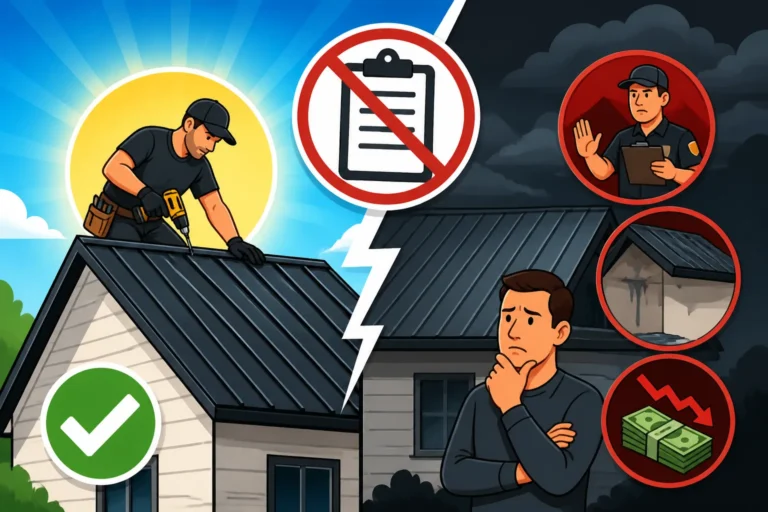
Firstly, if code enforcement discovers unpermitted work, you'll likely face fines. These aren't usually small penalties; they can quickly add up. Beyond fines, you'll be issued a "stop-work" order, bringing your project to an immediate halt. This means delays, potential damage to exposed parts of your roof, and extra costs as you scramble to get the proper permits. Secondly, and perhaps more importantly, any unpermitted work might have to be torn out and redone once a permit is secured, especially if the initial work doesn't meet code. Imagine having your brand new metal roof partially or fully removed! This scenario is explicitly covered in resources like What Happens If You Replace a Roof Without a Permit?.
Furthermore, unpermitted work can create significant headaches when you go to sell your home. Most home buyers and their lenders will require proof that all major renovations, particularly those affecting the structural integrity or safety of the home like a new roof, were done with proper permits and inspections. Without this documentation, it can lead to complications during closing, potential lawsuits, or even force you to secure retroactive permits (which can be more challenging and expensive) or reduce your home's sale price. Your homeowners insurance might also deny claims related to unpermitted work if damage occurs.
Ensuring Your Contractor Handles Permits Correctly
One of the biggest mistakes homeowners make is assuming their contractor will automatically take care of the permit. While many reputable contractors in Charlotte do handle this as part of their service, it's your responsibility as the homeowner to verify it. Don't just take their word for it; ask for proof. A professional, trustworthy metal roofing contractor will be transparent about the permitting process and happy to show you the approved permit.
When you're comparing bids and interviewing potential companies, make sure to explicitly ask about their approach to permitting. A good question to include from the list of Questions to Ask a Metal Roofing Contractor Before You Hire is, "Will you handle all necessary permits and inspections for this project?" They should clearly state they will, provide the permit number, and explain the inspection schedule. Reputable contractors are familiar with Charlotte's specific requirements and will ensure everything is filed correctly and on time. You should also verify their licensing, bonding, and insurance, which are crucial for any project, as detailed in Metal Roof Contractor Licensing, Bonding & Insurance. It's a significant red flag if a contractor tries to persuade you that a permit isn't necessary for a full roof replacement.
Understanding Inspections and Final Approval
The permit process doesn't end once the permit is issued. It also includes mandatory inspections by the Mecklenburg County Code Enforcement Department. These inspections are vital checkpoints to ensure the work is progressing according to code and the approved plans. For a metal roof project, you'll typically have at least two inspections:
- Mid-Roof or Decking Inspection: This usually occurs after the old roofing material has been removed, any necessary deck repairs have been made, and the underlayment (the protective layer beneath the metal panels) has been installed. The inspector will check the condition of the roof deck, the fasteners used for the underlayment, and ensure proper installation before the final metal panels are laid down. This step is crucial for ensuring the long-term performance and watertight integrity of your new roof.
- Final Inspection: Once all the metal roofing panels, flashing, trim, and other components are fully installed, a final inspection will be conducted. The inspector will check the overall installation quality, ensure proper sealing around penetrations (like vents and chimneys), verify the correct use of fasteners, and confirm that all aspects of the project comply with local building codes.
It's the contractor's responsibility to schedule these inspections, and they should be present during the inspector's visit. Upon successful completion of the final inspection, you'll receive a final approval, which officially closes out the permit. This documentation is incredibly important for your home's records, providing proof that your metal roof was installed legally and safely. For more in-depth information, you can check out guides like How to Pass a Roof Inspection for Metal.
Specific Metal Roof Considerations in Charlotte
Charlotte, like any thriving city, has its own unique blend of local regulations, weather challenges, and community standards that can influence your metal roof project. Beyond the general permitting process, there are specific nuances to consider when installing a metal roof here. Understanding these can help you choose the right materials and ensure your project is a resounding success.
Local Building Codes and Wind Load Requirements
North Carolina, and by extension, Charlotte, operates under the North Carolina Building Code. This code is regularly updated and incorporates national standards, often with amendments to address state-specific concerns, especially regarding wind resistance. Given Charlotte's location, which can experience everything from strong thunderstorms to the remnants of hurricanes moving inland, wind load requirements are particularly stringent for roofing.
Metal roofs are inherently durable and excellent at resisting high winds, often boasting superior Metal Roof Wind and Fire Ratings Explained compared to traditional asphalt shingles. However, the installation must meet specific fastening schedules and techniques outlined in the building code to achieve these ratings. This might mean using more fasteners, specific types of clips for standing seam roofs, or particular edge flashing details to prevent wind uplift. Your contractor should be intimately familiar with these local requirements and select products that have undergone proper testing and certification to meet them. For instance, panels might need to withstand specific uplift pressures or be of a certain gauge to comply.
Historic Districts and HOA Regulations
Charlotte is rich in history, with many beautiful older homes and established neighborhoods. If your property is located within a historic district, or if you belong to a homeowners association (HOA), you'll likely have an additional layer of approvals to navigate before installing a metal roof.
Historic Districts: If your home is in a designated historic district in Charlotte (like Dilworth, Myers Park, or Fourth Ward, among others), you'll need to seek approval from the Historic District Commission (HDC) or a similar preservation body before making exterior changes. These commissions often have strict guidelines regarding materials, colors, and profiles to maintain the historical aesthetic of the neighborhood. While modern metal roofs can replicate traditional styles like slate or shake, you might need to select specific colors (often muted tones) or panel types (like certain metal shingles or standing seam profiles with narrower seams) to gain approval. Always check with the City of Charlotte's Historic District Commission or planning department early in your process.
Homeowners Associations (HOAs): HOAs are notorious for having their own set of rules, and roofing materials are almost always on their list. Your HOA might have specific mandates on acceptable roofing materials, colors, or even the style of metal roof panels allowed. Some HOAs might initially resist metal roofs due to misconceptions about noise or appearance, but with the vast improvements in modern metal roofing, many are becoming more accepting. However, you'll still need to submit your plans to your HOA's architectural review committee for approval before applying for a city permit. Neglecting this step can lead to fines from your HOA or even being forced to remove the roof, an expensive and frustrating scenario. Learning about HOA Rules and Metal Roofs: What's Allowed is critical for a smooth project.
The Cost of the Permit Itself
While the overall Metal Roof Cost: Complete 2026 Guide includes materials, labor, and other factors, the permit fee itself is a relatively small, yet necessary, component of your budget. In Charlotte, permit fees are based on the valuation of the project, meaning the estimated cost of the roofing work. The fee structure is designed to cover the administrative costs of processing applications, conducting reviews, and performing inspections.
For a typical residential metal roof replacement, you can expect the permit fee to be a few hundred dollars. This is a general estimate, and the exact amount will be calculated by LUESA when you submit your application. For example, a project valued at $20,000 might have a permit fee somewhere in the range of $150-$300, but this can fluctuate based on specific parameters and any additional review requirements. Your contractor should include this fee in their overall quote, or at least inform you of its expected cost. While it's an added expense, remember it's an investment in the safety and legality of your home improvement, often detailed further in resources like How Much Is a Roofing Permit?. It's a small price to pay for peace of mind and compliance.
| Permit Application Step | Description | Estimated Timeline | Key Party Responsible |
|---|---|---|---|
| 1. Research & Planning | Understand Charlotte-Mecklenburg requirements, choose contractor, get quotes. | 1-3 Weeks | Homeowner/Contractor |
| 2. Application Submission | Fill out forms, gather contractor info, scope of work, submit to LUESA. | 1-2 Days | Contractor (typically) |
| 3. Plan Review | LUESA staff review application for code compliance. | 5-10 Business Days | LUESA Code Enforcement |
| 4. Permit Issuance | Once approved, permit is issued and must be displayed. | 1 Day | LUESA |
| 5. Mid-Roof Inspection | Inspector checks decking, underlayment before final panels. | Scheduled by Contractor | LUESA Inspector |
| 6. Final Inspection | Inspector checks complete installation, flashing, and code compliance. | Scheduled by Contractor | LUESA Inspector |
| 7. Permit Closure | Project receives final approval, records updated. | 1 Day (after final inspection) | LUESA |
This table provides a generalized overview, and specific projects might see variations in these timelines. Always confirm current processes with Mecklenburg County's LUESA department.
Disclaimer
The information provided in this article is intended for general guidance and informational purposes only, and does not constitute professional advice. Building codes, permit requirements, and local regulations in Charlotte, NC, and Mecklenburg County can change. Always verify the most current requirements with the official Mecklenburg County Land Use and Environmental Services Agency (LUESA) or a qualified, licensed local metal roofing contractor before beginning any project. Relying solely on the information presented here without independent verification is at your own risk.