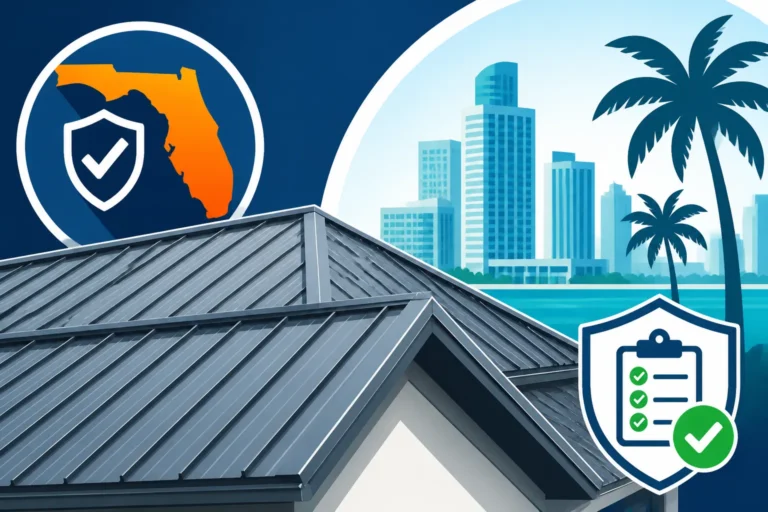
Can You Get an Insurance Discount for a Metal Roof in Florida?
Homeowners in Florida know the unique agony of trying to secure reasonable insurance rates. Between hurricane seasons that seem to stretch longer every year and the continuous churn of policy changes, it often feels like you're fighting an uphill battle just to protect your biggest investment. This guide is here to shed some much-needed light on how installing a metal roof could actually be one of your secret weapons in that fight, helping you understand the specific discounts available and how to claim them in the Sunshine State.
The Florida Insurance Landscape and Metal Roof Advantages
Living in Florida comes with its undeniable perks – sunshine, beaches, and a vibrant lifestyle. But it also means navigating a truly challenging homeowners insurance market. Many folks feel like they're caught in a financial vise, seeing premiums skyrocket year after year while struggling to find reliable coverage. This is largely due to our vulnerability to severe weather events, especially hurricanes, which cause billions in damage annually. In this environment, anything you can do to make your home more resilient is a huge win, and that's precisely where metal roofs shine.
Why Florida Homeowners Insurance Is a Beast
Let's be real: Florida's insurance market is a mess. We've seen major carriers pull out of the state, leaving fewer options and higher prices for those who remain. The sheer frequency and intensity of hurricanes, coupled with legal challenges and rising reinsurance costs, mean that insurers are constantly looking for ways to mitigate their risks. For you, the homeowner, this translates to meticulous scrutiny of your home's construction and protective features. An older, less robust roof is often seen as a significant liability, driving up your premiums or making it difficult to get coverage at all. The frustration is palpable, and many residents feel trapped by the system.
How Metal Roofs Stand Up to Florida's Elements
Unlike traditional asphalt shingle roofs that can be ripped away by strong winds or degrade quickly under intense sun and humidity, metal roofs are built for the long haul in tough climates. Their inherent design and material properties offer superior protection against the very elements that make Florida insurance so costly.
Consider the infamous Florida winds. A well-installed metal roof, particularly a standing seam system, creates a continuous, interlocking barrier that offers exceptional wind resistance. We're talking about ratings that can withstand sustained winds of 150 mph or more, far exceeding what many other roofing materials can handle. This resilience isn't just a marketing claim; it's a structural advantage that significantly reduces the likelihood of catastrophic roof failure during a hurricane.
Then there's the sun. Florida's relentless UV radiation can bake and crack asphalt shingles over time, leading to premature aging and the need for frequent replacements. Metal roofs, especially those with specialized reflective coatings, are designed to reflect a significant portion of the sun's energy, which can even lead to energy savings in your home. This thermal performance also contributes to the roof's longevity, slowing down material degradation. For a deeper dive, you might want to read about the Metal Roof Wind and Fire Ratings Explained.
Specific Discounts You Can Expect
The good news is that insurance companies in Florida recognize the enhanced protection a metal roof provides. While it might feel like a large upfront investment, the long-term savings on your insurance premiums can be substantial, making it a smart financial decision for many homeowners. These discounts aren't just a hopeful guess; they're often based on tangible risk reductions that insurers value.
Wind Mitigation Credits: The Big One
Without a doubt, wind mitigation credits are where metal roofs truly shine in Florida. These aren't just minor adjustments; they can lead to significant savings on the windstorm portion of your homeowners insurance premium. The state of Florida mandates that insurance companies offer discounts for specific construction features that reduce property damage from hurricanes and other windstorms. To qualify, you'll need a certified wind mitigation inspection, typically performed by a licensed inspector, who will fill out a Uniform Mitigation Verification Inspection Form (OIR-B1-1802).
For a metal roof, several key features are assessed:
- Roof-to-Wall Attachment: This is critical. How well is your roof deck attached to the walls of your home? Stronger connections, such as hurricane clips or straps, significantly reduce the chance of your roof lifting off in high winds. Metal roofs are often installed with robust fastening systems that naturally enhance this attachment.
- Roof Deck Attachment: This refers to how securely the plywood or oriented strand board (OSB) sheathing is attached to the roof trusses. Many metal roof installations require a more rigorous fastening schedule for the deck, such as 8d nails at 6" on-center spacing, which exceeds standard building code requirements and qualifies for higher discounts.
- Secondary Water Resistance (SWR): This is a layer of material applied directly to the roof deck that prevents water intrusion even if your primary roof covering is damaged or blown off. Options include a self-adhering modified bitumen 'peel and stick' membrane or a properly sealed, synthetic underlayment. Many metal roofing systems integrate a high-quality Metal Roof Underlayment and Ventilation Guide as standard practice, providing this crucial protection.
- Roof Geometry: While not directly tied to the material of your roof, certain roof shapes (like hip roofs) naturally perform better in high winds and can earn additional credits. However, a metal roof on any geometry will still benefit from its inherent strength.
These wind mitigation features directly reduce the risk of extensive damage during a storm, which in turn lowers the insurer's potential payout, and they pass those savings on to you. It's a win-win, really. You get a more resilient home, and your wallet gets a break.
Other Potential Savings: Hail, Fire, and Longevity
While wind mitigation is often the largest source of discounts for metal roofs in Florida, don't overlook other potential savings:
- Impact Resistance (Class 4): Many metal roofing materials, particularly stone-coated steel and heavier gauge standing seam panels, boast a Class 4 impact resistance rating. This means they can withstand the impact of large hailstones without sustaining significant damage. In states prone to hail, this can lead to notable premium reductions. While Florida might not be as notorious for hail as, say, Texas or Oklahoma, parts of the state do experience hailstorms, and this rating can still be a benefit.
- Fire Resistance (Class A): Metal is non-combustible, meaning a metal roof won't catch fire from airborne embers during a wildfire or house fire. This Class A fire rating is the highest possible and can lead to discounts, especially in areas with higher wildfire risk. While not as prevalent a concern in Florida as in some Western states, it's still a valuable safety feature that insurers appreciate.
- Longevity and Durability: Insurance companies understand that a roof that lasts 40-70 years, as many metal roofs do, represents a lower long-term risk than one that needs replacing every 15-20 years. While not always an explicit "discount" category on its own, this extended Metal Roof Lifespan: How Long Do They Last? contributes to a perception of lower risk, which can positively influence your overall premium and even the availability of certain policies. This isn't just about saving money on insurance; it's about minimizing the hassle and expense of frequent roof replacements.
Navigating the Process to Get Your Discount
Okay, so you've got your beautiful, resilient metal roof. Now comes the crucial step of actually getting those hard-earned discounts applied to your homeowners insurance policy. It's not always an automatic process, and you'll need to be proactive and informed.
Documentation and Inspections: Your Proof is Power
When it comes to insurance, proof is everything. Simply telling your agent you have a metal roof isn't enough; you need to provide verifiable documentation.
- Professional Installation: First and foremost, ensure your metal roof was installed by a qualified and reputable contractor. The quality of installation directly impacts its performance and, consequently, its ability to qualify for discounts. An improperly installed metal roof might not meet the stringent wind resistance requirements needed for significant savings. If you're looking for a professional, check out our guide on How to Hire a Metal Roofing Contractor.
- Building Permits: Always ensure that your contractor pulls the necessary building permits for the roof replacement. The local building department will inspect the installation to ensure it meets current Florida Building Codes. This permit and the final inspection approval are crucial pieces of documentation that verify the roof's adherence to standards. You can learn more about Do You Need a Permit for a Metal Roof?.
- Wind Mitigation Inspection: This is the most critical step for maximizing your discounts in Florida. Hire a licensed and certified wind mitigation inspector. They will meticulously examine your roof's age, shape, roof-to-wall attachment, roof deck attachment, and the presence of a secondary water resistance (SWR) layer. The inspector will then complete the official Uniform Mitigation Verification Inspection Form (OIR-B1-1802). This form is the gold standard for communicating your home's wind-resistive features to your insurance company. Don't skip this step! Many homeowners are surprised by how much they save just from this one inspection.
- Manufacturer Specifications: Keep all documentation from your roofing contractor, including details on the specific metal roofing material used (e.g., gauge, profile, brand), coating information, and manufacturer warranties. This can further substantiate the quality and performance of your new roof.
Talking to Your Insurer: What to Ask
Once you have all your ducks in a row with documentation, it's time to reach out to your insurance provider. Don't just call and say "I have a metal roof now." Be prepared to discuss specifics.
Here are some key questions and points to cover:
- "I've recently installed a new metal roof. What specific discounts are available for metal roofing systems, particularly those that meet current Florida Building Codes for wind resistance?"
- "I have completed a wind mitigation inspection. What is the process for submitting my Uniform Mitigation Verification Inspection Form (OIR-B1-1802) to ensure I receive all applicable wind mitigation credits?"
- "Does my metal roof's Class 4 impact resistance or Class A fire rating qualify for any additional discounts on my policy?"
- "Can you provide a breakdown of how these discounts will affect my overall premium, specifically the windstorm portion?"
- "Are there any specific product approvals, like Miami-Dade NOA or Florida Product Approval, that you look for which might qualify for further savings?" (Many metal roofs meet strict Florida Metal Roof Codes: FBC, HVHZ & Approvals).
Be persistent and don't hesitate to ask for a detailed explanation of your policy and the applied discounts. Sometimes, you might need to speak with a supervisor or a specialized underwriting department to ensure all credits are accurately reflected. Remember, you've invested in a superior product, and you deserve the savings it brings.
Important Considerations and Potential Hurdles
While metal roofs offer fantastic benefits and significant insurance savings in Florida, it's crucial to go into the process with your eyes wide open. Not all metal roofs are created equal, and there can be specific nuances in the Florida market that impact your experience.
Not All Metal Roofs Are Created Equal
The term "metal roof" covers a wide spectrum of materials and profiles, and the type you choose can definitely influence your insurance discounts.
- Material: Steel, aluminum, copper, and zinc are common options. While all are durable, their specific properties and installation methods can differ. For instance, a heavy-gauge steel standing seam roof might offer different wind resistance benefits than a lighter-gauge corrugated panel.
- Gauge: This refers to the thickness of the metal. A lower gauge number means thicker, more robust metal (e.g., 24-gauge is thicker than 26-gauge). Thicker metal often translates to greater durability and better impact resistance, which can be favorable for insurance. You can explore this further in our guide on Metal Roof Gauges Explained: 22, 24, 26 & 29.
- Profile: Different profiles, such as standing seam, corrugated, R-panel, or metal shingles, have varying installation methods and wind resistance capabilities. Standing seam roofs, with their hidden fasteners and interlocking panels, generally offer superior wind uplift resistance compared to exposed fastener systems like corrugated panels. This difference can impact the level of wind mitigation credits you receive. For a detailed comparison, check out Standing Seam vs Corrugated Metal Roof.
- Installation Method: This is paramount. A standing seam roof that is mechanically seamed offers a different level of wind resistance than a snap-lock system, even if both are standing seam. The quality and type of fasteners, the spacing, and the overall adherence to manufacturer specifications and local building codes are what truly count. An expert installer following the correct Metal Roof Installation Process: Step by Step is non-negotiable for maximizing both performance and insurance benefits.
It's vital to discuss these specifics with your roofing contractor and, if possible, with your insurance agent before installation to understand how your chosen system will be viewed for discounts. Ask for documentation that clearly outlines the wind and impact ratings of the specific product you're installing.
The "25% Rule" and Other Florida Specifics
Florida's insurance and building codes have some unique provisions that every homeowner should be aware of, especially when considering a roof replacement.
- The 25% Rule: This notorious rule dictates that if more than 25% of your roof deck is damaged, you might be required to replace the entire roof and bring it up to current Florida Building Code standards, even if only a portion was damaged. While this can be an unexpected expense, it’s often a blessing in disguise for insurance purposes. A full roof replacement to current code, especially with a metal roof, will ensure you meet the criteria for maximum wind mitigation credits. Your contractor should be well-versed in this rule.
- Florida Product Approvals and Miami-Dade NOA: In Florida, especially in high-velocity hurricane zones (HVHZ) like Miami-Dade and Broward counties, roofing materials must have specific product approvals. These approvals, often from the Florida Building Commission or a Miami-Dade Notice of Acceptance (NOA), verify that the product has undergone rigorous testing for wind uplift, impact, and other performance criteria. Choosing a metal roof system with these approvals not only ensures compliance but also signals to insurers that you have a high-performing product. Always confirm these approvals with your contractor.
- Cost vs. Savings: While metal roofs typically have a higher upfront cost than asphalt shingles, the long-term savings on insurance premiums, combined with the extended lifespan and reduced maintenance, often make them a more economical choice over the life of the home. This is especially true in Florida where the cost to replace shingles with a metal roof can be quickly offset by annual savings. Understanding the full Metal Roof Cost: Complete 2026 Guide will help you make an informed decision.
Understanding these details will not only help you secure the best insurance rates but also ensure your home is truly protected against the formidable challenges of Florida's weather. It's about making an informed investment in your home's future and your peace of mind.
Summary of Metal Roof Benefits & Insurance Impact
To help visualize how the qualities of a metal roof translate into insurance advantages, here's a quick overview:
| Metal Roof Feature | Benefit to Homeowner | Insurance Impact |
|---|---|---|
| High Wind Resistance | Withstands hurricane-force winds | Significant Wind Mitigation Credits (FL OIR-B1-1802) |
| Class 4 Impact Rating | Resists hail damage, dents, and punctures | Potential discounts in hail-prone areas |
| Class A Fire Rating | Non-combustible, reduces fire spread risk | Lower premiums due to reduced fire hazard |
| Secondary Water Barrier | Prevents water intrusion even if top layer fails | Essential for maximizing wind mitigation discounts |
| Longevity (40-70+ yrs) | Lasts significantly longer than other roofs | Perceived lower long-term risk for insurers, influencing rates |
| Energy Efficiency | Reflects heat, reduces cooling costs | Not a direct insurance discount, but a significant cost saving |
| Durable Materials | Resists rust, rot, mildew, and pests | Less frequent repairs, lower claims risk, stable premiums |
Disclaimer
Please note that insurance policies and available discounts can vary significantly by provider and change over time. The information provided in this guide is for general informational purposes only and does not constitute financial or insurance advice. Always consult directly with your insurance agent or provider to understand the specific discounts and coverage available for your property in Florida.