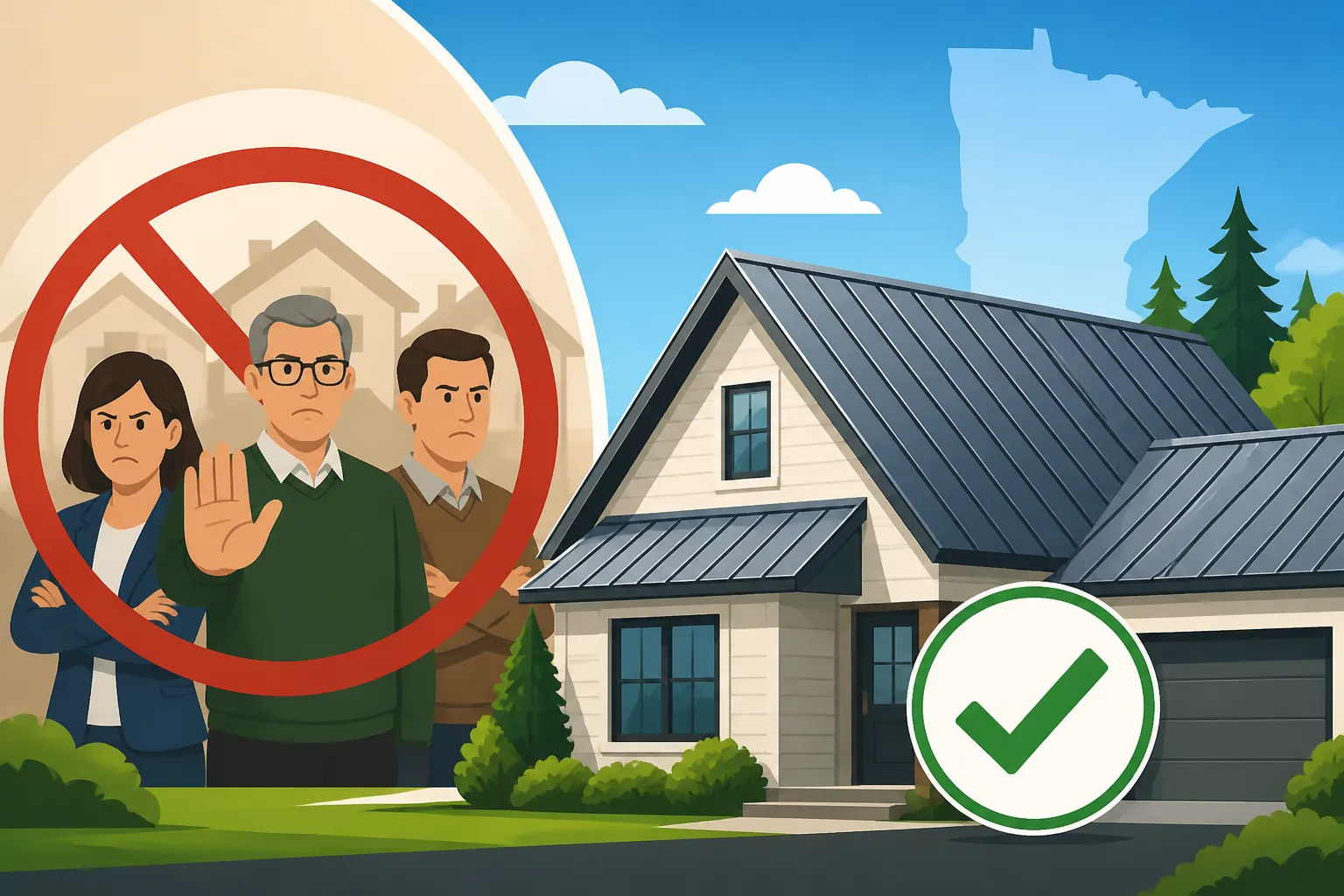
Can My HOA Stop Me From Getting a Metal Roof in Minnesota?
It's incredibly frustrating when you're trying to make a smart home improvement, like upgrading to a durable metal roof, only to hit a wall of restrictions from your homeowners' association. Many Minnesota homeowners face this exact dilemma, wondering if their HOA truly has the power to dictate their roofing choices. This comprehensive guide will walk you through the specifics of HOA authority in Minnesota, your rights as a homeowner, and how to effectively navigate the process to get that metal roof you desire.
Understanding HOA Authority and Metal Roofs
Homeowners' Associations (HOAs) are designed to maintain property values and a consistent aesthetic within a community. However, the scope of their power can often feel overwhelming, especially when it comes to significant exterior changes like roofing. It's not uncommon for homeowners to feel like they're caught between a rock and a hard place when their vision for their home clashes with HOA rules.
The Basics of HOA Covenants and Restrictions
When you buy a home in an HOA-governed community, you automatically agree to abide by a set of rules and regulations. These are typically outlined in documents like the Covenants, Conditions, and Restrictions (CC&Rs), bylaws, and architectural guidelines. These documents are legally binding and often cover everything from fence heights and paint colors to landscaping and, yes, even roofing materials. They're put in place to ensure a uniform look and feel, preventing drastic changes that some might perceive as decreasing property values or disrupting the neighborhood's harmony.
It’s easy to assume that because you own your home, you have complete control over its exterior. Unfortunately, within an HOA, that's rarely the case. The HOA's board of directors, elected by homeowners, is usually tasked with enforcing these rules. This means that any significant exterior alteration, including a new roof, typically requires prior approval from the architectural review committee or the board itself. Failing to get approval can lead to fines, forced removal of the unapproved change, and even legal action, which no one wants to deal with.
Why HOAs Might Restrict Metal Roofs Common Concerns
Metal roofs have come a long way, but some HOAs still operate under outdated perceptions or have specific reasons for their restrictions. One of the most common concerns is aesthetics. Traditional HOAs might prefer classic asphalt shingles, slate, or tile looks, viewing metal roofs, especially certain profiles like corrugated panels, as too industrial or "out of character" for the neighborhood. They might worry about the reflectivity of certain metals, the color palette, or even the potential for glare affecting neighboring properties.
Another concern for HOAs often revolves around noise. While modern metal roofs with proper underlayment are far quieter than many people imagine, some HOAs might still believe they'll be excessively loud during rain or hail. Durability and maintenance can also be a factor, though metal roofs generally excel in these areas. An HOA might express concerns about rust, dents, or a perceived higher maintenance cost if they aren't fully informed about contemporary metal roofing options. For these reasons, understanding the nuances of what your HOA's rules stipulate regarding roofing materials is crucial, especially concerning specific profiles mentioned in our guide on Metal Roofing Types Explained: Profiles & Panels.
Minnesota Laws and Metal Roof Rights
Navigating HOA regulations isn't just about understanding your community's specific rules; it also involves knowing how state laws in Minnesota might impact or override those rules. While HOAs generally have significant power, their authority isn't absolute and must operate within the framework of state statutes.
State-Specific Regulations Impacting HOAs
Minnesota has several laws that govern common interest communities, including HOAs. The Minnesota Common Interest Ownership Act (MCIOA), for instance, provides a legal framework for the creation, alteration, and termination of common interest communities and outlines the rights and responsibilities of both associations and unit owners. While MCIOA doesn't typically dictate specific roofing materials, it does set parameters around how HOAs can enforce their rules and how homeowners can seek recourse if they feel an HOA's decision is unreasonable or arbitrary.
For example, an HOA must act reasonably and in good faith when making decisions. If an HOA denies your request for a metal roof without a clear, objective reason that aligns with its governing documents and the overall community plan, you might have grounds to challenge that decision. Furthermore, any changes to the CC&Rs or architectural guidelines must typically follow a specific amendment process, often requiring a vote by homeowners. This means an HOA can't just arbitrarily ban metal roofs without proper procedure. Knowing these overarching legal principles gives you a stronger position when discussing your roofing plans with your association.
How Minnesota's Weather Influences Roofing Choices
Minnesota's climate is notoriously harsh, featuring brutal winters with heavy snow and ice, as well as significant temperature fluctuations and sometimes severe thunderstorms in other seasons. These conditions make roofing choices particularly critical for homeowners here. Traditional roofing materials like asphalt shingles can struggle under the constant freeze-thaw cycles, heavy snow loads, and impact from hail. This is where metal roofs truly shine.
Metal roofs are exceptionally durable, capable of withstanding extreme weather conditions that would compromise other roofing materials. Their smooth, hard surface allows snow to shed easily, reducing the risk of damaging snow loads and ice dams. They are also highly resistant to wind uplift, a crucial factor in states prone to severe storms. In fact, many metal roofing materials carry Class 4 impact resistance ratings, offering superior protection against hail, which can lead to significant Metal Roof Insurance Savings & Discounts. When considering the longevity and resilience needed for a Minnesota home, a metal roof offers a distinct advantage, making a strong case for its suitability, especially when comparing its lifespan to other options in our guide on Metal Roof Lifespan: How Long Do They Last?.
Navigating Your HOA for Metal Roof Approval
Getting your metal roof approved by your HOA might seem like a daunting task, but with the right approach and a clear understanding of the process, you can significantly increase your chances of success. It's all about preparation, communication, and presenting your case effectively.
Reviewing Your Governing Documents
Before you even think about contacting your HOA, your first and most critical step is to thoroughly review your community's governing documents. This includes your CC&Rs, bylaws, and especially the architectural guidelines. Look for any specific language related to roofing materials, colors, profiles, or even the reflectivity of materials. Some HOAs might have an outright ban on metal roofs, while others might simply have restrictions on certain types or appearances. You're looking for exact wording, not assumptions.
For instance, your guidelines might state "no exposed fastener metal roofing" but permit standing seam panels, or they might specify a "matte finish only" to prevent glare. Understanding these details can save you a lot of time and effort, as it will tell you immediately if your preferred metal roof style is a non-starter or if you need to choose a different profile. This deep dive into your HOA's specific rules is key to preparing your application and understanding what types of arguments or compromises you might need to make, as detailed in our comprehensive guide on HOA Rules and Metal Roofs: What's Allowed.
The Application and Approval Process
Once you've done your homework, the next step is to follow your HOA's established application process to the letter. Most HOAs have an architectural review committee (ARC) or a specific board member who handles these requests. Your application should be as detailed as possible, including:
- Specific Materials: Clearly state the type of metal (e.g., steel, aluminum, copper), the gauge, and the profile (e.g., standing seam, metal shingle, corrugated).
- Color Samples: Provide actual physical samples or high-quality images of the proposed color, ensuring it meets any specified color palette restrictions.
- Manufacturer Information: Include brochures or specification sheets from the manufacturer (e.g., Metal Roof Cost Compared to McElroy Metal Pricing or Metal Roof Cost Compared to Sheffield Metals Pricing), highlighting features like warranty, fire rating, and wind resistance.
- Installation Plan: Outline how the roof will be installed, including underlayment, and ensure it complies with local building codes and best practices. You might reference our guide on the Metal Roof Installation Process: Step by Step.
- Benefits: Emphasize the long-term benefits of a metal roof, especially relevant to Minnesota's climate, such as durability, energy efficiency, and low maintenance.
Be polite, persistent, and prepared to answer questions. Providing a well-researched and thorough application demonstrates your commitment and consideration for the community standards, making it harder for the HOA to deny your request without valid reason.
What to Do If Your Request is Denied
A denial can feel like a setback, but it's not necessarily the end of the road. Your first step is to understand why the request was denied. Was it a specific aesthetic concern, a misunderstanding of metal roofing technology, or a legitimate conflict with a specific covenant? Request the denial in writing, with clear reasons.
If the denial seems arbitrary or based on outdated information, prepare to appeal. This might involve:
- Direct Communication: Request a meeting with the architectural review committee or the board to discuss their concerns and present additional information. Bring samples, data, and even photos of other homes in similar communities that have successfully installed metal roofs.
- Education: Provide educational materials about modern metal roofing benefits, especially in cold climates like Minnesota. Highlight features like energy efficiency and extreme weather resistance, which can actually enhance property values and reduce long-term maintenance needs.
- Compromise: Be open to minor adjustments. If the HOA dislikes a certain color, perhaps a slightly different shade or a less reflective finish would be acceptable. If a corrugated profile is the issue, maybe a Standing Seam Metal Roof Cost would be a viable alternative that offers a more traditional appearance while retaining all the benefits.
- Legal Review: As a last resort, if you believe the HOA is acting outside its authority or discriminatorily, you might consider consulting with an attorney specializing in HOA law. They can help you understand your rights under Minnesota law and explore options for formal dispute resolution or even litigation. Remember, it's often more productive to resolve issues amicably, but knowing your legal standing is powerful. You can find more detailed advice on handling such situations in our article How to Get HOA Approval for a Metal Roof.
Benefits of Metal Roofs and Appealing to Your HOA
When approaching your HOA, it's not just about what you want; it's about making a compelling case for why a metal roof is a good choice for your home and, by extension, for the community. Highlighting the tangible benefits can help shift perceptions and gain approval.
Highlighting Durability and Longevity
One of the most powerful arguments for a metal roof is its unparalleled durability and longevity. Unlike asphalt shingles that might last 15-30 years, a high-quality metal roof can easily last 40-70 years, often outliving the homeowners themselves. In a state like Minnesota, where roofs take a beating from snow, ice, wind, and hail, this extended lifespan translates to significant long-term savings and peace of mind. You can discuss the initial Metal Roof Cost: Complete 2026 Guide but emphasize the superior return on investment over time.
Present your HOA with statistics on the life expectancy of different roofing materials. Explain how metal roofs are less prone to damage from high winds, thanks to their robust fastening systems, and how they resist moss and algae growth, which can be an aesthetic concern for HOAs. For instance, a quality Steel Roof Cost Per Square Foot offers immense value given its resilience. This isn't just about your house; it's about reducing the frequency of roof replacements in the neighborhood, minimizing disruption, and maintaining curb appeal for decades.
Energy Efficiency and Environmental Perks
Many HOAs are becoming more environmentally conscious, and metal roofs offer significant advantages in this area. Most modern metal roofs feature "cool roof" technology, often coated with special reflective pigments that reflect solar radiant heat. This can dramatically reduce cooling costs in the summer by keeping your attic and home cooler. While Minnesota summers might not be as long as those in other states, every bit of energy savings helps, and reducing your carbon footprint is a benefit everyone can appreciate.
Beyond energy savings, metal roofs are also an environmentally friendly choice because they are often made from a high percentage of recycled content and are 100% recyclable at the end of their exceptionally long life. Contrast this with asphalt shingles, which often end up in landfills. Presenting these environmental benefits can be a strong selling point, especially if your HOA prides itself on being a green or sustainable community. You can even mention how metal roofs are often eligible for certain tax credits or incentives, further sweetening the deal.
Aesthetic Considerations and Modern Options
The perception that metal roofs are only for barns or industrial buildings is outdated. Today's metal roofing market offers an incredible variety of styles, colors, and textures that can mimic traditional roofing materials with remarkable accuracy. From standing seam panels that offer sleek, modern lines to metal shingles that replicate the look of wood shakes, slate, or tile, there's a metal roof profile to suit almost any architectural style. Check out our detailed article on Metal Roofing Materials Compared: Steel, Aluminum, Copper & Zinc to see the aesthetic versatility.
When presenting to your HOA, bring high-quality images or physical samples of the specific metal roof profile and color you intend to install. Show them how these modern options can complement the existing homes in your community, rather than detracting from them. If their concern is a bright, shiny finish, explain that many metal roofs come in matte or low-gloss finishes designed to blend seamlessly into residential neighborhoods. Emphasize that the aesthetic impact is not just about the material but about the chosen profile and finish. For instance, Stone-Coated Steel Roof Cost options are specifically designed to replicate traditional aesthetics while providing the benefits of metal. Demonstrating that you've considered the community's aesthetic standards and chosen a metal roof that enhances, rather than clashes with, the neighborhood's appearance can go a long way in securing approval.
Disclaimer
The information provided in this guide is for general informational purposes only and does not constitute legal advice. Homeowners should always consult their specific HOA's governing documents and seek advice from a qualified legal professional or roofing contractor regarding their individual situation and local regulations in Minnesota. Building codes, HOA rules, and state laws can change, and it is the homeowner's responsibility to verify current requirements.