Can My HOA Stop Me From Getting a Metal Roof in Georgia?
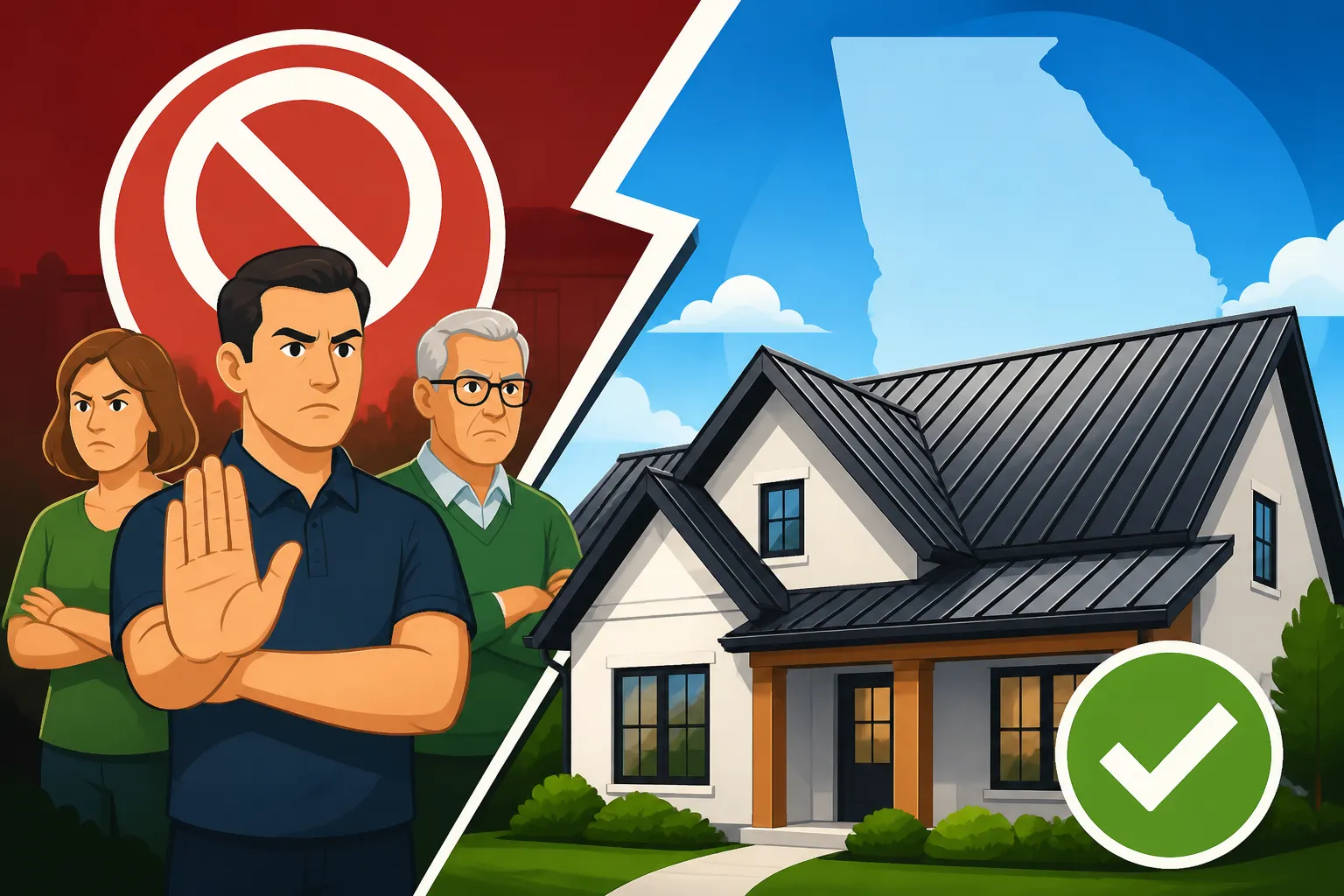
It's incredibly frustrating when you're looking to make a smart, long-term investment in your home, like installing a durable metal roof, only to hit a wall of rules and regulations from your Homeowners Association (HOA). Many homeowners in Georgia find themselves in this exact predicament, wondering if their HOA has the final say on such a significant upgrade. This comprehensive guide will walk you through the specifics of Georgia law, common HOA practices, and strategies to navigate the process if you're considering a metal roof for your Georgia home.
Understanding HOA Authority and Metal Roof Restrictions
Homeowners Associations are designed to maintain property values and a consistent aesthetic within a community. While this sounds good on paper, it often translates into a complex web of rules that can feel restrictive, especially when it comes to exterior home improvements.
The Basics of Covenants, Conditions, and Restrictions CC&Rs
Every HOA operates under a set of governing documents, primarily the Covenants, Conditions, and Restrictions, or CC&Rs. These are legally binding rules that outline what homeowners can and cannot do with their property within the association's jurisdiction. When you purchase a home in an HOA community, you agree to abide by these rules.
The CC&Rs will typically cover everything from fence heights and paint colors to landscaping and, yes, roofing materials. The devil is truly in the details with these documents. Some CC&Rs might explicitly prohibit certain roofing materials, while others might have more general clauses about "aesthetic harmony" or "approved materials" that leave a lot of room for interpretation by the architectural review board. For instance, some older CC&Rs might only mention traditional materials like asphalt shingles or tile, simply because metal roofing wasn't as prevalent or aesthetically diverse when the community was first established. They weren't necessarily trying to exclude metal roofs, but their outdated language can certainly feel that way today. This is why understanding your HOA's specific rules is the very first step.
Why HOAs Might Resist Metal Roofs
The resistance from an HOA against metal roofs often stems from a few core concerns, many of which are based on outdated perceptions or a lack of understanding of modern metal roofing options. It's not always about outright malice or trying to be difficult; sometimes it's about adhering to what they believe preserves the community's character.
One common concern is the aesthetic. Historically, metal roofs were often associated with agricultural buildings or commercial structures, featuring a utilitarian, corrugated look. Many HOAs worry that a metal roof will disrupt the uniform appearance of the neighborhood, especially if most homes have traditional asphalt shingles. They might fear a "shiny" or "industrial" look that doesn't fit with the established architectural style. Another concern can be noise; some believe metal roofs are inherently louder during rain or hail, which is largely a myth with properly installed, insulated systems. There might also be a misconception about durability, with some believing metal roofs are prone to denting or scratching, despite their proven resilience. Finally, some HOAs simply default to "no change" because it's easier than researching and understanding new materials.
Common Metal Roof Restrictions
If your HOA has rules regarding roofing, they might manifest in several ways. Some CC&Rs will have explicit prohibitions, stating something like, "Metal roofing is strictly prohibited." More commonly, however, you'll encounter rules that are less direct but equally impactful.
These can include requirements for specific material types, often listing only asphalt shingles, wood shakes, or tile. They might dictate specific colors, stipulating "earth tones only" or providing a palette of approved shades, which could exclude some of the vibrant or unique colors available for metal roofs. Often, the most challenging restriction is a broad "architectural review committee approval required" clause, which gives the HOA board or a dedicated committee significant discretionary power over any exterior changes. This means even if metal roofs aren't explicitly banned, a subjective decision by the committee could still lead to denial. For homeowners interested in specific styles, like a Standing Seam Metal Roof Cost, these aesthetic considerations can become particularly challenging if the HOA is unfamiliar with modern, high-end metal profiles that mimic traditional materials.
Georgia State Laws Affecting HOA Roofing Rules
While HOAs have significant power, their authority isn't absolute. State laws can and do impact what an HOA can and cannot regulate, especially when it comes to energy efficiency, storm resilience, and property improvements that promote sustainability.
Georgia's Specific Legislation Regarding Roofing Materials
Georgia, like many other states, has enacted laws that place limits on HOA restrictions concerning certain property improvements. The key piece of legislation to be aware of is Georgia Code O.C.G.A. § 44-3-200. This law, specifically under certain contexts related to energy devices, can implicitly impact roofing material choices. For example, laws that protect a homeowner's right to install solar panels can indirectly support metal roofs, as metal is often the ideal substrate for such installations. While Georgia doesn't have a direct "right to metal roof" law like some other states, it does have broader statutes protecting energy-efficient improvements.
Furthermore, general property rights laws exist. An HOA cannot implement rules that are arbitrary, capricious, or discriminatory. If an HOA's refusal of a metal roof cannot be justified by legitimate concerns (like structural integrity or true aesthetic discord, not just preference), it could be challenged. It's also important to consider if your HOA is following its own procedures correctly. Are they applying rules uniformly? Is their architectural review process transparent and fair? Any deviation from their established protocol could be grounds for an appeal. When comparing options, you might even consider the Metal Roof Cost vs Asphalt Shingle Cost in the context of long-term energy savings, which could appeal to an HOA open to sustainability arguments.
Balancing State Law with HOA Authority
The challenge often lies in interpreting how general state laws apply to specific HOA roofing restrictions. While a state law might protect your right to install an "energy device," a metal roof itself isn't always considered an energy device in the same way solar panels are, even though it offers significant energy efficiency benefits like heat reflection. However, you can make a strong case by linking the benefits of a metal roof directly to energy efficiency and sustainability, aligning it with the spirit of such state laws.
For instance, a highly reflective metal roof can significantly reduce cooling costs in Georgia's hot summers. If your HOA has a blanket ban on metal roofs, but allows for other energy-efficient upgrades, you might argue that their roofing restriction is inconsistent with broader state objectives. The key is finding specific language in Georgia law or precedent that creates leverage. This often requires careful research or consulting with an attorney familiar with both HOA law and Georgia property statutes. Don't assume defeat just because the HOA says "no"; understanding your rights under state law is crucial.
The Role of Aesthetic Standards
Even with state protections, HOAs in Georgia are generally permitted to enforce reasonable aesthetic standards. The question then becomes, what constitutes "reasonable"? A ban on overtly bright, non-conforming colors might be considered reasonable. A ban on a classic, subdued Stone-Coated Steel Roof Cost that mimics tile or shingles, however, might be harder to defend if the homeowner can demonstrate it blends seamlessly with the community's established look.
The Georgia courts generally uphold HOA covenants as long as they are clear, uniformly applied, and serve a legitimate purpose within the community, such as maintaining property values. If an HOA can demonstrate that a particular type of metal roof would genuinely detract from the overall aesthetic of the neighborhood, they might have a strong case. However, with the vast array of metal roofing styles available today—from standing seam and metal shingles to profiles that perfectly replicate slate or wood shake—it's increasingly difficult for HOAs to argue a blanket aesthetic incompatibility. Homeowners must often bridge this gap by educating the HOA on modern metal roofing capabilities.
Navigating the Approval Process and What to Do
So, you're set on a metal roof. What's the practical path to getting your HOA's blessing? It's a journey that requires preparation, diplomacy, and sometimes, a little legal muscle.
Reviewing Your HOA Documents Thoroughly
Before you even think about submitting a proposal, you absolutely must review your HOA's Declaration of Covenants, Conditions, and Restrictions (CC&Rs), bylaws, and any architectural guidelines. These documents are your roadmap. Pay close attention to sections on:
- Exterior Modifications: What process is outlined for making changes to the exterior of your home?
- Roofing Materials: Are specific materials explicitly permitted, prohibited, or is there a general "architectural review" clause? Look for phrases like "approved materials list" or "must be consistent with existing homes."
- Approval Process: How do you submit a request? What's the timeline for review? Who makes the final decision (board, architectural committee)? What information do they require?
- Appeal Process: What happens if your initial request is denied? Is there a formal way to appeal the decision?
It's not uncommon for homeowners to discover that the HOA documents are vague or even silent on modern metal roofing. This can actually work in your favor, as it means there isn't an explicit prohibition. However, it also means the decision often falls to the subjective judgment of the architectural review board. If you're going for a specific look, knowing the details of different profiles like Standing Seam vs Corrugated Cost Comparison can help you present a more informed proposal.
The Application and Appeal Process
Once you've done your homework on the documents, it's time to follow the formal process.
- Submit a Detailed Application: Don't just send a one-line request. Provide a comprehensive package that includes:
- A clear description of the proposed metal roof, including the specific material (e.g., steel, aluminum), profile (e.g., standing seam, metal shingles), color, and finish.
- Samples or brochures from your chosen metal roofing manufacturer (e.g., McElroy Metal vs Metal Sales Metal Roofing, Englert, Sheffield Metals) that show the actual appearance.
- Manufacturer specifications highlighting durability, energy efficiency, and warranty information.
- Photos of your home and, if possible, examples of other homes (even outside your community) with similar metal roofs to demonstrate the aesthetic you're aiming for.
- A statement outlining the benefits (longevity, energy savings, storm resilience) of a metal roof, perhaps with data on Metal Roof Insurance Savings & Discounts.
- A copy of the proposed contract with your chosen metal roofing contractor, ensuring they are licensed and reputable.
- Engage Professionally: Be polite, clear, and persistent. Answer any questions the HOA has promptly and thoroughly. Anticipate their concerns and address them proactively in your submission.
- Prepare for Denial (and Appeal): It's possible your initial request might be denied, especially if metal roofs are new to your community. If denied, review the reasons given by the HOA carefully. Does the denial cite a specific rule in the CC&Rs? Is it based on subjective aesthetic judgment? Then, follow the appeal process outlined in your HOA documents. This might involve presenting your case directly to the board.
During both the initial application and any appeal, remember that your goal is to educate the HOA and demonstrate that a modern metal roof can enhance, rather than detract from, the community's value and aesthetics.
Seeking Professional Help and Mediation
If direct communication and appeals don't yield results, it might be time to consider professional assistance.
- Metal Roofing Contractor: A reputable metal roofing contractor with experience in HOA communities can be an invaluable ally. They can provide expert advice, technical specifications, and even speak directly to the HOA's architectural review board to clarify details about the material and installation. They might even have experience navigating similar situations with HOAs in other parts of Georgia.
- Mediation: Some disputes can be resolved through professional mediation, where a neutral third party helps both sides find common ground. This is often less costly and confrontational than litigation.
- Legal Counsel: As a last resort, if you believe your HOA is acting arbitrarily, exceeding its authority, or violating Georgia state law, consulting an attorney specializing in HOA law is advisable. An attorney can review your CC&Rs, applicable state laws, and the HOA's actions to determine if you have a legal basis to challenge their decision. This route can be expensive, so it should be considered carefully after all other avenues have been exhausted. Sometimes, a strongly worded letter from an attorney can be enough to prompt the HOA to reconsider.
Making Your Case for a Metal Roof
Success often hinges on how well you can articulate the benefits of a metal roof and demonstrate that it aligns with, or even enhances, the community's values.
Highlighting Benefits for the Community
Frame your argument in terms of benefits not just for you, but for the entire community.
- Enhanced Property Values: Metal roofs are known for their longevity and curb appeal, which can positively impact property values across the neighborhood. A well-installed metal roof can easily last 50+ years, far outlasting traditional shingles, which means less frequent roofing noise and disruption for neighbors. You could reference articles like Does a Metal Roof Increase Home Value? to support this.
- Storm Resilience: Georgia experiences its fair share of severe weather, from heavy thunderstorms to hail. Metal roofs are incredibly durable and highly resistant to hail, high winds, and fire. This translates to fewer damaged roofs in the community, potentially leading to lower overall insurance claims for everyone and greater peace of mind during storm season. You can talk about the benefits of a Class 4 Impact-Resistant Roof Insurance Discount.
- Energy Efficiency: Modern metal roofs with cool roof coatings reflect a significant amount of solar radiation, reducing attic temperatures and leading to lower air conditioning costs for homeowners. This helps the environment and residents' wallets.
- Sustainability: Metal roofing often uses recycled content and is fully recyclable at the end of its very long life, making it an environmentally friendly choice compared to petroleum-based asphalt shingles that end up in landfills more frequently.
Presenting Acceptable Metal Roof Options
Many HOAs' objections stem from an outdated image of metal roofs. Educate them on the vast array of aesthetic options available today.
- Variety of Profiles: Show them brochures and samples of different metal roof profiles. A standing seam metal roof offers a sleek, modern look, while metal shingles can perfectly mimic the appearance of asphalt, slate, or wood shakes. Stone-coated steel roofs are virtually indistinguishable from traditional tile or heavy shake roofs.
- Color and Finish: Modern metal roofs come in a wide spectrum of colors, many with subdued, earthy tones that blend perfectly into any residential aesthetic. Show them that "metal roof" doesn't mean "shiny silver." Many finishes are matte or low-gloss, designed to integrate seamlessly. Point out that manufacturers like Sheffield Metals, Englert, or PAC-CLAD offer extensive color palettes.
- Matching Existing Materials: If your community has specific architectural styles or color schemes, demonstrate how your chosen metal roof can match or complement these existing elements. For example, a charcoal gray metal shingle roof can look nearly identical to a premium architectural asphalt shingle.
Documenting Everything
Maintain meticulous records of all your interactions with the HOA, your contractor, and any other professionals involved.
- Correspondence: Keep copies of all emails, letters, and application forms submitted to the HOA, as well as their responses. Note dates, times, and who you spoke with during phone calls or in-person meetings.
- Meeting Minutes: If you attend HOA meetings where your request is discussed, request copies of the meeting minutes.
- Contractor Information: Keep all documentation from your roofing contractor, including quotes, material specifications, and warranty information.
- Photographs: Take before-and-after photos, and photos of samples you've shown the HOA.
This documentation is vital if you need to escalate the issue or pursue legal action. It provides a clear, verifiable timeline and record of your efforts and the HOA's responses.
Here's a quick look at common HOA concerns and how modern metal roofing addresses them:
| HOA Concern | Metal Roofing Solution |
|---|---|
| Aesthetic Impact | Modern metal roofs come in diverse profiles (e.g., standing seam, metal shingles, stone-coated steel) and a wide range of colors/finishes (matte, low-gloss) that mimic traditional materials like slate, wood shake, or asphalt, blending seamlessly. |
| Noise Levels | With proper installation, insulation, and solid sheathing, modern metal roofs are often no louder than other roofing types during rain or hail. The perceived noise is largely a myth for residential applications. |
| Durability/Dents | High-quality metal roofs are highly resistant to hail and impacts (often Class 4 impact rated), high winds (up to 150+ MPH), and fire. They are built to withstand severe weather, far surpassing the lifespan of many conventional materials. |
| Resale Value | Metal roofs are a premium upgrade with a long lifespan, often offering a strong return on investment. Their durability, energy efficiency, and aesthetic appeal can enhance property values and attract buyers looking for low-maintenance, resilient homes. |
| Community Uniformity | By selecting a profile and color that complements the existing neighborhood aesthetic, you can demonstrate how a metal roof can blend in while offering superior performance, providing long-term value to the entire community. |
At the end of the day, getting a metal roof in an HOA-governed community in Georgia requires diligence and a well-informed approach. By understanding your HOA's documents, leveraging the benefits of metal roofing, and knowing when to seek professional help, you can significantly improve your chances of success.
Disclaimer
This article is for general informational purposes only and does not constitute professional advice. Laws, prices and regulations vary by location and change over time. Consult a qualified professional for guidance on your specific situation.