What Is Oil Canning and How to Prevent It
It's incredibly frustrating when you've invested in a beautiful, durable metal roof, only to notice unsightly waves or ripples appearing on the panels. This common, yet often misunderstood, phenomenon known as oil canning can make your roof look less than perfect and leave you wondering if something went wrong with the installation or the materials themselves. This guide will demystify oil canning, exploring what it truly is, why it happens, and most importantly, how to prevent it from marring the smooth, sleek appearance of your metal roofing.
Understanding What Oil Canning Is
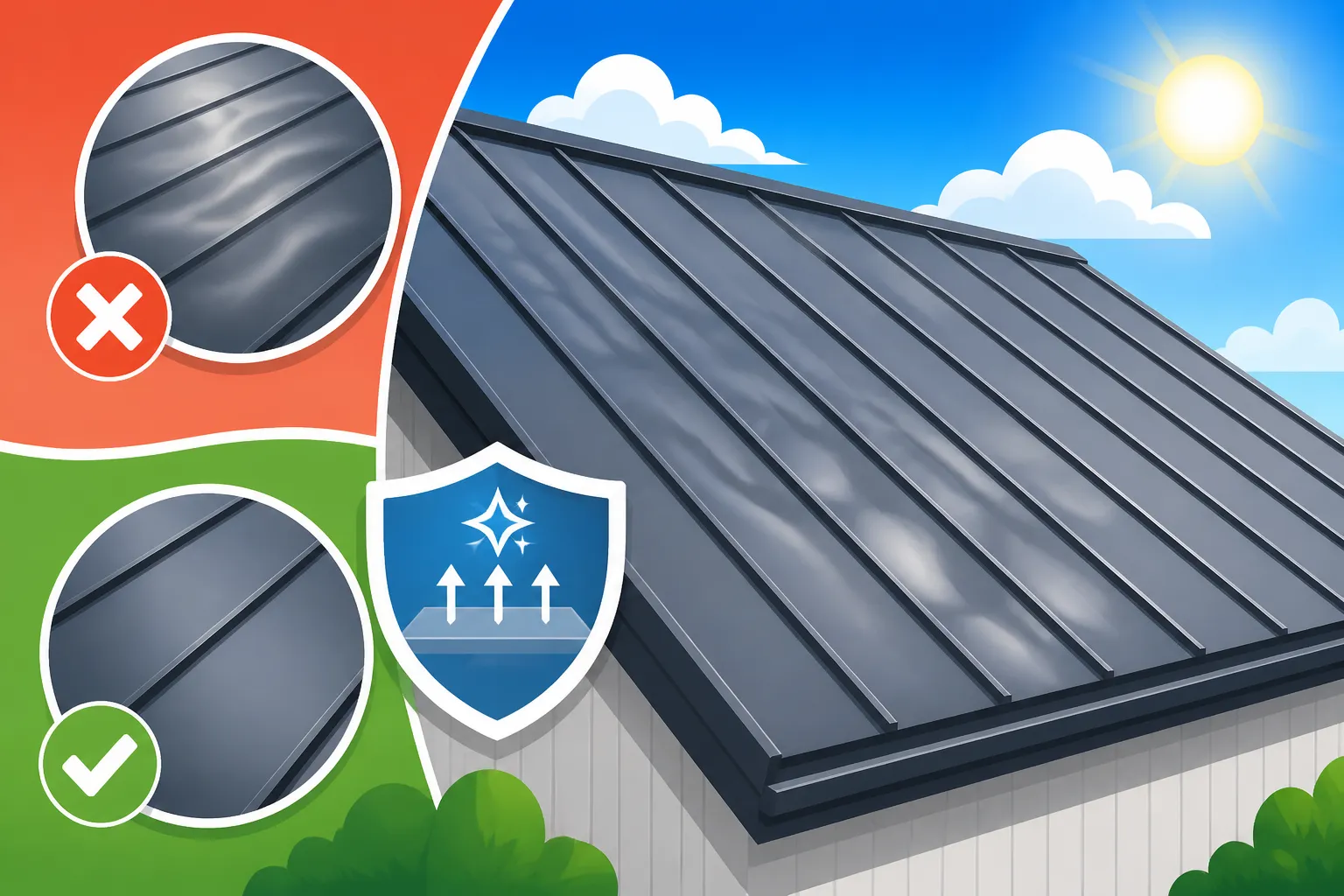
When people talk about oil canning, they're usually referring to the visible distortion or waviness that can appear on flat areas of metal panels. It's not unlike the effect you might see on the side of a thin metal can when you press it – a slight buckling or a ripple that can pop in and out. On a metal roof, these subtle depressions or bulges can catch the light in a way that makes them highly noticeable, detracting from the otherwise pristine lines of a well-installed system.
The Visual Manifestation on Metal Panels
Imagine looking across a new metal roof, expecting a perfectly flat, uniform surface. Instead, your eye catches a subtle, almost imperceptible ripple, a series of waves, or a slight buckling effect across the broad, flat sections of the panels. That’s oil canning. It's not a dent from hail or an impact, nor is it necessarily a sign of a manufacturing defect in the traditional sense. It’s more of an optical illusion created by minor variations in the flatness of the metal, amplified by light reflection. These distortions can appear as gentle undulations, broad waves, or even small, localized dimples, making the surface look anything but smooth.
The appearance of oil canning is often most noticeable on wide, flat panels, such as those found in many modern standing seam metal roof systems. The effect is also more pronounced on certain colors and finishes, particularly highly reflective, lighter-colored panels where shadows and light play a greater role in highlighting irregularities. Darker, matte finishes tend to conceal oil canning better, though it can still be present. It's purely an aesthetic issue; while it can be frustrating to look at, it doesn't typically compromise the structural integrity or performance of your roof.
The Mechanics Behind Metal Deformation
At its core, oil canning is a manifestation of stresses within the metal itself. Metal, even when it appears perfectly flat, has inherent residual stresses from its manufacturing process – rolling, forming, and coiling. When these stresses are released or exacerbated during handling, installation, or due to environmental factors, the metal panel seeks the path of least resistance, which often results in a slight buckle or wave. Think of it like a thin sheet of paper that, when trying to lie perfectly flat, still has a tiny curl or wave from how it was handled or stored.
The panels might be slightly stretched or compressed unevenly, or not perfectly flat off the coil. When installed, these minor imperfections can be "locked in," causing the metal to want to relieve that internal tension by bowing out or in. This can be particularly true for panels made from softer metals like copper or aluminum, but even steel panels can exhibit oil canning. It’s a complex interplay of internal stresses, external forces, and the physical properties of the specific metal sheet. Understanding these mechanics is the first step toward effectively mitigating or preventing the issue.
Key Factors Contributing to Oil Canning
Oil canning isn't usually caused by a single smoking gun but rather a combination of factors related to the material itself, how it's handled and installed, and the environment it's subjected to. It's often a cumulative effect, meaning several small issues can add up to noticeable distortions.
Inherent Material Characteristics and Panel Design
The type of metal you choose for your roof plays a significant role in its susceptibility to oil canning. Softer metals, like aluminum and copper, are more prone to exhibiting this phenomenon because they are more pliable and can deform under less stress. Even though they are durable, their malleability makes them visually more sensitive to imperfections. Steel, while generally stiffer, is not immune, especially if the panels are very wide or the gauge is too thin for the application. When considering different options, it's worth understanding the characteristics of various Metal Roofing Materials Compared: Steel, Aluminum, Copper & Zinc.
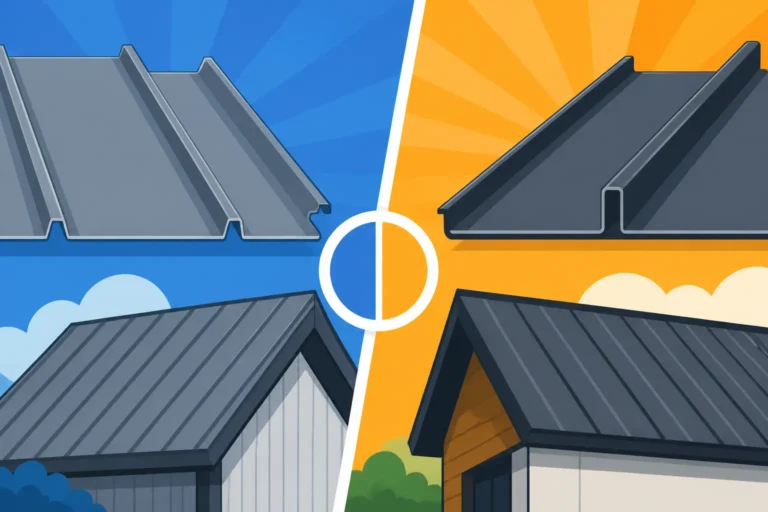
The thickness, or gauge, of the metal also matters. Thinner gauges, such as 29-gauge or even 26-gauge steel, have less rigidity and are more likely to show oil canning than thicker 24-gauge or 22-gauge panels. The wider the panel, the more surface area there is for these minor undulations to become visible, making panel width a critical design consideration. Panel profiles, like those in a Standing Seam Metal Roof Cost or Corrugated Metal Roof Cost system, can also influence how oil canning is perceived. Panels with stiffening ribs or striations are often less prone to exhibiting noticeable oil canning than wide, flat panels. The flatness of the coil from which the panels are formed is another factor; coils that aren't perfectly flat (known as "coil memory" or "coil set") can transfer these slight deformations into the finished panels.
Installation Practices and Substructure Challenges
Even with perfect materials, poor installation techniques can introduce or exacerbate oil canning. Over-fastening panels, especially in exposed fastener systems, can create localized stress points that lead to buckling. Improper fastening can restrict the natural thermal movement of the metal, forcing it to buckle elsewhere. Similarly, if the roof deck or substructure isn't perfectly flat and smooth, these imperfections can transfer directly to the metal panels laid over them. Any inconsistencies in the sheathing or the purlins can create high and low spots, causing the metal to conform to these uneven surfaces.
Careful handling of panels during transport and installation is also crucial. Bending, dropping, or walking improperly on panels can introduce permanent distortions. Professional roofing contractors understand the nuances of working with metal panels and ensure that the Metal Roof Installation Process: Step by Step adheres to best practices. This includes using proper lifting techniques, ensuring a level substrate, and applying fasteners correctly to allow for thermal expansion and contraction without causing unnecessary stress. Sometimes, the issue isn't with the metal itself but with the foundational elements; a weak or uneven substrate can spell trouble even for the highest quality metal panels.
Environmental Stresses and Thermal Movement
Metal roofs are constantly exposed to the elements, and extreme temperature fluctuations are a significant contributor to oil canning. Metal expands when heated and contracts when cooled. While metal roofing systems are designed to accommodate this movement, excessive expansion and contraction, especially if the panels are improperly fastened or too tightly constrained, can induce stress and lead to visible distortions. Imagine a long panel heating up under intense sun – if it can't expand freely, it might buckle or ripple to relieve the pressure.
Regions with large diurnal temperature swings, where days are very hot and nights are very cold, can see more pronounced oil canning. Direct sunlight, especially on broad, unshaded roof sections, can also intensify the effect. Wind uplift can also play a role, causing panels to flex and potentially developing or worsening oil canning over time. Humidity and moisture can indirectly affect the substrate, leading to warping that then transfers to the metal panels. All these environmental factors mean that proper design and installation for your specific climate are paramount to minimizing the risk of oil canning.
Distinguishing Oil Canning from Structural Issues
It's easy to look at those ripples on your new metal roof and immediately think the worst – that your roof is structurally compromised or failing. However, it's really important to understand that oil canning is almost entirely an aesthetic concern. It might not look pretty, but it rarely signals a problem with the roof's performance or longevity.
Primarily an Aesthetic Phenomenon
The most crucial thing to remember about oil canning is that it is primarily a cosmetic issue. It does not affect the watertight integrity of your metal roof. Your roof will still shed water effectively, resist wind uplift, and protect your home from the elements just as it was designed to. The ripples and waves are superficial deformations of the panel's flat surface, not breaches or weaknesses in the metal itself. This means that, while it can be disappointing to look at, it doesn't mean your roof is leaking, about to collapse, or failing in any functional way.
The frustration often stems from the expectation of a perfectly smooth, factory-new finish, especially given the investment in a high-quality metal roof. Homeowners anticipate a sleek, modern look, and oil canning can feel like a defect. However, it's actually an inherent characteristic of large, flat metal panels. Many industry experts consider a certain degree of oil canning to be an unavoidable reality of metal roofing, particularly with wide panel profiles. It's akin to the subtle variations you might find in natural stone or wood – a part of the material's character, even if not explicitly desired.
Implications for Warranties and Home Value
Because oil canning is largely an aesthetic issue, it's typically not covered by manufacturer warranties. Most metal roofing warranties focus on the functional aspects of the roof, such as its ability to resist corrosion, cracking, chalking, and fading, or its structural integrity against high winds and impact. They generally include clauses that specifically exclude oil canning from coverage, recognizing it as an inherent characteristic rather than a defect. This can be a hard pill to swallow for homeowners who feel their new roof isn't "perfect," but it's a standard industry practice.
When it comes to home value, the impact of oil canning is usually minimal. While a potential buyer might notice it, it's unlikely to be a deal-breaker or significantly reduce the appraised value of your home, especially once they understand it's not a functional defect. A well-maintained metal roof still offers superior durability, energy efficiency, and longevity, which are strong selling points. The key is managing expectations upfront. Reputable contractors and manufacturers will often discuss the potential for oil canning before installation to ensure homeowners are aware of this possibility. It’s a good idea to discuss these possibilities with your chosen contractor when reviewing your Metal Roof Warranties: Workmanship vs Manufacturer.
Proactive Measures to Prevent Oil Canning
While oil canning might be an inherent characteristic of metal roofing, there are many effective strategies you can employ during the design, material selection, and installation phases to significantly minimize its occurrence and visibility. Thinking ahead and making informed choices is your best defense against those frustrating waves.
Strategic Material Selection and Panel Specification
One of the most impactful ways to prevent oil canning starts long before installation begins: at the design and material selection stage. Thicker gauge metal panels, such as 22-gauge or 24-gauge steel or aluminum, inherently possess more rigidity and are less prone to buckling than thinner 26-gauge or 29-gauge options. While they might come with a slightly higher Metal Roof Cost: Complete 2026 Guide, the investment can pay dividends in aesthetic quality and peace of mind. For example, a 24-gauge metal roof offers greater stiffness compared to a 26-gauge panel, which can greatly reduce the likelihood of oil canning.
Beyond gauge, consider the width of the panels. Wider panels have more unsupported flat surface area, making them more susceptible to visible distortions. Opting for narrower panels or panels with stiffening ribs or striations (often called "pencil ribs" or "striations") can dramatically increase their rigidity and reduce the appearance of oil canning. These small, subtle indentations break up the flat surface, making any minor buckles less noticeable. Additionally, some manufacturers, like McElroy Metal or Metal Sales, offer specific panel profiles designed with enhanced stiffening features to combat oil canning. When choosing your metal, discuss these options with your supplier or contractor. You can also explore different Metal Roofing Types Explained: Profiles & Panels to understand how varying designs impact rigidity.
Precision Installation Techniques
Even the best materials can fall victim to oil canning if not installed correctly. Professional and experienced installers are key. They understand the critical importance of a perfectly flat and uniform substrate beneath the metal panels. Any unevenness in the roof deck, such as warped plywood or poorly spaced furring strips, will be telegraphed directly through the metal panels, exacerbating oil canning. Ensuring a smooth, consistent surface for the panels to rest on is paramount. This is also where high-quality underlayment comes into play, providing a consistent base. You can learn more about this in our guide on Metal Roof Underlayment and Ventilation Guide.
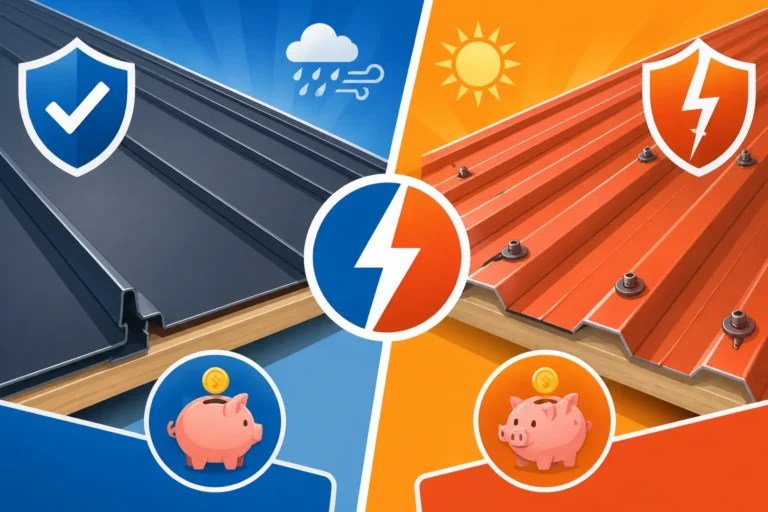
Proper fastening techniques are also vital. For concealed fastener systems, like standing seam, the clips must be installed correctly, allowing the panels to expand and contract freely with temperature changes. Over-tightening or incorrectly spacing fasteners can restrict this natural movement, forcing the metal to buckle. For exposed fastener systems, screws should be driven to the correct torque – snug but not so tight as to deform the panel. Installers must also handle the panels carefully during loading, unloading, and placement, avoiding bending or creasing that could introduce permanent stress. It's also important to ensure the panels are cut precisely and fit together without undue force or tension. Contractors familiar with How Metal Roofs Handle Expansion and Contraction will implement strategies to accommodate this movement.
Working with Experienced Professionals
Perhaps the single most critical prevention strategy is hiring a qualified and experienced metal roofing contractor. An expert who specializes in metal roofing understands the nuances of material selection, panel design, and installation techniques necessary to minimize oil canning. They will know which gauges and profiles are best suited for your climate and roof design and can advise on finishes that help camouflage potential ripples. Utilizing services from platforms like Modernize can help homeowners connect with reputable, vetted professionals who have a proven track record with metal roof installations.
An experienced contractor will also prioritize thorough preparation of the roof deck and ensure proper handling of materials. They will have skilled crews who understand the precision required for metal roof installation, ensuring panels are laid flat, fasteners are correctly applied, and thermal movement is accommodated. They should also be transparent about the potential for oil canning, managing your expectations upfront. Before committing to a contractor, make sure you ask them about their experience with various metal panel types and their strategies for preventing oil canning. Our guide on How to Hire a Metal Roofing Contractor provides excellent questions to ask potential candidates.
Here's a quick overview of key prevention strategies:
| Prevention Strategy | Description | Impact on Oil Canning |
|---|---|---|
| Material Gauge | Choosing thicker metal (e.g., 22 or 24 gauge). | Significantly Reduced |
| Panel Width | Opting for narrower panels or panels with stiffening ribs/striations. | Reduced |
| Coil Flatness | Sourcing panels from high-quality, flat-rolled coils. | Reduced |
| Substrate Prep | Ensuring a perfectly flat and smooth roof deck or purlin system. | Significantly Reduced |
| Fastening Techniques | Proper clip placement and torque for thermal movement allowance. | Reduced |
| Careful Handling | Avoiding bending or creasing panels during transport and installation. | Reduced |
| Experienced Contractor | Hiring specialists with expertise in metal roofing nuances. | Significantly Reduced |
| Panel Ribs/Striations | Selecting panel profiles with built-in stiffening features. | Reduced |
What to Do When Oil Canning Occurs
Even with the best preventative measures, sometimes a degree of oil canning can still appear. It’s important to manage expectations and understand what can realistically be done when you notice these ripples on your roof.
Managing Expectations and Remedial Approaches
The honest truth about existing oil canning is that it's notoriously difficult, if not impossible, to completely "fix" once it has occurred. Because it stems from inherent stresses within the metal and how it’s laid, there isn’t a simple patch or repair that can erase it. Many in the industry consider some level of oil canning an acceptable characteristic of metal roofing, especially with wide, flat panels. The goal then becomes not eradication, but mitigation and acceptance.
Some minor adjustments might be possible in certain situations, but these are often limited. For instance, sometimes a contractor can slightly loosen or adjust fasteners in specific areas to relieve tension, but this is a delicate process and only effective if the fastening was the primary cause and done improperly. In other cases, if panels are removable, they might be replaced with new ones from a different coil or with added stiffeners, but this is a costly and disruptive undertaking that might not even guarantee a different outcome. It's often more about managing the visual impact rather than achieving a perfectly flat surface. Using matte finishes or textured paint coatings can help camouflage the effect, as they tend to reflect light less uniformly than glossy finishes. When discussing options with your contractor, ask about various Best Metal Roof Colors and How to Choose as some finishes may be more forgiving visually.
When to Consult with a Metal Roofing Specialist
If you observe significant oil canning and are concerned, your first step should always be to contact your metal roofing contractor. A reputable contractor will visit your property, assess the situation, and explain the likely causes. They can help you understand whether the oil canning is within expected industry tolerances or if there might be an underlying issue that can be addressed. While they may not be able to eliminate it entirely, they can offer insights and, in rare cases where the installation was clearly faulty, discuss potential adjustments.
It’s beneficial to engage with a contractor who is a specialist in metal roofing rather than a general roofer. They have a deeper understanding of the material's behavior and the intricate aspects of metal roof installation. Platforms like Modernize can be excellent resources for finding such specialists, allowing you to connect with experienced professionals in your area. If you believe the issue goes beyond aesthetic and truly impacts the roof's performance, or if your contractor is unresponsive, you might consider getting a third-party inspection from a qualified roofing consultant. This independent assessment can provide an objective view of the situation, helping you understand if you have grounds for a claim or if the oil canning is indeed an inherent, non-warrantied characteristic. Remember, the key is to have realistic expectations; prevention is always more effective than attempting a "cure" for oil canning.
Disclaimer
Please note that the information provided in this article is intended for general guidance and informational purposes only, and does not constitute professional advice. Metal roofing projects are complex and should always be undertaken by qualified and experienced professionals. Building codes, product specifications, and installation techniques can vary significantly based on location and specific project requirements. Always consult with a licensed metal roofing contractor and local authorities before making any decisions related to your roofing project.