Metal Roof Contractor vs General Contractor
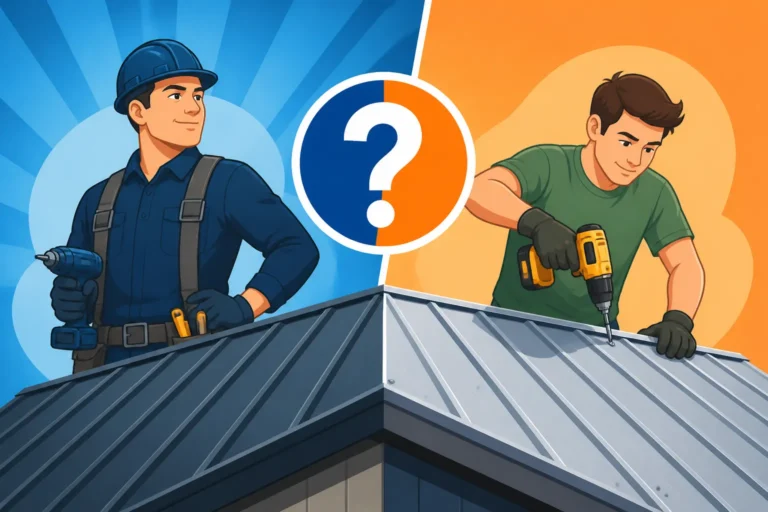
Deciding between a specialized metal roof contractor and a general contractor is a stressful crossroads for many homeowners. You want the job done right the first time to avoid expensive leaks, yet you also want someone who understands the "big picture" of your home’s exterior. This guide clarifies the distinct roles each professional plays so you can hire with confidence.
Understanding the Fundamental Differences
When you start looking for someone to handle your roof, you’ll likely see two types of business cards: one for a general contractor and one for a specialized roofing company. A metal roof specialist lives and breathes one specific trade. They are the surgeons of the roofing world. They know the exact pressure needed for a fastener and the specific way a metal panel should "breathe" during a hot summer afternoon. Their crews are trained specifically on the nuances of metal, which is a vastly different beast than traditional asphalt.
A general contractor (GC), on the other hand, is like a primary care physician. They have a broad understanding of every system in your home, from the foundation to the rafters. They are master project managers who juggle multiple trades at once. If your roofing project is just one part of a massive whole-home renovation—perhaps you are adding a second story or a large sunroom—the GC is often the one steering the ship. However, they rarely swing the hammers themselves on the roof.
Understanding these roles is the first step in How to Hire a Metal Roofing Contractor. If you choose a GC, they will likely hire a subcontractor to do the actual installation. If you choose a specialist, you are dealing directly with the experts. Both paths have merit, but the specialized route typically offers a more direct line to technical expertise, which is vital for high-end materials like standing seam or copper.
What is a Metal Roofing Specialist
A metal roofing specialist focuses almost exclusively on metal systems. Their shop is filled with specialized benders, crimpers, and shears that a standard roofing crew wouldn't own. These pros understand that metal isn't just a "set it and forget it" material; it requires precise measurements to account for the way metal expands and contracts. When you talk to a specialist, they can give you deep insights into 24 vs 26 Gauge Metal Roofing: Which Is Best? for your specific climate.
These contractors often have a direct relationship with manufacturers. This means they are up-to-date on the latest installation techniques required to maintain a warranty. They don't just "do roofs"; they master the art of the seam. If you are looking for a specific look, such as a Stone-Coated Steel Roof Cost estimate or a custom copper bay window roof, a specialist is the only one who will have the artisan skills to execute it without common errors like oil canning or visible fastener mistakes.
What is a General Contractor
A general contractor is your go-to person when your home needs a "total makeover." They excel at coordination. If your project involves replacing the roof, installing new siding, and rebuilding a deck all at once, a GC prevents the chaos of you having to manage three different companies. They handle the permits, the scheduling of inspections, and the "handoff" between different trades. For example, they ensure the siding installers don't damage the new roof flashing and that the gutter crew shows up the day after the roof is finished.
The downside is that a GC is a "jack of all trades." While they know how a roof should look, they might not know the intricate details of a Standing Seam Metal Roof Cost or the specific underlayment requirements that prevent condensation in a metal system. They rely heavily on their subcontractors. When you hire a GC for a metal roof, you are essentially paying them a management fee to find and vet the roofing crew for you.
Licensing and Certification Nuances
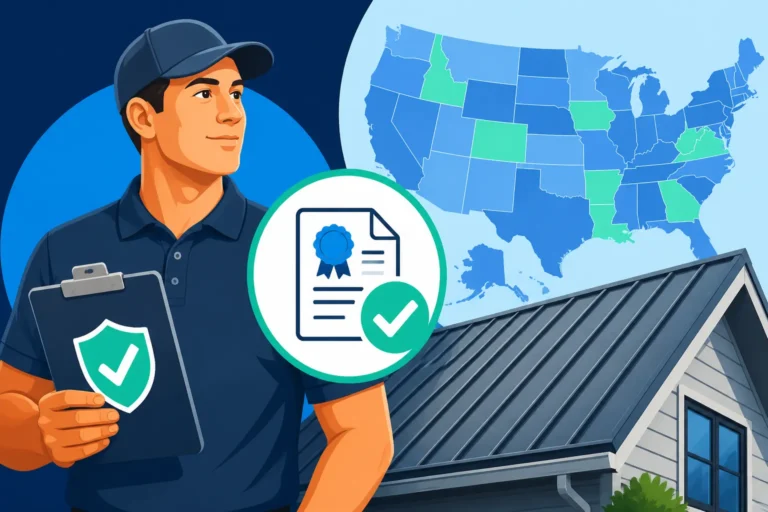
Licensing requirements vary wildly from state to state, but specialized roofing contractors often carry specific certifications that a general contractor might not bother with. For instance, a specialist might be a "Master Elite" installer for a specific metal brand. This is a huge deal because many metal manufacturers will only offer their best "no-dollar-limit" warranties if the installer has gone through their proprietary training.
General contractors hold a broad license that covers many types of work, but they might not have the specialized "C-39" (roofing) designation in states that require it for high-value projects. Before signing anything, you should review Metal Roof Contractor Licensing, Bonding & Insurance to ensure that whoever you hire is legally allowed to perform the specific task of roofing. A GC's insurance might cover general construction, but if their policy has a "roofing exclusion," you could be left high and dry if a leak occurs during the project.
Specialized Knowledge and Technical Skill
Metal roofing is not "shingles made of steel." It is a sophisticated water-shedding system that relies on physics and precision. A specialist understands that if you screw a metal panel down too tight, it will buckle and "moan" as the sun hits it. They know that different metals react poorly to one another—put a copper gutter on an aluminum roof, and you’ll see the aluminum literally dissolve through galvanic corrosion. This level of technicality is where the specialist shines.
General contractors are often focused on the aesthetic and the timeline. While they are great at ensuring the project stays on budget, they might overlook the "boring" technical details that lead to a 50-year roof life. If you are using a site like Modernize to find pros, you’ll notice that the best-rated experts for metal are usually the ones who don't also offer kitchen remodeling. They have dedicated their careers to the science of the building envelope.
Precision in Metal Fabrication
Many high-end metal roofs are "site-rolled." This means the contractor brings a massive machine on a trailer to your driveway and turns a flat coil of metal into custom-length panels that run from your ridge to your eaves without a single horizontal lap. A specialist owns this machine and knows how to calibrate it. A general contractor almost certainly does not. If a GC is handling your roof, they are likely ordering pre-cut panels from a warehouse, which can lead to more seams and more potential leak points.
The precision required for trim and flashing is also an area where specialists excel. On a metal roof, the flashing around a chimney or a valley isn't just tucked under a shingle with some tar; it’s often folded and "locked" into the panels. This requires a high level of metal-smithing skill. You want someone who can explain How to Find a Standing Seam Roof Specialist who knows how to hand-folder a dead-valley or a transition without relying on messy caulking that will fail in five years.
Understanding Thermal Expansion and Contraction
Metal is a living material in the sense that it grows and shrinks with the temperature. On a 100-degree day, a 30-foot panel can grow by nearly half an inch. If that panel is pinned at both ends with rigid fasteners, it will warp, creating a wavy look known as "oil canning." A specialized contractor knows how to use "sliding clips" that allow the roof to move independently of the house's frame.
A general contractor, or a general roofer who mostly does asphalt, might treat metal like a rigid material. They might use "exposed fasteners" (screws with rubber washers) in a way that doesn't account for this movement. Over time, those screws will "back out" or the holes will elongate, leading to leaks. Discussing the Standing Seam vs Corrugated Metal Roof options with a pro will reveal their depth of knowledge on this subject. If they don't mention thermal movement, they probably aren't the right specialist for the job.
Tooling and Equipment Requirements
You can install an asphalt shingle roof with a hammer and a utility knife. You cannot do that with metal. Metal roofing requires specialized power shears (to avoid "burning" the paint edge with a saw), seaming tools, and heavy-duty folding brakes. Specialists invest tens of thousands of dollars in these tools. A general contractor’s crew might show up with a circular saw and a "metal blade," which creates heat that destroys the factory finish on the edge of the panel, leading to premature rust.
Beyond the hand tools, there is the matter of safety equipment. Metal is incredibly slippery, especially when there's a light dew or a bit of dust. Specialized contractors use specific magnetic "roofing shoes" or sophisticated fall-arrest systems designed for steep-slope metal. When you are looking at Metal Roof Labor Cost, remember that part of that price is the overhead for these high-end tools and safety measures that ensure your home isn't a liability site.
Project Management and Subcontracting Realities
One of the "open secrets" of the construction industry is that general contractors rarely have an in-house roofing crew. When you sign a contract with a GC, they often turn around and call a roofing company they've worked with before. This isn't necessarily a bad thing, but it does add a layer of separation between you and the person actually doing the work. You are paying for the GC's "vetting" process and their ability to keep the subcontractor on schedule.
When you work with a specialist, the person you talk to during the sales process is usually the owner or a senior manager of the crew that will be on your roof. This direct communication can be a lifesaver when a problem arises mid-project. If you've used a service like Modernize to gather quotes, you'll be able to see which companies are "direct-to-consumer" specialists and which are larger management firms.
| Feature | Metal Roof Specialist | General Contractor |
|---|---|---|
| Primary Focus | Metal Roofing Systems | Overall Home Renovations |
| Labor Source | In-house specialized crews | Subcontracted roofing crews |
| Tooling | Specialized metal brakes/shears | General construction tools |
| Warranty Support | Manufacturer-certified for metal | General workmanship warranty |
| Best For | Dedicated roof replacement | Large multi-trade remodels |
Who is Actually Doing the Work?
If you hire a general contractor, your first question should be, "Who is your roofing sub, and can I see their previous metal jobs?" Some GCs have excellent relationships with top-tier specialists, while others might hire the cheapest crew available to maximize their profit margin. This is why How to Read and Compare Metal Roof Quotes is so important. If the GC’s quote is lower than a specialist’s quote, it’s often because they are using a lower-tier subcontractor or cheaper materials.
With a specialist, the "who" is much clearer. You can ask for a list of their recent local installs and actually drive by them. You can check if they have Manufacturer-Certified Metal Roof Installers Explained on their staff. When the same company that sells the job also installs it, there is a higher level of accountability. There is no "pointing fingers" between the GC and the sub if a leak develops; the specialist owns the problem entirely.
Communication and Point of Contact
Communication styles differ between these two pros. A general contractor is used to dealing with homeowners who have a million questions about cabinets, flooring, and paint. They are usually very good at "hand-holding" and providing daily updates. However, they might not be able to answer highly technical questions about the "PVDF paint finish" or "galvanic scales" without calling their sub first.
A specialist can be more "no-nonsense." They are focused on the technical execution. While they might not be as "polished" in their communication as a high-end GC, they provide the depth of information you need for a permanent roofing solution. If you use a tool like Modernize, you can often find reviews that specifically mention how well these pros communicate during the high-stress days when your roof is torn off and open to the elements.
Managing Multiple Renovation Projects
This is where the general contractor wins. If your project isn't just a roof, but also involves structural changes—like moving a chimney or adding a dormer—a specialist might be out of their league. Specialists generally don't want to touch framing, drywall, or electrical work. If they find a rotten rafter, they can usually fix it, but if they find that your entire roof pitch needs to be redesigned to accommodate the metal, they might tell you to call a GC anyway.
Managing the "flow" of a big project is an art. For example, if you are doing a roof and a kitchen, you don't want the roofing crew's heavy trucks cracking your newly poured driveway. A GC coordinates the timing of every delivery and every crew. They ensure that Questions to Ask a Metal Roofing Contractor Before You Hire are answered in the context of the whole house, not just the roof.
Cost Considerations and Budgeting
Money is usually the deciding factor, and the pricing structures of GCs vs. specialists are very different. A specialist provides a "fixed bid" for the roof. They know exactly how much the metal costs, how long the labor takes, and what their overhead is. They are "lean and mean" because they only do one thing.
A general contractor usually works on a "cost-plus" or a "percentage" basis. They take the subcontractor's bid and add 10% to 20% on top for their management fee. This means that, for the exact same roof, a GC will almost always be more expensive than a specialist. You are paying that extra money for the convenience of not having to manage the project yourself. For many busy homeowners, that 15% management fee is well worth the peace of mind.
Direct Labor vs. Management Fees
When you look at the breakdown in Metal Roof Installer Cost vs Material Cost, you’ll see that labor is a massive chunk of the price. In a specialist’s quote, that labor is going directly to the people on your roof. In a GC’s quote, that labor is split between the subcontractor and the GC's overhead. This is why "budget" GCs sometimes cut corners on the roofing sub—they have to keep the total price competitive while still taking their cut.
If you are on a tight budget and the roof is your only priority, going direct to a specialist is the most efficient use of your dollars. You can often get a higher-quality material—like upgrading from a 29-gauge to a 26-gauge—for the same price a GC would charge for the cheaper stuff plus their fee. It's about where your "value" lies: in the physical product or the management service.
Material Procurement Costs
Specialists often have better "buying power" with metal manufacturers. Because they buy thousands of squares of metal a year, they get volume discounts that a general contractor, who might only do three metal roofs a year, simply can't access. These savings are often passed on to you. A specialist can also offer more variety in styles, helping you decide if Stone-Coated Steel Roof Cost is a better fit for your HOA than a standard ribbed panel.
On the flip side, a general contractor might have better deals with big-box stores or general building suppliers. If your project uses a lot of different materials (lumber, windows, roofing), the GC can bundle these orders to save on delivery fees. However, for the metal itself, the specialist's direct-from-mill or direct-from-manufacturer relationship is almost always cheaper and ensures fresher, higher-quality coils.
Long-term Value and Warranty Protection
A roof is an investment in your home’s resale value. A specialized contractor can provide a Metal Roof Warranties: Workmanship vs Manufacturer package that is much more robust than a GC’s general one-year workmanship guarantee. Many specialists offer 10, 20, or even lifetime workmanship warranties because they trust their specific process so much.
When it comes to home value, a professionally installed standing seam roof is a major selling point. If you have documentation from a certified specialist, it carries more weight during a home inspection than a generic invoice from a GC. This is a key part of the ROI, Resale & Payback conversation. You want to be able to show a future buyer that the "experts" did the work, not just a "guy with a truck" who worked for a general builder.
Warranty and Insurance Implications
This is the "boring but essential" part of the guide. If your roof leaks three years from now, who is going to fix it? If you hired a GC, and they are still in business, they will call the sub who did the work. If that sub is gone, the GC has to find someone else to fix it—and they might not be happy about doing it for free. If the GC is gone, you are completely on your own.
Specialized roofing companies are often more "stable" in their niche. Because they have a physical shop and expensive equipment, they aren't as likely to disappear overnight as a "paper GC" who only has a laptop and a cell phone. Using Modernize to find established, highly-rated specialists is a great way to ensure you're hiring someone who will be around to honor their warranty.
Manufacturer-Certified Installer Benefits
The best warranties in the metal world come from the people who make the metal. Companies like Drexel Metals or Sheffield Metals offer "watertightness warranties," but they only issue them if the roof was installed by a certified pro. A general contractor almost never carries these certifications. If you want a 20-year warranty that covers both materials and the labor to replace them if they fail, you must use a specialist.
This certification process involves the manufacturer actually sending an inspector to the job site to verify the underlayment, the clips, and the flashing. It’s a rigorous "quality control" layer that you simply don't get with a general contractor. If you are investing in a "forever roof," this certification is the single most important factor to look for.
Workmanship Warranties and Recourse
Workmanship warranties cover errors made during installation—like a missed screw or a poorly cut valley. A specialist’s workmanship warranty is usually very specific: "We will repair any leak caused by our installation for 15 years." A general contractor’s warranty is usually broader: "We guarantee all work for 1 year."
One year is not enough for a metal roof. Sometimes it takes two or three cycles of thermal expansion and contraction for an installation error to manifest as a leak. This is why you should ask Questions to Ask a Metal Roofing Contractor Before You Hire specifically about the duration of the workmanship coverage. You want a pro who stands behind their specific craft for a decade or more.
Liability and Workers' Compensation
Roofing is one of the most dangerous jobs in the country. If a worker falls off your roof, you need to be 100% sure the contractor has Workers' Compensation insurance. A general contractor should have a "master policy" that covers their subs, but there are often "loopholes" if the sub isn't properly documented.
A specialized roofing company will carry their own dedicated roofing insurance. This is more expensive than general liability insurance because of the high risk of height-related work. When you're vetting pros, ask for a "Certificate of Insurance" (COI) that lists you as the "certificate holder." This ensures that if the policy is canceled mid-job, you will be notified. This is a non-negotiable step in Metal Roof Contractor Licensing, Bonding & Insurance.
Making the Final Decision Based on Project Scope
So, who should you call? It really comes down to the "list" of things your house needs. If the list is just "New Roof," the answer is a specialist, hands down. You will get a better technical installation, a better warranty, and a lower price. There is no reason to pay a GC's markup if you only have one trade coming to your house.
If your list is "New roof, new siding, replace three windows, and fix the front porch," then the GC becomes a very attractive option. The "hassle factor" of managing four different specialized companies is massive. A good GC will earn their fee by ensuring the windows are flashed correctly into the new siding, and the siding is flashed correctly into the new metal roof.
When a Specialist is Essential
If you are choosing a premium material like standing seam, copper, or zinc, you must use a specialist. These materials are too expensive and too technical to be left to a "generalist" crew. A single mistake with a $20,000 copper roof can ruin the entire aesthetic and functional value of the project. If you are using a service like Modernize, filter for "Metal Roofing Specialists" to find the crews that have the specific equipment needed for these high-end installs.
You should also choose a specialist if you have a complex roof with many valleys, dormers, or a very steep pitch. These "high-risk" areas are where leaks usually start, and they require the hand-crafted precision that only a specialist provides. If you're asking Should You Hire a Contractor or DIY Your Metal Roof?, the complexity of your roof's "geometry" is usually the sign that you need a professional specialist.
When a GC Makes More Sense
The GC is the king of the "Major Remodel." If you are changing the "footprint" of your home—like an addition—the roof is just the "lid" on a much larger jar. In this case, the GC’s ability to coordinate the structural engineer, the framers, and the roofers is invaluable. They ensure the "bones" of the house are strong enough to support the metal roof, which can be heavier than people realize when you account for snow loads.
A GC also makes sense if you are dealing with a complex insurance claim after a major storm. If a hail storm destroyed your roof, your siding, and your gutters, a GC can act as your "advocate" with the insurance adjuster. They can present a single, comprehensive "scope of work" to the insurance company, making the claim process much smoother for you.
Using Services Like Modernize to Find Pros
Vetting contractors is time-consuming. You can spend weeks calling people, checking licenses, and waiting for callbacks. This is where a network like Modernize saves you a massive amount of "mental load." Modernize has already done the heavy lifting of verifying that the contractors in their network are legitimate, licensed, and experienced in their specific fields.
When you use Modernize to find a metal roofing pro, you can specify that you are looking for a specialist. This allows you to How to Get a Metal Roof Estimate from 3 to 4 different companies that are actually qualified for the job. Instead of hoping the "guy on the billboard" knows what he's doing, you are matched with pros who have a track record of success with metal. It’s the fastest way to get "apples-to-apples" quotes and ensure you aren't overpaying a GC for a specialist's job.
Disclaimer
The information provided in this guide is for informational purposes only and does not constitute professional construction, legal, or financial advice. Always verify contractor licenses, insurance, and local building codes in your specific jurisdiction before signing any contracts or beginning home improvement projects. Professional estimates and on-site inspections are necessary for accurate project planning.