What Percentage of a Contractor’s Work Should Be Metal
Many homeowners make the mistake of hiring a local roofer who is a "jack of all trades," only to find their expensive new metal roof leaking within the first two years. Metal roofing requires a completely different mechanical skill set than asphalt shingles, involving precision cutting, specialized flashing, and an understanding of thermal expansion. This guide breaks down exactly why the percentage of metal work in a contractor's portfolio is the single most important metric for protecting your investment.
Why the Specialization Ratio Matters for Homeowners
When you start looking for someone to handle your roof, you’ll find plenty of folks who say they "do metal." But in the roofing world, there is a massive gulf between a crew that installs three metal roofs a year and a crew that lives and breathes standing seam panels. Shingles are relatively forgiving; they are nailed down in a repetitive pattern where minor overlaps can hide small errors. Metal is the opposite. It is an engineered system where every measurement must be precise to the eighth of an inch, or the whole run will be crooked, leading to aesthetic "oil canning" or, worse, structural leaks at the valleys and eaves.
A contractor who spends 90% of their time on asphalt shingles is conditioned to work fast and use standard, off-the-shelf flashing kits. When they switch to a metal project, that "shingle brain" can lead to disaster. For instance, they might use the wrong fasteners or fail to account for how a 40-foot steel panel expands and contracts in the sun. This is where using a platform like Modernize can be incredibly helpful, as it helps you filter through pros to find those who truly specialize in the material you want rather than someone just looking to fill a gap in their schedule.
Furthermore, specialized tools represent a significant capital investment. A dedicated metal roofer will own heavy-duty brake presses, specialized seamers, and non-marring cutting tools that a generalist simply won't have in their truck. If you see a contractor trying to cut your panels with a standard circular saw or a pair of basic tin snips, you’re likely looking at someone whose metal workload is far too low to justify the right equipment. Proper Metal Roof Contractor Licensing, Bonding & Insurance is also more complex for specialists because the risk profiles for high-end metal work differ from standard residential shingle jobs.
The Learning Curve of Metal vs. Asphalt
The technical mastery required for metal roofing is often underestimated. While a new laborer can be taught to lay shingles effectively in a few weeks, a lead metal installer often requires years of apprenticeship to master custom flashing and transitions. If a contractor’s work is only 10% metal, it means their crew isn't getting the "reps" they need to maintain that high-level proficiency. Think of it like a surgeon—would you want a general practitioner performing a specialized heart procedure just because they've "seen it done" before?
The nuances of Standing Seam vs Corrugated Metal Roof installations are a perfect example. A corrugated roof is often exposed-fastener and closer to a shingle mindset, but a standing seam roof is a mechanical feat. If the crew isn't doing this daily, they might forget the critical step of allowing for panel movement at the ridge, leading to buckled metal when the temperature hits 90 degrees. You want a team where the muscle memory for metal is second nature, not something they have to look up in a manual halfway through your project.
Specialized Tools and Equipment Requirements
A high-end metal roof isn't just "installed"; it’s often fabricated. True specialists often bring a roll-forming machine directly to your driveway, turning massive coils of steel into custom-length panels that have no horizontal seams. This reduces leak points significantly. A contractor who only does metal occasionally will likely order pre-cut panels from a big-box distributor. While these can work, they lack the precision of site-formed panels and often lead to more waste and higher costs for you.
When you How to Hire a Metal Roofing Contractor, one of your first questions should be about their tool kit. Ask if they own a mechanical seamer or if they hand-crimp their standing seams. Ask what kind of shears they use. If they mention "grinders" for cutting metal, that’s a massive red flag—the heat from a grinder can burn the protective Galvalume coating, leading to premature rust along every cut edge. A specialist knows this; a generalist usually doesn't.
Understanding Thermal Movement and Flashing
Metal is a living material in the sense that it grows and shrinks with the temperature. On a hot afternoon, a long metal panel can expand by a quarter-inch or more. If a contractor who usually does shingles pins that metal down too tightly with the wrong screws, the metal will fight against those fasteners. Over time, this creates "wallowed out" holes where water can seep in.
Proper flashing is another area where generalists fail. In shingle roofing, you can often "goop" a transition with roof cement and call it a day. In metal roofing, the flashing must be mechanically integrated. This involves "hemming" the metal around drip edges and using Z-bars to create a waterproof seal that doesn't rely on caulk, which will eventually dry out and crack. Checking Questions to Ask a Metal Roofing Contractor Before You Hire will help you dig into their specific approach to these technical transitions.
Determining the Ideal Percentage of Metal Work
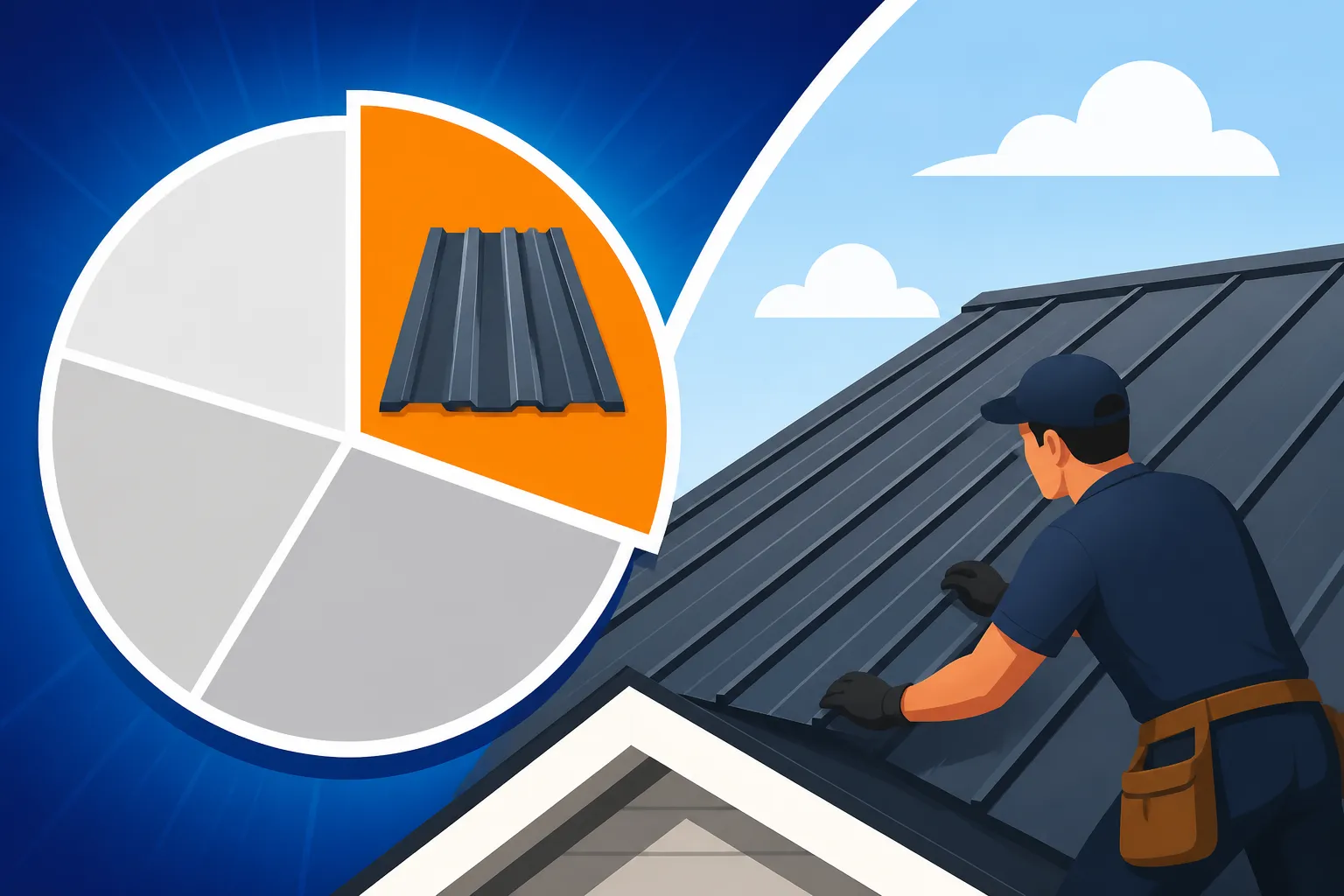
So, what is the "magic number"? Ideally, you want a contractor whose workload is at least 60% to 70% metal. This indicates that their entire business model—from their bidding software to their crew training—is built around the specific needs of metal. When a company is 90% metal, you are getting a true artisan. When they are at 50%, they are likely a "hybrid" shop that can handle both, which can be acceptable if they have a dedicated "metal crew" that doesn't touch shingles.
If the percentage is below 30%, you are entering the danger zone. These contractors often use metal as a "filler" job when they can't find shingle work. They might be perfectly nice people, but they are learning on your house. The risk of error is exponentially higher, and the likelihood that they will be around to honor a workmanship warranty ten years from now is lower, as they aren't committed to the metal industry long-term. You can use services like Modernize to find contractors who have a proven track record specifically in the metal sector to avoid this pitfall.
The 75 Percent Rule for Premium Systems
If you are investing in a high-end standing seam system, I suggest looking for the "75 Percent Rule." This means the contractor should be able to prove that three out of every four jobs they did in the last calendar year were metal. At this volume, the contractor usually has a direct relationship with metal manufacturers like McElroy Metal or Englert. These relationships are vital because they allow the contractor to offer better Metal Roof Warranties: Workmanship vs Manufacturer than a guy buying panels from a local lumber yard.
When a contractor hits that 75% threshold, they also tend to have better safety protocols. Walking on a metal roof is significantly more dangerous than walking on shingles—especially if there is even a hint of moisture or sawdust. A specialist crew will have the right magnetic shoes, specialized harnesses, and "pitch hopper" tools designed specifically for the slick surface of a steel roof.
Risks of the Occasional Metal Installer
The occasional installer is often the one who gives metal roofing a bad name. They are the ones who leave "swarf"—tiny metal shavings—on the roof after drilling. These shavings rust overnight in the dew, leaving orange stains all over your brand-new $30,000 roof. They are also the ones most likely to ignore the Metal Roofing Scams and Red Flags to Avoid, such as using "residential" grade panels that are too thin for your local wind speeds or using wood-screw fasteners in a metal-to-metal application.
Another risk is the "quote shock." Because they don't do metal often, they might under-estimate the labor involved in complex trim work. Halfway through the job, they realize they are losing money and start cutting corners to finish quickly. This is why it is so important to How to Read and Compare Metal Roof Quotes carefully; if one bid is 40% lower than the others, it’s usually because that contractor doesn't realize how much work a proper metal installation actually takes.
| Contractor Type | Metal Work % | Equipment Level | Best Use Case |
|---|---|---|---|
| The Generalist | 0-20% | Basic hand tools, shingles-focused | Simple sheds or barns; not recommended for homes |
| The Hybrid | 30-60% | Mixed tools, some specialized metal kits | Simple residential roofs, corrugated panels |
| The Specialist | 70-90% | Roll-formers, power seamers, custom brakes | High-end standing seam, complex roof lines |
| The Artisan | 95%+ | Full fabrication shop, exotic metal experience | Copper, Zinc, Historic restorations |
How to Verify a Contractor's Claimed Experience
Don't just take their word for it. Every contractor will tell you they are an expert when a big contract is on the line. You need to be a bit of a detective. Start by asking for a project list from the last twelve months. If they provide ten addresses and only two are metal, you have your answer. A true specialist will be proud to show off their metal work because it's the "Ferrari" of the roofing world.
Look at their social media or website gallery. Are the photos mostly of bundles of shingles on a ridge? Or do you see beautiful, clean lines of steel? Look for photos of the "hard parts"—chimney flashings, valley transitions, and skylights. If those look sloppy in the photos, they will look even worse on your roof. This is also a good time to check if they are Manufacturer-Certified Metal Roof Installers Explained, as these certifications require the contractor to pass rigorous training specifically on metal systems.
Reviewing the Portfolio for Specific Profiles
Not all metal is created equal. A contractor might have done a hundred "R-panel" or corrugated roofs for local warehouses, but that doesn't mean they can handle a residential standing seam project. Look for the specific profile you want in their portfolio. If you want stone-coated steel, ask to see three stone-coated steel jobs they did recently. If you want copper, find out if they have a dedicated coppersmith.
When reviewing a portfolio, look for consistency. If every roof looks slightly different in terms of how the trim is finished, it suggests they are "winging it" on-site rather than following a standardized, high-quality process. You can even How to Choose a Roofer for an Insurance Claim by looking at how well they documented the specialized metal components during past storm restoration projects.
Checking Manufacturer Certifications
Manufacturer certifications are the "Gold Seal" of the industry. Companies like Sherwin-Williams (who make the PVDF coatings) or panel manufacturers only certify contractors who have proven they can install the product according to strict engineering specifications. If a roofer is certified, it usually means the manufacturer will provide a "weather-tightness warranty" that covers both materials and labor. If the roofer isn't certified, you’re usually only getting a "finish warranty" on the paint, which won't help you if the roof leaks.
Ask to see their actual certification certificates and check the expiration dates. Some contractors take a class once in 2012 and claim they are "certified" for life. The best ones attend yearly training to stay up to date on new underlayment technologies and fastener improvements. This level of dedication is almost always found in contractors whose work is 70% metal or higher.
Speaking with Past Clients About Long-Term Performance
When calling references, don't just ask if the contractor was "nice" or "on time." Ask specific questions about the roof's performance during the first big rainstorm. Ask if they noticed any "popping" or "creaking" noises (which can indicate improper thermal expansion allowance). Ask if the contractor had to come back to fix any trim pieces that blew loose in the wind.
A specialist's references will often talk about the "look" and the "permanence" of the roof. If a client tells you their metal roof leaked and the contractor had to come back three times to "caulk it," that contractor likely didn't have the high-percentage expertise needed. If you are still on the fence, you can always ask Should You Hire a Contractor or DIY Your Metal Roof? to realize just how much technical skill you are actually paying for.
Red Flags to Watch for During the Bidding Process
The bidding phase is like the "first date"—if there are red flags now, things will only get worse once the contract is signed. One major warning sign is a contractor who tries to talk you out of metal and back into shingles. Usually, this means they aren't comfortable with metal and are trying to steer the job back to their "safe zone" where they make a higher profit with less effort.
Another red flag is a lack of detail in the quote. A metal roof quote should be several pages long. It should specify the gauge of the metal (24 gauge is the residential standard; 29 is often too thin), the type of paint coating (PVDF vs. SMP), and the specific type of underlayment. If the quote just says "Install Metal Roof," run the other way. A specialist knows that the "devil is in the details," and their quote will reflect that.
Vague Estimating and Low-Ball Quotes
In the world of metal, you truly get what you pay for. A low-ball quote usually means the contractor is using "exposed fastener" panels instead of standing seam, or they aren't planning on replacing the old underlayment. They might even be planning to install the metal directly over your old shingles without any "furring strips" or proper ventilation.
Vague estimates are a sign that the contractor doesn't have a standardized "take-off" process for metal. They might be guessing at the amount of trim needed, which leads to "change orders" and price hikes halfway through the job. Using a reputable source like Modernize can help ensure you're getting bids from professionals who understand the real costs of high-quality metal materials and labor.
Improper Underlayment Recommendations
What goes under the metal is just as important as the metal itself. A shingle roofer might try to use standard #30 felt paper. This is a huge mistake. Metal roofs get much hotter than shingles, and that heat can cause standard felt to stick to the bottom of the metal and tear as the panels expand.
A specialist will insist on a high-temperature, synthetic, self-adhering underlayment. They might also suggest a "breathable" mesh if you are doing a direct-to-deck installation. If your contractor doesn't mention "high-temp underlayment," they probably don't do enough metal work to know the building code requirements for these systems.
Hesitation Around Standing Seam Complexity
Standing seam is the "gold standard" because there are no holes drilled through the face of the metal. All the fasteners are hidden under the seams. However, this is significantly harder to install than "screw-down" panels. If a contractor seems hesitant or tells you that "screw-down is just as good," it’s a clear sign their metal percentage is low.
They are avoiding standing seam because it requires specialized folding tools and a much higher level of precision at the hips and valleys. If your house has a complex roofline with multiple dormers and gables, you absolutely cannot afford to hire a low-percentage metal roofer. The leaks will almost certainly start at those complex junctions where "shingle-style" flashing won't hold up.
Impact of Experience on Warranties and Longevity
The final reason to demand a high-percentage metal specialist is the long-term protection of your home. A metal roof can last 50 to 70 years, but only if it's installed perfectly. If the installation is flawed, you might be looking at a full replacement in just 15 years, which completely erases the "return on investment" that metal is famous for.
Most manufacturer warranties are void if the installation doesn't follow their specific manual to the letter. A "shingle guy" likely won't even read the manual. A specialist has it memorized. This is the difference between a roof that is a lifelong asset and a roof that becomes a lifelong headache.
Workmanship Warranties vs. Manufacturer Warranties
A workmanship warranty is only as good as the company behind it. If a contractor does 90% shingles and 10% metal, and they decide to stop doing metal next year because it's "too much trouble," will they really come back to fix a specialized metal leak in five years? Probably not. They will claim it’s a "material failure" and tell you to call the manufacturer.
The manufacturer will then send an inspector out who will find three things wrong with the installation—like the wrong type of screws or a lack of edge hemming—and they will deny the claim. Now you are stuck in the middle. A high-percentage specialist avoids this by doing the job right the first time and having a business that is built to support metal roofing for the long haul.
Navigating Insurance Claims with an Expert
If you are replacing your roof due to hail or wind damage, you need a contractor who knows how to talk to an insurance adjuster about metal. Adjusters often try to pay for the cheapest "metal-look" shingles rather than a true standing seam replacement. A specialist understands the line-item costs of high-grade steel and can advocate for you to ensure you get a fair settlement that covers a proper installation.
They know the "codes and standards" that adjusters often overlook, such as the requirement for specific ice and water shields in certain climates. This expertise can be the difference between paying $5,000 out of pocket and having your entire premium system covered by your policy.
Disclaimer
The information provided in this guide is for educational purposes only and does not constitute professional engineering or legal advice. Roofing requirements and building codes vary significantly by state and local municipality. Always verify a contractor's specific credentials, local licenses, and insurance coverage before signing a contract. Estimating the percentage of a contractor's work is based on self-reported data and independent verification; homeowners should conduct their own thorough due diligence.