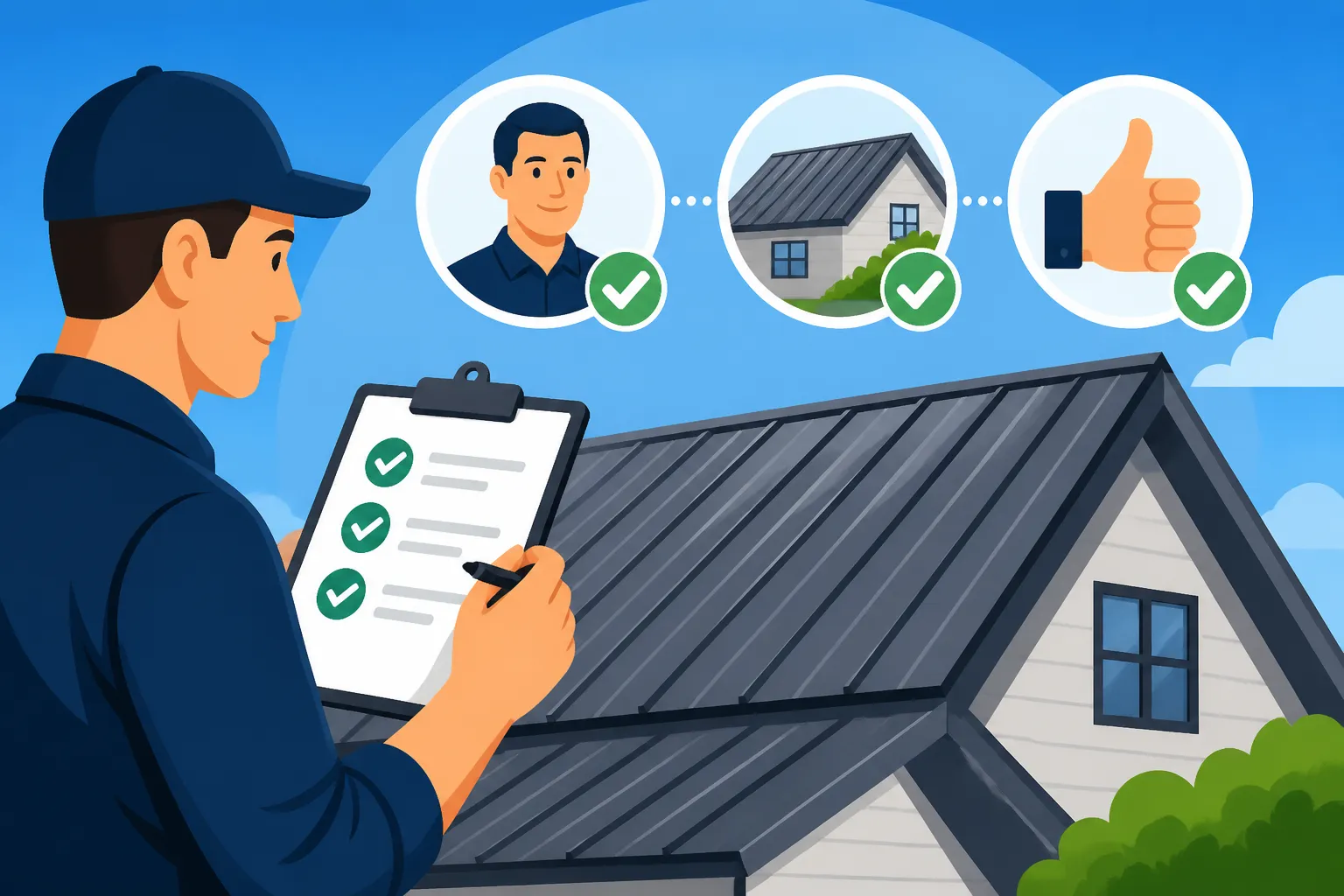
How to Check Roofing Contractor References
Selecting a metal roofing contractor is one of the most nerve-wracking decisions you will make as a homeowner, especially since a high-quality metal roof is intended to be a fifty-year investment. You are not just buying materials; you are buying the technician's ability to prevent leaks for the next five decades. This guide provides a meticulous framework for checking references so you can distinguish between a true craftsman and someone who just bought a metal bender yesterday.
Why Metal Roofing References Carry More Weight Than Shingle Projects
When you are checking references for a standard asphalt shingle roof, you are mostly looking for speed and clean-up. However, metal roofing is an entirely different beast that requires specialized mechanical skills. A contractor might have a thousand glowing reviews for shingle installations but zero experience with the thermal expansion and contraction cycles of a standing seam system. This is why you must treat the reference-checking phase as a deep-dive audit of their technical history.
The Specialized Nature of Metal Installation
Metal roofing requires precision at every junction, particularly around chimneys, valleys, and dormers. If a contractor doesn't understand how to allow for the metal's natural movement, the fasteners can back out or the panels can "oil can" (visible waviness). When you call a reference, you aren't just asking if they liked the crew; you are asking if the roof has remained silent and leak-free through three seasons of heavy temperature swings. I have seen countless homeowners regret skipped reference checks when they realize their expensive new roof makes loud popping noises every time the sun hits it because the installer pinned the panels too tightly.
Verifying Longevity Over Aesthetics
A metal roof almost always looks great the day it is finished. The real test of a contractor's skill comes three to five years later. In your reference list, specifically ask for at least two clients who had their roofs installed more than four years ago. This allows you to verify that the paint hasn't faded prematurely and that the specialized Metal Roof Underlayment and Ventilation Guide was followed correctly to prevent "attic rain" or condensation buildup. New references are fine for checking current crew behavior, but old references prove the contractor's technical longevity.
The Risks of the Jack of All Trades
Many contractors are feeling the pressure of the 2026 housing market and are branching out into metal because it commands higher margins. You want to avoid being the "guinea pig" for a crew that is learning on the fly. By checking references, you can confirm that the contractor has a dedicated metal crew rather than a rotating group of sub-contractors who usually only handle shingles. Using resources like Modernize can help you narrow down your search to professionals who actually specialize in these complex systems, but the final due diligence remains in your hands.
Preparing Your Strategy Before You Make the First Call
Before you start dialing numbers, you need to set the stage with the contractor. A professional who is proud of their work will usually have a "reference packet" ready to go. If they hesitate or tell you they need a week to "track down" some names, that is an immediate red flag. You want a list that reflects the specific type of work you are looking for.
Matching the Profile to Your Project
If you are planning to install a high-end Standing Seam Metal Roof Cost project, a reference for a corrugated barn roof is practically useless to you. The skill sets do not overlap. When you ask for references, be specific. Tell the contractor, "I need to speak with three homeowners who had a 24-gauge standing seam roof installed on a residential home with at least two valleys." This forces the contractor to show they have handled complexity similar to yours.
The Importance of Geographic Proximity
Roofing is highly dependent on local climate. A contractor who did a great job in a dry, flat area might struggle with the ice damming issues common in your specific neighborhood. Ask for references within a 20-mile radius of your home. This not only makes it easier for you to do a quick "drive-by" inspection, but it also ensures the contractor is familiar with local building codes and permitting offices. You can also use this time to ask the contractor How to Verify a Roofing License by State to ensure their local credentials are up to date for 2026.
Setting Expectations with the Homeowners
When you get the list, remember that these people are doing you a favor. I always recommend sending a quick text if a cell number is provided, or calling during reasonable evening hours. People who love their metal roofs are usually more than happy to talk about them because they are proud of the investment. If a reference seems annoyed or rushed, it might be a sign that the contractor has "burned out" that reference by giving their name to too many people, or that the experience wasn't as smooth as the contractor claimed.
The Essential Reference Interview Questionnaire
Once you have a reference on the line, don't just ask "Was the roofer good?" That leads to a one-word answer that tells you nothing. You need to ask open-ended, specific questions that reveal the contractor's true colors. Here is a breakdown of the questions that actually matter.
Professionalism and Communication
Start with the soft skills. A roof replacement is an invasive process.
- How did the contractor handle the initial Metal Roof Labor Cost explanation?
- Did they show up when they said they would, or were there weeks of "ghosting"?
- Was the job site kept clean daily, or did you find metal shards in your driveway for months?
- How did they handle the Metal Roof Trim and Flashing Cost—did it match the original estimate, or were there "surprise" add-ons?
Technical Execution and Problem Solving
This is where you dig into the mechanics of the build.
- Did you notice any "oil canning" or waves in the panels after installation?
- Did the crew use a magnetic sweeper to pick up screws and metal offcuts? (This is vital for preventing flat tires and injured pets).
- If you have a complex roof, how did they handle the Metal Roof Ridge Vent and Ventilation Explained during the install?
- Was there any damage to your landscaping or gutters during the process?
Warranty and Post-Job Support
The real value of a contractor is how they behave after they have been paid.
- Have you had any leaks since the installation, and if so, how fast did they come back to fix it?
- Did they provide you with a written Metal Roof Warranties: Workmanship vs Manufacturer document upon completion?
- Did the final price match the quote exactly, or was there a dispute?
- Would you hire them again for your next property?
| Question Category | Green Flag Response | Red Flag Response |
|---|---|---|
| Cleanliness | "They used a magnet every afternoon." | "I'm still finding screws in my tires." |
| Communication | "The owner texted me updates daily." | "I couldn't get ahold of them for a week." |
| Technical | "The seams are perfectly straight." | "The roof makes loud banging noises." |
| Pricing | "Everything matched the quote." | "They added $3,000 for 'extra' flashing." |
| Longevity | "Three years later, it still looks brand new." | "It started leaking at the chimney after one year." |
Driving by the Sites: The Visual Inspection
A phone call is great, but your eyes don't lie. I always tell my readers to take an afternoon to drive by at least two of the reference addresses. You don't even need to get out of the car or knock on the door (though you should ask the reference for permission first). A visual inspection can tell you a lot about the contractor’s attention to detail.
What to Look for from the Curb
Look at the "lines" of the roof. Are the ribs of the panels perfectly parallel, or do they look crooked as they head toward the ridge? Check the Metal Roof Trim and Flashing Cost execution—the flashing around the chimney and the "drip edge" along the gutters should look crisp and uniform. If the metal looks dented or if there are visible scratches in the paint (which can lead to future rust), you know the crew was careless with their boots or tools.
Checking for Consistent Color and Finish
Sometimes, contractors will use panels from different batches, which can result in slight color variations that only become visible in certain lighting. As you look at the reference’s roof, check for uniform color across all slopes. If the roof looks "patchy," it’s a sign the contractor isn't careful about material sourcing. This is also a good time to see how the color has held up against the sun. If you're using a platform like Modernize to find pros, you can often see photos of their work, but seeing it in person provides a level of depth a photo cannot capture.
The Neighbors' Perspective
If you happen to see a neighbor outside while you’re doing your drive-by, don't be afraid to ask, "Hey, I'm thinking of hiring the guy who did that roof over there. Was the crew a nightmare to have on the street?" Often, the neighbors have a more objective view of how loud, messy, or disrespectful a crew was than the homeowner who was just happy to have the project finished.
Leveraging Online Social Proof and Third-Party Verification
In 2026, a contractor's reputation is built on more than just a list of three names they hand you. You need to cross-reference their provided list with independent data. Contractors will obviously only give you the names of their happiest customers. It is your job to find the ones they didn't mention.
Using Platforms Like Modernize for Quality Control
Platforms like Modernize act as a powerful filter. When you look for contractors through these services, you are often looking at professionals who have already undergone a level of vetting. Use these platforms to read independent reviews that aren't curated by the contractor. Look for patterns in the feedback. One bad review might just be a difficult customer, but five reviews mentioning the same leak at the Standing Seam vs Corrugated Metal Roof transition point is a systemic problem.
The "Hidden" Reference: The Supply House
This is a veteran tip that most homeowners miss: Call the local metal roofing supply house (the place where the contractor buys their materials). Ask the manager, "Does [Contractor Name] have a good reputation for paying their bills on time and using the right components?" Supply house managers see every roofer in town. They know who buys the cheap, thin 24 vs 26 Gauge Metal Roof: Cost Difference materials for every job and who actually invests in high-quality sealants and fasteners. If a contractor doesn't pay their suppliers, the supplier could potentially place a lien on your house, even if you paid the contractor in full.
Evaluating the BBB and Recent Legal Filings
Check the Better Business Bureau, but don't stop there. A quick search of local court records for the contractor's name or business entity can reveal if they are currently embroiled in lawsuits over poor workmanship. It takes ten minutes and can save you from a lifetime of headaches. You want a contractor who spends their time on roofs, not in courtrooms. You can find more tips on this in our guide on Questions to Ask a Metal Roofing Contractor Before You Hire.
Warning Signs and Red Flags During the Reference Process
As you go through this process, you need to be hyper-aware of subtle "tells" that something is off. If your gut feeling is screaming at you, listen to it. Metal roofing is too expensive of a project to ignore your intuition.
The "Family and Friends" Reference
If every reference you call sounds like they are related to the contractor, they probably are. One way to sniff this out is to ask very specific technical questions, like "What type of Metal Roof Underlayment: Synthetic vs Felt did they use?" A real customer might not remember the brand, but they will remember the conversation about it. A fake reference will often give a generic, "Oh, they just used the best stuff, they are great guys!" response.
Reluctance to Provide Specifics
A contractor who says, "I can't give you addresses because of privacy laws," is usually lying. While they shouldn't hand out a list of 50 names to everyone who calls, they should absolutely have a handful of past clients who have agreed to act as references. If they refuse to provide any way to verify their work, walk away immediately. They are likely hiding a trail of Metal Roofing Scams and Red Flags to Avoid that you don't want to be a part of.
The "New Company, Old Experience" Trap
Be wary of contractors who say they have been in business for 20 years but only have references from the last six months. This often means they shut down an old business entity to escape bad reviews or legal trouble and started a "new" company. Always check how long the current business name has been registered with the Secretary of State. If there is a massive gap between their "years of experience" and their actual business age, ask for the name of their previous company and check those references too.
Making the Final Decision Based on Your Research
After you have called the references, driven by the houses, and checked the online platforms like Modernize, it’s time to sit down with your notes. Don't just pick the cheapest option. In the world of metal roofing, you almost always get exactly what you pay for.
Comparing Bids Apples-to-Apples
Use the information you gathered from references to re-evaluate your quotes. If Reference A said the contractor was great but the Metal Roof Labor Cost ended up being 20% higher than the quote, factor that into your budget. If Reference B mentioned that the contractor used a specific high-quality fastener, check to see if that same fastener is listed in your contract. You should be using your How to Read and Compare Metal Roof Quotes guide to ensure nothing was left out.
Trusting the Technical Proof
If one contractor has five references who all rave about the specialized Metal Roof Warranties: Workmanship vs Manufacturer they received, but another contractor "forgot" to mention warranties, the choice is clear. The references have given you a window into your own future. If their experience was chaotic and stressful, yours likely will be too. If their experience was a masterclass in professional construction, you can sign that contract with confidence.
Finalizing the Contract
Before you sign, ensure all the promises made during the reference-checking phase are in writing. If a reference said the contractor provides a "ten-year leak-free guarantee," make sure that exact language is in your document. A reference check is only as good as the contract that follows it. Once you are satisfied, you can move forward knowing you have done more due diligence than 95% of homeowners, ensuring your new metal roof is a source of pride rather than a source of stress.
Disclaimer
The information provided in this guide is for educational purposes only and does not constitute legal or professional construction advice. Always verify contractor licenses, insurance, and local building codes in your specific jurisdiction before starting any roofing project. Results of reference checks are subjective and past performance does not guarantee future results.