Metal Roof Cost Compared to McElroy Metal Pricing
If you have been scouring the internet for roofing quotes, you have likely realized that "ballpark" figures are often a shot in the dark. Homeowners frequently feel blindsided when a specific brand name like McElroy Metal is introduced, causing the price to jump significantly compared to local, unbranded corrugated panels. This guide clarifies exactly where McElroy Metal pricing sits in the market and helps you decide if the premium for their engineered systems is a justified investment for your home.
Understanding the McElroy Metal Value Proposition
When you start comparing a specialized manufacturer like McElroy Metal to your local "mom-and-pop" metal shop, you aren't just paying for a name. You are paying for a level of engineering that generic panels simply don't offer. I have seen many homeowners try to save a few thousand dollars by opting for local mill-finish panels, only to deal with fading and chalking within a decade. McElroy Metal positions itself as a premium provider, focusing heavily on high-performance coatings like Kynar 500 (PVDF), which is the gold standard for resisting the harsh UV rays we see in places like Florida or Arizona.
The reality of the roofing industry is that "metal" is a broad category. Just as you wouldn't compare a base-model economy car to a heavy-duty work truck, you shouldn't compare a thin, 29-gauge agricultural panel to a McElroy Maxima standing seam system. The latter is designed with structural integrity in mind, capable of spanning open purlins or sitting over solid decking while handling massive wind uplift loads. This level of testing and certification is a major component of the price tag. When you look at the Metal Roof Cost: Complete 2026 Guide, you’ll see that branded, engineered systems always sit at the top end of the spectrum.
Furthermore, McElroy Metal offers a diversity of profiles that many smaller regional players can't match. From their Medallion-Lock architectural panels to their multi-rib exposed fastener options, they provide specific solutions for different architectural needs. If you are living in a historic district or a high-end subdivision with strict HOA rules, you likely need the refined look that a brand like McElroy provides. These systems are often required to meet specific Metal Roof Building Codes Explained requirements, particularly in hurricane-prone regions.
Why Brand Recognition Matters in Metal Roofing
In the roofing world, a brand is more than just a label; it’s a warranty backstop. I have talked to dozens of frustrated homeowners who bought "discount" metal from a company that went out of business three years later. When their roof started leaking at the seams or the paint began to peel, they had zero recourse. With a company like McElroy Metal, which has been around since 1963, you are paying for the peace of mind that the company will actually be there if a manufacturing defect arises in twenty years.
Established brands also provide better support to their contractors. A McElroy-certified installer has access to specific detail manuals, custom flashing kits, and technical support that a general laborer does not. This translates to a more precise installation. If you’re wondering about the Questions to Ask a Metal Roofing Contractor Before You Hire, one of the first should be whether they have direct experience with McElroy's specific locking mechanisms. The complexity of these systems is a direct contributor to the total project cost.
The Engineering Behind Premium Pricing
If you were to look at a cross-section of a McElroy standing seam panel versus a cheap alternative, the differences would be immediately apparent. Premium panels often utilize a thicker substrate and a more complex rib height. For example, their standing seam options often feature a 1.5-inch to 2-inch rib height, which provides superior water shedding capabilities on low-slope roofs. This engineering prevents "siphoning," where water is pulled into the seams during heavy rain.
The coatings also play a massive role. Most budget-friendly metal uses SMP (Silicone Modified Polyester) paint. While SMP has improved over the years, it still lacks the chemical bond strength of the PVDF coatings found on McElroy’s residential lines. PVDF stays vibrant and resists "chalking"—that white, powdery residue you see on old metal barns. When you calculate the Metal Roof Cost vs Lifespan Value, the extra 20% to 30% you pay upfront for a PVDF-coated McElroy system often saves you the cost of a full replacement thirty years down the line.
Cost Comparison McElroy Metal vs Standard Industry Averages
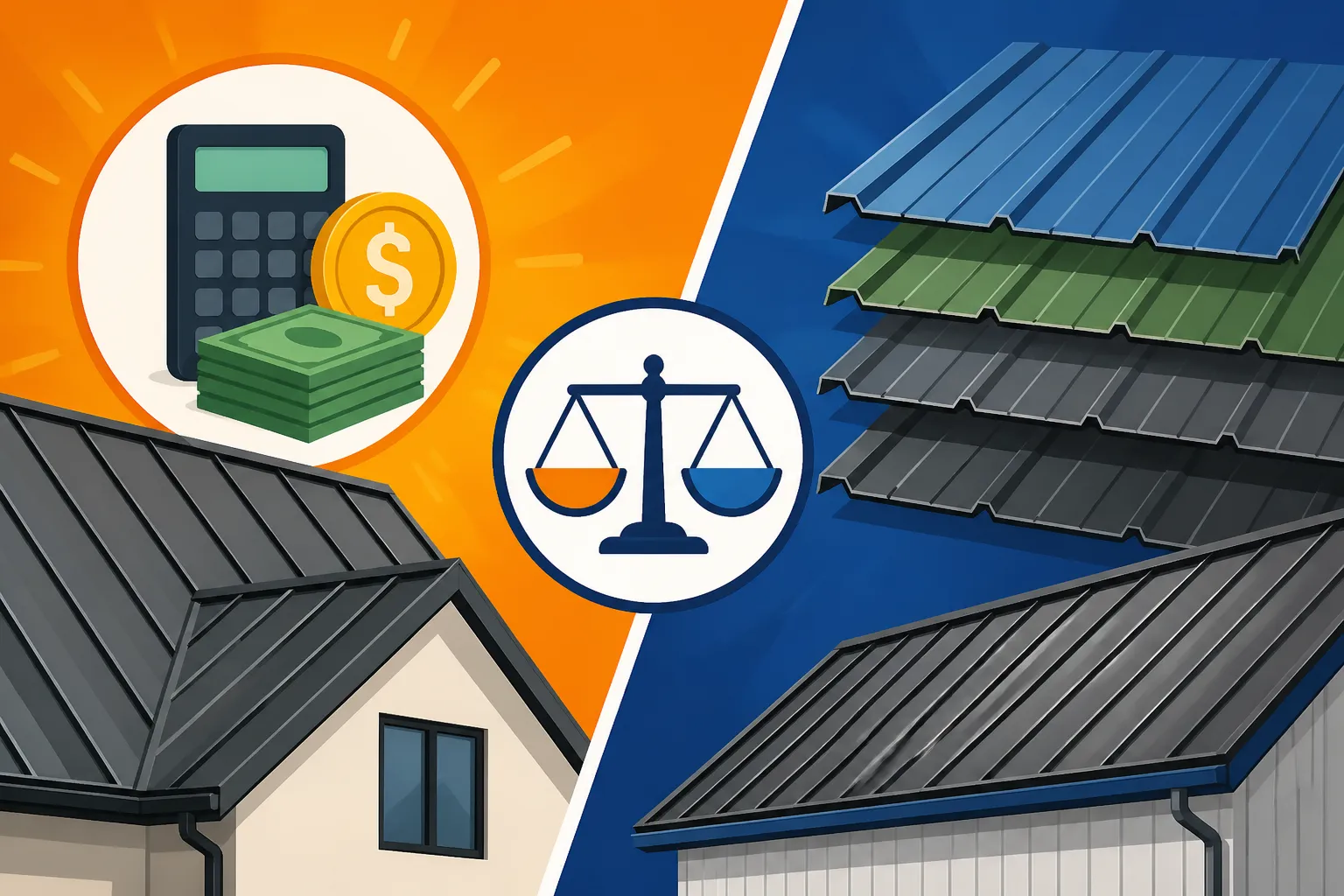
To give you a realistic idea of the financial landscape, we have to look at the "price per square." In roofing terminology, a "square" is a 100-square-foot area. While the national average for a basic metal roof might hover around $700 to $1,100 per square installed, a McElroy Metal system—especially their standing seam variety—will frequently land between $1,200 and $1,800 per square. This gap is significant, but it reflects the jump from "utility grade" to "architectural grade" materials.
The biggest price jump occurs when you move from exposed fastener panels (where screws are visible) to concealed fastener systems (standing seam). McElroy’s exposed fastener panels, like their Multi-Rib or 5V Crimp, are surprisingly competitive and might only sit 10-15% above the market average for unbranded steel. However, their standing seam lines are where the specialized engineering shines. Because these panels allow for thermal expansion and contraction without stressing the fasteners, the material and the specialized labor required to seam them together push the price higher. You can see more on this in the Standing Seam Metal Roof Cost breakdown.
| Roof System Type | Industry Average (Installed per Sq) | McElroy Metal Estimated (Installed per Sq) | Key Difference |
|---|---|---|---|
| Exposed Fastener (26ga Steel) | $650 – $900 | $800 – $1,050 | Higher quality PVDF paint options |
| Standing Seam (Snap-Lock) | $1,000 – $1,400 | $1,300 – $1,650 | Superior uplift ratings and seam integrity |
| Standing Seam (Mechanical) | $1,200 – $1,700 | $1,500 – $1,900 | Best for low slopes and extreme weather |
| Stone-Coated Steel / Shingle | $900 – $1,300 | $1,100 – $1,500 | Distinctive aesthetics and thick substrate |
Standing Seam vs Exposed Fastener Price Gaps
One of the most common points of confusion is why two metal roofs that "look similar" from the street can vary by $10,000 in price. If you choose an exposed fastener panel from McElroy, you are essentially buying a very high-quality version of a traditional barn roof. The installation is faster, the panels are wider, and the material cost is lower. However, every screw that goes through the face of that metal is a potential leak point as the rubber washers degrade over time.
A McElroy standing seam system, such as their Meridian or Medallion-Lock, eliminates those thousands of holes. The panels are attached to the roof via clips that are then hidden by the next overlapping panel. This is a much more labor-intensive process. When you look at the Metal Roof Labor Cost, you’ll find that standing seam installation requires specialized tools like power seamers or hand-crimpers. This is why the McElroy pricing for these systems is significantly higher than the Corrugated Metal Roof Cost you might see advertised at a big-box hardware store.
Material Grades Galvalume vs Aluminum Systems
Another factor in the McElroy pricing model is the substrate. Most of their residential products are built on a Galvalume base, which is a steel core coated in an aluminum-zinc alloy. This provides excellent corrosion resistance for most inland homes. However, if you are living within a few miles of the coast, McElroy also offers aluminum systems. Aluminum is inherently rust-proof, but it comes at a 20-30% premium over Galvalume steel.
The gauge of the metal also dictates the price. McElroy typically recommends 24-gauge steel for residential standing seam, which is thicker and more rigid than the 26-gauge or 29-gauge steel used in "budget" roofs. A 24-gauge roof is less likely to suffer from "oil canning"—that wavy, distorted look that can plague cheaper, thinner metal. For a deeper dive into these technical differences, check out the 24 vs 26 Gauge Metal Roof: Cost Difference guide.
Factors That Drive Your Specific McElroy Metal Quote
Your neighbor might have paid $20,000 for a McElroy roof, while your quote comes in at $35,000 for a similar square footage. This discrepancy is rarely about the material alone; it is about the "complexity" of your specific structure. McElroy panels are manufactured to precise lengths at the factory or roll-formed on-site. If your roof has multiple dormers, chimneys, valleys, and skylights, the amount of waste material and the time spent on custom flashing will skyrocket.
In my experience, homeowners often overlook the "trim and accessory" package. A high-quality McElroy installation doesn't just use standard off-the-shelf ridge vents. It uses engineered transition pieces, Z-closures, and specialized sealants designed to work with their specific panel profiles. These components can add 15-20% to the material cost alone. You should factor this in when considering What Affects Metal Roof Cost: Gauge, Pitch, Complexity & Tear-Off. A simple "up and over" gable roof is always going to be the most cost-effective way to use premium metal.
Roof Pitch and Geometrical Complexity
The steepness of your roof, or the "pitch," is a major variable in labor costs. Any roof with a pitch over 6:12 is generally considered "steep slope" and requires extra safety equipment, scaffolding, and slower movement for the crew. If you have a very steep Victorian-style home, you are paying for the risk and the time it takes for installers to navigate those heights safely.
Complexity also refers to the "cut-up" nature of the roof. Every time an installer has to cut a panel to fit into a valley or around a dormer, they are spending time that isn't spent simply "laying steel." Furthermore, many McElroy profiles require specific folding techniques at the eaves and ridges to ensure a watertight seal. This is far more involved than the Average Cost of a Metal Roof on a 1,500 Sq Ft Ranch where the roof is a simple rectangle.
Regional Labor Rates and Contractor Certification
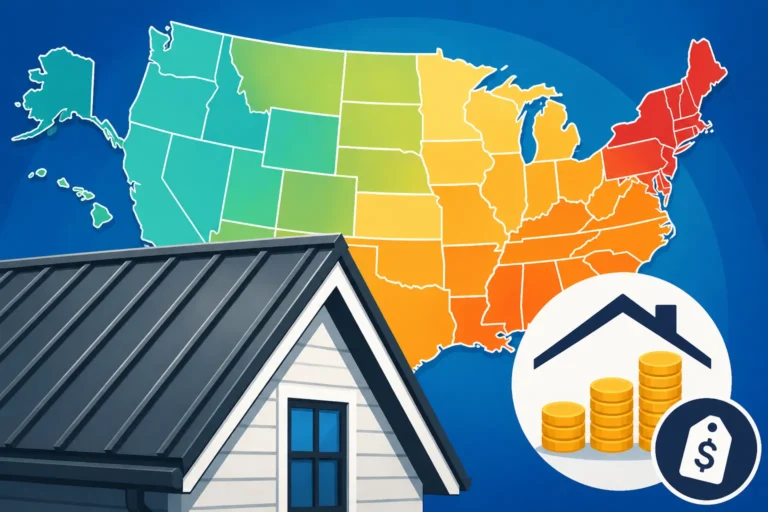
Where you live matters just as much as what you buy. If you are looking for Metal Roofing Contractors in Dallas or other major metros, you will likely find a higher concentration of certified McElroy installers, which can actually keep labor prices competitive due to volume. However, in more rural areas, you might only have one or two contractors capable of installing a mechanical lock standing seam, allowing them to charge a premium for their specialized skills.
It is also vital to verify if your contractor is truly familiar with the brand. Some contractors might quote you for McElroy materials but then use generic underlayment or cheap fasteners to pad their margins. Always ensure your quote specifies the Metal Roof Underlayment Cost and that they are using high-quality synthetic options rather than old-fashioned felt paper. A premium panel is only as good as the layers beneath it.
Is the Investment in McElroy Metal Worth It
Deciding whether to pay the "McElroy premium" often comes down to how long you plan to live in the home. If this is your "forever home," the answer is almost always yes. The combination of 24-gauge steel and PVDF coatings means you are buying a 50-year roof. When you compare Metal Roof vs Asphalt Shingle Cost, the metal roof will be 2-3 times more expensive upfront, but it will likely outlast three asphalt shingle installations.
Moreover, there is a tangible "curb appeal" factor. McElroy’s paint finishes are designed to resist fading, meaning your roof will look as good in year 20 as it did on day one. This has a direct impact on your home's resale value. Potential buyers in 2045 will be much more impressed by a pristine, branded metal roof than a weathered, generic one. It's often helpful to ask Does a Metal Roof Increase Home Value? when discussing the project with a real estate professional.
Long-term ROI and Warranty Protection
The return on investment (ROI) for a McElroy roof isn't just about the sale price of the home; it's also about energy savings and insurance. Because of the high-reflectivity Kynar coatings, these roofs can reduce cooling costs by up to 25% in the summer. Additionally, many insurance companies offer significant discounts for "Class 4" impact-resistant roofs, which many McElroy profiles achieve. You can read more about Metal Roof Insurance Savings & Discounts to see how much you might claw back over time.
The warranty is the other half of the ROI. McElroy offers some of the most robust paint and substrate warranties in the industry. However, you must ensure that your installer follows the manufacturer’s specifications to the letter, or you could void that protection. This is why paying a little more for a certified installer is actually a form of insurance for your investment.
Resale Value and Curb Appeal Metrics
In a competitive real estate market, a premium metal roof is a massive "selling feature." It signals to a buyer that the previous owner didn't cut corners on maintenance. When a buyer hears the name McElroy Metal, they can research the company and find a history of quality, which builds trust. If you compare the How Much More Does a Metal Roof Cost Than Shingles math, the "cost per year of ownership" is often lower with the premium metal option.
Ultimately, your roof is the first thing people see. Whether you choose a classic standing seam or a stone-coated look that mimics traditional shingles, the quality of the finish will dictate the overall "vibe" of your property. If you’re trying to stay within a strict budget, you might look at Cheapest Metal Roof Options, but be aware that those savings usually come at the expense of that long-term aesthetic perfection that a premium brand provides.
Disclaimer
This guide is provided for informational purposes only. Roofing costs can vary significantly based on local labor rates, material availability, and individual home specifications. Always obtain multiple quotes from licensed and insured contractors before beginning any home improvement project. Neither the author nor this website is affiliated with McElroy Metal, and pricing estimates are based on general market trends and historical data.