Metal Roof Cost in Boise
Trying to pin down an accurate metal roof estimate in Boise can feel like aiming at a moving target. Between unpredictable regional material supply fluctuations, high winter snow load requirements, and the distinct local labor market across the Treasure Valley, homeowners often receive wildly conflicting quotes. This comprehensive guide breaks down actual cost drivers, profile options, labor nuances, and long-term financial returns specific to Boise homes.
Understanding Metal Roof Costs in the Boise Treasure Valley
When you start researching a roof replacement in the Boise area, the first thing you will notice is the wide price spread between a basic architectural asphalt shingle roof and a fully installed metal system. While metal carries a higher upfront price tag, understanding how local factors shape that expense helps clarify why the investment varies so significantly from one home to another.
Key Factors Driving Boise Metal Roofing Prices
The shape of your overall quote depends on several interwoven variables. First, the structural footprint and geometry of your home play a massive role. A straightforward single-story ranch house in South Boise with a standard gabled roof requires far less labor and trim work than a multi-level home in the Boise Foothills featuring dormers, valleys, steep pitches, and complex chimney flashings. To understand how these structural elements dictate labor and material usage, consider What Affects Metal Roof Cost: Gauge, Pitch, Complexity & Tear-Off.
Second, freight and regional logistics influence material expenses in Idaho. Metal coils and pre-formed panels must be transported into the Treasure Valley, meaning supply chain trends directly impact localized raw material costs. Finally, local trade labor dynamics in Ada and Canyon counties dictate hourly installation rates. Roofing crews specializing in metal installation carry specialized skills, tools, and insurance, which naturally reflects in the total contract price.
Metal Roof Panel Profiles and Price Shapes
The profile you select is one of the most significant cost forks in your project. Roofing panels generally fall into three distinct categories:
- Exposed Fastener Panels: Commonly known as corrugated or ribbed panels (like R-panel or 5V crimp), these are secured by driving screws directly through the face of the metal into the roof deck. They represent the most budget-friendly entry point into metal roofing.
- Standing Seam Systems: Featuring concealed fasteners and raised interlocking seams, standing seam panels allow the metal to slide naturally as it expands and contracts during extreme temperature shifts. This system sits at a premium price point due to complex installation requirements.
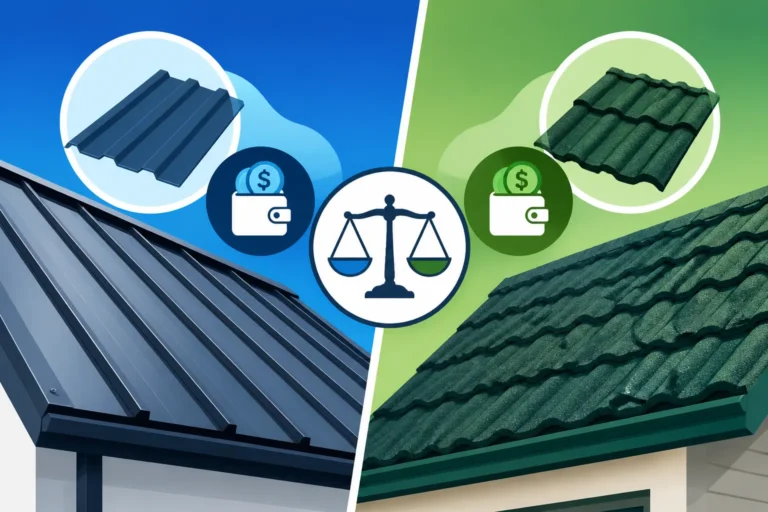
- Metal Shingles and Tiles: Stamped metal panels designed to mimic traditional slate, wood shake, or clay tile offer high-end architectural aesthetics while maintaining metal durability. These fall into the upper-tier cost bracket.
For a broader perspective on how these panel profiles compare on a square-foot basis nationally, review our guide on Metal Roof Cost Per Square Foot.
Local Climate Impact on Material Selection
Boise experiences a dramatic climate spectrum, ranging from scorching summer days exceeding 100 degrees Fahrenheit to freezing winter sub-zero dips, high winds sweeping through the valley, and heavy snow accumulation near the foothills. These environmental realities directly dictate material specifications.
For instance, cheap thin-gauge metals or improperly fastened panels can buckle or fail under thermal expansion cycles. Snow loads demand specific panel strength and pitch considerations, along with snow guards to prevent heavy sheets of ice from suddenly avalanching off your roof onto walkways or gutters. Paying slightly more upfront for a heavy-duty gauge steel panel treated with a high-grade finish often saves thousands in avoided weather damage over the home’s lifespan.
Material and Profile Cost Breakdown for Boise Homeowners
Selecting the right combination of metal material and panel profile requires balancing your budget against the architectural needs of your home. Below is a detailed look at how these choices interact.
Material Options: Steel, Aluminum, Copper, and Galvalume
The raw metal used to roll your roof panels sets the baseline cost shape:
- Galvalume and Galvanized Steel: The industry workhorses for residential metal roofing in Idaho. Steel is coated with zinc (galvanized) or an aluminum-zinc alloy (Galvalume) to prevent corrosion. Steel provides incredible structural strength against heavy winter snow loads and hail, keeping material expenses relatively moderate compared to exotic metals.
- Aluminum: Aluminum is completely rust-proof, making it exceptionally long-lasting, though its primary benefit—corrosion resistance in salt air environments—is less critical in dry inland climates like Boise unless you are dealing with localized chemical exposures or specific architectural needs. Aluminum expands more than steel, requiring specialized fastener engineering.
- Copper: The luxury gold standard of metal roofing. Copper develops a distinct patina over decades and can easily last over a century. However, its material cost is exponentially higher than steel, making it primarily popular for accent roofs, historic restorations in Boise’s North End, or bay windows rather than whole-house installations.
Exposed Fastener vs. Standing Seam Cost Dynamics
The choice between exposed fastener panels and concealed fastener standing seam panels is the single largest structural driver of your final quote.
Exposed fastener systems require significantly less labor to install because crews can rapidly lay down wide panels and screw them down. However, because thousands of rubber-washered screws penetrate the exterior face of the roof, those washers degrade over 15 to 20 years under Boise’s harsh ultraviolet sun. Maintenance crews must eventually back out those old screws and replace them to maintain a watertight seal. If you are comparing lower-cost options, check out our breakdown on Corrugated Metal Roof Cost.
Standing seam, on the other hand, hides all clips and fasteners beneath interlocked panel legs. No screws pierce the weather barrier. The panels floating on hidden clips allow smooth thermal movement through Boise’s summer heat and winter freezes. While the initial investment for standing seam is substantially higher due to hand-seaming labor and custom flashing fabrication, it offers virtually maintenance-free protection for half a century or more. For a deep dive into this profile, read Standing Seam Metal Roof Cost.
Profile Cost Comparison for Boise Homes
To help you compare profile options, the following table outlines the general financial shape, expected longevity, and ideal application for each major system installed in the Boise region:
| Panel Profile | Upfront Cost Bracket | Average Lifespan | Maintenance Level | Best Boise Use Case |
|---|---|---|---|---|
| Exposed Fastener (Corrugated / Ribbed) | Economical | 30 – 40 Years | Moderate (Screw washer replacement every 15-20 yrs) | Residential ranches, detached garages, agricultural buildings, budget retrofits |
| Snap-Lock Standing Seam | Mid to High Range | 50+ Years | Low | Standard suburban single-family homes, modern residential builds |
| Mechanical Lock Standing Seam | Premium | 50+ Years | Very Low | Low-slope roofs, high snow-load foothill properties, custom homes |
| Stone-Coated Steel Shingles | High Range | 50+ Years | Very Low | HOA neighborhoods requiring a traditional shingle or tile look |
| Copper Standing Seam / Accent | Ultra-Luxury | 100+ Years | Extremely Low | Historic North End restorations, architectural accents, luxury estates |
Boise Labor, Permits, and Hidden Installation Expenses
When reviewing a contractor’s bid, remember that the metal panels themselves usually make up only a portion of the total quote. Labor, structural prep work, and regional building compliance account for the rest.
Local Labor Market and Structural Preparation
Metal roofing is an intricate trade that requires skilled craftspeople who understand sheet metal fabrication, soldering, fold-crafting flashings, and calculating thermal expansion. Unlike asphalt shingles, which can be nailed down relatively quickly, metal panel installation requires precision measuring and specialized tools.
Before new metal panels go down, your underlying roof deck must be thoroughly inspected. If old decking is sagging, warped, or rotted from prior roof leaks, those plywood or OSB sheets must be replaced. Furthermore, metal roofs require specific high-temperature underlayment products. Because metal panels absorb and transfer heat rapidly, standard felt paper can deteriorate under metal. Installing a premium synthetic or self-adhering ice-and-water shield adds to the upfront material tally but guarantees watertight performance. You can read more about these protective layers in Metal Roof Underlayment Cost.
In areas prone to heavy snowdrifts, homeowners should also budget for critical safety additions. Installing snow guards prevents dangerous snow slides that can destroy gutters or injure pedestrians below. You can learn about these safety systems in How Much Does Snow Guard Installation Cost.
Boise City Permits, Code Compliance, and Inspections
Any structural roof replacement within Boise city limits, Meridian, Eagle, or broader Ada County requires a residential building permit. Roofing permits ensure that the installation adheres to the International Residential Code (IRC) as adopted by Idaho, including wind resistance ratings and local snow load engineering standards.
Permit fees are typically based on the total valuation of the job or flat municipal rate schedules. Typically, your contractor will pull the permit, schedule required mid-process or final inspections, and include these administrative fees directly in your overall bid. If you want to better understand the permitting process, check out Do You Need a Permit for a Metal Roof?.
Tear-Off vs. Overlaying Over Existing Shingles
One common question Boise homeowners ask is whether they can save money by installing a metal roof directly over their existing asphalt shingles.
Installing metal over shingles eliminates tear-off labor expenses and landfill disposal fees. However, overlaying requires installing wood furring strips or a specialized underlayment layer to prevent the abrasive asphalt shingles from scratching the back coating of the metal panels. Furthermore, overlaying traps existing moisture issues or rotten decking beneath the new roof where it cannot be inspected. Tearing off the old roof adds labor costs, but it allows contractors to inspect the deck, install a seamless ice and water barrier, and start with a flat, clean surface. For a comprehensive cost-benefit analysis, explore Tear-Off vs Metal Over Shingles: Cost Difference.
Long-Term Value, Energy Efficiency, and ROI in Idaho
While a metal roof represents a significant initial outlay, looking strictly at upfront costs misses half the picture. Metal roofs act as long-term financial hedges against inflation, rising energy costs, and repeating shingle replacements.
Heating, Cooling, and Utility Bill Savings
Boise summers are notoriously sunny and hot. Dark asphalt shingles absorb radiant solar energy, transferring massive amounts of heat down into your attic and forcing your air conditioning system to work overtime.
Metal roofs coated with modern Cool Roof PVDF (Kynar 500) paint finishes reflect a vast majority of the sun’s solar radiation back into the atmosphere. This solar reflectance keeps attic temperatures significantly cooler during July and August, which can translate into noticeable reductions in monthly summer cooling bills. In the winter, proper underlayment and ventilation beneath the metal help seal heat inside your home, stabilizing year-round climate control costs.
Insurance Discounts and Home Resale Value
Because metal roofing offers exceptional resistance to severe weather, hail, high winds, and fire, many insurance providers offer policy premium discounts for homes with Class 4 impact-rated metal roofs. In wildfire-prone areas like the Boise Foothills, having a non-combustible Class A fire-rated metal roof provides vital structural protection and peace of mind. To see how these savings compound, check out Metal Roof Insurance Savings & Discounts.
Additionally, a metal roof adds tangible resale appeal to your property. Buyers recognize that a home with a modern standing seam roof will not require a costly roof replacement for decades, allowing sellers to recover a significant percentage of their installation investment upon sale. If you are analyzing a multi-decade property investment, standing seam systems offer exceptional payback value. To estimate prospective multi-decade costs, review How Much Does a Standing Seam Roof Cost for a 2,000 Sq Ft House and evaluate long-term financial performance with Is a Metal Roof Worth It? ROI, Resale & Payback.
By carefully assessing your home’s roof pitch, neighborhood aesthetic requirements, local climate stressors, and long-term financial plans, you can choose a metal roofing system that offers unbeatable durability and curb appeal for your Boise home.
Disclaimer
This article is for general informational purposes only and does not constitute professional advice. Laws, prices and regulations vary by location and change over time. Consult a qualified professional for guidance on your specific situation.