How Much Does a Corrugated Metal Roof Cost
Figuring out the exact cost of a new roof can feel like trying to hit a moving target, especially when you're considering something as specific as a corrugated metal roof. You're probably wrestling with questions about materials, labor, and all those "hidden" fees that seem to pop up out of nowhere. This guide is here to untangle that knot, offering a clear, realistic breakdown of what you can expect to pay for a corrugated metal roof, helping you budget wisely and make an informed decision for your home.
What Exactly is a Corrugated Metal Roof?
When most folks picture a metal roof, often what comes to mind is the classic corrugated style. It's the roof you see on everything from barns to beach houses, and it's gaining immense popularity in residential settings thanks to its distinct look and robust performance. But what exactly makes it "corrugated"? Let's dive a little deeper.
Understanding Corrugated Metal Roofing Profiles
The term "corrugated" refers to the distinctive wave-like pattern rolled into the metal panels. This ridged design isn't just for aesthetics; it significantly enhances the panel's strength and rigidity, making it incredibly durable and resistant to bending or denting. Unlike a flat sheet of metal, these undulations create a much stiffer profile, allowing for thinner gauges of metal to be used without sacrificing structural integrity. These panels come in various patterns, but the most common are the classic sinewave (often called 8-foot or 12-foot panels, referring to the common lengths) and more pronounced R-panel or PBR-panel profiles, which have deeper, squarer ribs and are usually seen on commercial buildings but are also finding their way onto modern homes for a bolder look. This visual texture not only adds character to your home but also helps with water runoff, quickly directing rain and melting snow off the roof.
Common Materials for Corrugated Panels
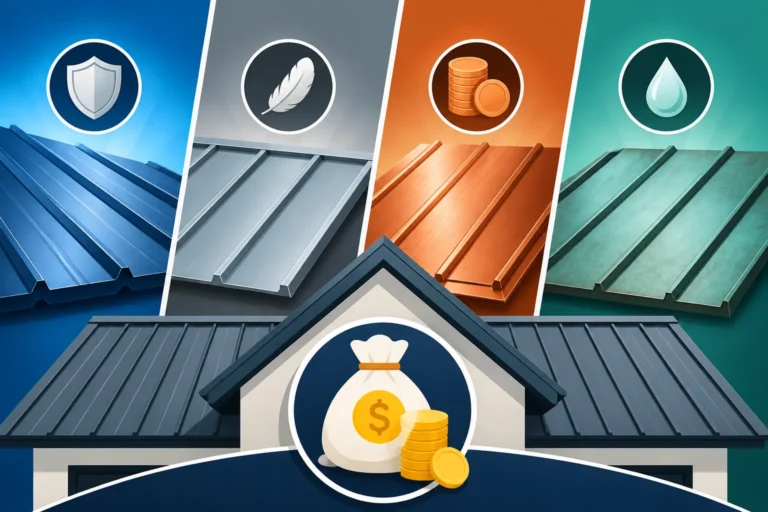
Corrugated metal panels aren't a one-size-fits-all product; they come in a few different material flavors, each with its own price point and characteristics. The most popular choice, by far, is steel, typically coated to protect against rust and enhance longevity. You'll often hear terms like Galvanized and Galvalume thrown around. Galvanized steel is essentially steel coated with zinc, which provides a sacrificial layer of protection against corrosion. Galvalume, on the other hand, is steel coated with a blend of aluminum and zinc, offering even superior corrosion resistance, especially in coastal or humid environments. Aluminum is another option, though less common for corrugated profiles than steel. It's naturally rust-proof, lightweight, and excellent for coastal areas where salt spray is a concern. While often pricier than steel, aluminum's inherent resistance to corrosion means it doesn't rely on coatings in the same way, which can be a big plus for some homeowners. For those interested in the intricacies, understanding the differences between these materials is key, as highlighted in our guide on Metal Roofing Materials Compared: Steel, Aluminum, Copper & Zinc.
Benefits and Drawbacks of Corrugated Roofing
So, why do people choose corrugated metal? Well, for starters, it's generally one of the more budget-friendly metal roofing options out there, offering a fantastic balance of durability and cost-effectiveness. Its exposed fastener system means installation can be quicker and, therefore, less labor-intensive than a hidden fastener system like standing seam. It's incredibly long-lasting, often boasting a lifespan of 40-70 years, far outstripping traditional asphalt shingles. Plus, it's energy-efficient, reflecting solar radiant heat and potentially lowering your cooling costs. On the flip side, the exposed fasteners, while simplifying installation, are also the most common point of maintenance over the decades, as the washers under the screws can degrade and need replacement. You might also notice a bit more noise during heavy rain or hail compared to other roofing types, though proper insulation and underlayment can largely mitigate this.
Breaking Down the Cost Components
When you're getting a quote for a new corrugated metal roof, it's rarely just one number. Instead, it's a sum of several crucial parts: the materials themselves, the labor to get them on your roof, and all those necessary accessories and preparatory work. Understanding each piece of the puzzle can help you see where your money is going and identify areas where you might have options.
Material Costs by Type and Gauge
The actual metal panels are, naturally, a big chunk of your budget. The cost here is heavily influenced by the type of metal, its gauge (thickness), and the specific finish or coating.
- Steel (Galvanized and Galvalume): This is the most common and often the most affordable option for corrugated panels. You can typically expect galvanized steel corrugated panels to range from $1.50 to $4.00 per square foot for materials alone. Galvalume, with its enhanced corrosion resistance, tends to be slightly higher, often falling between $1.75 and $4.50 per square foot. These prices don't include the labor to install them, mind you.
- Aluminum: As mentioned, aluminum is lighter and completely rust-proof, making it a premium choice, especially for coastal homes. Material costs for corrugated aluminum can range from $3.00 to $7.00 per square foot. It's a higher upfront investment, but its performance in harsh environments can justify the cost for many.
- Gauge: This refers to the thickness of the metal. A lower gauge number means thicker metal, which is more durable, less prone to denting, and consequently, more expensive. For residential corrugated roofing, you'll most commonly encounter 26-gauge and 29-gauge steel. While 29-gauge is perfectly adequate for many applications, 26-gauge offers superior rigidity and hail resistance, and costs a bit more. To learn more about how this impacts pricing, check out our article on 24 vs 26 Gauge Metal Roof: Cost Difference. Choosing the right gauge for your climate and budget is a vital decision.
Installation Labor and Complexity
Getting those heavy panels up on your roof and properly secured is no small feat, and labor costs will reflect that. This isn't just about the crew's hourly rate; it's about the entire scope of work.
- Roof Pitch and Accessibility: A steep roof pitch (the angle of your roof) makes installation more difficult and dangerous, increasing labor time and, thus, costs. If your roof is hard to access—say, your house is nestled among mature trees or there are obstacles that make it difficult to stage materials—you can expect labor costs to rise. Complex rooflines with multiple valleys, hips, and dormers also add significant time and require more intricate cutting and flashing work.
- Roof Size and Tear-Off: Larger roofs, naturally, take more time and materials. But before any new metal goes down, the old roof often needs to come off. The cost to tear off existing shingles, haul them away, and dispose of them can add anywhere from $1 to $5 per square foot to your overall project. This cost depends on the number of existing layers and the type of material. Our guide on Cost to Replace Shingles With a Metal Roof delves deeper into these aspects. If you're lucky enough to have a roof that allows for installing metal over existing shingles, you might save on tear-off costs, but always verify this is permitted by local codes and won't void warranties.
- Geographic Labor Rates: Just like everything else, labor rates vary significantly by region. A skilled roofing crew in a high cost of living area like Los Angeles or Boston will charge more than one in a rural part of, say, Alabama. It's why getting local quotes is so crucial.
Additional Costs and Accessories
Beyond the main panels and the crew, there are several other components that contribute to the final price. These aren't "extra" in the sense that they're optional; they're essential for a complete, watertight, and long-lasting roof system.
- Underlayment: This protective layer goes between your roof deck and the metal panels. It's critical for secondary weather protection, noise dampening, and sometimes even for fire ratings. Synthetic underlayments are the modern standard, offering superior durability and moisture resistance compared to traditional felt. Expect to pay between $0.20 to $0.80 per square foot for quality underlayment materials and installation. Understanding your options here is important, and our article on Metal Roof Underlayment and Ventilation Guide provides more detail.
- Fasteners: For corrugated metal, you're looking at exposed fasteners—screws with rubber washers that secure the panels directly to the roof deck or purlins. While individual screws are inexpensive, the sheer number required means they add up. More importantly, using high-quality, long-lasting screws with durable washers is critical to prevent future leaks, so don't let a contractor skimp here.
- Trim and Flashing: These are the finishing touches that seal the edges, valleys, ridges, and penetrations (like chimneys and vents) on your roof. They're customized pieces of metal that prevent water intrusion and give your roof a clean, finished look. The complexity and amount of trim and flashing needed can significantly impact the overall cost, typically adding anywhere from 10-20% to the material budget. You can learn more about these critical elements in our piece on Metal Roof Trim and Flashing Cost.
- Permits: Almost every major roofing project requires a permit from your local municipality. The cost of a permit varies widely, from $75 to $500 or more, depending on your city and the scope of the project. This is a non-negotiable step to ensure your roof meets local building codes and passes inspection. Our guide on Do You Need a Permit for a Metal Roof? can help clarify local requirements.
Average Corrugated Metal Roof Costs You Can Expect
Now for the numbers you've been waiting for! While prices can fluctuate based on market conditions, material availability, and local demand, we can provide some solid ranges for what a corrugated metal roof typically costs. Remember, these are averages, and your specific project might fall outside these ranges.
Cost Per Square Foot and by Project Size
When we talk about roofing costs, the most common metric is "per square foot." This allows for a direct comparison regardless of your roof's overall size. For a corrugated metal roof, including both materials and professional installation, you can expect a wide range.
Generally, homeowners report paying between $6.00 and $12.00 per square foot installed for a corrugated metal roof.
Let's break that down further:
- Materials Only: As we discussed, this typically runs from $1.50 to $7.00 per square foot, depending on the metal type (steel vs. aluminum), gauge, and coating.
- Labor Only: Professional installation usually falls between $3.00 to $6.00 per square foot, but can go higher for complex roofs or in high-cost areas. This often includes the tear-off of a single layer of old roofing.
- Total Installed Cost: When you combine everything, including materials, labor, underlayment, fasteners, trim, and potentially tear-off and permits, the range of $6.00 to $12.00 per square foot is a good ballpark.
To give you a clearer picture, here’s a table showing estimated costs for common home sizes, assuming an average roof size (which can be about 1.5 times the living area due to overhangs and pitch) and the mid-range of our per-square-foot estimate (e.g., $9.00/sq ft).
| Home Size (Sq Ft) | Estimated Roof Area (Sq Ft) | Estimated Total Cost (Low End) | Estimated Total Cost (High End) |
|---|---|---|---|
| 1,000 | 1,500 | $9,000 | $18,000 |
| 1,500 | 2,250 | $13,500 | $27,000 |
| 2,000 | 3,000 | $18,000 | $36,000 |
| 2,500 | 3,750 | $22,500 | $45,000 |
| 3,000 | 4,500 | $27,000 | $54,000 |
Note: These figures are estimates and can vary significantly based on location, contractor, and specific material choices.
It's also worth noting that the Average Metal Roof Cost by Home Size Chart provides even more detailed breakdowns if you're looking for a specific size. Remember, getting multiple quotes from reputable, local contractors is the absolute best way to get an accurate price for your home.
Geographic Variations in Pricing
As with most home improvement projects, where you live plays a significant role in the final price tag for your corrugated metal roof. States and cities with a higher cost of living generally have higher labor rates, which directly translates to higher installation costs. For instance, getting a metal roof in California or Florida, where there's high demand and strict building codes (especially for hurricane resistance), will likely be pricier than in states with lower labor costs or less stringent regulations.
Consider the cost of living index in your area, as well as the local market for skilled trades. Areas with fewer experienced metal roofing contractors might also see higher prices due to limited supply. Additionally, shipping costs for materials can vary based on your distance from manufacturers or major distribution hubs. Always seek out estimates from local professionals to understand the true cost in your specific area.
Long-Term Value and ROI
While the upfront cost of a corrugated metal roof might seem higher than traditional asphalt shingles, it's crucial to consider the long-term value and return on investment (ROI). Metal roofs are renowned for their exceptional lifespan, often lasting 40-70 years, whereas asphalt shingles typically need replacement every 15-30 years. This means you could replace your asphalt roof two to three times before a metal roof even nears the end of its life, saving you significant money over the decades.
Beyond longevity, metal roofs offer impressive durability against harsh weather, including high winds, hail, and fire. This resilience can translate into lower homeowners insurance premiums in some areas, especially if your roof has a Class 4 impact rating. Many metal roofs are also highly energy-efficient, reflecting solar heat and potentially reducing your cooling costs by 10-25%. When it comes time to sell, a metal roof can also be a significant selling point, as it's seen as a desirable upgrade that adds curb appeal and value. Our article Is a Metal Roof Worth It? ROI, Resale & Payback explores these financial benefits in greater detail.
Comparing Corrugated to Other Metal Roof Options
The world of metal roofing is diverse, and corrugated panels are just one fantastic option among many. To truly appreciate its cost and value, it's helpful to see how it stacks up against other popular metal roof profiles. Each type has its own aesthetic, installation nuances, and, of course, price point.
Corrugated vs. Standing Seam
Standing seam metal roofs are often considered the "premium" choice in residential metal roofing, and for good reason. They feature flat panels with raised, interlocked seams that run vertically up the roof, completely concealing the fasteners beneath. This hidden fastener system offers a sleek, modern look and significantly enhances weather resistance by protecting the most vulnerable parts of the roof. However, this superior aesthetic and performance come at a higher price.
- Cost: A standing seam metal roof typically costs between $10.00 and $20.00 per square foot installed. This is considerably higher than corrugated due to the more complex panel manufacturing, specialized installation techniques, and often thicker gauge metals used. For a full breakdown, explore our guide on Standing Seam Metal Roof Cost.
- Aesthetics: Standing seam offers a very clean, contemporary look that homeowners often prefer for modern architecture. Corrugated has a more industrial or rustic appeal, though it can also be used to great effect in contemporary designs.
- Installation: Corrugated panels, with their exposed fasteners, are generally quicker and simpler to install. Standing seam installation requires more specialized tools, training, and precision, driving up labor costs.
- Maintenance: While standing seam minimizes exposed components, making it lower maintenance in the long run (no exposed washers to degrade), corrugated roofs are generally easier to repair if a single panel is damaged, as they can often be unfastened and replaced more readily.
Corrugated vs. Metal Shingles
Metal shingles, sometimes called metal tiles or metal shakes, are designed to mimic the appearance of traditional roofing materials like asphalt shingles, slate, or wood shakes, but with the benefits of metal. They are often pressed into individual pieces or modular panels that interlock.
- Cost: Metal shingles usually fall into a mid-to-high price range for metal roofing, often costing between $8.00 and $16.00 per square foot installed. This is generally more expensive than corrugated metal due to the increased manufacturing complexity and the more intricate installation process. Our article on Metal Shingle Cost provides more details.
- Aesthetics: If you love the look of traditional roofing but want the durability of metal, metal shingles are a fantastic choice. They offer a wide variety of styles and colors to match almost any architectural design, providing a more subtle metal roof appearance than corrugated or standing seam.
- Installation: Like standing seam, metal shingles use a hidden fastener system. Their installation is more labor-intensive than corrugated panels because each shingle or panel needs to be individually fastened and interlocked, which takes more time and skill.
- Durability: Both corrugated and metal shingles are incredibly durable. However, the interlocking nature of metal shingles often makes them very resistant to wind uplift, and their multiple layers can sometimes offer slightly better sound dampening than a single layer of corrugated.
Each of these metal roofing options has its own unique advantages and a corresponding price point. Corrugated metal remains a strong contender for homeowners seeking a durable, cost-effective, and distinct metal roof without the higher investment required for standing seam or metal shingles.
Disclaimer
Please remember that all cost estimates provided in this guide are averages and can vary significantly based on your geographic location, the specific contractor you choose, current material market prices, the complexity of your roof, and additional services like old roof tear-off and disposal. It is always recommended to obtain multiple detailed quotes from local, reputable metal roofing contractors to get the most accurate pricing for your specific project.