Metal Roofing Contractors in Chicago
Homeowners in Chicago often face a daunting sea of generic contractors who claim to do it all but lack the specialized skills required for high-performance metal systems. This guide cuts through the noise to help you identify, vet, and hire elite metal roofing contractors in Chicago, ensuring your investment stands up to Lake Michigan’s brutal winds and punishing winters.
The Unique Challenges of Chicago Metal Roofing
Chicago isn't called the Windy City just for its political history. The meteorological reality of living near Lake Michigan means your roof is subject to intense pressure cycles, rapid temperature swings, and heavy snow loads. When you are looking for metal roofing contractors in Chicago, you aren't just looking for someone who can swing a hammer; you are looking for a specialist who understands thermal expansion and contraction in a climate that can go from sub-zero to ninety degrees in a few months.
Coping with the Windy City Climate
The wind uplift ratings in Chicago are no joke. A poorly installed metal roof can act like a sail during a lake-effect storm. Professional contractors in the area must prioritize specific fastening patterns and hem details that prevent the wind from getting underneath the panels. If you live in a high-density neighborhood like Wicker Park or Logan Square, the wind tunnels created between buildings can intensify these forces. You need a contractor who understands the difference between a standard installation and one reinforced for urban wind tunnels.
Furthermore, the freeze-thaw cycle in Cook County is brutal on roofing materials. Metal is excellent at shedding snow, which helps prevent the massive weight accumulation that can crush older Chicago bungalows. However, if the contractor doesn't understand proper ventilation and underlayment, you can end up with ice dams at the eaves or condensation in the attic. This is why services like Modernize are so helpful; they connect you with pros who have a track record of handling these specific Midwestern headaches.
Navigating Local Building Codes and Permits
The City of Chicago Department of Buildings has a reputation for being meticulous, and for good reason. The building code is designed to protect structures from the specific fire and wind risks found in a dense urban environment. Whether you are in a historic greystone or a modern Lincoln Park condo, your contractor must be well-versed in the local permitting process. Many contractors will try to tell you that a permit isn't necessary for a "simple" metal over-shingle job, but that is a major red flag.
In Chicago, most significant roofing work requires a permit through the Easy Permit Program or a more detailed Standard Plan Review if structural changes are involved. A reputable contractor will handle the permit application for you, ensuring that the work is inspected and logged with the city. This protects your home's resale value and ensures the installation meets the minimum safety standards for the region. Skipping this step is a recipe for legal and financial disaster down the road.
Finding and Vetting Chicago Metal Roofing Contractors
The search for the right pro usually starts with a frantic Google search, but the real work happens during the vetting process. You want to move beyond the surface-level reviews and dive deep into their actual experience with metal. Many roofing companies in Northern Illinois are primarily asphalt shingle installers who take on metal jobs as a side hustle. This is where most failures occur. Metal roofing requires a different set of tools, like hand seamers and specialized shears, rather than just a nail gun.
Questions to Ask Chicago Installers
When you sit down with a potential contractor, you need to be pointed with your questions. Don't be afraid to ask how many standing seam projects they have completed in the city limits in the last twelve months. Ask about their specific crew—is it a dedicated metal team or a general crew that rotates tasks? You want the specialists. Using a platform like Modernize can help narrow down your list to those who actually specialize in the material you want.
It is also vital to ask about their insurance and bonding specifically for the City of Chicago. A contractor may be "insured," but do they carry the specific limits required to work on a multi-story masonry building in the city? If they are working on a 3-flat, the liability is much higher than on a ranch in the suburbs. To help you prepare, you should review Questions to Ask a Metal Roofing Contractor Before You Hire so you don't miss any critical details during the interview.
Red Flags in the Chicago Market
One of the biggest red flags in the Chicago area is the "storm chaser" phenomenon. After a significant hail event in places like Naperville or Evanston, out-of-state contractors flood the area with door-to-door sales pitches. These crews are often gone before the first snow hits, leaving you with no recourse if your roof starts leaking in January. Always check for a physical Chicago-area office and a local 312, 773, or 708 area code.
Another warning sign is a quote that is significantly lower than the others. In the world of metal roofing, you truly get what you pay for. A low-ball bid often means the contractor is using a thinner gauge of steel, inferior paint coatings, or skipping essential components like high-temperature underlayment. For more tips on what to watch out for, take a look at Metal Roofing Scams and Red Flags to Avoid to keep your investment safe.
Understanding Costs and Quotes in the Chicago Area
Chicago is a high-cost market for labor and materials. Between the union influence in certain sectors and the logistical challenges of transporting large metal panels through narrow city streets, you should expect to pay a premium compared to more rural parts of Illinois. However, the long-term ROI of a metal roof in this climate is often superior to asphalt.
Labor vs. Material Breakdown
In Chicago, the labor component of your quote will likely be higher than the material cost. This is because installing a metal roof, especially a standing seam system, is incredibly labor-intensive. It requires precision cutting and folding that cannot be rushed. If you are comparing bids, make sure you look at the Metal Roof Labor Cost to understand why a professional installation commands the price it does.
The materials themselves also vary in price based on the current steel and aluminum markets. Your contractor should provide a detailed quote that specifies the gauge of the metal and the type of finish. In a city with significant pollution and salt from winter road treatments, you want a high-quality PVDF coating (like Kynar 500) that won't fade or chalk after five years of Chicago sun and snow.
The Impact of Neighborhood Density on Pricing
Where you live in Chicago significantly impacts your roofing quote. If you are in a neighborhood with tight alleys and no street parking, like Lakeview or Bucktown, the contractor has to factor in the extra time and equipment needed to stage materials. They might need to rent a crane to lift panels over power lines or narrow gangways, which adds to the bottom line.
| Factor | Impact on Chicago Roofing Projects | Why It Matters |
|---|---|---|
| Building Height | High | Scaffolding and safety gear requirements increase with every story. |
| Street Access | Medium | Narrow alleys make material delivery and debris removal difficult. |
| Permit Fees | Low-Medium | City fees vary based on the total value of the project. |
| Snow Load Requirements | High | Roof must be engineered to handle heavy lake-effect snow accumulation. |
| HOA/Historic Rules | Variable | Districts like Pullman or Old Town have strict aesthetic requirements. |
When you How to Read and Compare Metal Roof Quotes, ensure that these logistical costs are clearly itemized so you aren't surprised by "hidden" fees later on.
Key Considerations for a Chicago Metal Roof Project
Before you sign a contract, you need to think about the long-term performance of your home. A metal roof is a 50-year decision, so the choices you make now regarding material and contractor certifications will echo for decades. This is why it is so important to How to Hire a Metal Roofing Contractor who has deep roots in the local community.
Choosing the Right Metal for Illinois Weather
For most Chicago residential applications, a 24-gauge or 26-gauge steel roof with a Galvalume coating is the gold standard. It provides the rigidity needed for snow loads and the corrosion resistance required for urban environments. If you live right on the lakefront, you might even consider aluminum to completely negate the risk of salt-air corrosion.
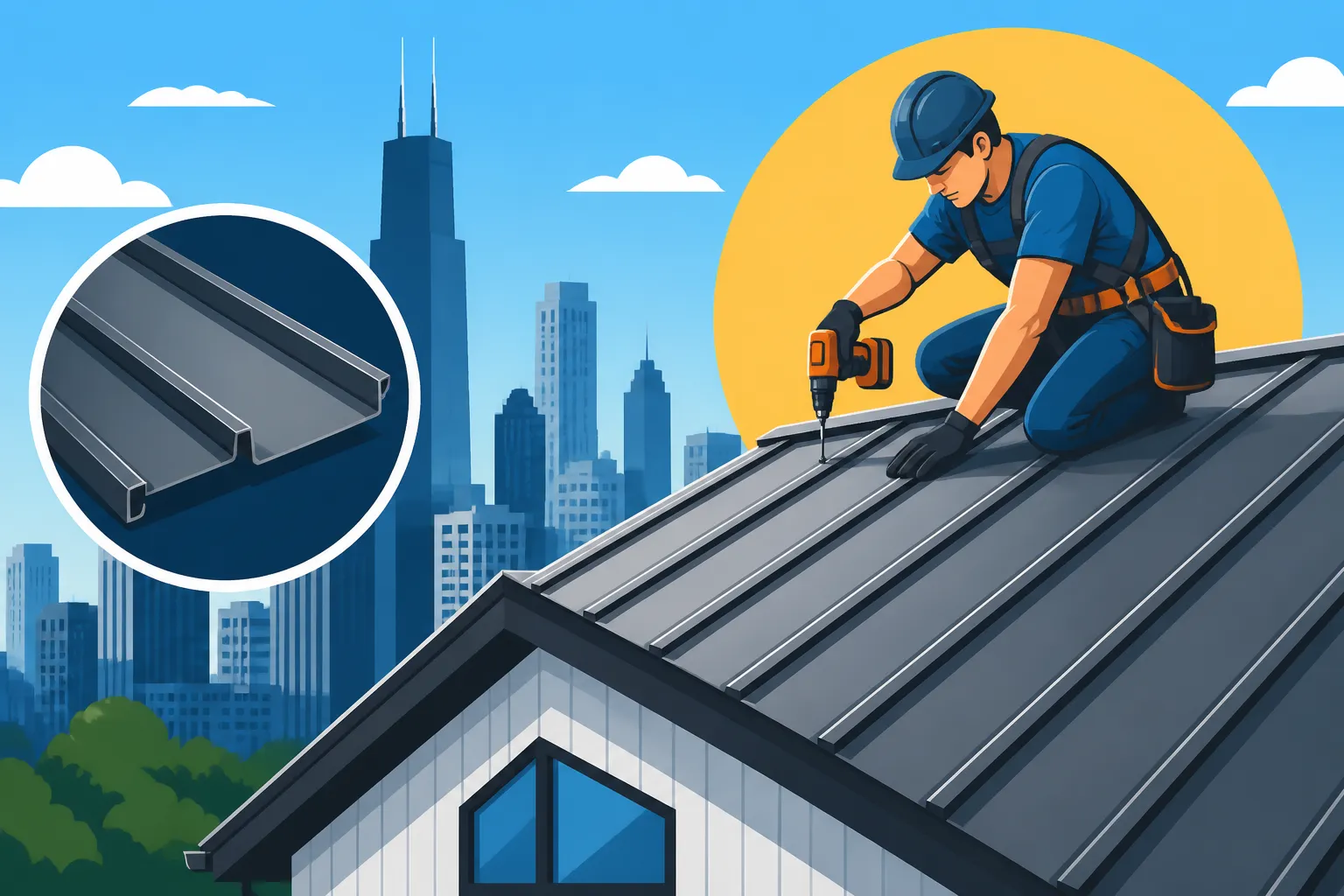
You also need to decide between exposed fasteners and standing seam. In Chicago, I almost always recommend standing seam. The hidden fasteners are protected from the elements, which is crucial when you have ice and snow sitting on the roof for weeks at a time. The expansion and contraction of the metal can eventually back out exposed screws, leading to leaks that are hard to track down. Using a service like Modernize can help you find contractors who have the specialized equipment to roll-form standing seam panels right on your job site.
Seasonal Installation Logistics
Timing is everything in the Midwest. While you can technically install a metal roof in the winter, it is far from ideal. The metal becomes slippery, and the underlayment can be difficult to seal in freezing temperatures. Most elite metal roofing contractors in Chicago have their schedules booked months in advance for the "prime" season of April through October.
If you are planning a replacement, start the process of How to Get a Metal Roof Estimate in the late winter or early spring. This gives you time to vet contractors, secure your permits, and get on the schedule before the summer rush. If you wait until your current roof is actively leaking in a November rainstorm, you'll be at the mercy of whatever contractor happens to be available, which is rarely a good position to be in.
Financing and Protecting Your Investment
A metal roof is a significant capital improvement, and for many Chicagoans, it requires a solid financial plan. Many reputable contractors offer Metal Roof Financing Options to help bridge the gap between your savings and the total project cost. This allows you to get the high-quality roof you need now, rather than settling for a cheaper alternative that will need to be replaced in 15 years.
Once the roof is installed, make sure you receive a copies of both the manufacturer's material warranty and the contractor's workmanship warranty. In the city, a workmanship warranty of at least 5 to 10 years is standard for high-end metal work. Ensure that What a Metal Roof Contract Should Include is fully understood before any money changes hands. This document is your primary protection against subpar work.
Modernize can be a powerful ally in this final stage, providing resources and connections to ensure you aren't just getting a roof, but a long-term sheltering solution for your home. By doing your homework and hiring the right Chicago-based specialist, you can rest easy knowing your home is protected from the next Great Lakes blizzard.
Disclaimer
The information provided in this guide is for educational and informational purposes only. Roofing costs, building codes, and contractor availability in Chicago are subject to change based on local regulations and market conditions. Always consult with a licensed, insured, and bonded professional contractor and verify current local building codes with the City of Chicago Department of Buildings before starting any construction project. The author and publisher are not liable for any actions taken based on the contents of this article.