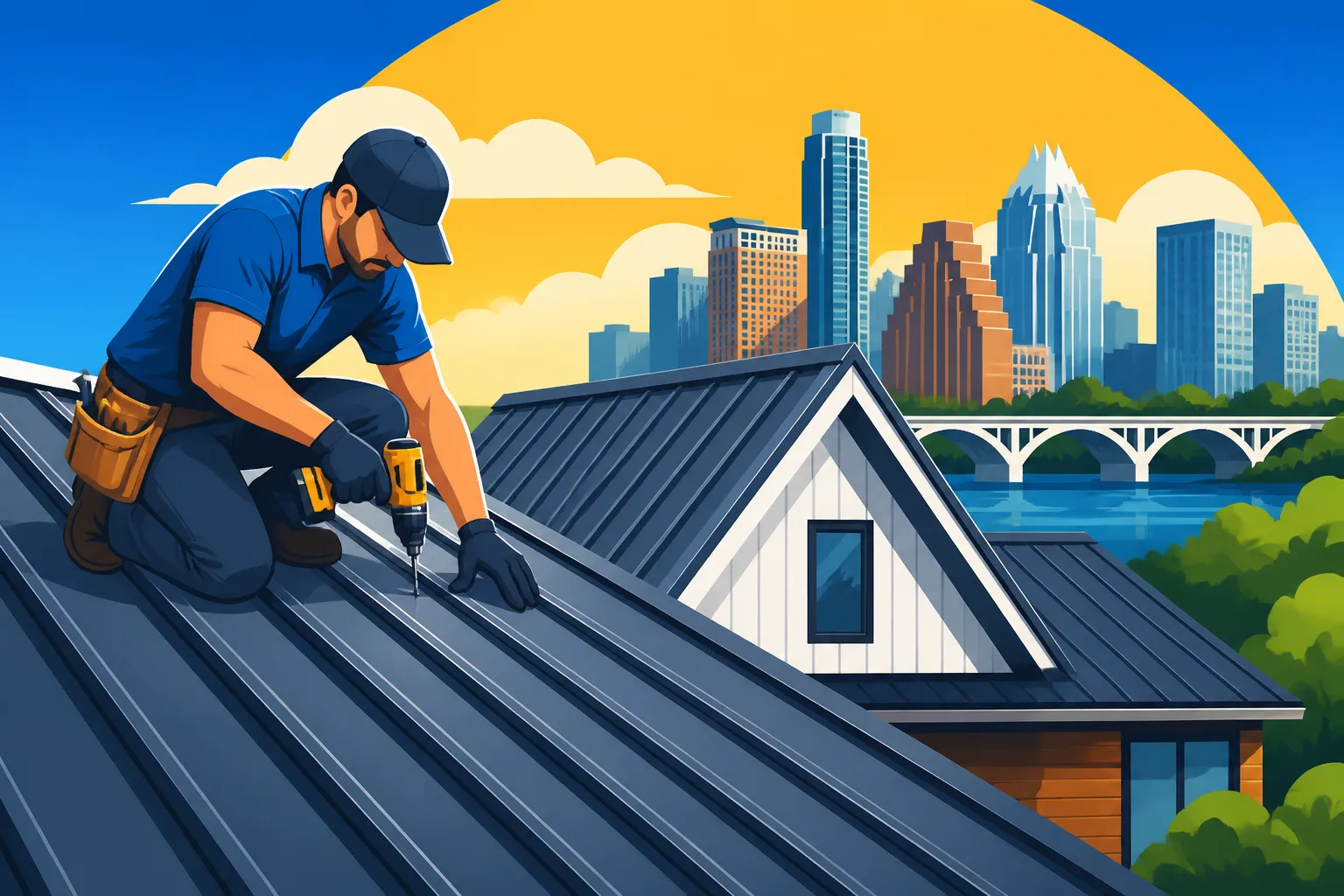
Metal Roofing Contractors in Austin
Austin homeowners often find themselves in a frustrating cycle of replacing asphalt shingles every few years due to the relentless Texas sun and frequent, violent hailstorms that roll through Central Texas. This guide provides a comprehensive roadmap for navigating the local market to find the best metal roofing contractors in Austin, ensuring your home is protected by a roof that can actually withstand the unique demands of the Hill Country climate.
Navigating the Austin Metal Roofing Landscape
Austin is not like other cities when it comes to roofing. We deal with the "Urban Heat Island" effect, where the dense concentration of pavement and buildings in areas like Downtown or the Domain traps heat, making cooling costs skyrocket. A local contractor needs to understand more than just how to hammer a nail; they need to understand thermal expansion and how metal interacts with the high-UV environment of Central Texas. Many homeowners start their search by looking for Metal Roofing Contractors in Austin, but they quickly realize that the level of expertise varies wildly from one company to the next.
One of the biggest frustrations you will face is the "shingle-first" mentality. Most roofing companies in the Travis County area are high-volume asphalt installers. They might offer metal as a secondary service, but metal roofing requires a completely different set of tools and a much higher level of precision. If a contractor tries to talk you out of metal or seems vague about their specific experience with Standing Seam Metal Roof Cost or installation techniques, it is usually a sign that they lack the specialized crew necessary for a high-quality metal job.
The local weather is another factor that separates the amateurs from the pros. In Austin, we don't just get rain; we get torrential downpours that can lead to flash flooding. A metal roof must be perfectly flashed around chimneys and valleys to prevent leaks during these intense events. When vetting local pros, you should ask how they handle the specific challenges of the Austin terrain, from the rocky soil that affects how they set up staging to the narrow streets in neighborhoods like Hyde Park or South Congress that make material delivery a logistical puzzle. Platforms like Modernize can be incredibly helpful here, as they connect homeowners with contractors who are vetted for their specific regional expertise.
Understanding Austin Building Codes and Permits
Before you even tear off your old roof, you have to deal with the City of Austin’s Development Services Department. The permitting process here can be notoriously slow and bureaucratic. A reputable contractor will handle the permitting for you, but you need to be aware of what is happening. For instance, if you live in a historic district like Old West Austin, there are very specific requirements regarding the profile and color of the metal panels you can use. You cannot simply install a bright blue corrugated roof on a 1920s bungalow without facing significant fines.
Furthermore, the city has strict "Cool Roof" standards for certain types of renovations. Because metal is naturally reflective, it often exceeds these standards, but your contractor must provide the proper documentation to prove the Total Solar Reflectance (TSR) of the material. This is where What License Does a Roofer Need in Texas becomes a critical piece of knowledge; while Texas does not have a mandatory state-level roofing license, the city of Austin has its own registration requirements that your contractor must follow to pull a valid permit.
The Impact of Central Texas Weather on Contractor Choice
Austin sits right at the edge of "Tornado Alley" and is a prime target for the "Dryline" weather patterns that produce massive hail. When a storm hits neighborhoods like Pflugerville or Cedar Park, the "storm chasers" arrive in droves. These are out-of-state contractors who follow the hail. You want to avoid them at all costs. A local Austin contractor has a physical office, local references, and a reputation to maintain within the community.
When discussing your project, ask the contractor how they plan to handle the heat during installation. In July and August, metal panels can reach temperatures that make them impossible to touch. A seasoned Austin crew will start at 6:00 AM and may stop work by early afternoon to ensure the safety of the workers and the integrity of the installation. If a contractor claims they can work 12-hour days in the middle of an Austin August, they are likely cutting corners or overworking their crew, which leads to mistakes.
What to Look for in a Top-Tier Austin Contractor
Finding a contractor is easy; finding one who specializes in the craft of metal is the hard part. You are looking for an artisan, not just a laborer. Metal roofing involves complex geometry, especially on the multi-gabled homes found in West Lake Hills or Tarrytown. A single mistake in a valley or a poorly crimped seam can lead to a leak that is incredibly difficult to track down later.
You should prioritize contractors who own their own roll-forming machines. This allows them to create custom-length panels right in your driveway, reducing the number of seams and minimizing the potential for damage during transit. When you use a service like Modernize to find pros, look specifically for those who emphasize their custom fabrication capabilities. It shows a level of investment in the trade that "shingle-first" companies simply don't have.
Specialized Knowledge in Standing Seam and Stone-Coated Steel
In the Austin market, two types of metal roofing dominate: standing seam and stone-coated steel. Standing seam is the "gold standard" for the modern Austin aesthetic. It offers clean lines and hidden fasteners, which is crucial because exposed screws can eventually back out due to the extreme temperature fluctuations we see in Texas—going from 30 degrees in the morning to 80 degrees in the afternoon is not uncommon in the spring.
Stone-coated steel is a fantastic option for homeowners who want the durability of metal but the look of traditional shingles or Mediterranean tile, which is very popular in the Steiner Ranch area. You need to ensure your contractor has specific experience with these products. The installation process for stone-coated steel is entirely different from standing seam, requiring a batten system for proper airflow. If you are curious about the price difference, checking a Metal Roof Cost Calculator: How to Estimate can give you a baseline, but a local contractor will provide the most accurate quote based on Austin's current labor rates.
Licensing, Insurance, and Certifications
While we mentioned that Texas doesn't license roofers at the state level, the best contractors in Austin will hold voluntary certifications. Look for a contractor who is part of the Roofing Contractors Association of Texas (RCAT). This shows they have undergone a background check and have demonstrated a certain level of technical mastery.
Insurance is the most important "non-negotiable" factor. A contractor must carry both General Liability and Workers' Compensation. Given the height and steepness of many Austin roofs, the risk of injury is real. If a worker falls and the contractor isn't insured, the liability could fall on you as the homeowner. Always ask for a current certificate of insurance and call the agent to verify it is active. This is a standard part of the process when you are learning How to Hire a Metal Roofing Contractor.
| Contractor Feature | Why It Matters for Austin Homeowners | Recommended Standard |
|---|---|---|
| Local Office | Essential for warranty claims after local hail events. | Physical address in Travis, Williamson, or Hays County. |
| In-House Crews | Subcontractors often lack specific metal roofing training. | At least 75% in-house labor for specialized tasks. |
| Custom Roll-Forming | Reduces seams and transit damage to panels. | On-site fabrication for standing seam projects. |
| Cool Roof Expertise | Critical for lowering AC bills in the 100+ degree heat. | Knowledge of PVDF coatings and TSR ratings. |
| Permit Handling | Austin's building department is complex and strict. | Contractor pulls all permits and schedules inspections. |
Evaluating Quotes and Hidden Costs in Austin
When you receive a quote for a metal roof in Austin, it might feel like "sticker shock" compared to a basic shingle estimate. However, you have to look at the Total Cost of Ownership. In a city where a shingle roof might only last 12-15 years due to heat and hail, a metal roof is a 50-year investment. When reviewing bids, make sure you are comparing "apples to apples."
One contractor might give you a low-ball quote for Corrugated Metal Roof Cost, while another provides a higher quote for a 24-gauge standing seam system. The corrugated roof has exposed fasteners that will require maintenance every decade, whereas the standing seam is virtually maintenance-free. Use Modernize to gather multiple quotes so you can see the range of options available in the Austin market.
Labor Costs and Material Availability in Central Texas
Austin is a high-growth area, which means labor is in high demand and short supply. This drives up the Metal Roof Labor Cost significantly compared to more rural parts of Texas. You aren't just paying for someone to lay down panels; you are paying for the expertise of a crew that knows how to work with expensive materials without scratching the Kynar finish.
Material availability can also fluctuate. Most high-quality metal used in Austin is sourced from regional hubs in Houston or Dallas. A good contractor will have established relationships with suppliers like McElroy Metal or Boral to ensure that your project isn't delayed by supply chain hiccups. If a contractor tells you they can start tomorrow but hasn't even measured your roof, be wary—proper metal roofing requires lead time for ordering and fabrication.
Addressing the HOA Hurdle
If you live in a master-planned community like Avery Ranch or Circle C, your biggest obstacle might not be the cost, but your Homeowners Association (HOA). Many Austin-area HOAs have outdated bylaws that restrict metal roofing because they associate it with "barns" or "industrial buildings."
A professional contractor will help you navigate this. They can provide samples, brochures, and photos of finished projects to prove that a modern metal roof—especially stone-coated steel or a matte-finish standing seam—enhances the neighborhood's aesthetic. They should be familiar with How to Get HOA Approval for a Metal Roof and be willing to attend a board meeting or write a letter on your behalf. In Texas, there are even laws that protect your right to install energy-efficient roofing, and a savvy local contractor will know how to use those regulations to your advantage.
Final Steps: Vetting and the Contract
Before you sign on the dotted line, you need to do your due diligence. Don't just look at the star rating on a review site; read the actual comments. Look for mentions of how the contractor handled problems. Did they show up on time? Did they clean up the magnetic sweeping of the yard to ensure no metal shards were left for your pets or kids to step on?
Ask for at least three references for projects completed in the last year specifically in Austin. Drive by those houses. A metal roof looks different in the harsh midday sun than it does in a brochure. Look for "oil canning"—that wavy appearance that can happen if panels are installed too tightly. While some oil canning is natural, excessive waving is a sign of poor installation. This is a key part of Questions to Ask a Metal Roofing Contractor Before You Hire.
What Your Contract Should Include
In Austin, a handshake isn't enough. Your contract needs to be explicit. It should detail the exact gauge of the metal (24-gauge is the standard for quality residential work in Texas), the type of underlayment (synthetic is a must here), and the specific brand of paint coating. You want a PVDF coating (like Kynar 500) to ensure the color doesn't fade into a chalky mess after three years of Austin sun.
The contract should also outline the payment schedule. It is normal to pay a deposit for materials, but you should never pay the full balance until the final inspection is passed by the city and the job site is clean. This protection is vital when navigating Metal Roofing Contractors in Austin. Finally, ensure the workmanship warranty is clearly stated. A manufacturer's warranty only covers the material; if the contractor installs it wrong, the manufacturer won't help you. You want a workmanship warranty of at least 5 to 10 years from the contractor themselves.
By taking these steps, you move from being a frustrated homeowner to an informed consumer. An Austin metal roof is more than just a home improvement; it is a shield against the elements and a significant boost to your property value. Whether you are in the heart of the city or out in the rolling hills of Dripping Springs, finding the right partner for this project is the most important decision you will make for your home's longevity.
Disclaimer
This guide is for informational purposes only. Roofing costs, building codes, and contractor availability in Austin, Texas, are subject to change based on market conditions and local regulations. Always verify a contractor's insurance, local registration, and references before signing any legal agreement or making payments. Homeowners should consult with the City of Austin Development Services Department regarding specific permit requirements for their property.