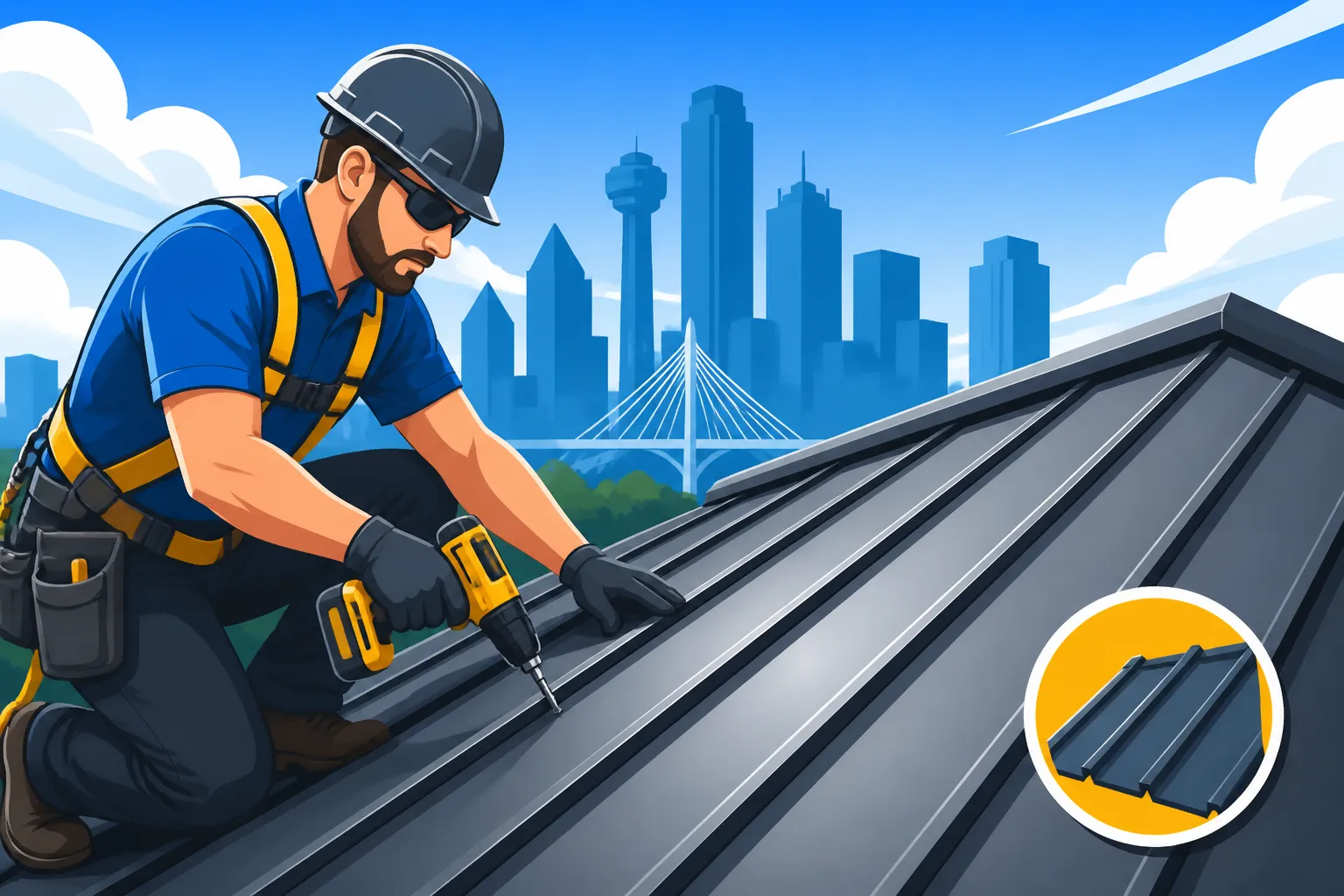
Metal Roofing Contractors in Fort Worth
Homeowners in Tarrant County often face the brutal reality of North Texas weather, where baseball-sized hail and triple-digit heat can turn a standard shingle roof into a liability in just one season. This guide provides a deep dive into finding the best metal roofing contractors in Fort Worth, ensuring your home is protected by professionals who understand our unique climate and local building codes.
The Reality of Choosing a Metal Roofer in Cowtown
Fort Worth isn't just any city; it’s a place where the weather can change from a calm morning to a destructive hailstorm by mid-afternoon. When you start looking for metal roofing contractors, you aren't just looking for someone with a ladder and a hammer. You are looking for a specialist who understands how the intense Texas sun interacts with various metal gauges and how the high winds of the southern plains can catch an improperly installed panel. Many homeowners feel overwhelmed by the sheer number of "storm chasers" that appear after a big weather event, making it difficult to discern who is actually a local fixture and who is just passing through.
The stakes are significantly higher with metal than with asphalt shingles. While any general handyman might claim they can "nail down a few panels," a proper metal installation requires precision flashing, specialized cutting tools, and an understanding of thermal expansion. In a city like Fort Worth, where temperatures can swing 40 degrees in a single day, that metal is going to move. If your contractor doesn't account for that, you’ll hear popping and groaning every time the sun goes down, or worse, you’ll end up with pulled fasteners and leaks.
Because the investment in a metal roof is substantial, the vetting process for a contractor needs to be equally rigorous. You want someone who has a physical office in the DFW metroplex, not just a PO box. Using a service like Modernize can help narrow down the field to contractors who have already been screened for basic requirements, giving you a head start on the research process. It’s about finding that balance between a fair price and the peace of mind that the person working on your home will still be in business ten years from now when you need a minor repair or a warranty check.
Essential Qualifications for Fort Worth Contractors
When you begin the interview process, you have to look beyond the shiny portfolio photos. In Texas, there is a surprising lack of state-level licensing for roofing contractors, which means the burden of proof falls squarely on the homeowner. You need to ensure your chosen professional understands the specific requirements of the Licensed vs Insured vs Bonded: What's the Difference debate. In Fort Worth, reputable contractors will often hold voluntary certifications from organizations like the North Texas Roofing Contractors Association (NTRCA), which shows a commitment to local standards and ethics.
Insurance is the next non-negotiable. Don't just take their word for it; ask to see a certificate of insurance (COI) that lists both general liability and workers' compensation. If a worker is injured on your property in a neighborhood like Tanglewood or Mira Vista, and the contractor doesn't have workers' comp, you could potentially be held liable. A true professional will have no problem having their insurance agent email you a current certificate. This level of transparency is exactly what sets a master craftsman apart from a weekend warrior.
Furthermore, you should look for a contractor who has a deep understanding of the local permit landscape. Whether you are in the historic districts of Fairmount or a new development in North Fort Worth, the city has specific codes regarding how many layers of roofing can be on a house and how the runoff must be handled. A good contractor will handle the permitting process entirely, as they should be the ones held accountable by the city inspectors. Using a platform like Modernize can connect you with pros who are familiar with these local nuances, saving you the headache of navigating city hall yourself.
Evaluating Past Performance in North Texas
A contractor might have great reviews from a job they did in a different climate, but you need to know how their roofs handle the Fort Worth "Hail Alley." Ask for a list of at least three references within a 20-mile radius of your home. If possible, ask for addresses of roofs they installed five or more years ago. This allows you to see how the paint finish has held up against the Texas sun and if there are any signs of "oil canning" or wavy panels that suggest poor installation techniques.
When you call these references, don't just ask if they liked the roofer. Ask specific questions: Did the crew clean up the magnetic sweeps for nails every day? Did they protect the landscaping and the AC unit? How did the contractor handle unexpected issues, like finding rotted decking once the old roof was removed? Knowing how a contractor handles a crisis is often more important than knowing how they handle a "perfect" job.
Understanding Local Labor and Crew Dynamics
In the Fort Worth market, many companies use sub-contracted crews. While this isn't inherently bad, you need to know who is actually going to be on your roof. Ask the contractor if they have a dedicated project manager who will be on-site every day. You want a consistent point of contact who speaks your language and understands the specific details of your contract. If the person who sold you the roof disappears the moment the materials are dropped in your driveway, that’s a major red flag.
The best Metal Roofing Contractors Near Me: How to Find & Vet are those who invest in their crews. Ask if the installers have been trained by specific manufacturers. Metal roofing is a craft; the way a valley is flashed on a standing seam roof is entirely different from how it’s done on a stone-coated steel roof. If the crew treats metal like it’s just "hard shingles," you are going to have problems.
Comparing Quotes and Material Options
In Fort Worth, you’ll likely receive quotes for a few different types of metal. The most common are corrugated panels (often used for barns or industrial-chic homes) and standing seam (the gold standard for residential). You might also see stone-coated steel, which mimics the look of traditional shingles or tile but offers the durability of metal. When you are looking at How to Read and Compare Metal Roof Quotes, make sure you are comparing apples to apples. One contractor might be quoting a thin 29-gauge metal while another is quoting a heavy-duty 24-gauge.
The difference in gauge is critical for Fort Worth homeowners. Thinner metal is much more prone to denting during our spring storms. If you want a roof that qualifies for insurance discounts, you generally need a Class 4 impact rating. Make sure the quote specifies the gauge, the paint system (look for Kynar 500 or Hylar 5000), and the type of underlayment. A cheap felt underlayment will not last as long as the metal above it, creating a "weakest link" scenario that could lead to leaks in twenty years while the metal still looks new.
| Feature | Standing Seam | Corrugated Panels | Stone-Coated Steel |
|---|---|---|---|
| Fasteners | Concealed (Higher protection) | Exposed (Maintenance required) | Concealed (Interlocking) |
| Wind Resistance | Excellent (Up to 140 mph) | Good (Dependent on screws) | Exceptional (Hurricane rated) |
| Hail Rating | Usually Class 4 | Varies by gauge | Class 4 Standard |
| Price Point | High | Low to Moderate | Moderate to High |
| FW Suitability | Best for modern/custom homes | Great for outbuildings/sheds | Best for HOA compliance |
When reviewing these options, keep in mind What Drives Metal Roof Cost in Texas. Factors like the pitch of your roof, the number of dormers, and whether you have a complex chimney can all drive labor costs up. A reputable Fort Worth contractor will break these costs down clearly rather than giving you a single "lump sum" number that hides the details.
Navigating the Contract and Warranty
Once you’ve chosen a contractor through a service like Modernize or through local referrals, the contract becomes your most important document. It should be incredibly detailed, covering everything from the exact brand of metal to the specific color and the thickness of the trim. A vague contract is a recipe for a dispute. You want to see a clear payment schedule—typically a small deposit, a payment when materials are delivered, and a final payment only after the job is completed and the site is clean.
The warranty is another area where many homeowners get confused. There are two parts to a metal roof warranty: the manufacturer's warranty on the materials (usually 40-50 years for the paint and substrate) and the contractor's workmanship warranty. In the roofing world, a workmanship warranty is only as good as the company providing it. If a contractor offers a "lifetime" labor warranty but has only been in business for two years, take that with a grain of salt. A solid 5 to 10-year workmanship warranty from an established local company is often more valuable.
Ensure you understand What a Metal Roof Contract Should Include before signing. This includes a "right to rescind" clause (which is law in many places, allowing you a few days to change your mind) and a clear timeline for the project. Metal roofing takes longer to install than shingles, especially if the weather doesn't cooperate. A good contractor will give you a realistic window rather than promising to be done in 48 hours.
The Importance of a Detailed Estimate
A professional How to Get a Metal Roof Estimate involves more than a quick look from the street. The contractor should get on the roof, measure the pitch, check the condition of the decking, and inspect the attic ventilation. In Fort Worth, proper ventilation is key to keeping your cooling costs down. If a contractor doesn't talk to you about ridge vents or solar fans, they aren't looking at the whole picture.
They should also provide a clear plan for debris removal. Metal scraps are sharp and dangerous. Will they provide a dumpster? Will they use a magnetic sweep to find every fallen screw in your driveway? These details matter when you are trying to keep your family and pets safe during the construction process.
Questions to Ask Before Signing
Before you hand over any money, sit down with the contractor and go through a list of Questions to Ask a Metal Roofing Contractor Before You Hire. Ask about their specific experience with the material you've chosen. Ask who will be your primary contact during the build. Most importantly, ask what happens if they find unexpected damage once the old roof is off. A transparent contractor will have a set price per sheet for plywood replacement so there are no surprises on the final bill.
Another great tool for this stage is Modernize, which can help you compare multiple quotes and check contractor ratings in one place. It streamlines the process of finding someone who isn't just a good roofer, but a good communicator. In the end, the contractor-homeowner relationship is built on trust, and that starts with the very first phone call.
Avoiding Common Pitfalls and Scams
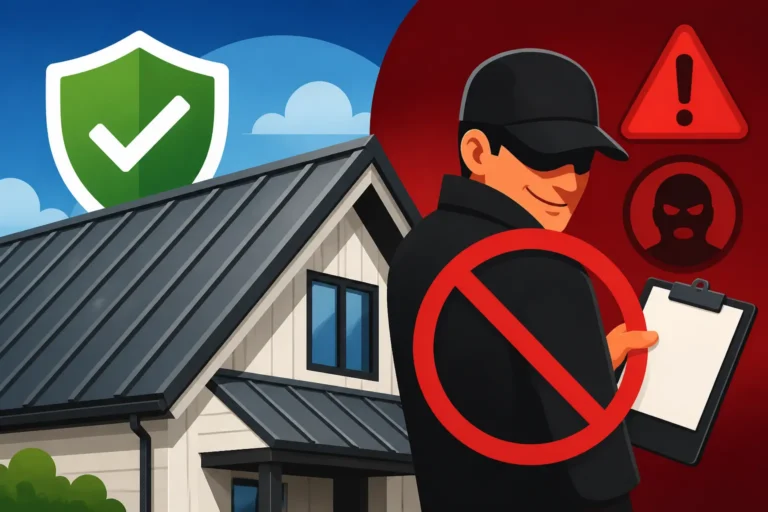
Unfortunately, the roofing industry is a magnet for scams, especially in high-weather areas like North Texas. One of the most common issues is the "no-deductible" scam. In Texas, it is illegal for a contractor to waive your insurance deductible. If a roofer tells you they can "handle the deductible" for you, they are asking you to participate in insurance fraud. This is a massive red flag that suggests they are cutting corners elsewhere, likely in the quality of the materials or the labor.
Be wary of door-knockers who show up immediately after a storm with a "limited time offer." Reputable Fort Worth contractors stay busy through word-of-mouth and established marketing; they rarely need to chase storms. These Metal Roofing Scams and Red Flags to Avoid often involve high-pressure sales tactics designed to get you to sign a contract before you’ve had a chance to do your research. If you feel rushed or bullied, walk away.
Always verify the physical address of the company. If their truck has a magnetic sign instead of a permanent wrap, or if they are using a temporary out-of-state license plate, proceed with extreme caution. A local contractor has a reputation to uphold in the community; a storm chaser will be in a different state by the time your roof starts leaking in the next rainy season.
Finalizing Your Investment
Choosing a metal roofing contractor in Fort Worth is a significant decision that affects your home's value, safety, and curb appeal for decades. By focusing on local expertise, verifying insurance and references, and using reputable matching services like Modernize, you can navigate this process with confidence. Don't be afraid to take your time. A roof is a major investment, and the "right" contractor will respect your need to be thorough.
Once the project is underway, stay involved. Check the progress daily, ask questions about anything that looks off, and don't make that final payment until you are 100% satisfied with the work and the cleanup. With the right partner, your new metal roof will be the last one you ever have to buy for your Fort Worth home, standing strong against the Texas elements for a lifetime.
Disclaimer
This guide is for informational purposes only and does not constitute professional legal, financial, or engineering advice. Roofing requirements can vary significantly based on local building codes and specific property conditions. Always consult with a licensed professional contractor and verify all insurance and credential information before entering into a legal contract.