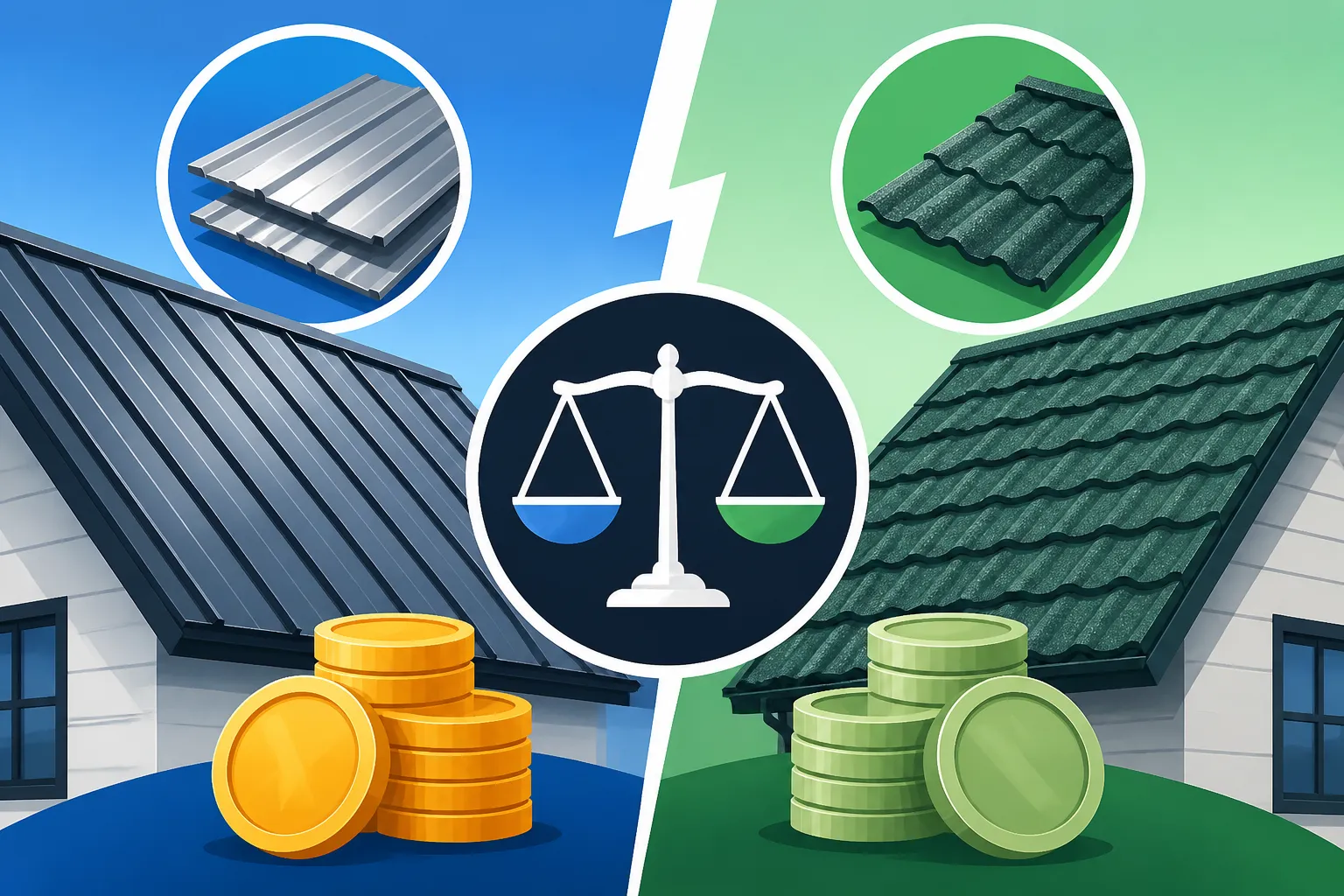
Metal Roof Cost Compared to Gerard Pricing
Choosing a new roof is one of the most stressful and expensive hurdles you will ever face as a homeowner. You want the legendary durability of metal, but you might hate the industrial look of large panels or worry that your neighborhood association will block the project. This guide clears up the confusion around premium stone-coated steel systems by comparing the actual investment of a Gerard roof against standard metal options to help you budget accurately.
Understanding the Gerard Pricing Premium
When you start looking at Gerard roofing, you are moving away from the world of basic utility and into the realm of architectural luxury. Gerard is a pioneer in stone-coated steel, a material that combines the structural strength of a 26-gauge steel panel with the aesthetic beauty of traditional shingles, wood shakes, or Mediterranean tiles. The reason the price tag often causes a bit of "sticker shock" is that you aren't just buying a piece of metal; you are buying a multi-layered composite system designed to last over half a century.
The physical construction of these panels involves a core of Galvalume-coated steel, which is then primed and coated with an acrylic resin. This resin holds ceramic-coated stone granules in place, providing the color and texture. Because of this complexity, the Metal Roof Cost Per Square Foot for a Gerard system is significantly higher than what you would pay for a basic barn-style roof. You are paying for the engineering required to make steel look like something it isn't, while keeping the weight low enough that it doesn't require the structural reinforcement often seen with heavy clay tiles.
Another factor in the pricing is the interlocking design. Unlike basic metal sheets that overlap and are screwed down from the top, Gerard panels typically use a horizontal "fix" or an interlocking system that creates a unified, weather-tight shell. This design is what gives the product its high wind and hail ratings, but it also increases the manufacturing cost and, subsequently, the price per square that you see on your contractor's estimate. It is common for homeowners to find that a Gerard system sits at the higher end of the Stone-Coated Steel Roof Cost spectrum, often competing with high-end standing seam systems.
Comparing Gerard Costs to Traditional Metal Roofing Profiles
To understand if Gerard is a good fit for your wallet, you have to look at it side-by-side with the more common metal profiles. Most people are familiar with "R-panels" or "corrugated" metal, which are the go-to choices for sheds, barns, and some modern homes. If you are comparing a Gerard stone-coated shake to a Corrugated Metal Roof Cost, the difference is vast. Corrugated roofing is an entry-level product that often uses exposed fasteners and thinner gauges. Gerard, by contrast, is a concealed-fastener system that offers a level of curb appeal and longevity that basic corrugated panels simply cannot match.
The more realistic comparison for most suburban homeowners is between a Gerard system and a standing seam roof. A Standing Seam Metal Roof Cost is usually the benchmark for high-quality residential metal roofing. While standing seam is sleek, modern, and incredibly effective at shedding water, it has a very specific "metal" look. Gerard pricing often lands in the same ballpark as high-end standing seam, but the labor for Gerard can sometimes be more intensive because of the detailed trim pieces required for the hips, ridges, and gables.
For those who are specifically looking for a traditional aesthetic, such as the look of Spanish tile or heavy cedar shakes, the Metal Roof vs Tile Roof Cost comparison is where Gerard really shines. While the initial material cost of Gerard might be similar to high-end clay tiles, the total project cost is often lower because the steel panels are much lighter. You won't need to pay an engineer to inspect your rafters or pay a carpenter to reinforce your home's structure to hold the weight of heavy tile. This "hidden" saving makes Gerard a very competitive option for those who want the Mediterranean look without the Mediterranean weight.
Price Comparison Table: Gerard vs. Common Alternatives
| Roofing Type | Estimated Cost (Installed) | Expected Lifespan | Primary Aesthetic |
|---|---|---|---|
| Gerard Stone-Coated Steel | $12.00 – $18.00 / sq. ft. | 50+ Years | Tile, Shake, Shingle |
| Standing Seam (Steel) | $11.00 – $17.00 / sq. ft. | 50+ Years | Modern Vertical Lines |
| Corrugated Metal (Exposed) | $5.00 – $9.00 / sq. ft. | 30-40 Years | Industrial / Rustic |
| Asphalt Shingles (Architectural) | $5.00 – $8.00 / sq. ft. | 15-25 Years | Traditional Shingle |
| Natural Clay or Concrete Tile | $15.00 – $25.00 / sq. ft. | 50-75 Years | Mediterranean / Spanish |
Regional Price Influences and Installation Factors
The quote you receive for a Gerard roof in Austin, Texas, might look very different from a quote for the exact same product in Seattle or Miami. One of the biggest drivers of this discrepancy is the availability of qualified labor. Stone-coated steel installation is a specialized trade. It is not the same skill set as laying down asphalt shingles or even installing long-run standing seam panels. When you look at Metal Roof Labor Cost, you have to realize that you are paying for a crew that knows how to properly "step" the panels and flash the unique transitions of a stone-coated system.
Your specific roof's architecture also plays a massive role in the final price. A simple "up and over" gable roof is relatively cheap to install, even with premium materials. However, if your home has multiple dormers, complex valleys, or a very steep pitch, the price will climb rapidly. In the industry, we call this the "cut and waste" factor. Because Gerard panels come in specific sizes to mimic shakes or tiles, a complex roof requires more cutting, more specialized trim, and more waste material. These details are thoroughly explained in our guide on What Affects Metal Roof Cost: Gauge, Pitch, Complexity & Tear-Off.
Furthermore, your local climate can dictate certain "must-have" add-ons that influence the total. In snowy regions like Colorado or Minnesota, you will almost certainly need to budget for snow guards to prevent "roof avalanches." In coastal Florida or South Carolina, your local building codes might require specific high-wind fastening patterns or enhanced underlayment. These regional requirements can add 10% to 20% to the total project cost compared to a "base" installation in a more temperate, less regulated area.
Evaluating the Long-Term ROI of a Gerard Roof
If you only look at the upfront cost, you might find it hard to justify the price of a Gerard roof when compared to the Metal Roof vs Asphalt Shingle Cost. Asphalt is almost always cheaper on day one. However, the veteran lifestyle blogger perspective is all about the "long game." A Gerard roof is often a "once and done" investment. While your neighbors are replacing their asphalt shingles every 18 to 22 years—and dealing with the rising costs of labor and materials each time—your metal roof will likely still be in its prime.
When we talk about Is a Metal Roof Worth It? ROI, Resale & Payback, we have to look at three specific financial benefits. First is the insurance savings. In many states, stone-coated steel roofs qualify for the highest "Class 4" impact resistance rating. This can lead to significant annual discounts on your homeowners' insurance premiums, especially in hail-prone areas. Over 20 or 30 years, those savings can recoup a large chunk of the initial price gap between metal and shingles.
Second is the energy efficiency. The stone granules on Gerard panels help break up the sun's rays, and many systems are installed on "battens" or furring strips that create an air gap between the roof deck and the metal. This air gap acts as a thermal break, keeping your attic cooler in the summer and reducing the load on your air conditioner. Finally, there is the resale value. A home with a permanent, beautiful Gerard roof is a massive selling point. It tells a potential buyer that they won't have to worry about the roof for the next half-century, which often allows sellers to recoup 60% to 85% of the roof's cost in the home's final sale price.
Strategic Tips for Budgeting Your Project
If you have decided that the stone-coated look is exactly what your home needs, but the initial Gerard quotes are pushing your limits, there are a few ways to manage the cost without sacrificing quality. First, always get multiple quotes from contractors who specialize specifically in stone-coated steel. Because this is a niche product, some general roofers might overbid the project simply because they aren't comfortable with the installation process. You want a crew that does this every week, not once a year.
Consider the timing of your installation as well. Roofing is a seasonal business. If you try to book a Gerard installation in the middle of the "summer rush" or immediately after a major hailstorm has hit your city, you will pay a premium for labor. If you can schedule your project for the "shoulder seasons"—early spring or late fall—you might find that contractors are more willing to negotiate on price to keep their crews busy.
Finally, look into financing options. Many premium metal roofing contractors offer specialized financing because they know the upfront cost is high. Spreading the cost over 5 or 10 years at a low interest rate can make the "forever roof" much more affordable than trying to pay for a cheaper roof twice in the same timeframe. By focusing on the total cost of ownership rather than just the initial check you write, the value of a Gerard system becomes much clearer.
Disclaimer
The pricing information and cost estimates provided in this guide are based on national averages and general industry data. Actual costs for roofing materials and labor can vary significantly based on your specific location, local building codes, contractor availability, and the unique architectural features of your home. We strongly recommend obtaining multiple written estimates from licensed and insured professional roofing contractors in your area before making any financial commitments. This guide is for informational purposes only and does not constitute a formal quote or financial advice.