Metal Roof Cost in North Carolina
North Carolina homeowners often find themselves staring at a roof quote that feels like it was plucked out of thin air, especially when dealing with our state's diverse weather—from salt spray on the coast to ice in the mountains. This guide demystifies the actual Metal Roof Cost in North Carolina, providing realistic price points, material comparisons, and local labor insights to help you budget accurately.
Average Metal Roof Cost in North Carolina
When you start shopping for a new roof in the Tar Heel State, the first thing you’ll notice is the massive spread in pricing. It isn't just about the size of your home; it’s about the specific engineering required to handle our humidity and wind loads. On average, homeowners in North Carolina can expect to pay anywhere from $12,000 to $45,000 for a professional metal roof installation. While that range is wide, most mid-sized residential projects for a standard ranch or two-story home land in the $18,000 to $28,000 neighborhood.
The price per square (a 100-square-foot area) varies significantly based on the system you choose. For a basic exposed-fastener system, which is common in more rural parts of the Piedmont, you might see prices starting as low as $800 per square installed. However, if you are looking for the gold standard of residential protection, you'll want to consult a Metal Roof Cost: Complete 2026 Guide to see how our local rates compare to the national average, which is often pushed higher by NC's specific coastal building codes.
To give you a clearer picture of what you are looking at, we have broken down the typical costs for the most popular systems used across the state. Remember that these figures include both materials and the specialized labor required for metal work, which is significantly more technical than traditional shingle application.
| Roof Type | Cost Per Sq Ft (Installed) | Expected Lifespan (NC Climate) | Best Regional Fit |
|---|---|---|---|
| Asphalt Shingles | $4.50 – $7.50 | 15 – 20 Years | Budget-conscious urban areas |
| Corrugated Metal | $8.00 – $12.00 | 30 – 45 Years | Rural outbuildings and farmhouses |
| Standing Seam | $14.00 – $22.00 | 50+ Years | Coastal and High-Wind areas |
| Aluminum Roofing | $12.00 – $18.00 | 50+ Years | Direct Oceanfront (OBX/Wilmington) |
The Cost per Square Foot Breakdown
If you are trying to do the math on your own, the most reliable way to estimate is by looking at the Metal Roof Cost Per Square Foot. In North Carolina, material costs for steel typically range from $3.00 to $6.00 per square foot, while the labor can add another $5.00 to $12.00 depending on the complexity of your roof. If your home has multiple dormers, steep pitches, or a "cut-up" design with lots of valleys and ridges, expect to sit at the higher end of that labor scale.
For example, a homeowner in a city like Greensboro with a simple gable roof will likely pay much less for labor than a homeowner in Asheville with a steep-pitched mountain cabin. The pitch of the roof doesn't just change the amount of material needed; it changes the safety equipment required for the crew and the speed at which they can move. Anything over a 6/12 pitch usually triggers a "steep charge" from local contractors because of the added risk and difficulty.
Total Project Estimates by House Size
To put this into perspective, let’s look at a standard 2,000-square-foot home, which is quite common in the Raleigh-Durham suburbs. A roof for this size home usually requires about 22 to 25 squares of material (to account for overhangs and waste). If you choose a mid-range standing seam system, your total investment would likely fall between $30,000 and $45,000.
Meanwhile, if you were to opt for a ribbed or corrugated panel—often referred to locally as "barn tin"—the price for that same 2,000-square-foot house might drop to the $18,000 to $22,000 range. While the initial savings are tempting, it is vital to consider how these different systems handle North Carolina's summer heat and tropical storm season. The exposed screws in corrugated systems require maintenance every 10 to 15 years, whereas a standing seam system is virtually "set it and forget it."
Factors That Influence Your NC Metal Roofing Quote
The "North Carolina factor" is very real when it comes to construction. We have three distinct geographic zones—the Coastal Plain, the Piedmont, and the Mountains—and each one places different stresses on a metal roof. A contractor in Wilmington is going to quote you based on high-wind fasteners and perhaps aluminum materials to prevent salt-air corrosion. Conversely, a contractor in Boone will be looking at snow-load requirements and heavy-duty gauges to handle ice dams.
Understanding the Standing Seam Metal Roof Cost is particularly important if you live in a coastal county. Standing seam uses a concealed fastener system, meaning there are no holes drilled through the face of the metal. In a hurricane-prone state like ours, this is a massive advantage because it prevents the wind from getting under the panels and ripping them off. It also eliminates the risk of leaks as the metal expands and contracts in our 100-degree July humidity.
Standing Seam vs. Corrugated Costs
The choice between standing seam and corrugated is the biggest fork in the road for your budget. Corrugated panels are cheaper because they are thinner and faster to install. However, they use exposed fasteners—thousands of screws with rubber washers that sit out in the NC sun. Over time, those washers dry rot and crack, leading to the "leaking screw" syndrome that many older metal roofs suffer from.
Standing seam systems, while more expensive, are engineered for longevity. They feature a "snap-lock" or "mechanical seam" that allows the metal to slide as it heats up during the day. This movement is crucial in North Carolina, where a roof surface can swing from 70 degrees in the morning to 150 degrees by mid-afternoon. If the roof can’t move, it will eventually buckle or "oil can," which is that wavy look you sometimes see on cheap metal installs.
Labor Rates and Regional Variations in NC
Labor isn't uniform across the state. If you are hiring a crew in Charlotte or North Raleigh, you are competing with a massive amount of new construction, which keeps labor prices high. You might find that labor accounts for 60% of your total quote in these metropolitan hubs. In contrast, in more rural areas like Surry or Sampson County, labor might only be 40% to 50% of the total bill.
Furthermore, specialized installers are harder to find in certain parts of the state. Metal roofing is a craft; it’s not the same as throwing down asphalt shingles. You want a crew that knows how to properly flash a chimney and handle the unique transition points on your roof. This expertise comes at a premium. If a quote seems suspiciously low, it usually means the contractor is using a crew that primarily does shingles and is "trying out" metal on your house—a recipe for a very expensive leak down the road.
Material Comparison for North Carolina Climates
North Carolina’s weather is a literal testing ground for roofing materials. We have the humidity of the deep south, the wind of the Atlantic, and the freeze-thaw cycles of the Appalachians. Choosing the wrong metal for your specific micro-climate can lead to premature failure. For example, standard galvanized steel is great for the Piedmont, but it will start to show "white rust" or corrosion within a decade if you use it on a home in Nags Head or Wrightsville Beach.
If you are on the coast, you should prioritize an Aluminum Roof Cost analysis. Aluminum is naturally resistant to salt-water corrosion. While it is more expensive than steel, it is the only way to ensure your roof lasts the promised 50 years when you're within five miles of the ocean. Steel roofs in coastal environments, even those with high-end Galvalume coatings, often struggle with "edge creep" where the cut ends of the panels begin to rust due to the salt air.
Steel Roof Cost Per Square Foot
Steel is the workhorse of the North Carolina metal roofing market. Most residential steel is either G90 Galvanized or, more commonly, Galvalume (a zinc and aluminum coating). For homeowners in the Piedmont or the mountains, Galvalume is an incredible value. It offers superior corrosion resistance compared to old-school galvanized tin and holds paint exceptionally well.
The gauge (thickness) of the steel also plays a role in the price. In North Carolina, you’ll typically see 26-gauge or 24-gauge steel. A 24-gauge panel is thicker and more rigid, making it better for high-wind areas and less prone to "oil canning." While it costs about 15-20% more than 26-gauge, it’s often the recommended choice for a primary residence because of its durability against falling branches or hail, which we see plenty of during spring storm season.
Aluminum Roof Cost Per Square Foot
For those lucky enough to live near our beautiful coast, aluminum is the elite choice. It’s a softer metal than steel, so it is usually manufactured in a thicker .032 or .040 gauge to give it strength. Because aluminum doesn't rust, it can be installed right up to the high-tide line without the warranty being voided—something many steel manufacturers won't allow.
Expect to pay a premium for aluminum. The material itself is more volatile in price than steel, and the installation requires a bit more care because the panels can be scratched or dented more easily during the process. However, when you consider that a salt-air environment can kill a shingle roof in 12 years, the 50-year life of an aluminum roof makes it the most cost-effective long-term solution for coastal North Carolina.
Long-Term Value and ROI in North Carolina
One of the biggest frustrations homeowners face is the "sticker shock" of metal versus shingles. It is true: a metal roof can cost two to three times more than a high-quality architectural shingle. However, in North Carolina’s real estate market, a metal roof is often seen as a permanent upgrade rather than a maintenance item. If you plan on staying in your home for more than 15 years, the metal roof actually becomes the cheaper option.
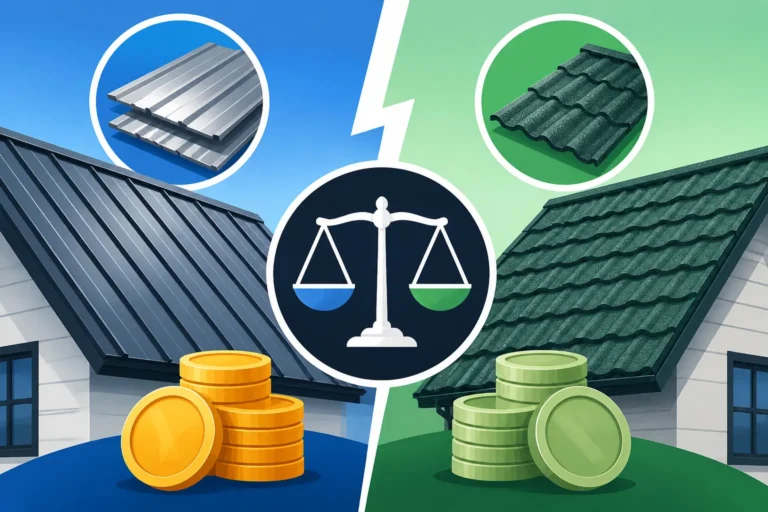
There is also the matter of resale value. Homes in the Triangle or the Charlotte metro area with standing seam metal roofs often command a higher asking price. Buyers love the "industrial farmhouse" look that is so popular right now, but more importantly, they love the idea of never having to buy a roof for as long as they own the home. When you factor in the Metal Roof vs Asphalt Shingle Cost over a 30-year span, the metal roof wins every time because you would have replaced the shingle roof at least once, if not twice, during that period.
Metal Roof Insurance Savings & Discounts
Did you know your roof could actually pay you back through your insurance premiums? In North Carolina, many insurance companies offer a Metal Roof Insurance Savings & Discounts program, especially if the metal is UL 2218 Class 4 impact rated. Because metal is fire-resistant and handles high winds much better than shingles, insurers see your home as a lower risk.
This is particularly true in the "hurricane alley" counties. If your metal roof meets certain wind-uplift requirements, you may qualify for wind mitigation credits on your homeowners' insurance policy. We’ve seen North Carolina homeowners save anywhere from 5% to 15% on their annual premiums just by switching to a qualified metal system. Over 20 or 30 years, those savings can add up to thousands of dollars, effectively subsidizing the higher initial cost of the metal.
Energy Efficiency in the NC Heat
We all know how brutal a North Carolina August can be. Your attic can easily reach 140 degrees, forcing your AC to work overtime. Metal roofs are "cool roofs" by nature. They reflect a high percentage of solar radiation back into the atmosphere rather than absorbing it into the structure of your home.
By choosing a metal roof with a high SRI (Solar Reflectance Index) coating, you can reduce your cooling costs by up to 25%. In a state where the AC runs from May through October, that is a massive monthly saving. Many homeowners find that their "comfort level" in the house improves significantly because the second floor is no longer a sauna in the afternoon.
Additional Costs and Considerations
When you receive a quote for a metal roof, you need to look beyond just the panels. There are several "hidden" costs that can sneak up on you if you aren't prepared. For example, what is the contractor planning to do with your old shingles? Some companies will suggest a "layover," while others insist on a full "tear-off."
Understanding the Tear-Off vs Metal Over Shingles: Cost Difference is vital. While a layover saves you about $1,500 to $3,000 in labor and disposal fees, it can make it harder to find leaks in the future. In North Carolina, building codes generally allow for two layers of roofing, but many professional metal installers prefer a clean deck to ensure the underlayment (the waterproof barrier) is perfectly sealed.
Metal Roof Underlayment and Accessories
The "stuff under the metal" is just as important as the metal itself. In our humid climate, you need a high-quality synthetic underlayment that acts as a secondary water barrier. For standing seam roofs, many pros recommend a "high-temp" underlayment because the metal can get so hot it would actually melt a standard asphalt-based peel-and-stick.
You also have to account for the trim, flashing, and ridge vents. A metal roof requires specific color-matched trim for the rakes, eaves, and valleys. If you have a chimney, it needs a custom-fabricated "cricket" to divert water. These accessories can easily add $2,000 to $5,000 to a project, but they are the components that actually keep the water out. Don't let a contractor cut corners here to give you a lower "panel price."
Metal Roof Permit Cost in North Carolina
Finally, don't forget the bureaucracy. Every county and municipality in North Carolina has its own rules for roofing permits. The metal roof permit cost in North Carolina usually scales based on the total value of the project. For a $25,000 roof, you might be looking at $200 to $500 in permit fees.
Your contractor should handle the permitting process, but you should verify that it’s being done. A permit ensures that a local inspector will come out and verify that the roof meets the wind-load requirements for your specific area. In coastal zones, this inspection is critical for maintaining your wind and hail insurance coverage. Without a passed inspection and a closed permit, you might find yourself in a very difficult spot the next time a named storm rolls through the coast.
Disclaimer
The pricing information and regional advice provided in this guide are based on general market trends and historical data for North Carolina as of 2024-2026. Roofing costs are subject to extreme volatility due to fluctuations in global steel and aluminum prices, as well as local labor shortages. Always obtain multiple written quotes from licensed, insured, and bonded North Carolina contractors before starting a project. This guide is for informational purposes only and does not constitute a formal financial or construction estimate.