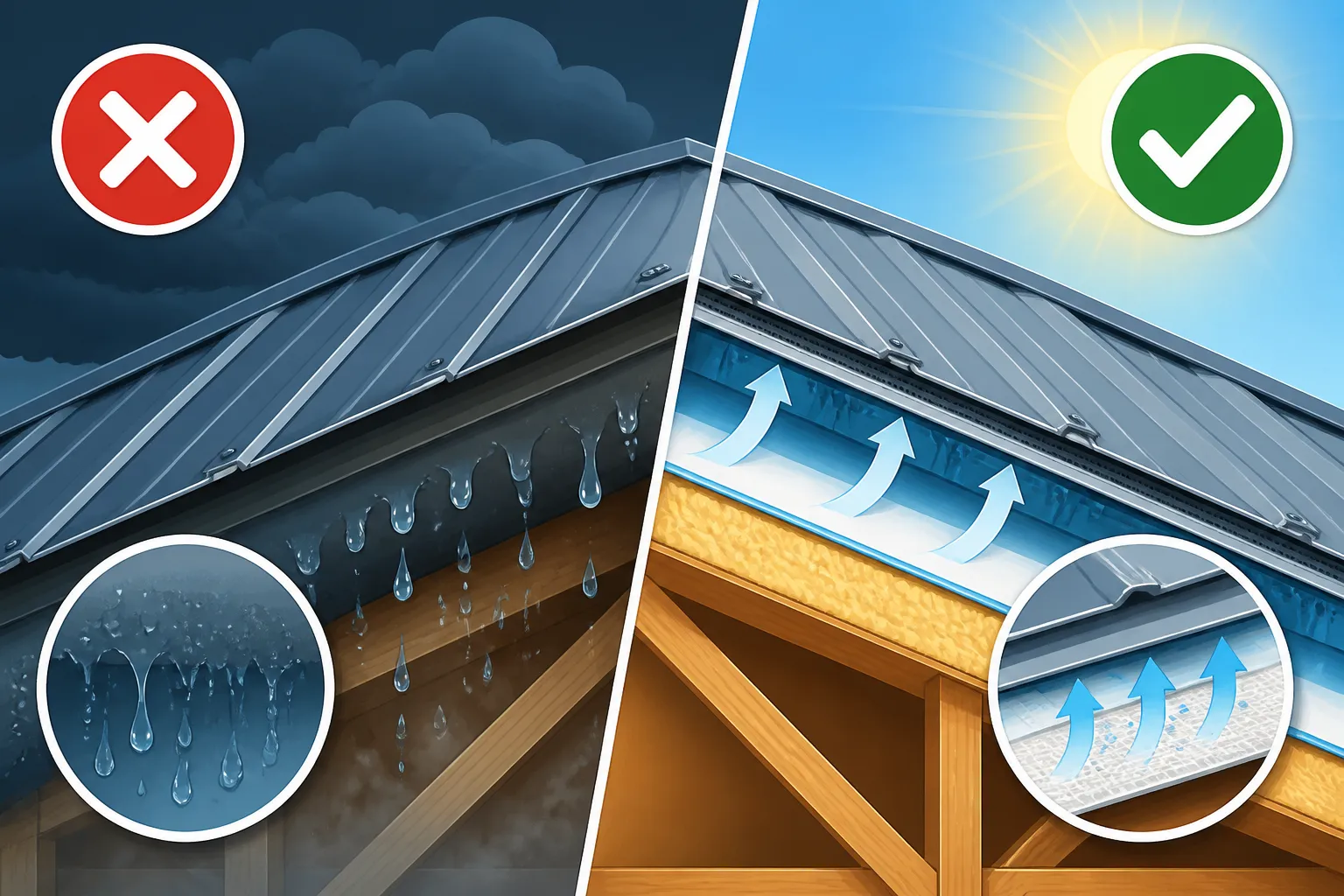
How to Stop Condensation Under a Metal Roof
That cold, dripping ceiling or the musty smell wafting from your attic is often a tell-tale sign of a problem many metal roof owners face: condensation. It’s a frustrating issue that can silently wreak havoc, leading to everything from damaged insulation to structural rot. This guide is here to walk you through exactly what causes condensation under your metal roof and, more importantly, provide you with comprehensive, actionable strategies to stop it in its tracks and protect your home for the long haul.
Understanding What Condensation Is and Why It Happens Under Metal Roofs
It’s easy to get frustrated when you see moisture where it shouldn't be, especially right under your sturdy metal roof. But understanding what condensation actually is and why it forms is the first crucial step in effectively preventing it. It's not magic, it's science, and once you grasp the basics, the solutions start to make a lot more sense.
The Science of Condensation Explained
At its core, condensation is simply the process where water vapor, which is water in its gaseous form, turns back into liquid water. Think about a cold glass of iced tea on a hot summer day – the outside of the glass gets covered in water droplets, right? That’s condensation. The warm, humid air in the room comes into contact with the cold surface of the glass. As the air cools down rapidly at the surface, it can no longer hold as much moisture, so the excess water vapor condenses into liquid.
Under your metal roof, the same principle applies. Your metal roof panels, especially in cooler weather or at night, can get quite cold. If the air in the attic or the space directly below the roof is warm and humid, it acts like that summer air. When this warm, moisture-laden air hits the cold underside of the metal panels, it cools down, and the water vapor it carries precipitates as liquid droplets. This is particularly noticeable during significant temperature swings, like a warm, moist day followed by a cold night, or during periods of high indoor humidity combined with cold outdoor temperatures.
Common Causes Specific to Metal Roofs
Metal is an excellent conductor of heat and cold. This is one of its superpowers, contributing to its energy efficiency, but it also means that the temperature of your metal roof panels can fluctuate quickly and dramatically with external conditions. This rapid temperature change makes metal roofs particularly susceptible to condensation if not properly managed. Unlike asphalt shingles, which have more mass and don’t conduct temperature as quickly, metal panels can reach the dew point temperature much faster.
Beyond the inherent thermal properties of metal, several factors contribute to this issue. Poor attic ventilation is a huge culprit. If warm, moist air from your home (from showering, cooking, breathing, laundry) can seep into the attic and then gets trapped there without an escape route, it creates a perfect breeding ground for condensation. Similarly, if your insulation isn't doing its job effectively or if there are gaps in your vapor barrier (more on that later), moisture-rich air can bypass these protective layers and come directly into contact with the cold metal. Even factors like heavy dew or fog outside can exacerbate the problem, as the entire roofing structure might be colder for longer periods.
Factors that Worsen Condensation Problems
It's not just a single thing that causes condensation; it's often a perfect storm of environmental and structural conditions. High humidity levels, both inside and outside your home, are primary drivers. If you live in a climate with consistently high humidity, or if your home generates a lot of indoor moisture, you're at a higher risk. Think about homes near lakes, rivers, or coastal areas – the air itself carries more moisture. Similarly, running humidifiers excessively indoors, or having leaky plumbing in the attic, can introduce an abundance of water vapor.
Another major factor is inadequate or improperly installed insulation. Insulation doesn’t just keep your home warm; it also helps regulate the temperature difference between your living space and your attic. If insulation is compressed, wet, or has significant gaps, it loses its effectiveness, allowing more heat to escape into the attic, and making the cold metal surface even more prone to attracting moisture. Lastly, a complete lack of a vapor barrier or an improperly installed one will allow moist air to pass directly through the ceiling and insulation into the colder attic space, virtually guaranteeing condensation on the underside of your metal roof. It’s like leaving a window open in a steam room – all that moisture has nowhere to go but onto the coolest surface.
The Damaging Effects of Underside Condensation
Seeing a few drops of water under your metal roof might seem like a minor annoyance at first, but don't be fooled. Underside condensation is a silent, persistent threat that can lead to significant and costly damage over time. It's a progressive problem, often starting subtly and escalating into major issues that compromise the integrity, health, and value of your home.
Structural Integrity and Rot
When condensation forms and drips, it doesn't just evaporate harmlessly. That moisture repeatedly wets the wooden components of your roof structure, such as rafters, trusses, and sheathing. Over time, this constant dampness creates an ideal environment for wood rot and decay. Wood rot weakens the structural members of your roof, making them less capable of bearing weight and withstanding environmental stresses like high winds or heavy snow loads. Imagine the beams supporting your roof slowly turning to mush – that’s the long-term consequence of unaddressed condensation.
Beyond the immediate structural damage, persistent moisture can also corrode metal fasteners and components, like screws and clips, that hold your roof panels in place. This can lead to loose panels, increased susceptibility to wind uplift, and eventually, catastrophic roof failure. What starts as a small drip can become a major repair bill, potentially requiring extensive carpentry work or even a full roof deck replacement. Regular inspections and addressing these issues quickly are paramount to avoid a much larger problem. You can learn more about Metal Roof Repair vs Replacement: How to Decide when the damage becomes extensive.
Insulation Degradation and Mold Growth
Perhaps one of the most immediate and widespread impacts of condensation is on your insulation. Most common attic insulations, like fiberglass or cellulose, are designed to work by trapping air. When they get wet, they lose their ability to trap air efficiently, drastically reducing their R-value and thermal performance. This means your home becomes less energy-efficient, your heating and cooling bills go up, and your HVAC system has to work harder to maintain comfortable indoor temperatures. Think of trying to stay warm with a soaking wet blanket – it just doesn't work.
Even worse, damp insulation becomes a perfect breeding ground for mold and mildew. Mold spores thrive in moist, dark environments, and a condensation-prone attic provides exactly that. Once mold takes hold, it can spread rapidly, not only consuming organic materials like wood and drywall but also releasing microscopic spores into your home's air. This leads us to the next serious concern: compromised indoor air quality. If you’re experiencing persistent damp smells or a sudden increase in allergies, mold might be the culprit.
Compromised Indoor Air Quality
The presence of mold and mildew in your attic isn't just an aesthetic or structural problem; it's a significant health hazard that directly impacts your indoor air quality. As mold grows, it releases tiny spores into the air, which can then circulate throughout your entire home, especially if your HVAC system draws air from the attic or has inadequate filtration. These mold spores are allergens and irritants that can cause a range of health issues for occupants.
For some, it might mean exacerbated allergies, leading to sneezing, coughing, itchy eyes, and nasal congestion. For others, particularly those with asthma or compromised immune systems, mold exposure can trigger more severe respiratory problems, including wheezing, shortness of breath, and asthma attacks. Long-term exposure to certain types of mold can even lead to chronic health conditions. Moreover, the musty, damp odors associated with mold can permeate your home, making it an unpleasant and unhealthy living environment. Addressing condensation isn't just about protecting your roof; it's about protecting the health of everyone under it.
Effective Strategies for Preventing Condensation Under a Metal Roof
Now that we understand the 'what' and 'why' of condensation, let's dive into the 'how' – how to effectively stop it. Preventing condensation under a metal roof primarily involves controlling temperature, moisture, and airflow in your attic space. It's a multi-pronged approach that often requires a combination of solutions rather than a single fix.
Proper Ventilation Techniques
Ventilation is arguably the most critical component in preventing condensation. It works by creating a continuous airflow through your attic, which helps to equalize temperatures and expel moisture-laden air before it has a chance to condense. Without proper ventilation, warm, humid air gets trapped, cools against the cold metal, and drips. A well-designed ventilation system usually involves a combination of intake and exhaust vents.
Intake vents are typically located at the lowest point of the roof, often in the soffits (the underside of the eaves), allowing cooler, drier outside air to enter the attic. Exhaust vents are placed at the highest point, like ridge vents or gable vents, to allow warm, moist air to escape. This creates a natural convective flow, pulling fresh air in and pushing stale, humid air out. Ensure that your existing vents aren't blocked by insulation or debris, and if your attic feels stifling or damp, it's a strong sign you need to evaluate your ventilation system. You can explore a deeper dive into this topic with our guide on Metal Roof Underlayment and Ventilation Guide.
Choosing and Installing Effective Underlayment
Underlayment plays a crucial role not only as a secondary weather barrier but also in managing moisture, especially for metal roofs. While a well-ventilated attic is key, sometimes condensation can still form directly on the underside of the metal panels, or moisture can migrate through tiny imperfections. This is where a high-quality underlayment comes in. Modern synthetic underlayments are often preferred over traditional felt for metal roofs due to their superior moisture resistance and durability.
Some specialized underlayments even come with an integrated "anti-condensation" or "moisture-absorbing" layer. These products, often made of a fleece or felt material, are designed to absorb any condensation that forms on the underside of the metal panels and then release it back into the attic air when conditions allow for evaporation. This prevents the liquid water from dripping down onto your insulation or roof deck. When planning a new metal roof installation or a re-roof, discussing these advanced underlayment options with your contractor is vital. Understanding Metal Roof Underlayment: Synthetic vs Felt can help you make an informed decision.
Insulation Solutions for Metal Roofs
Effective insulation is your thermal barrier, separating the conditioned air in your home from the fluctuating temperatures of your attic and roof deck. The goal is to minimize heat transfer into the attic during colder months and prevent warm air from rising into the attic and meeting the cold metal surface. Properly installed insulation, with the right R-value for your climate, is essential.
Different types of insulation can be used, including fiberglass batts, blown-in cellulose, or rigid foam boards. Each has its pros and cons regarding R-value, installation, and moisture resistance. It’s crucial that the insulation is installed correctly, with no gaps or compression, which can create thermal bridges where heat and moisture can easily pass. If insulation gets wet from condensation, it loses its effectiveness, creating a vicious cycle where more condensation forms. Therefore, it's not just about having insulation, but having the right insulation, installed correctly, and kept dry.
Vapor Barriers and Their Role
While ventilation addresses moisture in the attic air, and underlayment protects the roof deck from condensation on the metal, a vapor barrier (or vapor retarder) tackles moisture migration from within your living space. Warm, humid air naturally rises, and without a vapor barrier, this moisture-laden air from your home can easily pass through your ceiling, into your attic insulation, and then come into contact with the cold underside of your metal roof.
A vapor barrier is a material, typically a plastic sheeting (like polyethylene) or a specialized paint, installed on the warm side of the insulation (i.e., between your ceiling drywall and the attic insulation). Its purpose is to significantly reduce or block the movement of water vapor from your living space into the colder attic. In cold climates, a vapor barrier is almost always recommended to prevent moisture from saturating insulation and causing condensation. However, in warmer, more humid climates, a vapor retarder or even no barrier might be recommended, as trapping moisture within the wall or ceiling cavity could cause problems. Always consult with a local roofing or insulation expert to determine the best approach for your specific climate and home construction. For further reading, check out Do Metal Roofs Need a Vapor Barrier?.
Addressing Existing Condensation Issues
Finding condensation under your metal roof can feel disheartening, especially if you thought your roof was in tip-top shape. But don't despair! Most existing condensation problems can be effectively mitigated or eliminated with the right approach. It’s about being systematic in your investigation and strategic in your repairs.
Identifying the Source of the Problem
The first step in addressing existing condensation is to play detective. You need to pinpoint exactly where the moisture is coming from and why it's collecting. Is it a persistent drip in one spot, or is there widespread dampness across the underside of the panels?
Start by thoroughly inspecting your attic or the space beneath the metal roof. Look for:
- Ventilation issues: Are soffit vents blocked by insulation? Are gable or ridge vents clear and unobstructed? Is there enough airflow? Sometimes, even a bird's nest or accumulated leaves can severely restrict airflow.
- Insulation gaps: Are there areas where insulation is missing, compressed, or wet? Pay close attention to wall intersections, around light fixtures, and attic hatches.
- Vapor barrier integrity: If you have a vapor barrier, is it torn or improperly installed, allowing moisture to bypass it?
- Interior humidity sources: Are there excessive sources of moisture within your home, such as unvented dryers, frequent long showers without proper fan use, or even large numbers of houseplants?
- Roof leaks (mistaken for condensation): While less common on a new metal roof, it's always worth double-checking for actual roof leaks that might be mimicking condensation. Look for water stains that appear to originate from above the metal panels themselves, rather than forming on their underside. This may require a closer look at your Metal Roof Leak Repair Guide.
Taking photos and notes during your inspection can be incredibly helpful for your records and if you need to consult with a professional.
Repairing Damage and Implementing Solutions
Once you’ve identified the underlying causes, it's time to implement solutions. This often involves a combination of repairs and upgrades:
- Improve Ventilation: This is usually the lowest-hanging fruit. Clear any blocked vents. If your attic lacks adequate intake or exhaust, consider adding more soffit vents, a continuous ridge vent, or even powered attic fans (though these can be controversial and need to be carefully balanced with natural ventilation). The goal is cross-ventilation.
- Seal Air Leaks: Seal any penetrations in your ceiling from the living space into the attic. Use caulk or expanding foam around electrical wires, plumbing pipes, and light fixtures. Weatherstrip your attic hatch to prevent warm, humid air from leaking into the attic.
- Upgrade Insulation: If your insulation is wet, degraded, or insufficient, it needs to be addressed. Wet insulation should be removed and replaced. Consider adding more insulation to achieve recommended R-values for your region, ensuring it's installed evenly and without compression.
- Install or Repair Vapor Barrier: If your home lacks a vapor barrier and experiences persistent condensation, adding one can be highly effective. This is often done during a renovation or if ceilings are being replaced. If an existing barrier is damaged, repair it with appropriate materials.
- Manage Indoor Humidity: Use exhaust fans in bathrooms and kitchens consistently. Ensure your clothes dryer is properly vented outside. Consider using a dehumidifier in your living space during particularly humid periods, especially in basements or crawl spaces, as moisture can migrate upwards.
These steps can often be tackled by a competent DIYer, but for significant ventilation upgrades or vapor barrier installation, professional help is often recommended to ensure proper performance and avoid unintended consequences.
When to Consider a Full Roof Replacement
While many condensation issues can be resolved through strategic repairs and upgrades, there are situations where the damage caused by long-term condensation might be so severe that a full roof replacement becomes the most practical and cost-effective solution.
If your attic inspection reveals widespread wood rot, especially affecting major structural components like rafters or trusses, or if multiple sections of your roof sheathing are soft and compromised, a complete replacement might be necessary. Attempting to patch extensive rot can be a temporary fix at best, and may not fully restore the structural integrity needed to safely support your metal roof. Similarly, if your insulation is so saturated with mold and moisture that it's beyond cleaning or spot replacement, and the mold has spread to other attic components, a comprehensive tear-off might be required to ensure a healthy living environment.
A full roof replacement, while a significant investment, allows for a complete overhaul of your roofing system. This means you can install new, modern underlayment, ensure a perfectly installed vapor barrier, upgrade to optimal insulation, and design a highly effective ventilation system from scratch. It’s an opportunity to build in robust condensation prevention measures that will protect your home for decades. If you're exploring this option, researching the overall Metal Roof Cost: Complete 2026 Guide can provide a solid financial overview.
Choosing the Right Professionals for Condensation Solutions
Dealing with condensation, especially when it's led to damage, can feel overwhelming. It’s a specialized problem that often requires the nuanced expertise of professionals who understand the unique dynamics of metal roofing and building science. Choosing the right contractor isn't just about getting a good price; it's about finding someone who can accurately diagnose the problem and implement a lasting solution.
Finding Experienced Metal Roofing Contractors
When you’re looking for someone to help with condensation issues, you need more than just a general handyman. You need a contractor with specific experience in metal roofing and, ideally, a strong understanding of building envelope science, insulation, and ventilation. Metal roofing has different installation requirements and behaviors compared to asphalt shingles, and a contractor who specializes in it will be better equipped to identify and resolve condensation problems unique to these systems.
Start by looking for local roofing companies that prominently feature metal roofing services. Ask for references, especially from clients who have had similar issues. A reputable contractor should be able to explain the science behind condensation, detail their proposed solutions, and provide a clear, written estimate. Websites like Modernize can be a valuable resource for connecting homeowners with qualified local roofing professionals who specialize in metal roof installations and repairs. Don't hesitate to ask about their experience with various underlayments, vapor barriers, and ventilation systems.
Questions to Ask and Red Flags to Avoid
Interviewing potential contractors is crucial. Here are some key questions to ask:
- "What experience do you have specifically with metal roof condensation issues?" Look for detailed answers about past projects and solutions.
- "How will you diagnose the specific cause of my condensation?" A good contractor won't just guess; they'll outline their inspection process, possibly including thermal imaging or humidity readings.
- "What solutions do you recommend, and why?" They should be able to explain the different options (ventilation, underlayment, insulation, vapor barrier) and justify their recommendations based on your home and climate.
- "Can you provide references for past clients who had condensation problems resolved?" Always follow up on these references.
- "What kind of warranty do you offer on your workmanship?" A strong warranty shows confidence in their work.
Be wary of red flags:
- Contractors who only offer one solution: Condensation is often multi-faceted. A one-size-fits-all approach is suspicious.
- High-pressure sales tactics: Take your time to review quotes and make decisions.
- Lack of licensing, insurance, or bonding: Never hire a contractor who can't provide proof of these essentials. You can learn more about how to vet a professional with our guide on How to Hire a Metal Roofing Contractor.
- Unsolicited door-to-door offers: While not always a scam, it’s often a sign of less reputable "storm chasers."
The Value of Professional Assessment
While DIY can save money, a professional assessment for condensation issues is often worth the investment. An experienced contractor or building scientist brings a trained eye and specialized knowledge to the problem. They can accurately identify subtle air leaks, assess the effectiveness of your existing ventilation, and recommend the most appropriate vapor barrier strategy for your specific climate zone, which can vary significantly even within a single state.
For example, a professional might use tools like a hygrometer to measure humidity levels in your attic and living spaces, or a smoke pencil to visualize airflow patterns. They understand how different building materials interact and how various climate conditions impact moisture dynamics. This expertise ensures that the solutions implemented are not just band-aids but long-term fixes that genuinely address the root cause, preventing future damage and saving you money in the long run. Many reputable roofing companies, easily found through services like Modernize, offer detailed consultations to evaluate your roof and attic before proposing solutions.
Long-Term Maintenance and Monitoring
Once you've implemented solutions to combat condensation, your work isn't entirely over. Metal roofs, while durable, benefit immensely from ongoing care. Long-term maintenance and regular monitoring are essential to ensure your condensation prevention strategies remain effective and your roof continues to perform optimally.
Regular Inspections and Upkeep
Routine inspections are your best defense against recurring condensation or the emergence of new issues. Aim for at least two inspections a year – once in the fall, before the colder weather sets in and heating systems come on, and again in the spring, after the winter season.
During these inspections, pay particular attention to:
- Attic space: Look for any signs of moisture, water stains, mold growth, or unusual odors. Check the underside of the metal panels for droplets or dampness.
- Insulation: Ensure it's dry, fluffy, and hasn't shifted or compressed, especially around eaves and penetrations.
- Vents: Confirm that all attic vents (soffit, ridge, gable) are clear of debris, insulation, or pest nests. Good airflow is critical.
- Exhaust fans: Make sure bathroom and kitchen exhaust fans are properly venting outside and not into the attic. Check for loose or disconnected ducts.
- Sealants: Inspect any sealants around pipes, wires, and fixtures in the attic to ensure they haven't cracked or deteriorated, which could allow air and moisture to leak.
Addressing minor issues like a blocked vent or a loose duct immediately can prevent them from escalating into larger condensation problems. A good Metal Roof Maintenance Guide can provide a comprehensive checklist for upkeep.
Seasonal Considerations and Adjustments
Different seasons bring different challenges and necessitate slightly varied approaches to condensation management.
- Winter: This is often peak condensation season. Ensure your home is adequately sealed against air leaks from the living space into the attic. Check that your insulation is dry and functioning optimally. Keep an eye on humidity levels inside your home, as using humidifiers can sometimes contribute to attic condensation if not carefully balanced with ventilation.
- Spring/Fall: These shoulder seasons often see significant temperature swings, which can trigger condensation. Ensure your ventilation system is working freely to accommodate the rapid changes between warm days and cool nights. This is a good time for a thorough attic inspection before extreme temperatures arrive.
- Summer: While less common for cold surface condensation, summer can bring high humidity. Ensure your ventilation is robust enough to flush out humid air and prevent heat buildup in the attic, which can lead to other issues and potentially set the stage for condensation when cooler temperatures arrive.
Understanding how your local climate influences your home's moisture dynamics can help you make proactive adjustments.
Monitoring Humidity Levels
A simple but highly effective long-term strategy is to monitor the relative humidity levels both inside your home and, if possible, in your attic. You can purchase inexpensive hygrometers (humidity meters) that provide real-time readings.
- Indoor Humidity: Aim to keep your indoor relative humidity between 30% and 50%, ideally closer to 30-40% during colder months. If your indoor humidity is consistently high (above 50-60%), even with proper ventilation, you might need to address internal moisture sources more aggressively or consider a whole-house dehumidifier.
- Attic Humidity: If you have access to your attic, placing a hygrometer there can give you valuable data. While attic humidity will fluctuate with outdoor conditions, consistently high readings (above 60-70%) indicate a problem with either insufficient ventilation or moisture intrusion.
By monitoring these levels, you can catch potential problems early, before they manifest as visible condensation or damage. For instance, if you notice your attic humidity rising unexpectedly, it might be a sign that a vent has become blocked, or an exhaust fan duct has detached. This proactive approach ensures your metal roof remains healthy and dry for its entire, impressive lifespan.
Condensation Prevention Checklist for Metal Roofs
To make sure you're covering all your bases, here's a handy checklist summarizing the key strategies for preventing condensation under your metal roof.
| Category | Action Item | Notes |
|---|---|---|
| Ventilation | Ensure adequate intake (soffit) and exhaust (ridge/gable) vents. | Critical for continuous airflow; prevents stale, moist air buildup. |
| Verify all vents are clear of obstructions (insulation, debris, pest nests). | Blocked vents render your ventilation system ineffective. | |
| Confirm bathroom/kitchen exhaust fans vent outside, not into the attic. | Direct source of highly humid air into attic; a common mistake. | |
| Underlayment | Install a high-quality, breathable synthetic underlayment. | Provides secondary moisture barrier; allows trapped moisture to escape. |
| Consider anti-condensation underlayment for severe climates or specific applications. | Designed to absorb and release moisture, preventing drips. | |
| Insulation | Ensure adequate R-value for your climate zone; insulation is dry, uncompressed, and evenly distributed. | Prevents heat transfer into attic; wet or compressed insulation loses effectiveness. |
| Seal all air leaks from living space into the attic (around pipes, wires, fixtures, attic hatch). | Stops warm, moist interior air from bypassing insulation and reaching cold metal. | |
| Vapor Barrier | Install a proper vapor barrier/retarder on the warm side of insulation (consult local codes/climates). | Crucial in cold climates to prevent moisture migration from indoors; consult a pro for correct type and placement. |
| Indoor Humidity Mgmt. | Use exhaust fans regularly during/after showers, cooking, laundry. | Reduces overall moisture load in your home. |
| Consider a dehumidifier in basements/crawl spaces or during highly humid periods. | Manages ambient humidity that can rise into the attic. | |
| Monitoring & Maint. | Conduct semi-annual attic inspections (fall/spring) for moisture, mold, and vent blockages. | Catches issues early before significant damage occurs. |
| Monitor indoor and, if possible, attic relative humidity levels with a hygrometer. | Provides data to assess effectiveness of prevention strategies and identify potential problems. Keep indoor humidity ~30-50%. |
Disclaimer
Please remember that the information provided in this guide is for general educational purposes only. While we strive to offer comprehensive and accurate advice, every home and climate is unique. We strongly recommend consulting with a qualified, licensed metal roofing contractor or building science professional in your local area before undertaking any major repairs or installations related to your metal roof or attic system. They can provide a personalized assessment and ensure solutions are compliant with local building codes and specific to your home's needs.