How Do You Insulate Under a Metal Roof?
It's a common story: you've invested in a beautiful, durable metal roof, expecting decades of worry-free protection. But then the seasons change, and suddenly you're dealing with surprising temperature fluctuations inside your home, a symphony of rain noise that rivals a drum solo, or worse, condensation dripping from the underside of your roof deck. These issues can be incredibly frustrating, making you question if that long-term investment was truly worth it. The good news is, these problems are often linked to inadequate insulation. This comprehensive guide will walk you through everything you need to know about insulating under a metal roof, helping you create a more comfortable, energy-efficient, and quiet home.
Why Proper Insulation Under a Metal Roof is Crucial
Installing a metal roof is a significant upgrade, known for its longevity and resilience. However, the very properties that make metal roofs so robust – like their excellent thermal conductivity – can also lead to challenges if not properly addressed. Without the right insulation, your metal roof can become a source of discomfort and efficiency loss.
Battling Condensation and Moisture Damage
One of the most insidious problems homeowners face with inadequately insulated metal roofs is condensation. Imagine a cold drink on a humid day; moisture forms on the outside. Your metal roof acts similarly. When the cold metal roof surface meets warm, moist air rising from your living space, that moisture condenses. This can happen particularly during colder months or in climates with significant temperature swings.
This isn't just a minor annoyance; it can lead to serious issues. Chronic condensation can drip onto your attic insulation, making it ineffective and potentially leading to mold and mildew growth. It can also cause rust on the underside of your metal panels, even if they're galvanized or Galvalume. Wood framing, sheathing, and other structural components can suffer rot and decay over time, compromising the integrity of your home. A proper insulation system, combined with an effective Do Metal Roofs Need a Vapor Barrier?, is your first line of defense against this hidden enemy.
Enhancing Energy Efficiency and Comfort
Metal roofs are fantastic at reflecting solar radiant heat away from your home in the summer, which is a huge energy saver, especially with lighter colored coatings. But when it comes to keeping your home warm in the winter or preventing heat from radiating in during the summer through the roof deck, insulation plays the primary role. Without it, your HVAC system works overtime to maintain a comfortable indoor temperature, leading to inflated energy bills.
Think about it: heat naturally moves from warmer areas to colder areas. In winter, precious warmth generated by your furnace tries to escape through your roof. In summer, the scorching heat absorbed by the roof deck tries to penetrate your home. Good insulation creates a thermal barrier, slowing this heat transfer down dramatically. This means less energy consumed, more consistent indoor temperatures, and a more comfortable living environment year-round, whether you’re facing a blistering summer in Phoenix or a freezing winter in Minnesota.
Reducing Noise from Rain and Hail
Another common complaint from metal roof owners is the noise. While some find the patter of rain on a metal roof soothing, others find it disruptive, especially during heavy downpours or hail storms. The sound of rain or hail impacting an uninsulated metal panel can be surprisingly loud, reverberating through your home. This can be particularly noticeable if you have an older home with minimal attic insulation or if you've chosen a panel style like corrugated that can sometimes amplify sound.
Proper insulation acts as an acoustic dampener. It absorbs sound waves, significantly reducing the transmission of impact noise from the outside world into your living space. This means you can enjoy the sound of rain as a gentle murmur, rather than a jarring racket. For those in hail-prone regions or simply sensitive to noise, this benefit alone can make the investment in good insulation well worth it.
Understanding the Different Types of Insulation for Metal Roofs
When it comes to insulating under your metal roof, you've got several excellent options, each with its own set of advantages and ideal applications. The "best" choice really depends on your specific roof structure, budget, climate, and desired R-value (a measure of thermal resistance).
Rigid Foam Board Insulation
Rigid foam boards are a popular choice for metal roofs, offering high R-values per inch and a relatively straightforward installation process. They come in large, lightweight sheets that are easy to cut and fit.
- Polyisocyanurate (Polyiso): This is often considered the workhorse of rigid insulation. It boasts one of the highest R-values per inch, typically R-6 to R-8. Polyiso is often faced with foil, which adds a radiant barrier component, further boosting its thermal performance. It's excellent for "warm roof" assemblies where insulation is placed directly beneath the metal roof deck, creating a continuous layer of thermal protection.
- Extruded Polystyrene (XPS): XPS foam boards are easily identifiable by their distinct pink, blue, or green color. They offer an R-value of around R-5 per inch and are known for their excellent moisture resistance, making them a good option in humid environments. They are often used in below-grade applications but are also suitable for roof insulation.
- Expanded Polystyrene (EPS): EPS is the least expensive of the rigid foams, with an R-value of about R-3.8 to R-4.2 per inch. While it has a slightly lower R-value and can be more permeable to moisture than XPS, it's still a very effective insulator, especially when combined with a robust vapor barrier.
The beauty of rigid foam is its ability to create a continuous layer, reducing thermal bridging – spots where heat can easily escape through framing members. Companies like Kingspan and Dow are well-known manufacturers of these types of products. When planning your Metal Roof Installation Process: Step by Step, rigid foam can often be installed directly over existing decking, under furring strips, or as part of a new insulated panel system.
Spray Foam Insulation
Spray foam insulation offers unparalleled performance in terms of air sealing and R-value, but it comes with a higher price tag and typically requires professional installation. It expands upon application, filling every void and crevice, creating an incredibly tight thermal envelope.
- Closed-Cell Spray Foam: This is the denser, more rigid of the two types. It has an excellent R-value, typically R-6.5 to R-7 per inch, and acts as its own vapor barrier due to its closed-cell structure. This makes it an ideal choice for metal roofs, as it drastically reduces the risk of condensation and provides structural rigidity. It also offers significant sound dampening properties.
- Open-Cell Spray Foam: Lighter and less dense than closed-cell, open-cell foam has an R-value of about R-3.5 to R-3.8 per inch. It's more flexible and permeable, meaning it typically requires a separate vapor barrier in roofing applications, especially in colder climates. While it provides good air sealing and sound dampening, its R-value and vapor resistance are lower than closed-cell options.
Spray foam is particularly effective in complex roof geometries or older homes where air leakage is a major concern. It adheres directly to the underside of the roof deck or between purlins, creating a monolithic, gap-free layer. While a DIY spray foam kit might seem tempting, the proper application of two-part spray foam requires specialized equipment and expertise to achieve the correct density and R-value, making it a job best left to certified professionals.
Batt and Blown-In Insulation
Traditional batt and blown-in insulation, commonly found in attics, can also be used under metal roofs, though they require specific installation considerations to prevent moisture issues.
- Fiberglass Batts: These are the most common type of insulation, typically coming in pre-cut rolls or sheets designed to fit between framing members. Fiberglass offers an R-value of around R-3 to R-4 per inch. When used under a metal roof, it's crucial to ensure there's a proper air gap and ventilation above the fiberglass, between it and the metal decking, to prevent moisture accumulation. An effective vapor barrier on the warm side of the insulation (the ceiling side in winter) is non-negotiable.
- Mineral Wool Batts: Made from rock or slag, mineral wool offers higher fire resistance and often a slightly better R-value (around R-4 to R-4.5 per inch) than fiberglass. It also provides excellent sound dampening properties, making it a great choice for noise reduction under a metal roof. Like fiberglass, it requires careful moisture management and ventilation.
- Blown-In Cellulose/Fiberglass: Loose-fill insulation can be blown into enclosed cavities or open attics. Its R-value is similar to batts, but it excels at conforming to irregular spaces. For metal roof applications, it’s most commonly used in attic spaces below a vented roof deck. Again, proper ventilation and vapor control are paramount to prevent moisture issues that could compress the insulation and lead to mold.
These types of insulation are generally more affordable on a material cost basis but can be more complex to install correctly in a metal roof assembly, especially in direct contact with the roof deck, due to the need for airflow and moisture protection. For example, if you're installing a Corrugated Metal Roof Cost might be lower, but ensure that the insulation strategy accounts for the unique profile.
Reflective Insulation and Radiant Barriers
Reflective insulation and radiant barriers work differently than mass insulation. Instead of resisting conductive heat flow (measured in R-value), they primarily block radiant heat transfer.
- Radiant Barriers: These are typically thin sheets of highly reflective material, often aluminum foil, installed to face an air space. Their effectiveness comes from reflecting radiant heat. In hot climates, a radiant barrier installed directly under the metal roof deck or under the sheathing can significantly reduce the amount of heat entering your attic space, keeping your home cooler.
- Reflective Insulation: This combines a radiant barrier with a thin layer of foam or bubbles, creating a small air gap. It offers a low R-value but excels at reflecting radiant heat. It's often used as a supplemental insulation, particularly in warmer climates, or as part of a hybrid system with other insulation types.
It's important to understand that radiant barriers require an air space to be effective. If they are in direct contact with another surface, their reflective properties are nullified. They are most beneficial in controlling heat gain in summer by reflecting sunlight. For comprehensive year-round thermal performance, they are usually best used in conjunction with traditional mass insulation to address both radiant and conductive heat transfer.
| Insulation Type | Typical R-Value per Inch | Primary Benefit | Moisture Resistance | Installation Complexity | Average Cost (Material per sq ft) |
|---|---|---|---|---|---|
| Polyiso Foam Board | R-6 to R-8 | High R-value, radiant barrier option | Moderate to High | Moderate | $1.00 – $2.50 |
| XPS Foam Board | R-5 | Moisture resistance, continuous layer | High | Moderate | $0.80 – $2.00 |
| EPS Foam Board | R-3.8 to R-4.2 | Cost-effective, continuous layer | Moderate | Moderate | $0.50 – $1.50 |
| Closed-Cell Spray Foam | R-6.5 to R-7 | Air sealing, high R-value, vapor barrier | Excellent | High (Professional) | $2.00 – $4.00 |
| Open-Cell Spray Foam | R-3.5 to R-3.8 | Air sealing, sound dampening | Moderate | High (Professional) | $1.00 – $2.50 |
| Fiberglass Batts | R-3 to R-4 | Affordable, sound dampening | Low (needs vapor barrier) | Moderate | $0.20 – $0.50 |
| Mineral Wool Batts | R-4 to R-4.5 | Fire resistance, excellent sound | Low (needs vapor barrier) | Moderate | $0.40 – $0.70 |
| Radiant Barrier | N/A (reflects heat) | Blocks radiant heat (summer) | Low | Easy | $0.10 – $0.30 |
Note: Costs are estimates and can vary significantly based on location, material quality, and market conditions. Professional installation costs for spray foam are typically higher.
Installation Methods for Insulating Under a Metal Roof
The way you install insulation under a metal roof depends heavily on whether you're working on new construction, a complete roof replacement, or trying to improve an existing roof. The goal is always the same: create an effective thermal and moisture barrier.
Warm Roof vs. Cold Roof Assemblies
Before diving into specific installation techniques, it's crucial to understand the two primary philosophies for roof assemblies:
- Cold Roof Assembly (Vented Attic): This is the traditional approach where insulation is installed at the ceiling level (the attic floor), and the attic space above is intentionally vented to the outside. The metal roof deck and the air space directly beneath it remain "cold" (closer to ambient outdoor temperatures). This design allows moisture that enters the attic to escape through vents, preventing condensation on the underside of the roof deck. It requires robust air sealing between the conditioned living space and the attic floor to prevent warm, moist air from entering the attic. This is a common strategy for homes with ample attic space. Ensuring good airflow is key, so reviewing a Metal Roof Underlayment and Ventilation Guide can be very helpful.
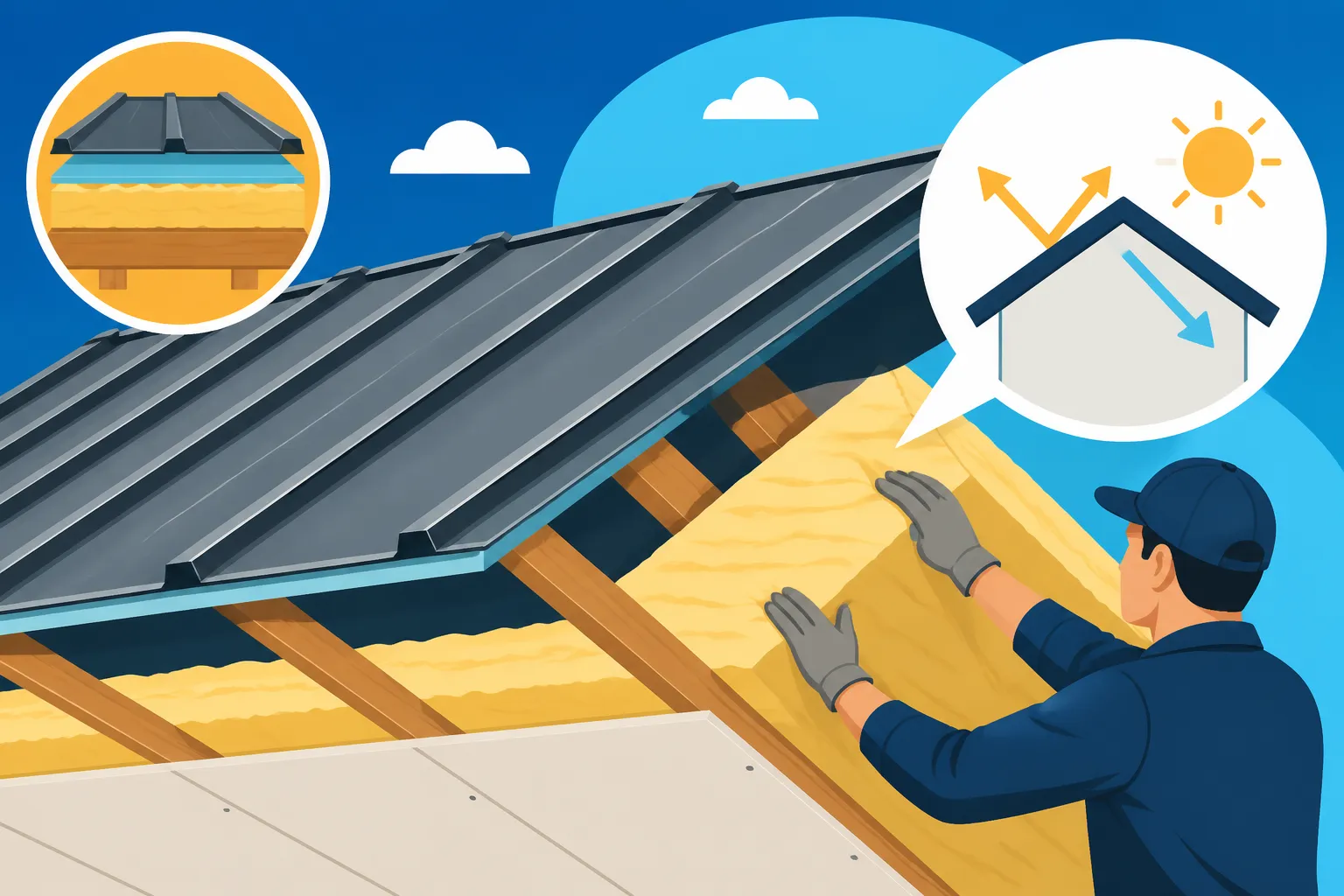
- Warm Roof Assembly (Conditioned Attic/Unvented): In this system, the insulation is installed directly against the underside of the roof deck, bringing the entire attic space into the conditioned envelope of the house. There is no vented air space between the insulation and the metal roof panels. This approach eliminates the cold surface for condensation to form on and helps to make the attic space more comfortable. This is particularly popular for homes with cathedral ceilings, finished attics, or those seeking maximum energy efficiency and noise reduction. It requires meticulous air sealing and the right type of insulation, often closed-cell spray foam or high-R rigid foam boards with excellent vapor control.
For metal roofs, a warm roof assembly is often favored due to the potential for condensation directly on the metal panels, especially with a highly conductive material.
Installing Insulation in New Construction
In new builds, you have the most flexibility to integrate the best insulation system from the ground up.
- Integrated Rigid Foam/Sheathing: Many builders opt for structural insulated panels (SIPs) or create an "upside-down" roof. This involves installing a layer of rigid foam insulation (like polyiso) directly over the roof decking, followed by another layer of sheathing, and then the metal roof panels. This creates a highly insulated, continuous thermal envelope. Alternatively, rigid foam can be installed directly beneath the roof decking, between rafters or trusses, followed by a finish material.
- Spray Foam Application: For a warm roof assembly, closed-cell spray foam is a top-tier choice. It's sprayed directly onto the underside of the roof decking, filling all cavities between rafters or trusses. This not only insulates but also provides an incredibly effective air barrier and often acts as its own vapor barrier. For a metal roof that will have Standing Seam Metal Roof Cost considerations, this premium insulation choice often complements the high-end profile.
- Batt Insulation with Proper Gaps: If using batt insulation, especially in a cold roof scenario, ensure adequate air circulation. This means leaving a clear air gap (typically 1-2 inches) between the top of the insulation and the underside of the roof decking or sub-decking. Baffles are often installed at the eaves to maintain this airflow from the soffit vents up to the ridge vent. The vapor barrier must be on the warm side of the insulation.
When working with a new metal roof, discussing insulation strategies with your builder and roofing contractor is critical. A Modernize specialist can help you connect with qualified professionals who understand the nuances of metal roof insulation.
Retrofitting Insulation for Existing Metal Roofs
Adding or upgrading insulation to an existing metal roof can be more challenging but is often necessary to fix comfort issues, reduce noise, or address condensation.
- Accessing the Attic Space: If you have an accessible attic, adding insulation to the attic floor (creating a cold roof) is usually the simplest and most cost-effective option. You can add more batt insulation, blown-in cellulose or fiberglass, or even rigid foam boards. The key here is to ensure excellent air sealing of the attic floor to prevent warm, moist air from migrating into the unconditioned attic space. Seal all penetrations (light fixtures, plumbing stacks, electrical wires) with caulk or spray foam.
- Insulating Under the Roof Deck (Warm Roof Conversion): If your attic is already finished or you want a warm roof assembly, you'll need to insulate directly under the roof deck. This often involves:
- Spray Foam: The most common and effective method for existing structures. Professionals can spray closed-cell foam directly onto the underside of the roof decking, filling the rafter bays. This instantly creates a sealed, insulated envelope.
- Rigid Foam Panels: These can be cut to fit between rafters and then sealed with foam sealant. This method is more labor-intensive and requires meticulous attention to air sealing at all edges and seams to prevent thermal bypass.
- Furring Strips and Insulation: In some cases, especially when the metal roof is installed over purlins or an open frame, insulation can be added between the purlins. However, this often requires careful planning for vapor control and a finished ceiling underneath.
- Insulating Over an Existing Roof: In some replacement scenarios, particularly for Cost to Replace Shingles With a Metal Roof, a layer of rigid insulation can be installed over the existing roof deck before the new metal panels are put on. This is an excellent way to boost R-value without disrupting the interior of the home. This usually involves adding furring strips to create a level surface and an air gap if needed, then installing the insulation boards, and finally the new metal roof.
Regardless of the method, remember that proper ventilation for a cold roof or meticulous air sealing and vapor control for a warm roof are non-negotiable. Skipping these steps can lead to severe moisture problems.
Addressing Common Challenges and Best Practices
Insulating under a metal roof isn't just about throwing up some material; it's about creating a holistic system that manages heat, air, and moisture. Overlooking certain details can undermine even the best insulation choices.
The Critical Role of Vapor Barriers
We've touched on it, but it bears repeating: managing moisture is paramount when insulating under a metal roof. A vapor barrier (or vapor retarder, depending on your climate and specific needs) is a material that restricts the movement of water vapor. This is essential to prevent warm, humid interior air from reaching the cold metal roof deck, where it would condense and cause problems.
- Placement is Key: In most cold climates, the vapor barrier should be installed on the "warm in winter" side of the insulation, which is typically the interior side, closest to the living space. In hot, humid climates, the placement can be more nuanced, sometimes requiring it on the exterior side or relying on a vapor-impermeable insulation like closed-cell spray foam.
- Types of Barriers: Common vapor barriers include polyethylene sheeting (plastic film), foil-faced rigid insulation, or even certain paint primers. Closed-cell spray foam, due to its dense structure, often acts as its own vapor barrier, eliminating the need for a separate layer.
- Seamless Application: Whatever type you choose, it must be installed meticulously, with all seams taped and sealed, and all penetrations (pipes, wires) properly caulked or foamed. Any gaps can compromise its effectiveness. Failing to properly seal a vapor barrier is like having a boat with a hole – it will still leak.
Consulting with a local roofing or insulation expert is highly recommended to determine the correct type and placement of a vapor barrier for your specific climate zone and roof assembly.
Ensuring Adequate Ventilation
Ventilation is the yin to insulation's yang, especially in cold roof assemblies. It works hand-in-hand with insulation to manage temperature and moisture.
- Cold Roof Ventilation: For vented attics, a continuous airflow from the soffit vents (low on the roof) up to the ridge vent (at the peak) is crucial. This airflow sweeps away any moisture that might migrate into the attic and helps equalize the attic temperature with the outside air. Baffles are often installed in the rafter bays at the eaves to ensure the insulation doesn't block the airflow from the soffit vents. Without proper ventilation, even a well-insulated attic can become a breeding ground for mold and mildew.
- Warm Roof (Unvented) Considerations: In a true warm roof assembly where insulation is directly against the roof deck and there's no air space, ventilation of the attic space itself is not required. However, the choice of insulation must be appropriate for an unvented assembly (e.g., closed-cell spray foam or rigid foam with an integrated vapor barrier) to prevent moisture issues within the roof structure itself. This type of system relies entirely on the air-tightness and vapor control properties of the insulation.
Regardless of your chosen system, ensure that all Metal Roof Components & Accessories Explained are working together efficiently, including any vents or baffles.
Preventing Thermal Bridging
Thermal bridging occurs when there's a direct path for heat to transfer through a more conductive material within the building envelope, bypassing the insulation. In a roof, this often happens through rafters, trusses, or purlins.
- Continuous Insulation: The best way to combat thermal bridging is with a continuous layer of insulation (often referred to as "continuous insulation" or "ci") that runs uninterrupted across the entire roof plane, either above or below the rafters. Rigid foam boards are excellent for this, as they can be installed in a continuous layer directly over the roof deck or under the rafters, providing a thermal break.
- Spray Foam Advantages: Closed-cell spray foam, when applied directly to the underside of the roof deck, encapsulates the framing members, greatly reducing thermal bridging and creating a superior thermal envelope.
- Staggered Layers: If using multiple layers of rigid insulation, staggering the seams in each layer can further improve performance by minimizing direct thermal bypass points.
Even the most robust insulation can be compromised by thermal bridging, leading to cold spots, uneven temperatures, and higher energy bills. Investing in a system that minimizes these thermal breaks will maximize your metal roof's overall thermal performance.
Practical Tips and Best Practices
- Climate Matters: Always consider your local climate. A humid, hot climate will have different insulation priorities (reflecting heat, managing moisture from the outside) than a cold, dry climate (retaining heat, preventing internal moisture from condensing).
- Professional Consultation: While this guide offers comprehensive information, consulting with a reputable roofing contractor or insulation specialist is invaluable. They can assess your specific roof structure, local building codes, and climate conditions to recommend the most effective and compliant insulation strategy. Websites like Modernize can connect you with local, vetted professionals.
- Seal Air Leaks First: Before adding any insulation, meticulously seal all air leaks in your ceiling and attic floor. Air sealing is often more critical and cost-effective than adding more insulation, as uncontrolled air movement can negate much of the insulation's benefits.
- Check Local Codes: Always verify local building codes regarding required R-values, vapor barrier placement, and ventilation. Codes are designed to ensure safety and performance and vary by region.
- Consider Future Plans: If you plan to finish your attic or convert it into living space, opt for a warm roof assembly from the start. It will save you significant headaches and costs down the line.
Proper insulation under your metal roof isn't just an expense; it's an investment that pays dividends in comfort, energy savings, and the long-term health of your home. Taking the time to understand your options and implement the right solution will ensure your metal roof truly performs as the premium roofing system it's meant to be.
Disclaimer
Please remember that this article provides general information and recommendations. Building codes, climate considerations, and specific project requirements vary widely. Always consult with a qualified, licensed professional before undertaking any roofing or insulation project to ensure safety, compliance with local regulations, and optimal results for your specific situation.